31 Bold Short Bald Fade Undercut Ideas for Men

A short bald fade undercut is one of the sharpest men’s hairstyles for creating a clean, contemporary appearance without sacrificing personality. By taking the sides and back down to skin and leaving contrasting length on top, this haircut combines the precision of a bald fade, the structure of an undercut, and the versatility of short men’s hair. Whether you prefer textured, slicked, curly, spiky, or naturally messy hair, the cut can be adapted to different face shapes, hair textures, beard styles, and grooming routines.
Modern barbers can also customize the transition with a low, mid, or high skin fade while changing the top to suit straight, wavy, curly, fine, or thick hair. Details such as hard parts, line-ups, crop fringes, razor designs, and beard fades can make the hairstyle even more distinctive. Below are 31 short bald fade undercut ideas for modern men, ranging from understated professional cuts to bold, fashion-forward looks.
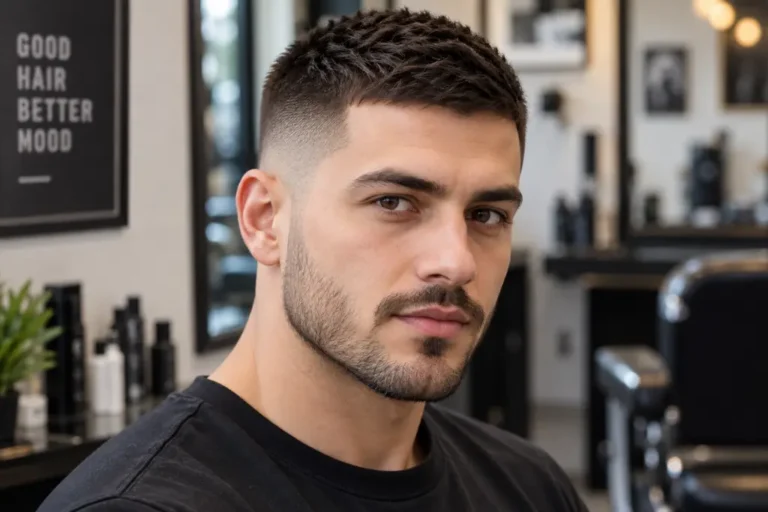
1. Classic Short Bald Fade Undercut
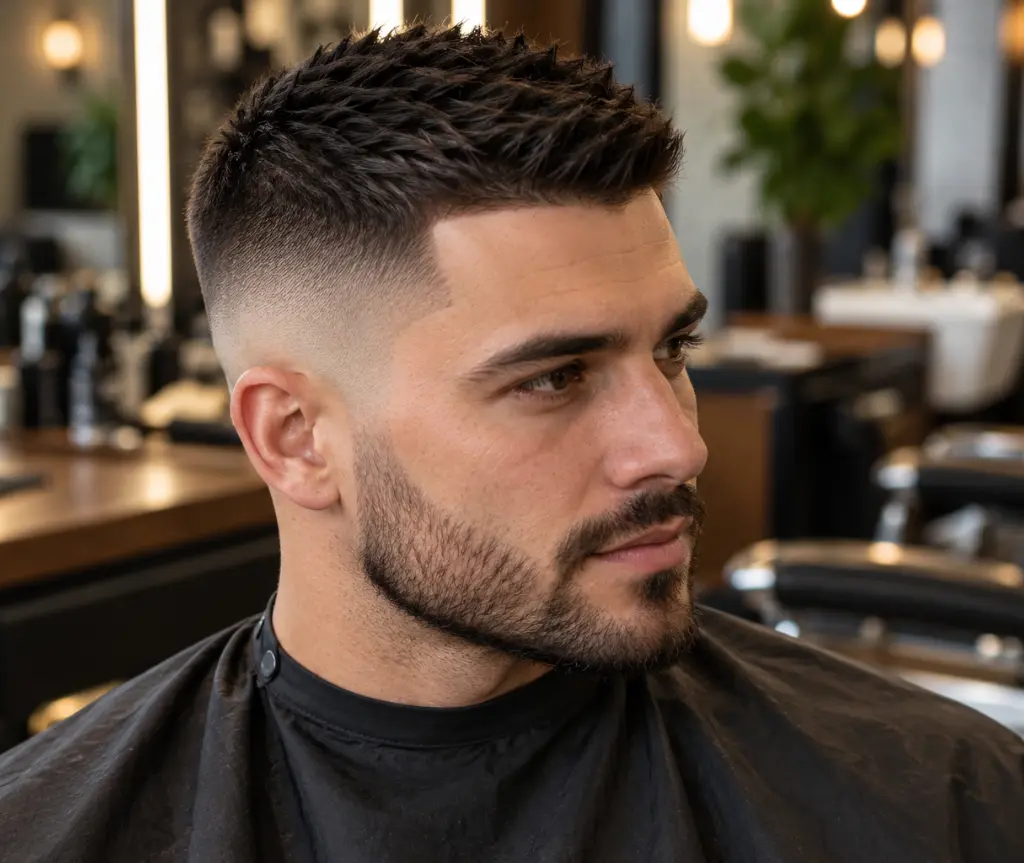
The classic short bald fade undercut is an excellent starting point for men who want a clean haircut with strong contrast and minimal complications. The barber gradually blends the sides and back down to bare skin while maintaining a clearly longer section on top. Keeping the top short makes the hairstyle practical for everyday grooming while still providing enough length to create texture or subtle direction. This balanced combination works particularly well for men who appreciate traditional barbering but want a noticeably modern finish.
Another advantage of the classic version is its versatility across casual, business, and formal settings. Men with straight or slightly wavy hair can apply a small amount of matte clay or styling paste to create controlled definition without making the hair look overly polished. A clean neckline, neatly edged temples, and precise fade transition reinforce the haircut’s sharp appearance. Regular barber visits are important because the skin fade becomes noticeably softer as the sides begin growing back.
2. Textured Bald Fade Undercut
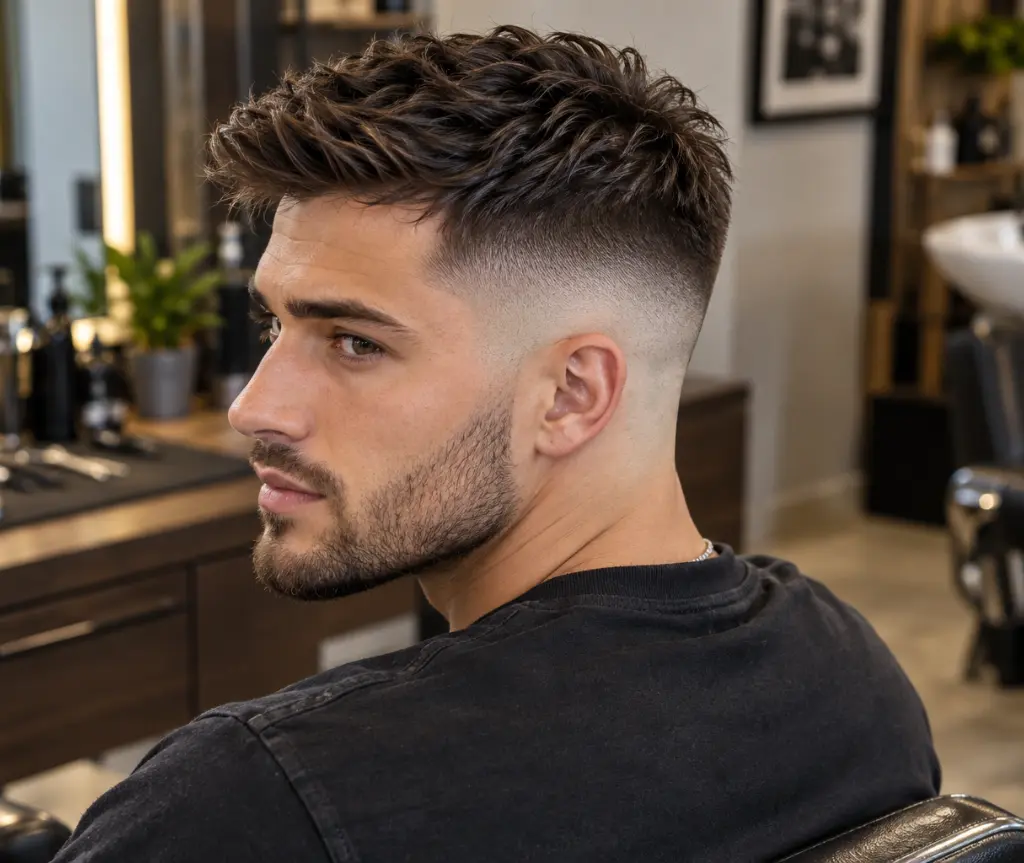
A textured bald fade undercut introduces movement and separation into the longer hair on top while preserving extremely clean sides. Rather than styling every strand in one direction, the upper section is cut with texture so individual pieces can sit naturally. The exposed skin around the lower sides creates dramatic contrast against the fuller crown, making the texture appear even more pronounced. This approach is particularly effective for thick or medium-density hair that naturally holds shape after being layered or point-cut by a barber.
Styling the textured undercut does not require an elaborate routine. Work a small amount of matte paste, clay, or texture cream through dry or slightly damp hair using the fingertips instead of a comb. This creates a relaxed finish that complements the precision of the bald fade. Men wanting extra volume can blow-dry the top upward before applying the product. The contrast between natural texture and razor-clean sides gives this short men’s hairstyle its contemporary, effortless character.
3. High Bald Fade Undercut
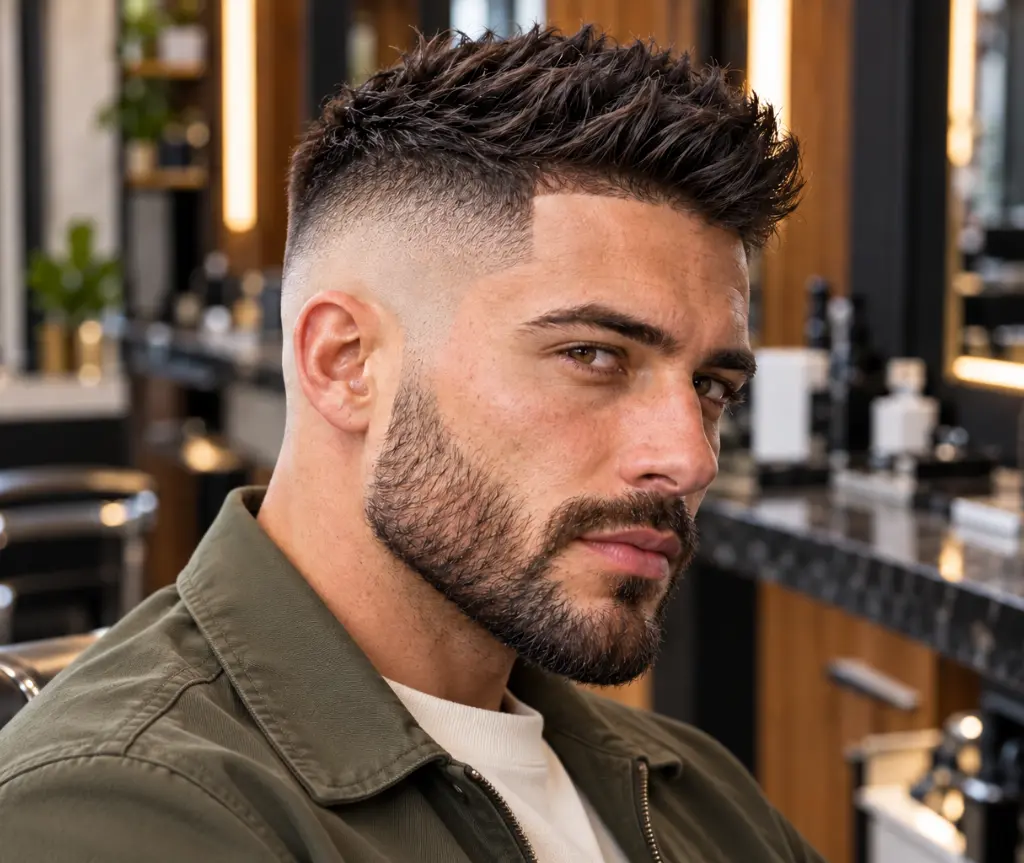
The high bald fade undercut creates maximum contrast by beginning the skin fade much closer to the temples and upper sides of the head. Because very little side hair remains, attention immediately shifts toward the textured section on top. The result is bold, angular, and exceptionally clean. This style can visually elongate the head, especially when the upper hair is given some vertical volume, making it an interesting option for men who want their haircut to create a stronger overall silhouette.
A high fade requires precision because the transition between bare skin and the longer upper section is particularly visible. Experienced barbers typically use several clipper lengths to prevent harsh or accidental lines in the gradient. The top can remain natural, brushed forward, lifted upward, or styled into a miniature quiff depending on personal preference. Pairing the haircut with light facial stubble or a carefully shaped beard can also balance the dramatic amount of exposed skin around the sides.
4. Low Bald Fade Undercut
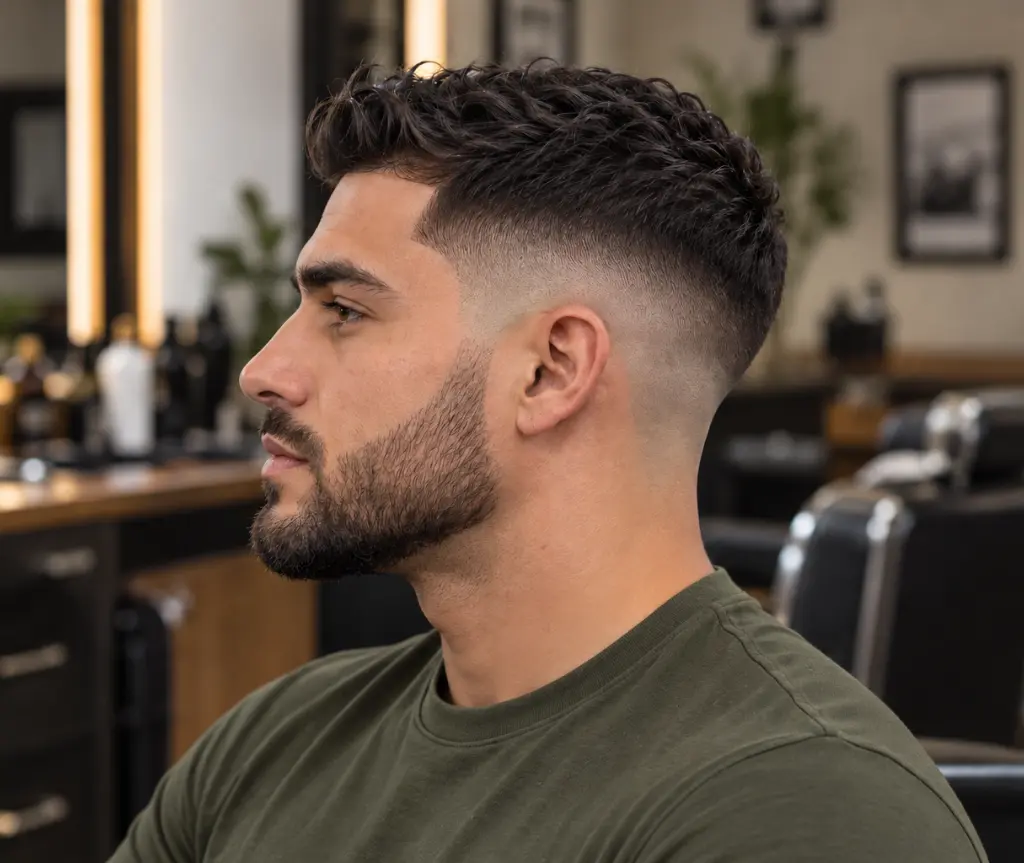
A low bald fade undercut offers a softer interpretation of the trend by keeping the skin transition close to the ears and neckline. More hair remains around the upper sides, creating a gradual blend rather than the dramatic exposure associated with a high fade. This makes the haircut suitable for men who appreciate the freshness of a skin fade but prefer something slightly more conservative. It can work particularly well in professional environments because the silhouette remains structured without looking excessively aggressive.
The extra density around the upper sides also provides visual balance for longer or narrow face shapes. On top, short textured hair can be styled forward, sideways, or slightly upward according to natural growth patterns. Matte products are useful when maintaining a relaxed contemporary finish, while pomade can provide additional control for polished occasions. Since the bald portion sits lower on the head, regrowth may appear somewhat less dramatic than it does with an extremely high skin fade.
5. Mid Bald Fade Undercut
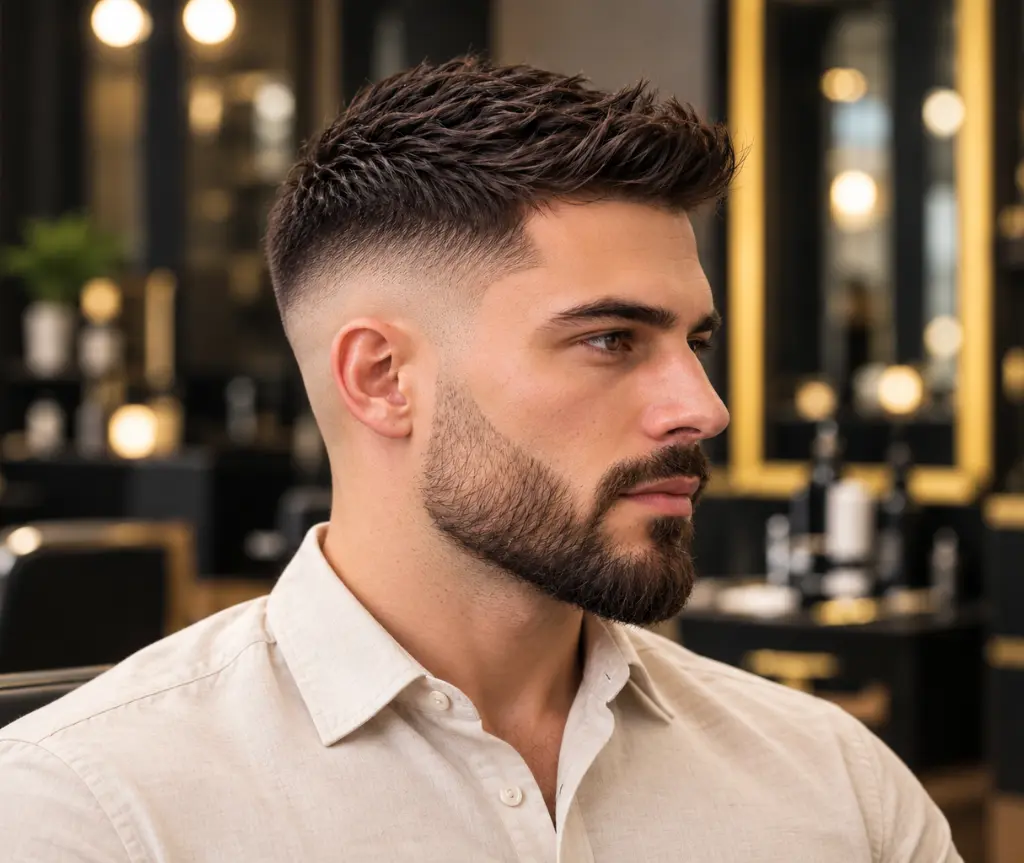
The mid bald fade undercut occupies the ideal middle ground between understated low fades and highly exposed high fades. The transition generally begins around the middle of the sides, producing enough contrast to highlight the upper hair without removing excessive visual weight. This balanced structure makes the haircut adaptable to many face shapes and personal styles. Men trying a skin fade for the first time may find the mid fade particularly appealing because it delivers a noticeable transformation without looking overly extreme.
Short hair on top can be textured with scissors or clippers depending on the desired result. Adding subtle volume toward the front gives the hairstyle a modern silhouette, while brushing the hair forward creates a more compact finish. The middle fade also pairs naturally with facial hair because a barber can transition the sideburn into a beard using the same gradual blending technique. Regular trimming keeps the fade crisp and preserves the clean separation associated with an undercut-inspired hairstyle.
6. Short Bald Fade Undercut With Quiff
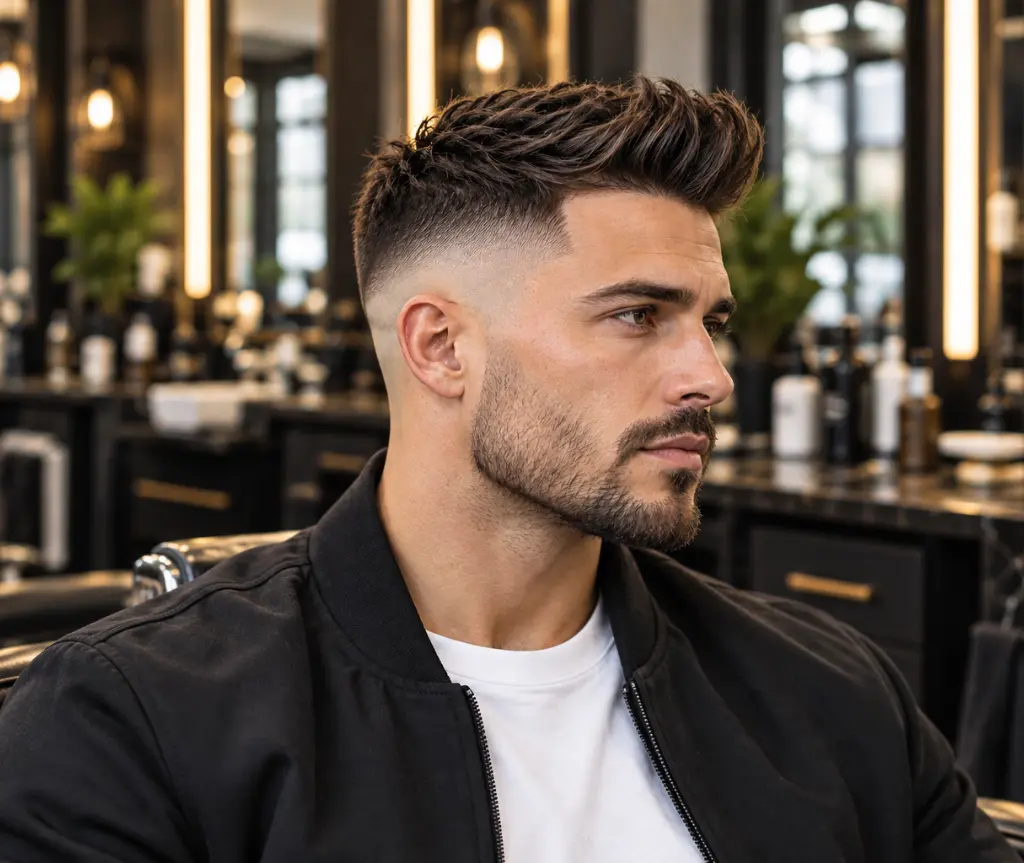
Combining a short quiff with a bald fade undercut adds height and personality while maintaining clean, manageable proportions. The front section is left slightly longer than the rest of the top so it can be lifted backward and upward. Meanwhile, the shaved sides remove unnecessary bulk and emphasize the quiff’s shape. This contrast makes even a relatively small amount of volume appear more dramatic, allowing men to achieve an eye-catching hairstyle without maintaining several inches of hair.
For styling, start with slightly damp hair and direct the front upward with a blow dryer. A matte styling paste or medium-hold clay can then maintain the shape while preserving natural movement. Avoid applying excessive product because a short quiff generally looks best when it remains airy rather than stiff. The haircut works especially well with straight, thick, or slightly wavy hair capable of holding elevation, although pre-styling spray can provide additional support for finer textures.
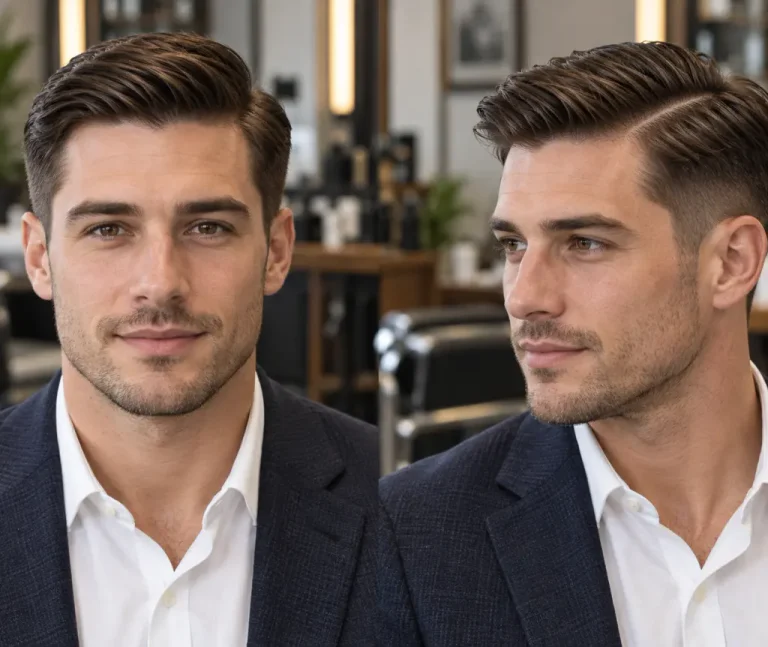
7. Bald Fade Undercut With Side Part
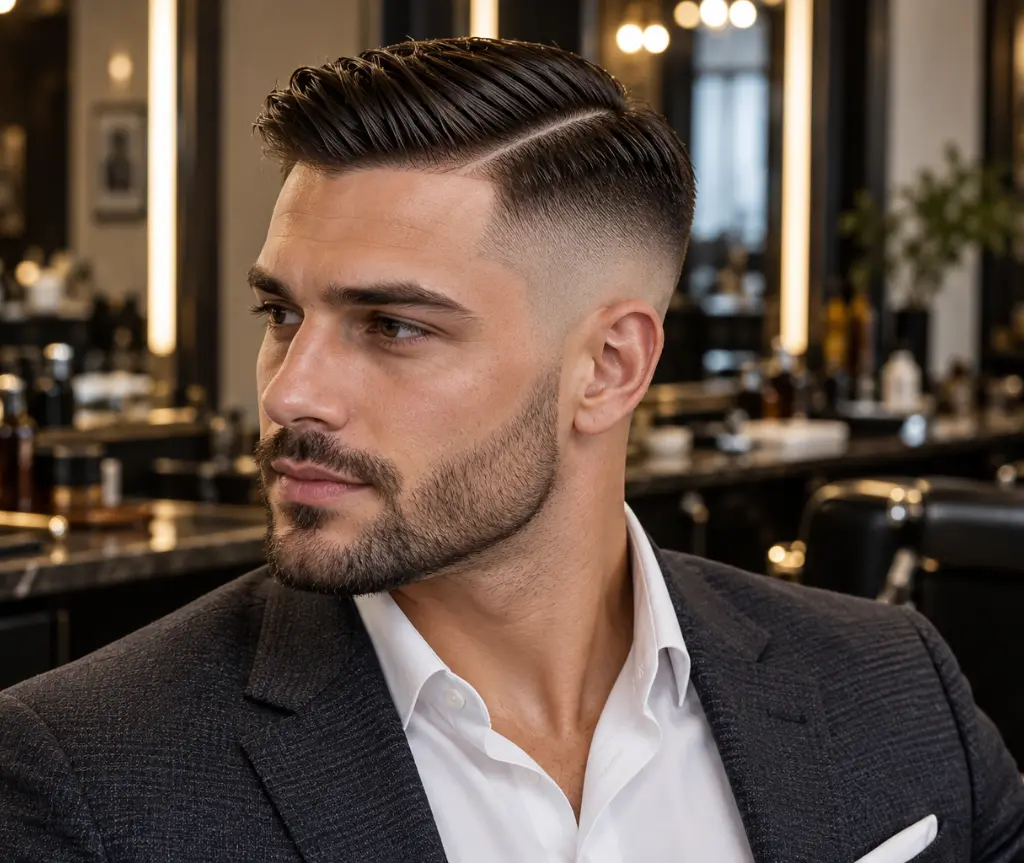
A side-part bald fade undercut combines traditional gentleman styling with modern barbering. The upper hair is directed neatly toward one side, creating a defined structure that contrasts with the extremely short faded sides. This combination can make the hairstyle appropriate for offices, weddings, dinners, and everyday wear. The side part introduces sophistication, while the bald fade prevents the haircut from appearing dated or excessively formal. It is particularly effective on straight or slightly wavy hair with enough density to maintain separation.
A barber can create either a natural part or a more visible razor-defined line depending on how bold you want the haircut to appear. Lightweight pomade produces a controlled finish, whereas matte cream creates a softer, contemporary result. Men with rounder faces may also appreciate the subtle vertical structure produced by leaving additional height near the front. Keeping the part tidy and the skin fade freshly trimmed ensures that the hairstyle maintains its deliberately precise geometry.
8. Hard Part Bald Fade Undercut
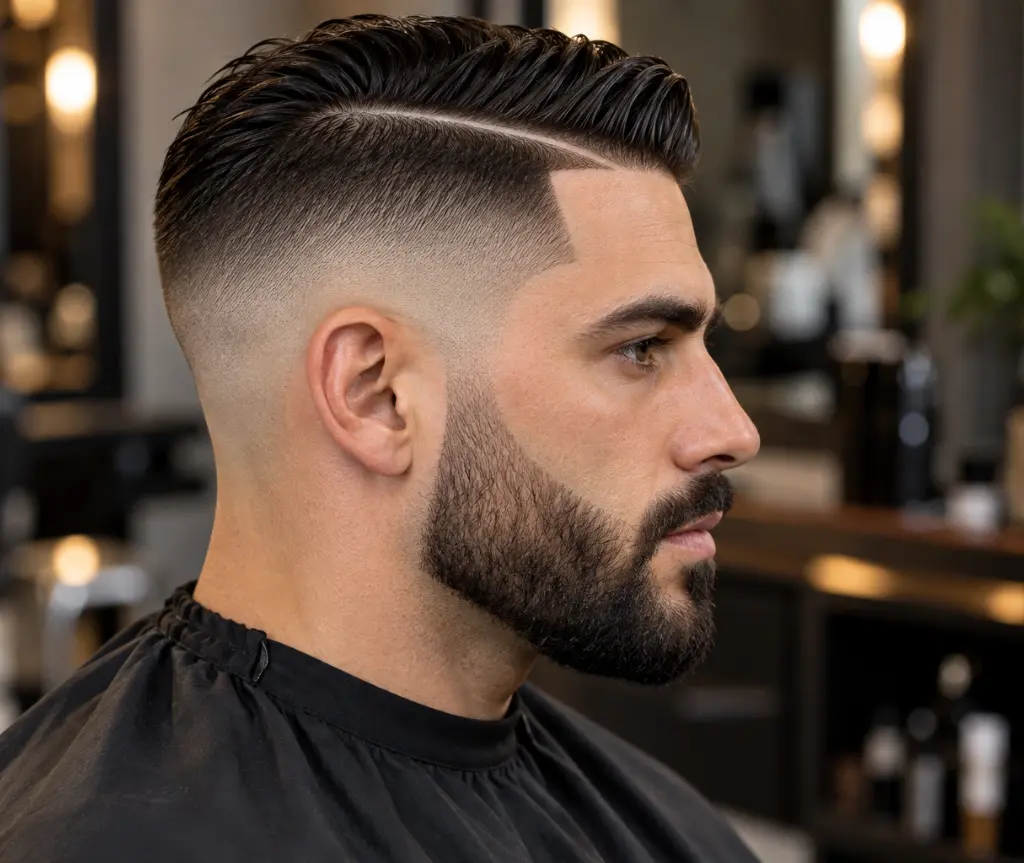
The hard part bald fade undercut makes the separation between the top and sides unmistakable. Instead of relying solely on the hair’s natural parting, the barber creates a narrow shaved line using a trimmer or razor. This detail provides a strong geometric accent that complements the smooth gradient of the bald fade. Because the design is intentionally sharp, it works best for men who enjoy precise grooming and want their haircut to look freshly barbered rather than soft or understated.
The remaining top can be combed sideways for a polished look or styled with texture for a less formal interpretation. Since the hard part grows out relatively quickly, maintaining its crispness requires regular touch-ups. A well-shaped hairline and carefully blended temple area help integrate the shaved line with the rest of the haircut. The result combines elements of the classic side part, skin fade, and undercut into one distinctly modern men’s hairstyle.
9. Curly Bald Fade Undercut
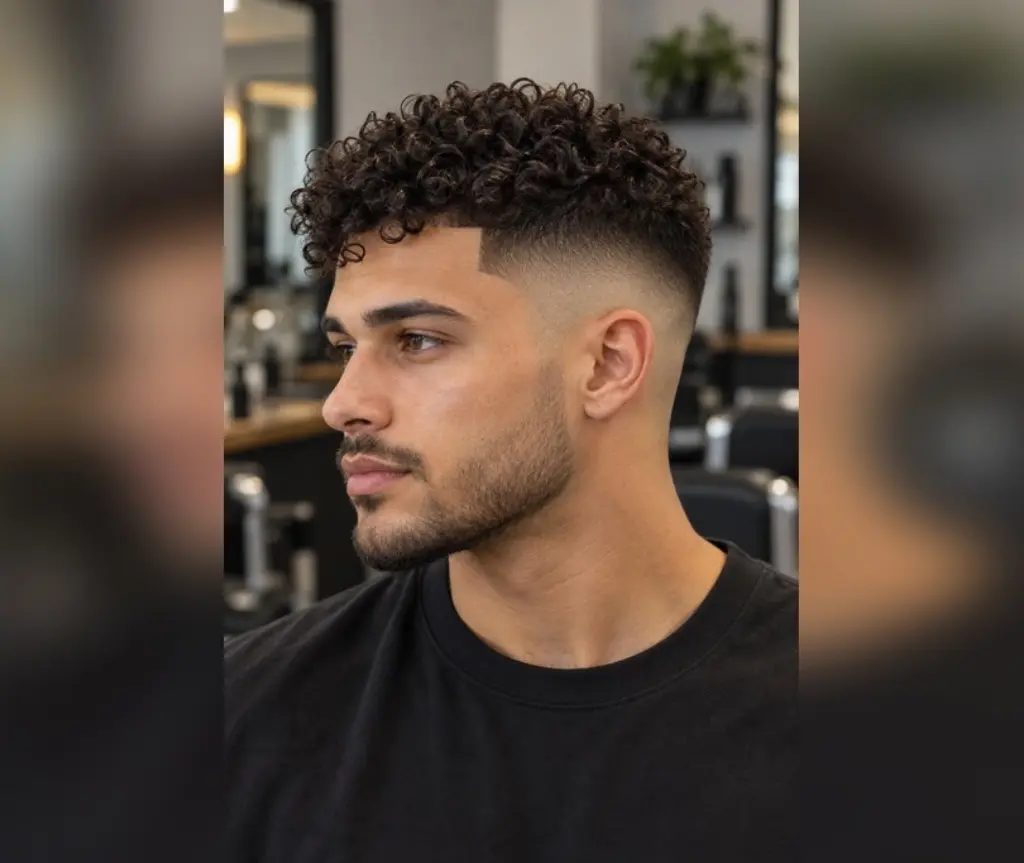
A curly bald fade undercut showcases natural curls while eliminating excess bulk around the sides and neckline. The short curls remain concentrated on top, allowing their pattern and definition to become the focal point of the haircut. Because the sides transition into bare skin, the difference between tightly cropped areas and textured curls creates striking visual contrast. This approach works with loose curls, tighter ringlets, and various curl densities, provided the upper section retains enough length for the pattern to form naturally.
Moisture is particularly important when styling curly hair because excessive dryness can create frizz and reduce curl definition. A lightweight curl cream or leave-in conditioner can enhance the shape without making the hair appear greasy. Finger styling usually works better than aggressive brushing because it preserves the curl pattern. Combining defined curls with a precise bald fade creates a hairstyle that feels simultaneously natural and controlled, making it an attractive choice for men who want to celebrate their hair texture.
10. Wavy Bald Fade Undercut
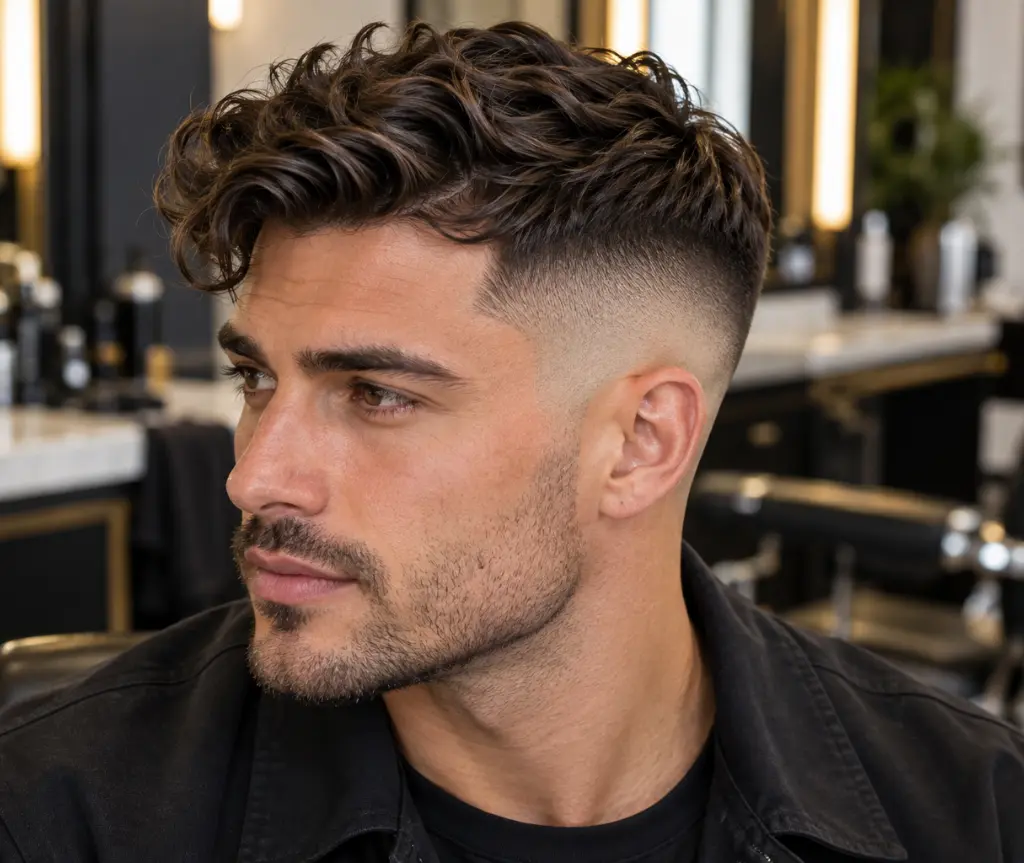
The wavy bald fade undercut uses natural bends and movement to soften the otherwise sharp structure of a skin fade. Short waves across the top create texture without requiring the dramatic volume of a pompadour or quiff. By removing the hair around the sides, the barber prevents wavy textures from expanding outward and creating unnecessary width. This produces a streamlined silhouette while allowing the natural wave pattern to remain clearly visible across the crown and front.
Sea-salt spray, lightweight texture cream, or matte paste can enhance natural waves without flattening them. Apply the product lightly and use your fingers to guide the hair rather than forcing it into an overly structured shape. Men with naturally wavy hair can often achieve this look with minimal daily styling, especially when the upper layers are cut to complement their growth pattern. The combination feels relaxed yet refined, making it suitable for both casual outfits and more polished wardrobes.
11. Buzz Cut Bald Fade Undercut
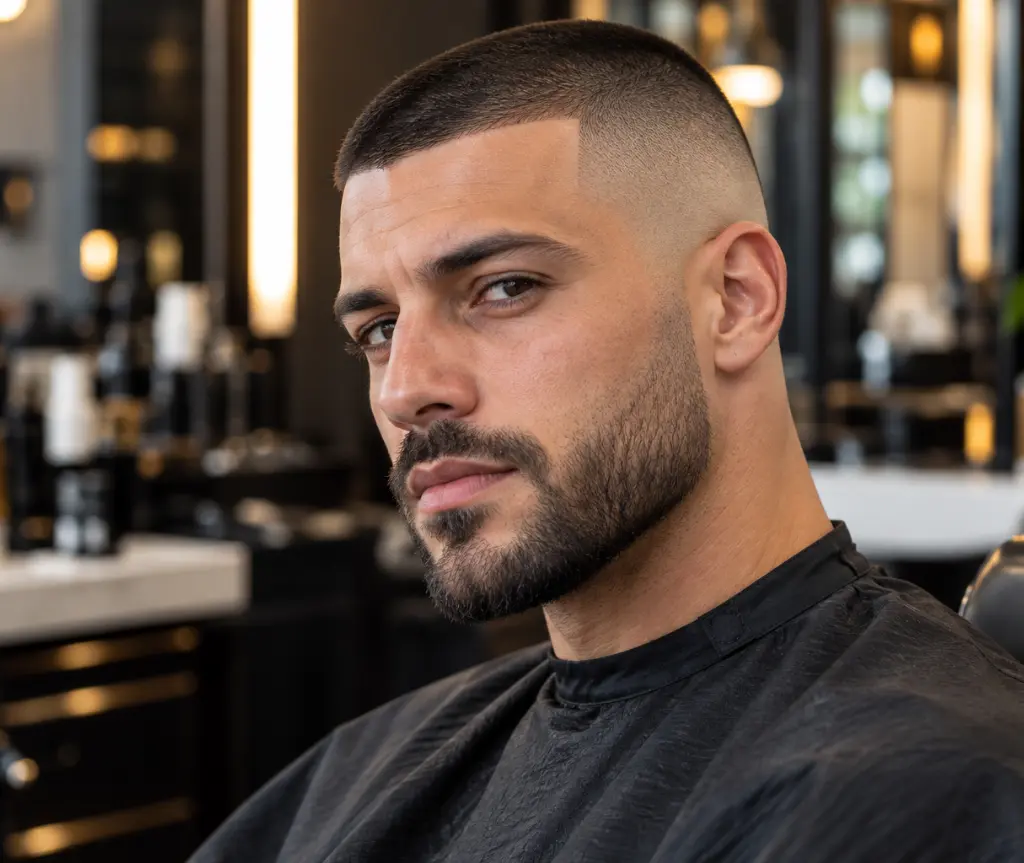
A buzz cut bald fade undercut is ideal for men who prioritize convenience while still wanting a highly intentional haircut. The upper section is clipped short and uniform, while the sides gradually disappear into bare skin. Although the difference in length is relatively small, the fade creates enough contrast to distinguish the top from the sides. This minimalist approach highlights facial structure, hairline shape, and head proportions more than hairstyles that rely on significant volume or texture.
Maintenance at home is straightforward because little to no styling product is required. However, keeping the fade exceptionally clean usually requires frequent barber appointments. Adding a sharp line-up around the forehead and temples can make the buzz cut appear even more structured. The hairstyle also works well with short stubble or a full beard because facial hair provides an additional point of visual balance. For active lifestyles and warm climates, its low-maintenance nature is particularly practical.
12. Crew Cut Bald Fade Undercut
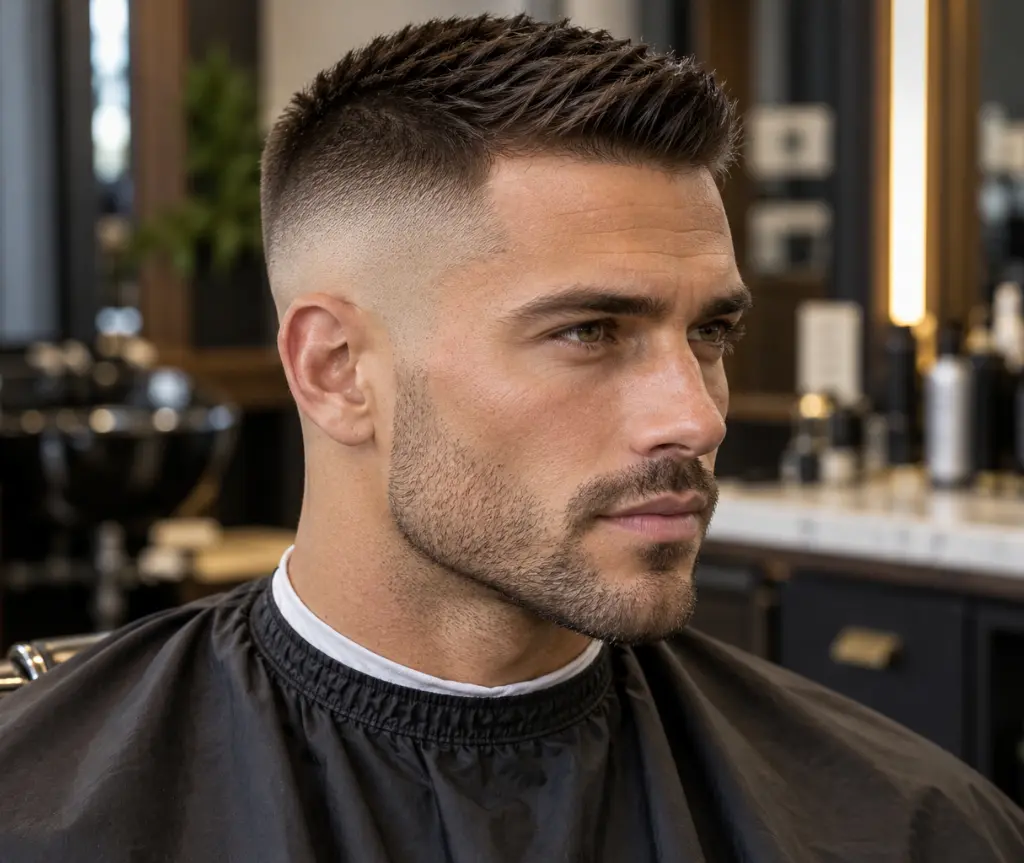
The crew cut bald fade undercut blends military-inspired practicality with contemporary barber styling. Hair remains slightly longer toward the front while becoming progressively shorter toward the crown, creating subtle shape without requiring dramatic styling. The bald fade removes the sides completely at the lowest point and gradually reconnects them to the top. This creates a cleaner and more modern variation of the traditional crew cut while retaining the straightforward maintenance that has made the style popular for generations.
A small amount of matte product can add texture to the front, although many men can simply towel-dry the hair and leave it naturally positioned. The haircut suits active professionals, athletes, students, and anyone who wants to spend minimal time on daily grooming. A precise temple line-up adds extra sharpness, while a softer natural hairline can create a more understated effect. Either way, the crew cut and bald fade combination provides structure without unnecessary complexity.
13. French Crop Bald Fade Undercut
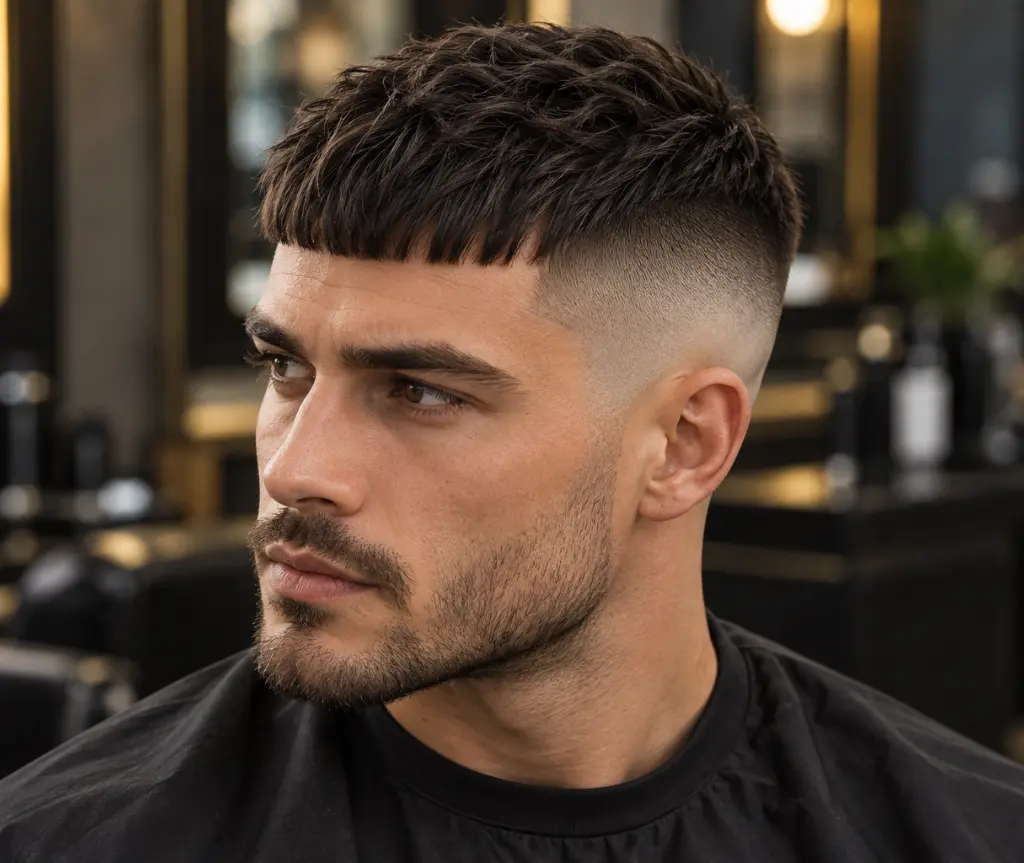
A French crop bald fade undercut features short textured hair on top with the front directed toward the forehead. The cropped fringe provides a distinctive horizontal element while the shaved sides create strong contrast. This combination is particularly useful for men who want a fashionable haircut that does not depend on significant volume. Because the hair is styled forward rather than backward, the crop can also help visually reduce the appearance of a high forehead or uneven front hairline.
Texture is essential for preventing the upper section from looking flat. Barbers often point-cut or layer the top to create separation, after which matte clay can emphasize individual strands. The fringe may be kept perfectly straight for a graphic finish or slightly irregular for a relaxed look. When paired with a bald fade, both approaches appear modern and deliberate. The result is compact, easy to style, and compatible with many casual and streetwear-inspired aesthetics.
14. Caesar Bald Fade Undercut
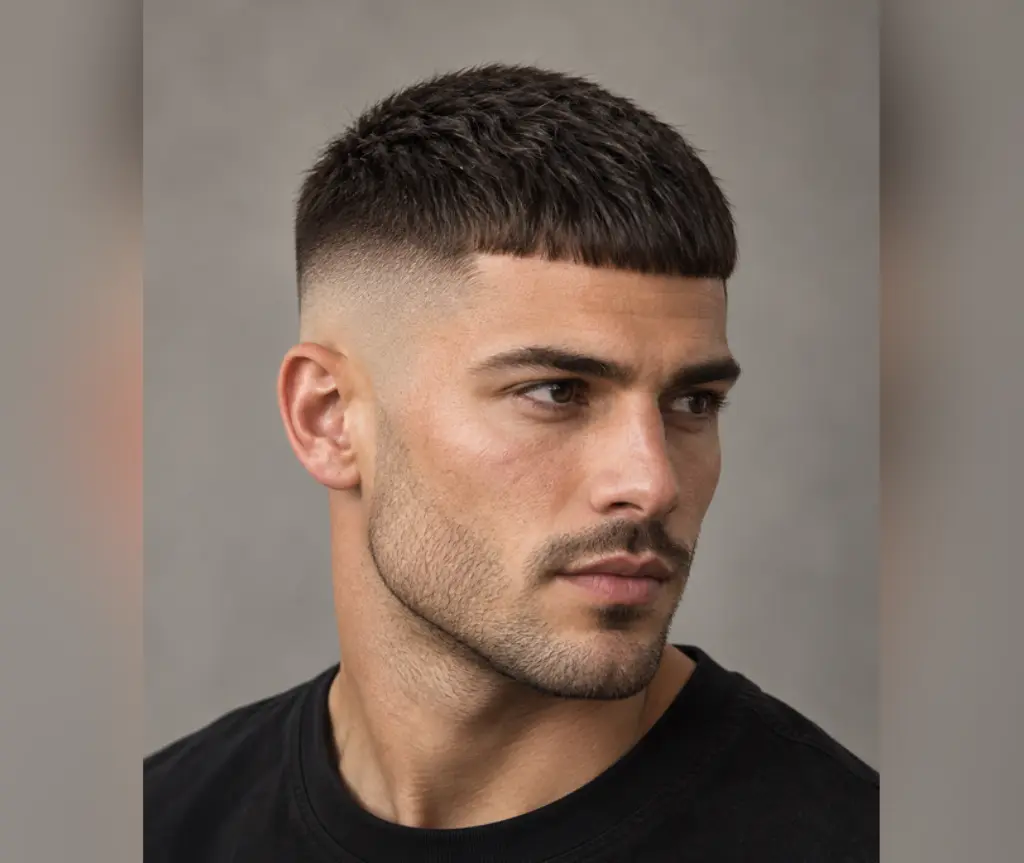
The Caesar bald fade undercut modernizes the recognizable short forward-combed hairstyle associated with the classic Caesar cut. A small fringe rests across the upper forehead while the sides transition dramatically into skin. Unlike a heavily textured French crop, the Caesar usually maintains a more uniform top length and a compact silhouette. This simplicity makes it particularly attractive for men who want a distinctive haircut without relying on lengthy styling sessions or high-volume products.
The short fringe can help frame the upper face and place greater emphasis on the eyes, eyebrows, and jawline. Styling typically requires only a small amount of lightweight matte cream to keep the hair directed forward. A crisp line-up can make the cut appear highly geometric, whereas retaining a natural hairline creates a softer interpretation. With its combination of historical influence and modern fading techniques, the Caesar bald fade remains both practical and visually recognizable.
15. Spiky Bald Fade Undercut
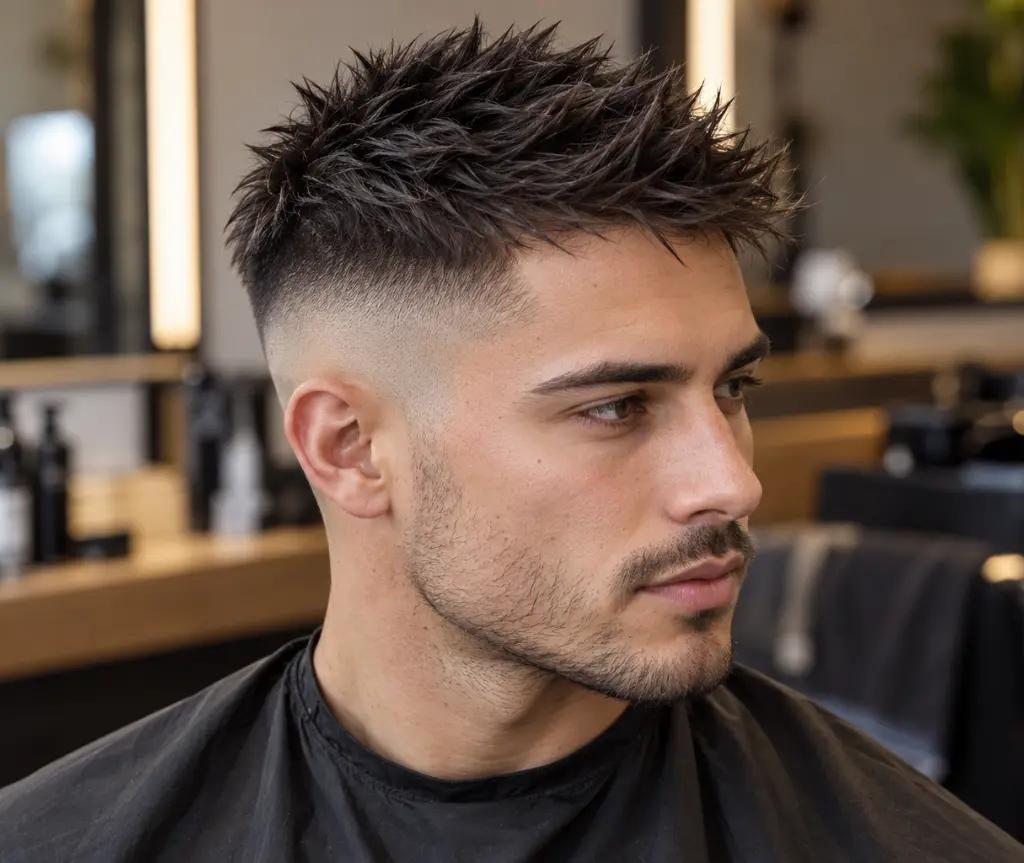
A spiky bald fade undercut brings energetic texture to short hair by directing individual sections upward. Unlike heavily gelled spikes associated with older styling trends, modern versions favor softer separation and matte finishes. The bald sides make the textured upper section appear taller and more defined, creating a strong silhouette without requiring long hair. Men with straight, dense hair often find this style especially easy to achieve because their natural texture can maintain separation with relatively little product.
Start by blow-drying the hair upward using your fingers, then apply a small amount of matte clay from roots to ends. Pinch individual sections lightly rather than creating rigid, identical spikes. The objective is controlled texture with natural variation. A mid or high bald fade works particularly well because it strengthens the vertical emphasis. Combined with a clean line-up and optional stubble, the finished haircut feels youthful, sharp, and suitable for contemporary casual styling.
16. Messy Bald Fade Undercut
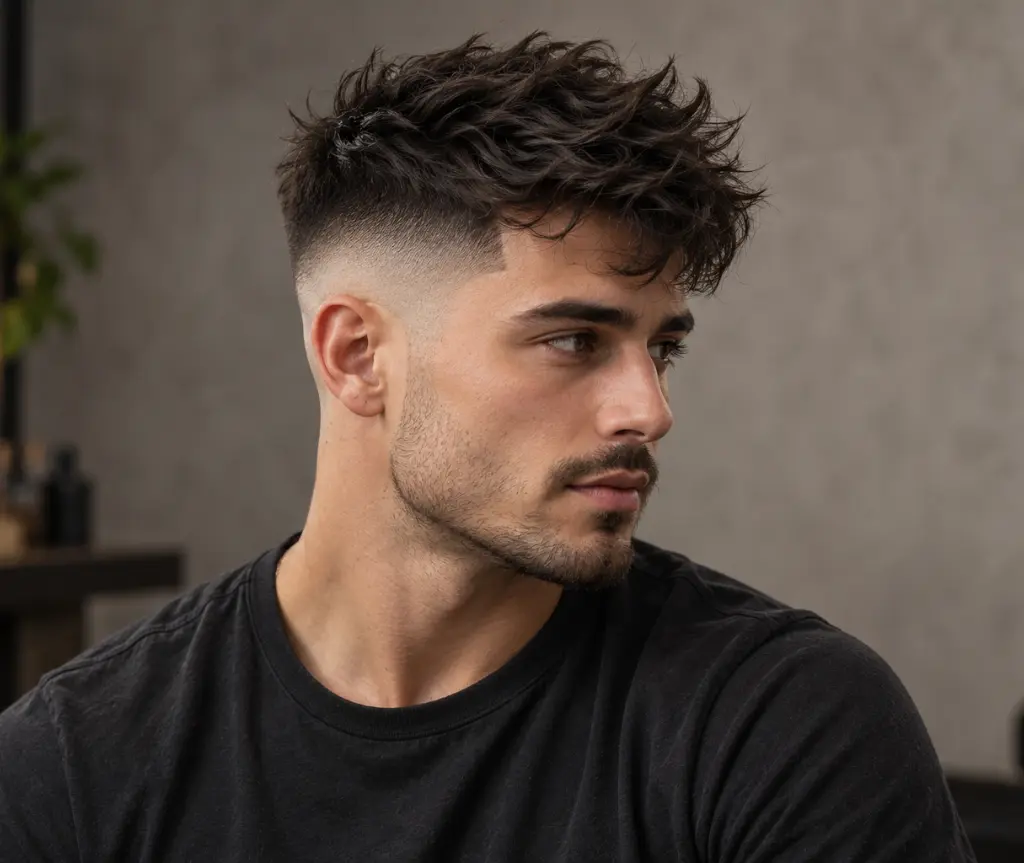
The messy bald fade undercut deliberately contrasts perfectly clean sides with relaxed, imperfect texture on top. Rather than arranging the upper hair into a polished quiff or side part, the strands are encouraged to fall in slightly different directions. This controlled disorder creates movement and makes the hairstyle appear effortless. The bald fade ensures that the overall haircut still feels neat even when the top is intentionally tousled, making it particularly appealing to men who prefer contemporary casual grooming.
A successful messy style still depends on a well-designed haircut. Strategic layers allow the top to separate naturally instead of collapsing into a shapeless mass. Use texture powder, matte clay, or sea-salt spray sparingly, working the product through with your fingertips. Avoid combing afterward because perfectly aligned strands defeat the purpose of the look. This hairstyle is particularly effective on medium-density straight or wavy hair, where natural movement enhances the intentionally undone finish.
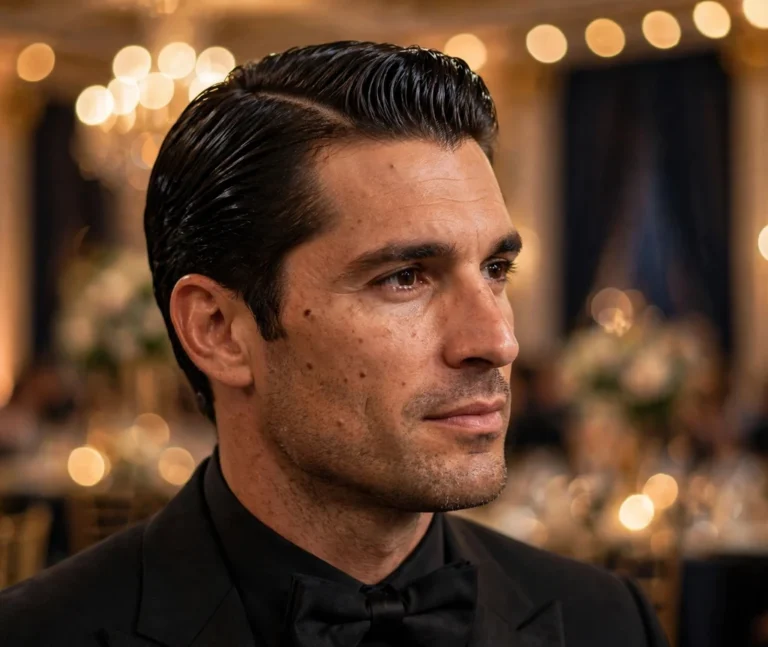
17. Slicked-Back Bald Fade Undercut
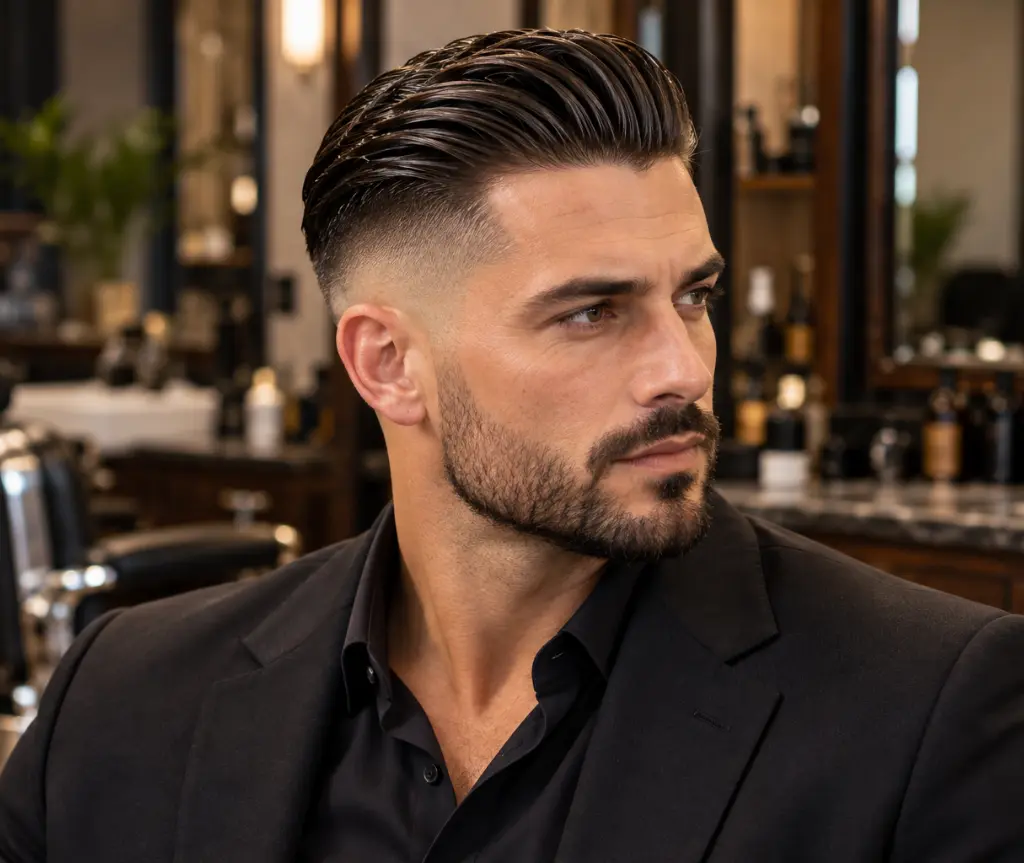
A slicked-back bald fade undercut combines a sleek upper section with extremely clean sides for a strong, sophisticated appearance. The hair on top is kept long enough to move backward while remaining short enough to avoid the heavy appearance of a traditional long undercut. The exposed sides emphasize the backward direction of the hair and create a streamlined profile. This makes the haircut a strong choice for men who enjoy polished styling but still want unmistakably contemporary barber details.
For a classic finish, apply pomade to damp hair and comb it backward from the forehead. For something more modern, use matte paste and finger-comb the hair so some natural texture remains visible. A blow dryer can help establish direction before a product is applied. Because the slicked-back top exposes the forehead, maintaining a neat hairline and temple area becomes particularly important. A short boxed beard or carefully maintained stubble can add further balance to the sharp fade.
18. Brushed-Up Bald Fade Undercut
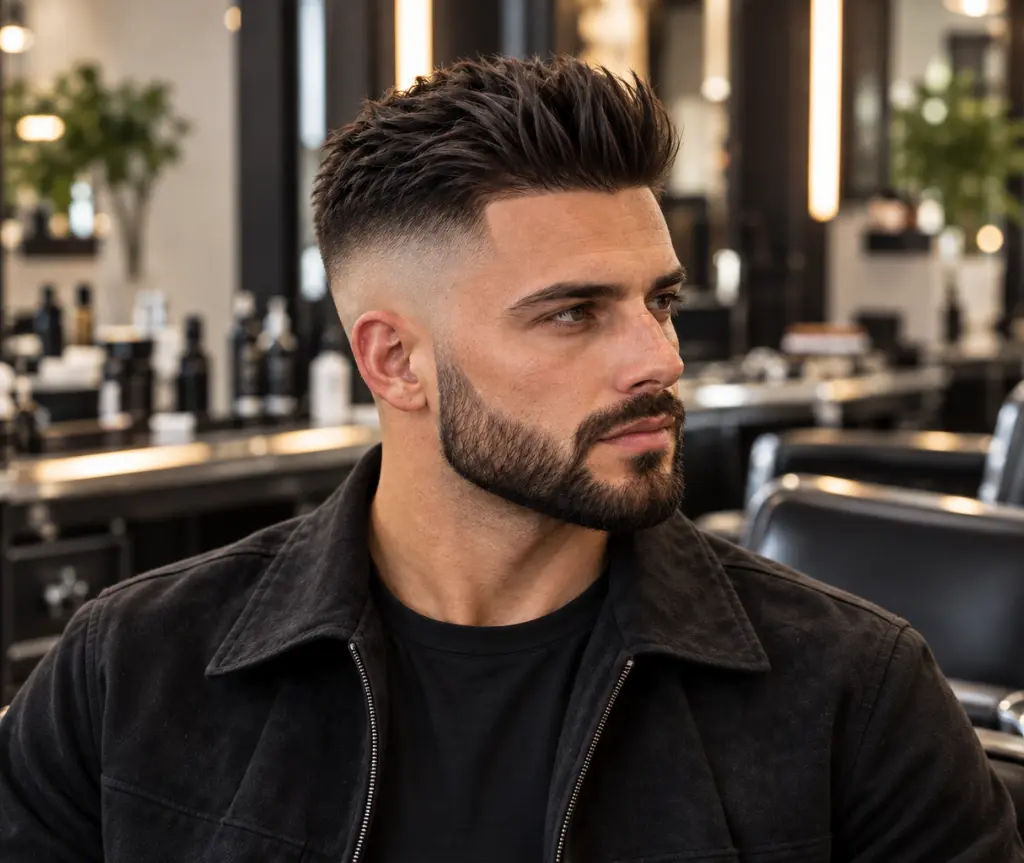
The brushed-up bald fade undercut creates vertical movement across the entire upper section rather than concentrating volume only at the front. Short strands are lifted upward and slightly backward, producing a fuller silhouette that contrasts strongly against shaved sides. This styling technique can make short hair appear denser, making it particularly useful for men whose hair has adequate coverage but lacks natural volume. The resulting hairstyle feels clean, athletic, and contemporary without becoming overly elaborate.
Blow-drying is the easiest way to establish the upward direction. Begin with damp hair, lift the roots using your fingers, and direct warm air upward before finishing with matte paste or clay. Men with fine hair may benefit from a lightweight volumizing pre-styler rather than heavy wax. The bald fade removes side bulk and further exaggerates the height created on top. A neatly blended beard can extend the fade’s clean gradient into the lower face for an especially cohesive result.
19. Bald Fade Undercut With Line-Up
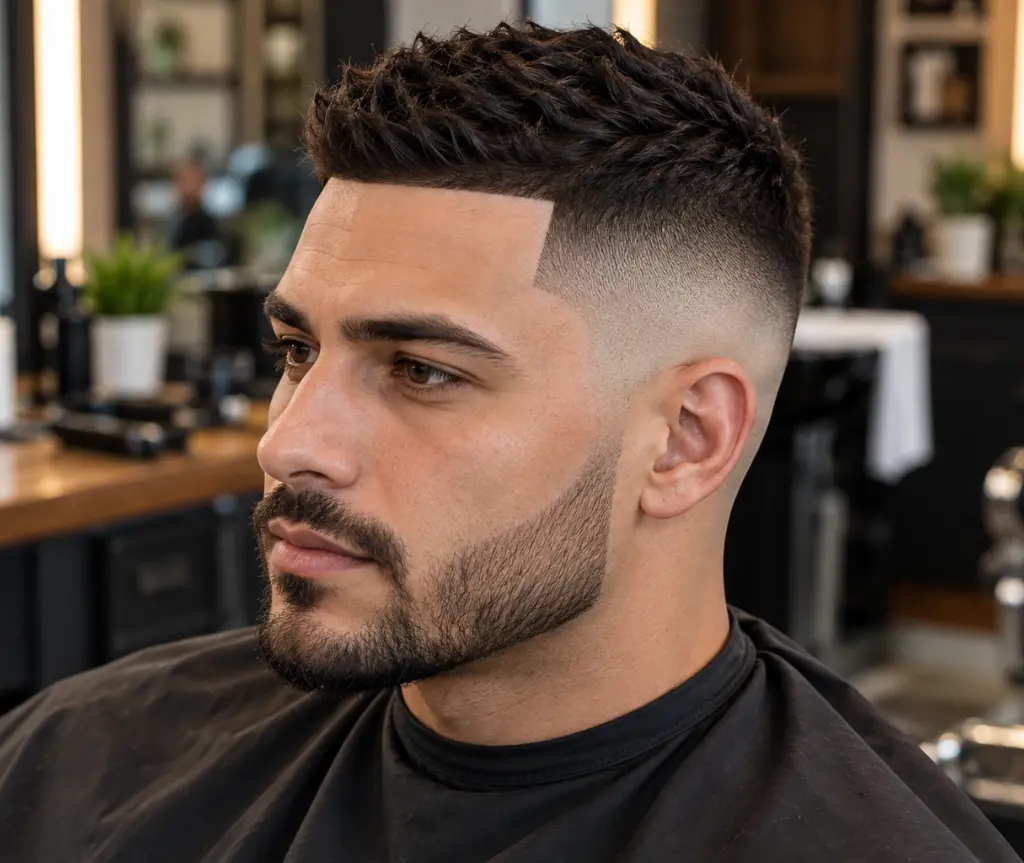
Adding a line-up to a bald fade undercut creates an exceptionally crisp frame around the hairstyle. The barber uses a trimmer to define the temples and front hairline with clean angles, emphasizing symmetry and structure. When combined with skin-faded sides, these sharp boundaries make the entire haircut appear freshly detailed. The upper hair can remain simple because the precision around the perimeter provides enough visual interest to make the haircut stand out.
Line-ups are particularly effective when the natural hairline is dense enough to create visible definition. However, a skilled barber should avoid pushing the line unnecessarily far backward simply to achieve perfect symmetry. Keeping the edge close to natural growth typically produces a more sustainable result. Whether the top is buzzed, textured, curled, or brushed forward, the defined border complements the bald fade and reinforces the haircut’s polished, masculine appearance.
20. Bald Fade Undercut With Beard Fade
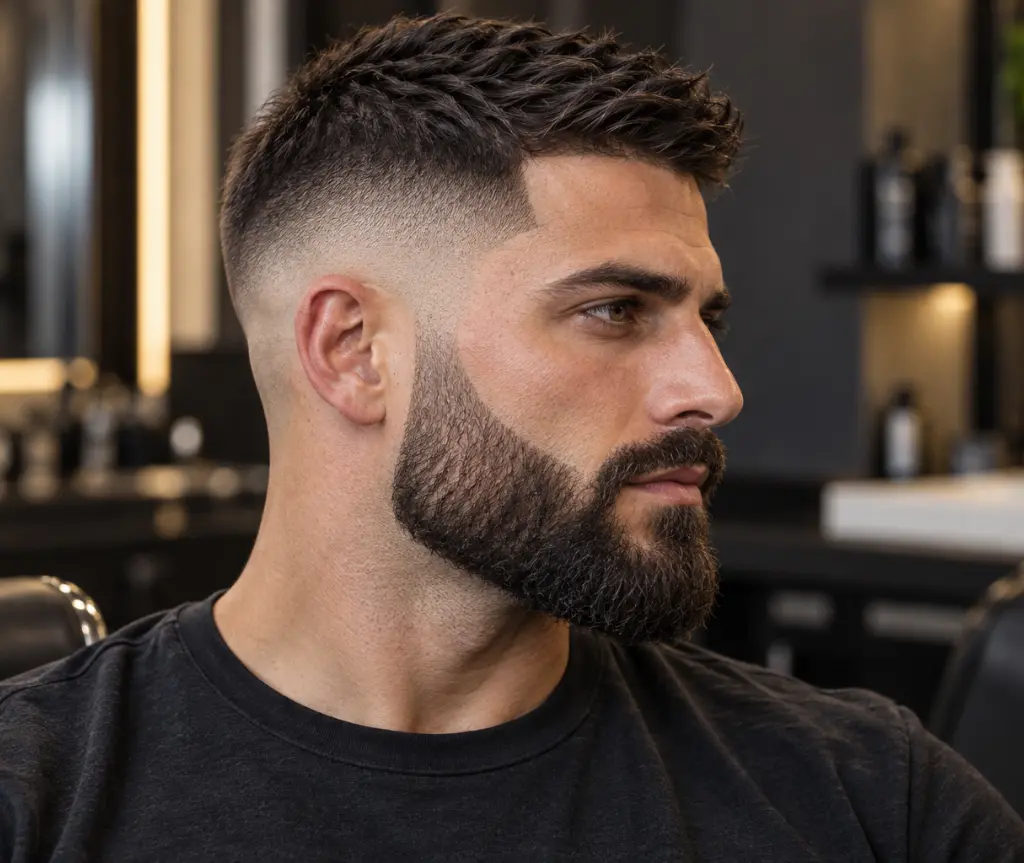
A bald fade undercut with a beard fade creates continuity between the haircut and facial hair. Instead of allowing the beard to begin at full density directly beside the shaved temple, the barber gradually increases its thickness through the sideburn area. This mirrors the gradient of the scalp fade and creates a smooth transition from clean skin into facial hair. The technique is especially effective for men with medium or full beards who want the entire grooming style to appear deliberately connected.
The beard itself should complement the proportions of the haircut. A shorter beard creates a sharp athletic look, while a fuller beard can add weight around the lower face and balance highly exposed sides. Maintaining clean cheek and neckline boundaries prevents the facial hair from competing with the precision of the bald fade. Together, the undercut, skin transition, and beard blend create a comprehensive modern grooming style rather than making the haircut and facial hair appear like unrelated elements.
21. Platinum Blonde Bald Fade Undercut
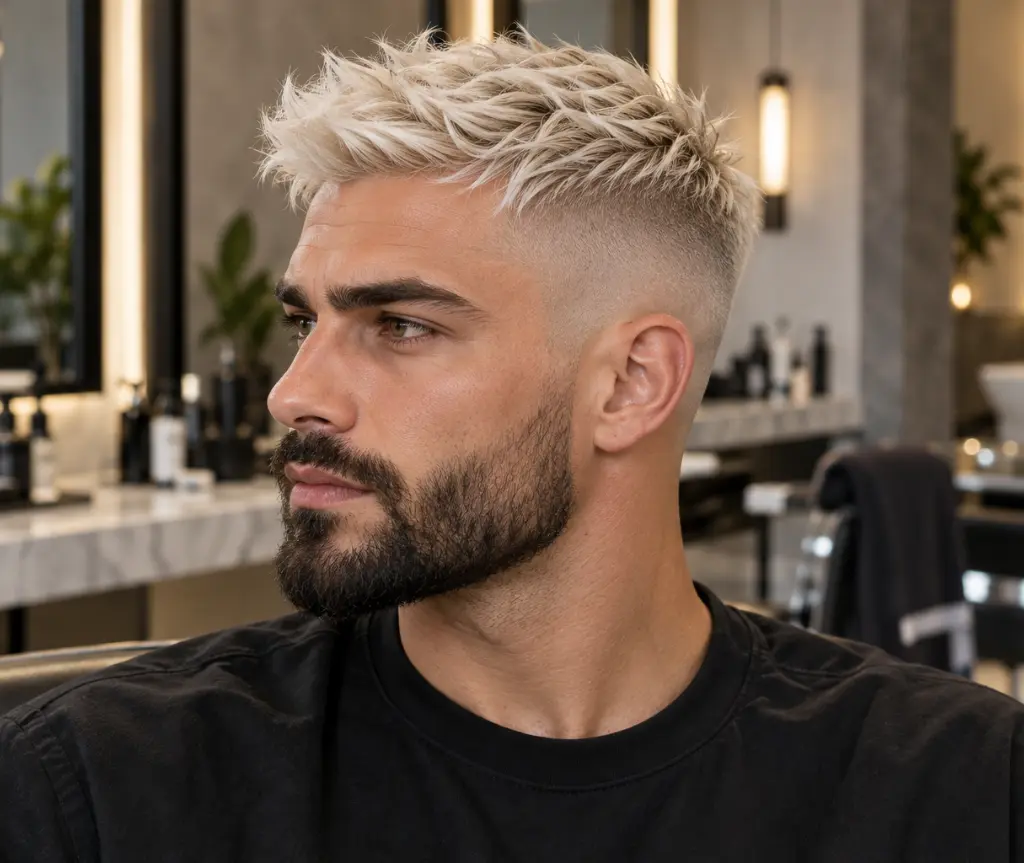
A platinum blonde bald fade undercut adds striking color contrast to an already distinctive haircut. Light blonde or icy platinum hair on top stands out dramatically against darker roots, eyebrows, facial hair, and skin-faded sides. Because the sides are shaved extremely short, most of the color is concentrated across the upper section, making the transformation visually impactful without requiring the entire head to remain bleached. The result has a fashion-forward character that suits men who enjoy experimental grooming.
Bleached hair requires additional care because chemical lightening can reduce moisture and increase brittleness. Purple shampoo can help neutralize unwanted yellow tones, while conditioning products keep the short strands softer and more manageable. Styling should generally remain textured so the variations within the light hair catch the light. When combined with a clean bald fade and darker beard, platinum hair produces one of the highest-contrast variations of the modern short undercut.
22. Salt-and-Pepper Bald Fade Undercut
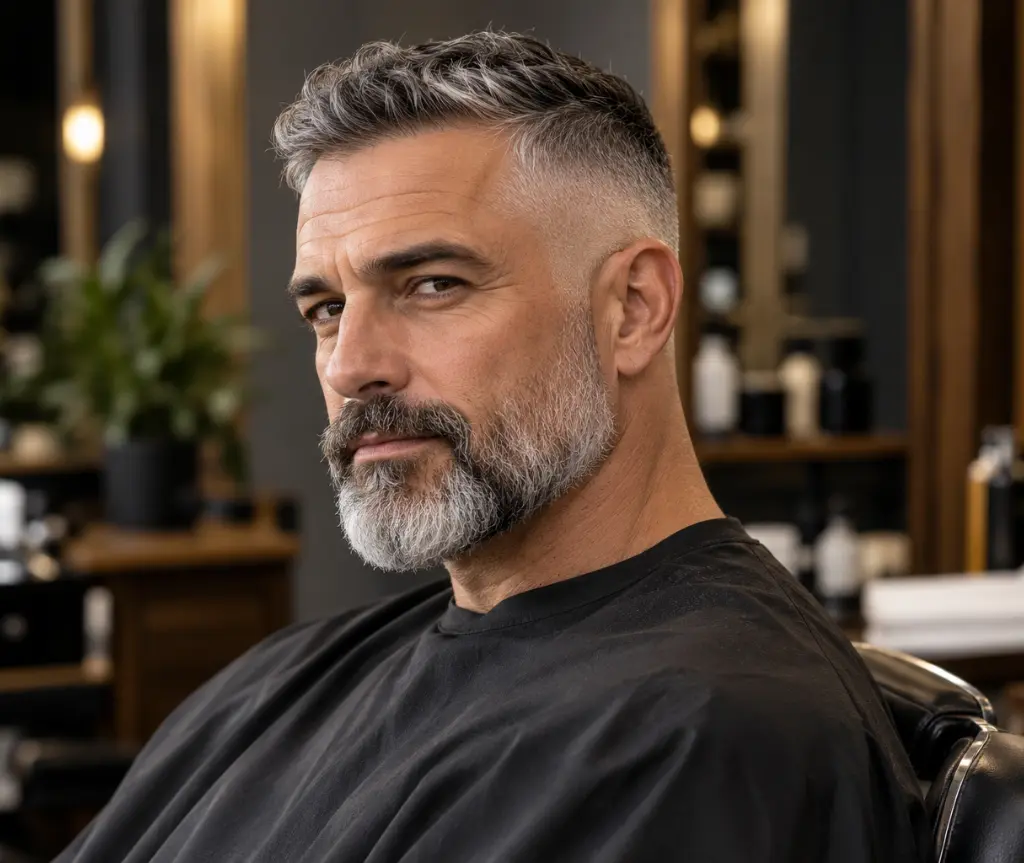
The salt-and-pepper bald fade undercut demonstrates that contemporary skin fades work exceptionally well with naturally graying hair. Silver and darker strands create multidimensional texture across the short top, while faded sides maintain a crisp modern outline. Rather than concealing gray hair, this haircut uses the color variation as an intentional feature. Mature men can therefore maintain a sophisticated appearance while still embracing current barbering techniques instead of relying exclusively on traditional conservative cuts.
Texture becomes especially valuable because separated strands make natural silver tones more visible. A matte styling cream can provide control without producing excessive shine, while a short beard with matching gray variation can create a cohesive appearance. Keeping the temples, neckline, and fade transition clean prevents the style from appearing overgrown. The contrast between naturally mature hair color and a youthful bald fade creates a distinguished look that feels confident rather than overly trend-driven.
23. Bald Fade Undercut for Straight Hair
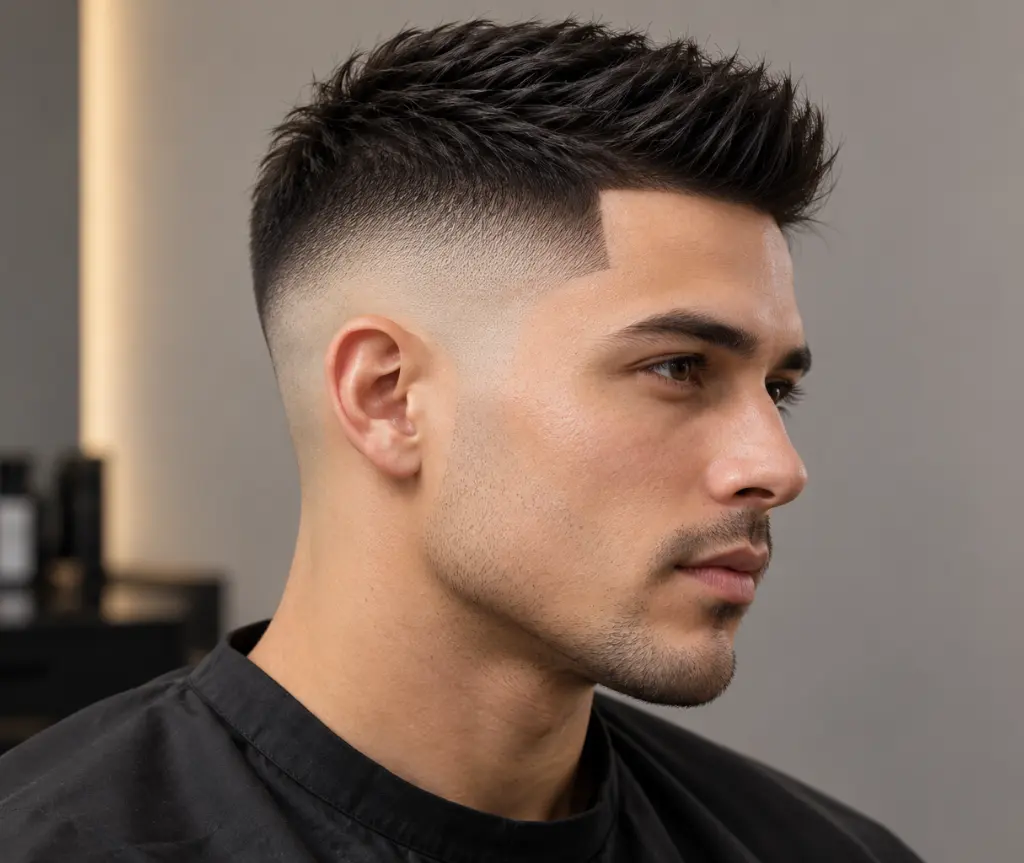
A short bald fade undercut for straight hair takes advantage of naturally smooth strands to create crisp direction and clean separation. Straight hair can be styled forward, sideways, upward, or backward with relatively predictable results, making this haircut exceptionally versatile. The bald sides eliminate bulk and create a sharp contrast against the uniform texture above. Depending on the cut, the top can appear sleek and polished or choppy and highly textured, giving men several styling possibilities from one basic haircut.
For a natural everyday look, matte clay can add grip and prevent straight strands from falling completely flat. Blow-drying the roots upward can provide additional lift when needed. Men with very thick straight hair may benefit from internal texturizing to reduce weight, whereas finer hair should generally retain more density. By adjusting the layering and styling products to suit individual thickness, a barber can customize the bald fade undercut without changing its fundamental clean-lined structure.
24. Bald Fade Undercut for Thick Hair
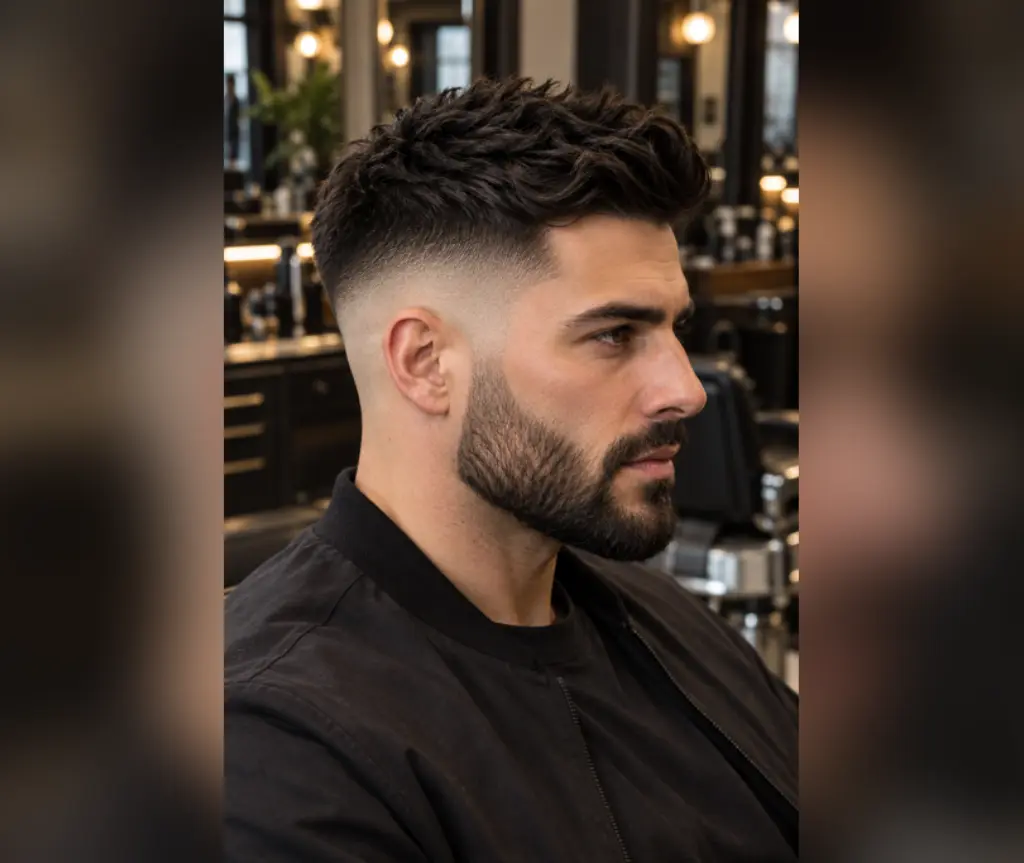
Men with dense hair can use a bald fade undercut for thick hair to remove considerable weight from the sides while keeping enough fullness on top to create texture. Thick hair sometimes expands around the temples and above the ears, producing an overly wide silhouette as it grows. Taking these areas down to skin immediately solves that problem and redirects visual volume toward the crown. The upper section can then be layered or texturized to make naturally heavy strands easier to control.
Strong hair density also gives men freedom to experiment with brushed-up, spiky, messy, or short quiff styling. Matte clay usually provides enough hold to maintain definition without making thick strands appear greasy. Blow-drying can further control the direction before finishing products are applied. Since the contrast between dense top hair and bare sides can be dramatic, a gradual fade transition is important. Skilled blending prevents the haircut from looking disconnected while preserving the bold undercut effect.
25. Bald Fade Undercut for Fine Hair
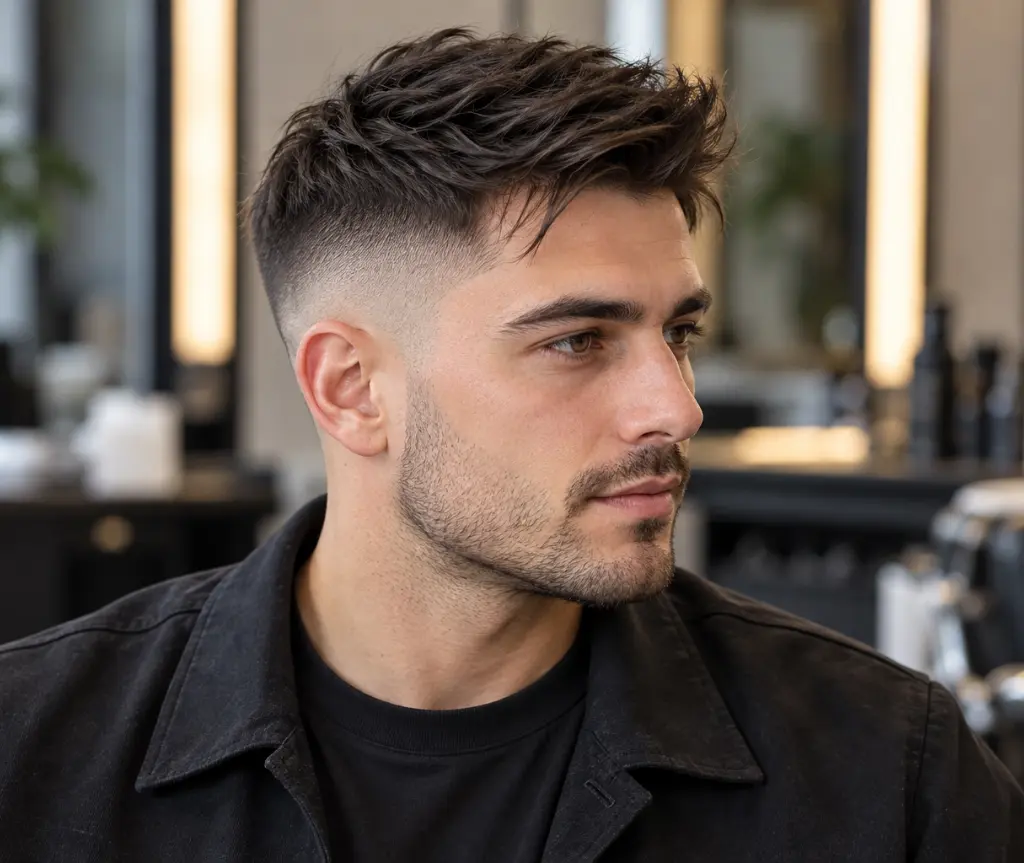
A bald fade undercut for fine hair can make the upper section appear fuller by eliminating competing density around the sides. When the sides are taken extremely short, even modest volume on top becomes more noticeable. The barber should avoid excessive thinning because fine strands need as much natural density as possible. Instead, subtle layering and careful length distribution can encourage lift and texture, helping the hairstyle appear thicker without relying on an unrealistic amount of styling product.
Lightweight products are essential for fine hair because heavy waxes and wet pomades can collapse volume. Texture powder, volumizing spray, or a small amount of matte paste can create grip while maintaining movement. Blow-drying the roots upward before styling can also improve fullness. A mid or high bald fade generally strengthens the visual contrast, drawing attention toward the top. This strategic approach demonstrates how barbering proportions can enhance the appearance of relatively fine short hair.
26. Bald Fade Undercut With Short Fringe
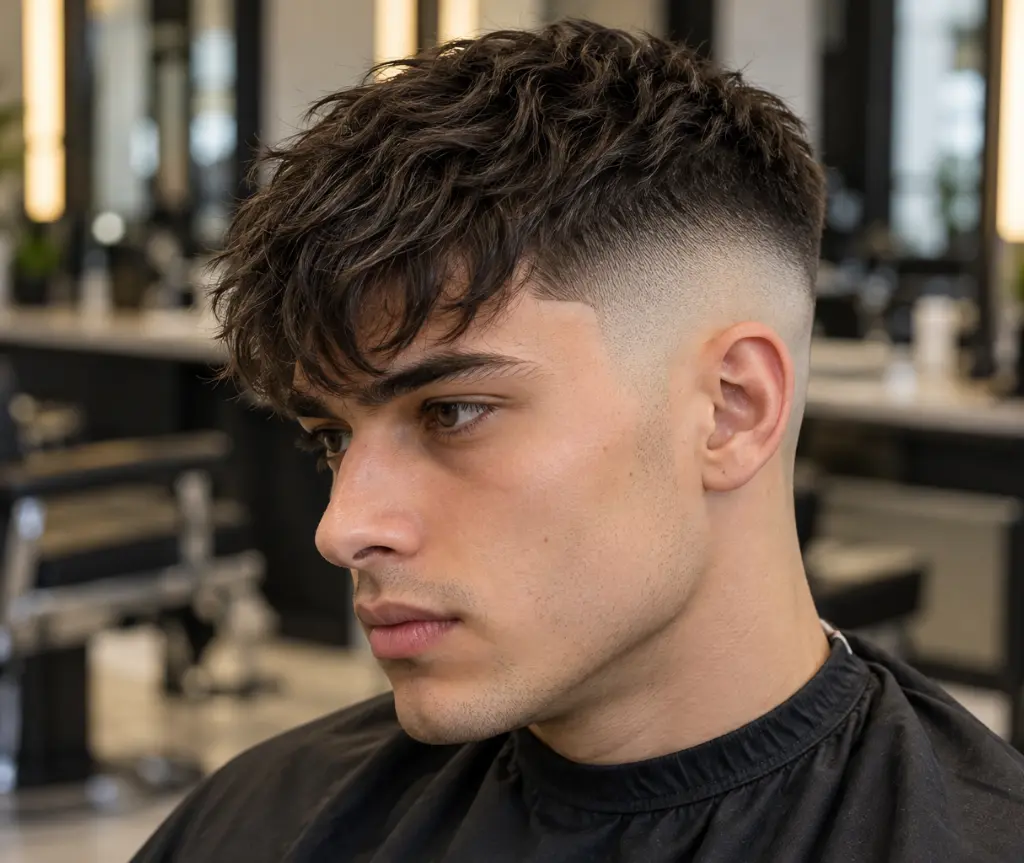
A bald fade undercut with a short fringe directs attention toward the front of the haircut while maintaining minimal length overall. The fringe can sit naturally across the forehead or be slightly broken into textured sections for a softer finish. Removing the sides to skin makes this relatively small styling detail much more noticeable. The haircut is useful for men who dislike exposing their entire forehead but still want the sharp, contemporary appearance associated with modern skin fades.
The fringe should be proportioned carefully according to face shape and hair growth. A very heavy fringe can overpower a short haircut, whereas light texturing allows it to move naturally. Matte styling cream helps maintain separation without making the front appear stiff. This version can also accommodate straight or slightly wavy textures because the fringe does not need perfect uniformity. Combined with crisp temples and a smoothly graduated fade, it offers an approachable alternative to high-volume undercut styles.
27. Drop Bald Fade Undercut
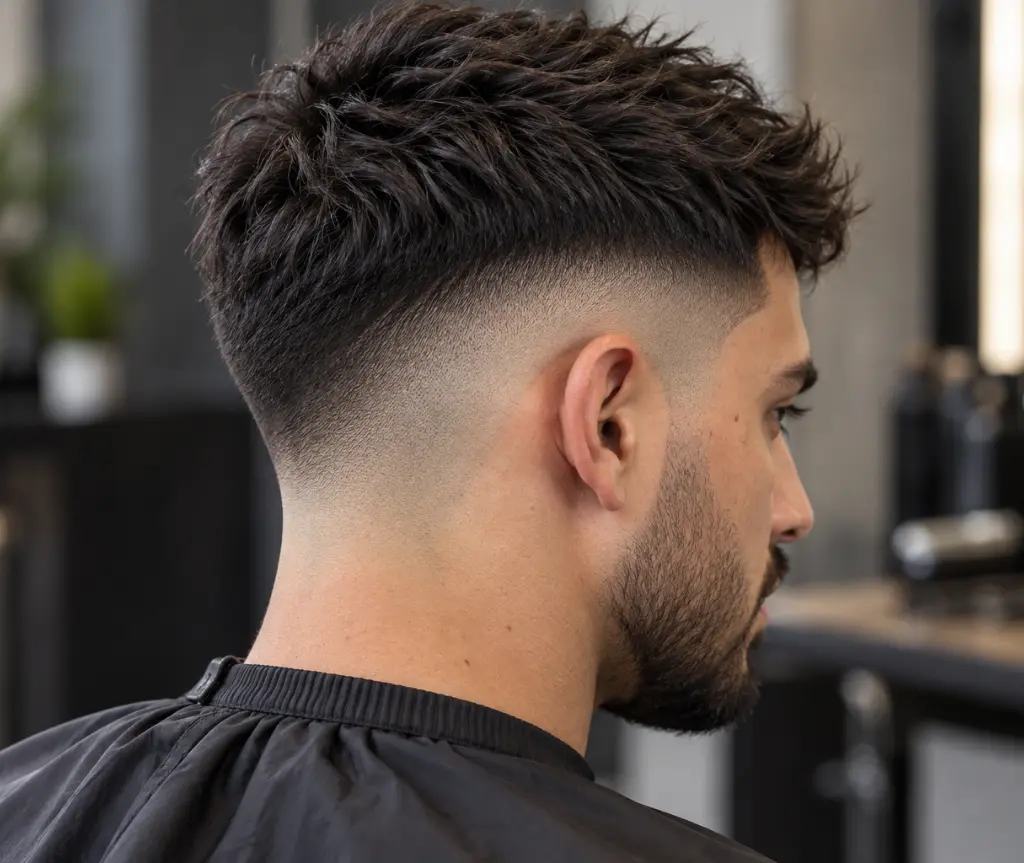
A drop bald fade undercut follows the natural curvature of the head by descending lower behind the ears rather than maintaining a straight horizontal fade line. This curved transition creates extra shape around the back of the skull and can make the haircut appear more customized. When paired with a short undercut top, the drop fade preserves bold contrast while introducing a smoother, anatomical silhouette. Side and rear angles become particularly attractive because the curved gradient remains clearly visible.
The top can be styled with texture, curls, waves, or a compact quiff depending on hair type. Because the fade design itself adds visual detail, complicated styling is not necessary. Asking the barber to maintain a clean gradient around the occipital area is important, since poor blending becomes particularly noticeable on a curved fade. A neat neckline completes the look. For men who want something more distinctive than a standard mid fade without adding shaved designs, this is an excellent option.
28. Bald Fade Undercut With Razor Design
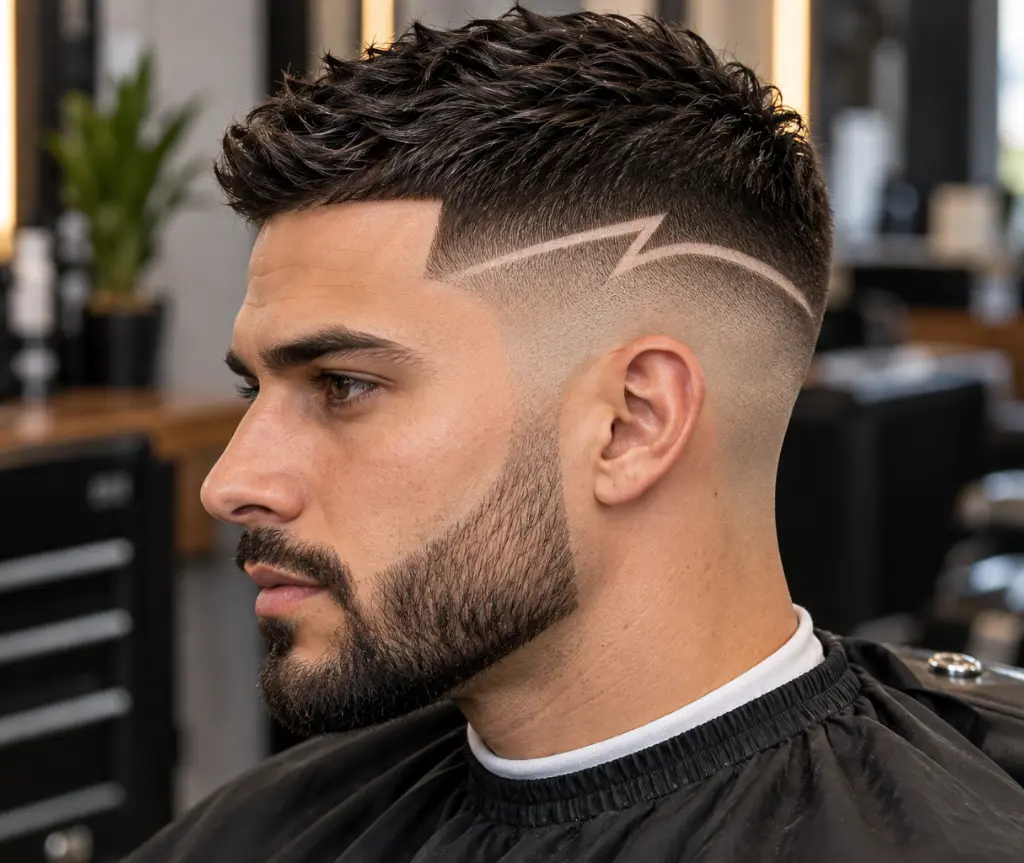
A bald fade undercut with a razor design transforms a clean haircut into a personalized statement. Simple shaved lines, geometric shapes, or curved details can be placed within the short transition area, adding visual interest without changing the structure of the top. Because bald fades provide a clean canvas, even a relatively minimal design becomes highly visible. This variation is particularly popular among men who want creative barbering and are comfortable wearing a hairstyle that attracts more attention.
Design placement matters because the artwork should complement the natural contours of the head rather than fight against them. A single line can create a subtle accent, while multiple shapes produce a more dramatic result. Since razor patterns disappear as hair grows, the design is temporary and can be changed during future barber appointments. Keeping the top relatively simple allows the shaved detail to remain the focal point, creating a balanced rather than visually overcrowded hairstyle.
29. Disconnected Bald Fade Undercut
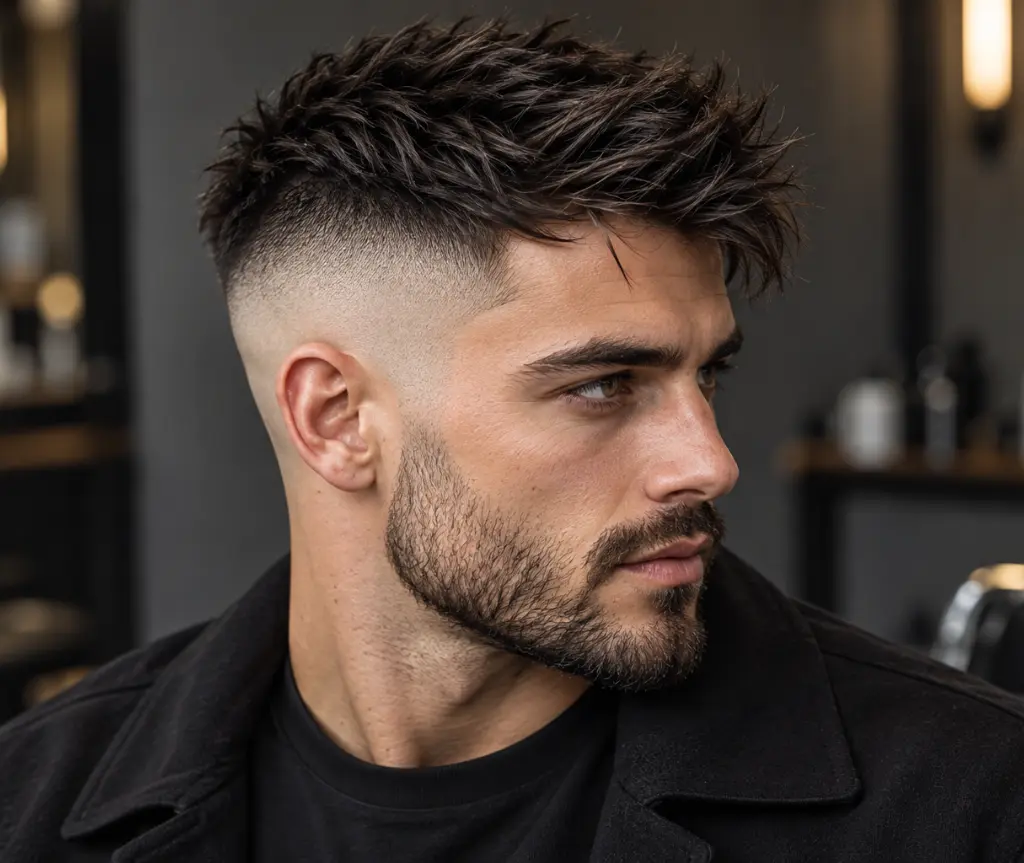
The disconnected bald fade undercut intentionally creates a stronger boundary between the longer top and extremely short sides. Rather than blending the upper hair seamlessly into the fade, the barber preserves a noticeable difference in length. This produces the bold silhouette historically associated with undercuts while adding the smooth skin gradient of contemporary fade techniques. The result works particularly well for men with thick hair because natural density makes the contrast more visible and structurally impressive.
Styling can emphasize the disconnection even further. Sweep the top backward, lift it into a short quiff, or add messy texture while keeping the sides completely controlled. A matte finish creates a relaxed modern look, whereas pomade makes the separation appear more formal and deliberate. Because the transition is intentionally stronger than in a conventional fade, careful barbering is necessary to ensure it appears purposeful rather than unfinished. Regular maintenance also keeps the contrast clearly visible.
30. Bald Fade Undercut With Mini Pompadour
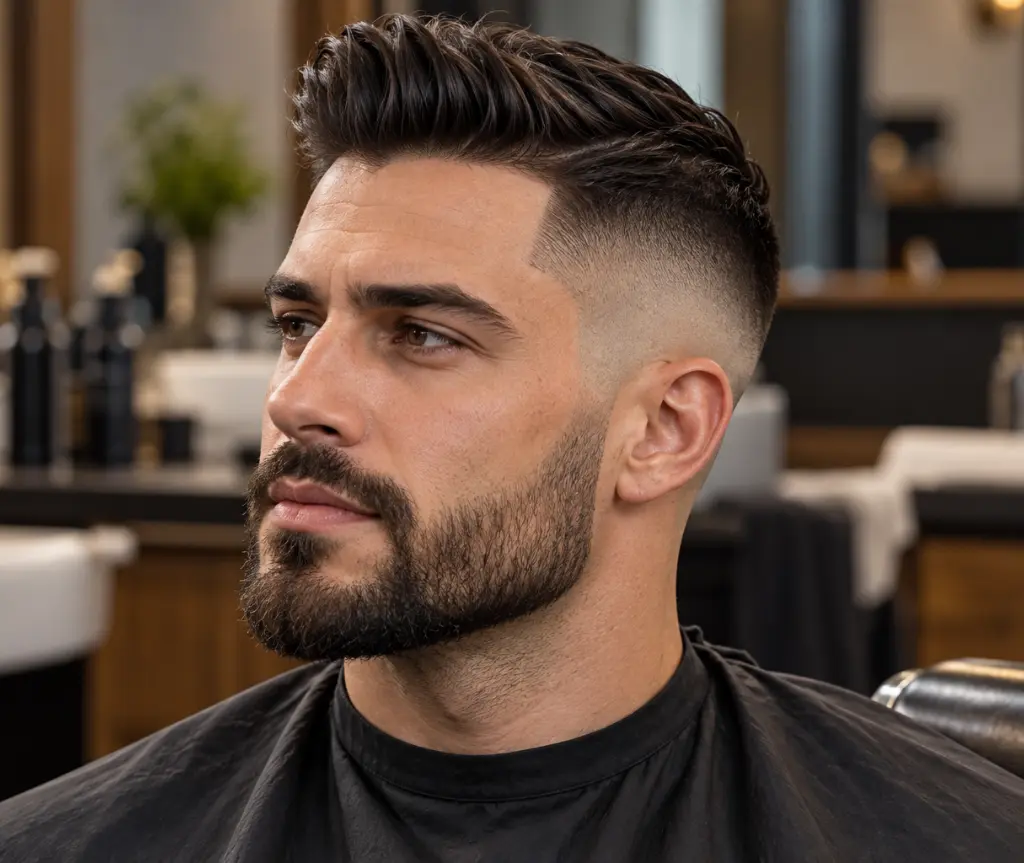
A mini pompadour bald fade undercut offers the recognizable height and backward sweep of a pompadour without requiring long, high-maintenance hair. The front is left slightly longer and lifted away from the forehead, while the remainder of the top gradually becomes shorter. Skin-faded sides amplify this modest elevation, making the hairstyle appear more dramatic than its actual length suggests. It is an excellent compromise for men who appreciate classic rockabilly-inspired styling but prefer modern proportions.
To create the mini pompadour, blow-dry damp hair upward and backward before applying a small amount of medium-hold product. Matte paste gives the style contemporary texture, while pomade creates a smoother traditional finish. Avoid excessive height because maintaining compact proportions is what distinguishes this variation from a full pompadour. The clean bald fade keeps the silhouette narrow around the sides and places visual emphasis on the controlled front volume.
31. Bald Fade Undercut With Natural Texture
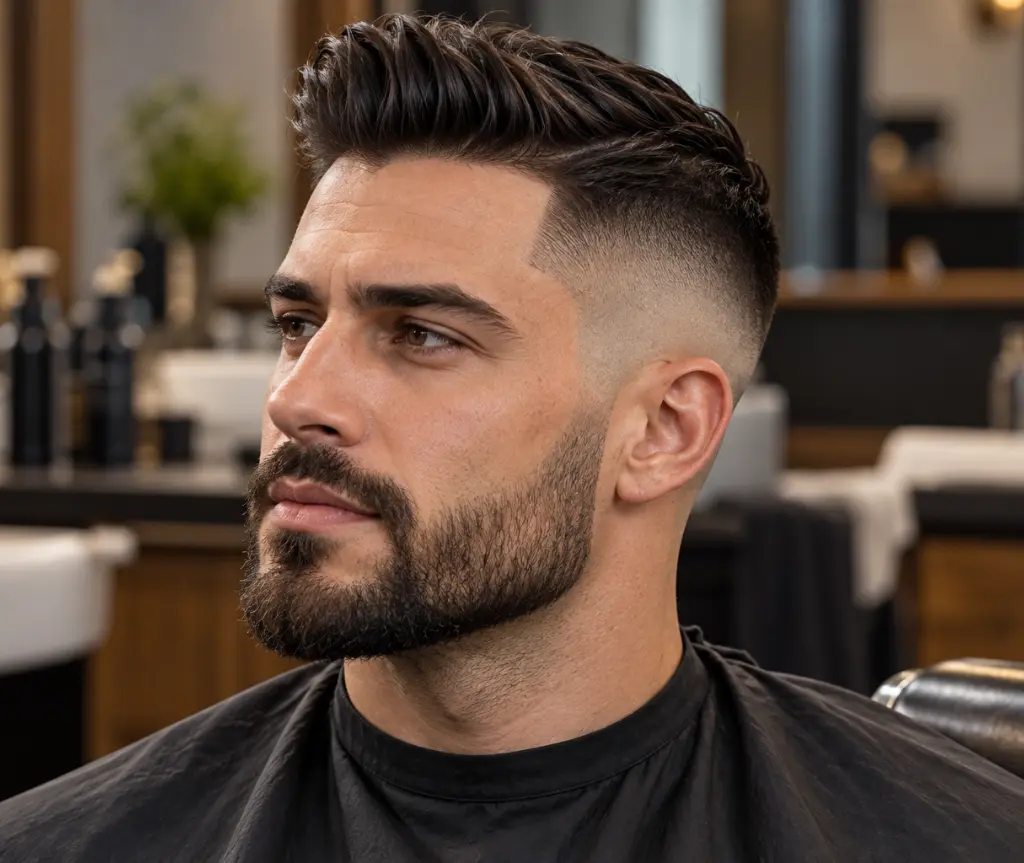
The natural-texture bald fade undercut is ideal for men who want a modern haircut without making their hair look excessively styled. Instead of forcing the upper section into a rigid direction, the barber works with its existing growth pattern, bends, waves, or subtle irregularities. The bald fade provides the necessary precision around the sides while the top remains relaxed. This contrast between structured barbering and natural movement produces an effortlessly contemporary finish suitable for many hair types.
Daily styling can remain extremely simple. After washing, allow the hair to partially air-dry or use a blow dryer at low intensity, then work a small amount of lightweight matte cream through the top. The objective is definition rather than transformation. Regularly refreshing the fade keeps the relaxed upper texture from making the overall haircut appear untidy. For men seeking a versatile balance of comfort, masculinity, low maintenance, and modern barber aesthetics, this variation is an excellent final choice.
Image Prompt: Natural-looking modern man with short bald fade undercut, relaxed naturally textured dark hair on top, subtle movement and separation, seamless skin fade around sides, clean but not overly styled finish, realistic masculine features, premium natural-light barbershop photography, 1024 x 683, vertical composition.
How to Choose the Best Short Bald Fade Undercut
Choosing the right short bald fade undercut for men depends on hair texture, face shape, lifestyle, and the amount of styling you are comfortable doing every morning. High bald fades create stronger contrast and can visually emphasize height, while low fades provide a more conservative transition. Mid fades offer a versatile balance between the two. Straight hair works particularly well with side parts, crops, quiffs, and brushed-up styles, while naturally curly or wavy textures can become the focal point when surrounded by clean skin-faded sides.
Consider maintenance before choosing your haircut as well. A bald fade looks sharpest when the skin transition and edges remain fresh, so regular barber visits are usually necessary. If you prefer minimal daily styling, consider a buzz cut, crew cut, Caesar, or natural-texture version. Men willing to spend several minutes with a blow dryer and styling product can experiment with quiffs, mini pompadours, brushed-up tops, and slicked-back finishes.
How to Maintain a Bald Fade Undercut
A bald fade undercut requires relatively little daily work, but maintaining its sharp appearance depends heavily on regular trimming. Skin fades reveal regrowth quickly because the shortest areas begin at bare skin. Many men refresh the fade every few weeks, although the ideal schedule depends on hair growth speed and how crisp you want the haircut to remain. Between appointments, keeping the scalp clean and using suitable shampoo can help maintain a neat, healthy appearance.
The top should be maintained according to hair texture. Matte clay and paste are useful for textured short hairstyles, pomade works well for slicked and side-parted looks, and curl creams can enhance natural curls. Avoid using more product than necessary because heavy buildup can flatten short hair and reduce definition. A consistent routine involving appropriate cleansing, light styling, and professional barber maintenance will keep the haircut looking intentional rather than overgrown.
Conclusion
The 31 short bald fade undercut ideas for modern men show how versatile one basic barbering concept can become. From classic crew cuts, buzz cuts, French crops, and side parts to curly tops, mini pompadours, razor designs, platinum hair, and beard fades, there is a variation for almost every personal style. The defining feature remains the contrast between closely skin-faded sides and a short but visibly structured upper section.
For the best result, take a reference image to your barber and discuss your hair density, texture, growth pattern, face shape, preferred fade height, and daily styling routine before the cut begins. A well-executed short bald fade undercut should not simply follow a trend—it should adapt that trend to your natural features. With the right fade placement, top length, texture, and maintenance routine, this modern men’s haircut can remain sharp, versatile, and easy to personalize.