23 Sharp Short Haircuts for Men with Straight Hair

Straight hair gives men a major styling advantage because it naturally showcases clean lines, sharp fades, textured tops, neat side parts, and precise fringe work. The best short haircuts for men with straight hair use that smooth texture to create structure without demanding excessive styling time. From timeless crew cuts and buzz cuts to modern French crops, Ivy League cuts, short quiffs, and taper fades, straight hair can be shaped into polished hairstyles that suit professional, casual, athletic, and fashion-forward lifestyles.
The right haircut depends on several factors, including hair density, face shape, forehead height, natural growth direction, lifestyle, and preferred maintenance level. Fine straight hair often benefits from shorter cuts that create the appearance of thickness, while thick straight hair can be texturized to reduce bulk and improve movement. Whether you prefer a clean office-friendly style or something more edgy and contemporary, these 23 short straight hairstyles for men offer practical inspiration for a fresh barber appointment.
1. Classic Crew Cut
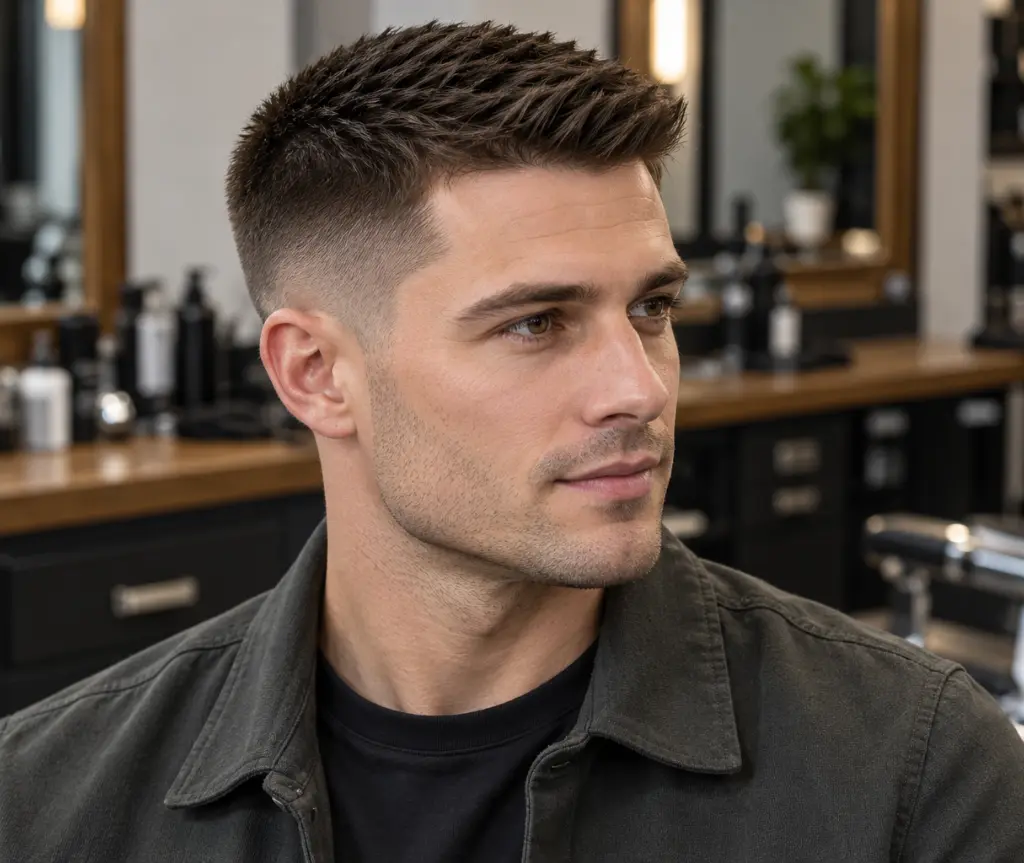
The classic crew cut for men with straight hair is one of the most reliable short hairstyles because straight strands naturally hold the clean shape of the haircut. The sides and back are kept short, while slightly more length remains through the top and front. This creates a subtle graduation that adds structure without making the hairstyle difficult to maintain. Men with straight hair often benefit from this shape because the crown stays neat and controlled even when no styling product is used.
The crew cut also works well across different face shapes because the top length can be adjusted according to facial proportions. Round faces may benefit from slightly more height at the front, while longer faces can keep the crown flatter for better balance. Matte clay or lightweight paste can be worked through the top for extra definition, though many men can simply towel-dry and go. Regular trims keep the sides tidy and preserve the classic masculine silhouette.
2. Buzz Cut
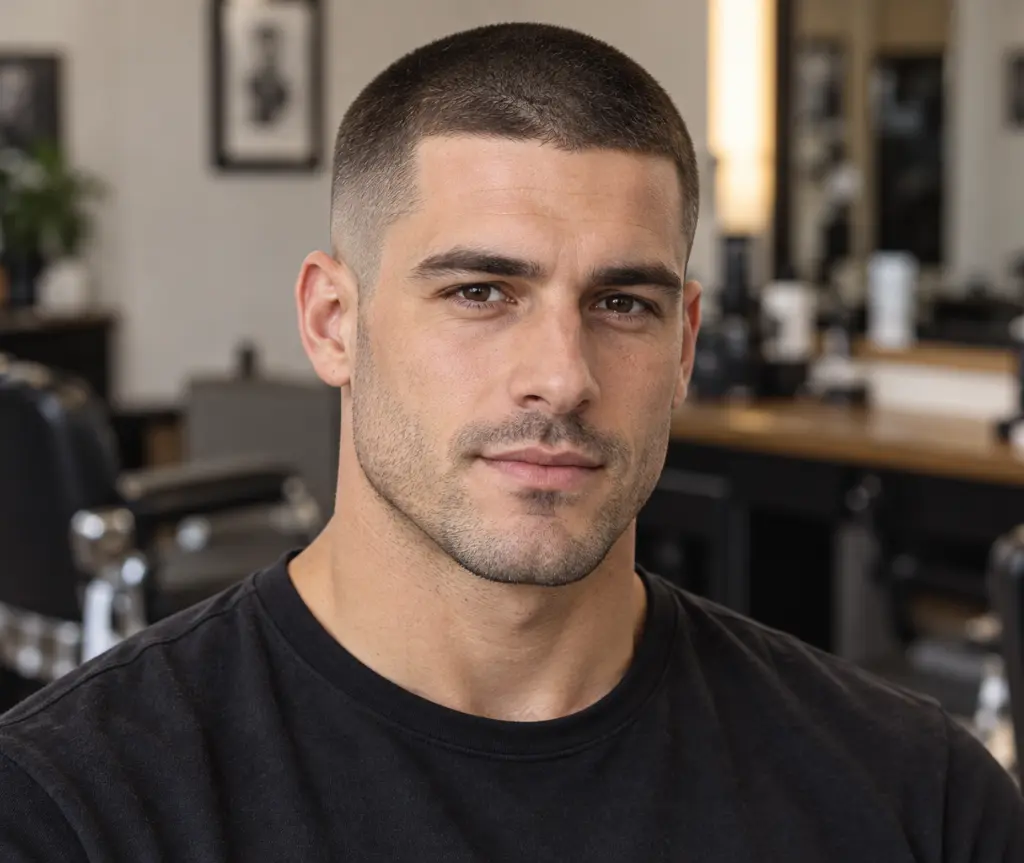
A buzz cut for men with straight hair is ideal for anyone who values simplicity, practicality, and a clean masculine appearance. The hair is clipped very short across the entire head, either at one consistent length or with subtle variation between the top and sides. Straight hair works particularly well with this haircut because the texture creates an even surface without requiring additional styling. The minimal length also highlights facial features, beard shape, brows, and jaw structure.
Daily maintenance is almost nonexistent beyond basic washing and scalp care. A crisp line-up around the temples and forehead can create a sharper appearance, while a light taper at the sides adds subtle refinement. Because the scalp is more exposed, sun protection becomes important during extended outdoor activity. Men with thick straight hair often achieve a particularly dense-looking finish, while men with finer hair appreciate how the cut reduces the contrast between fuller and thinner areas.
3. Textured Crop
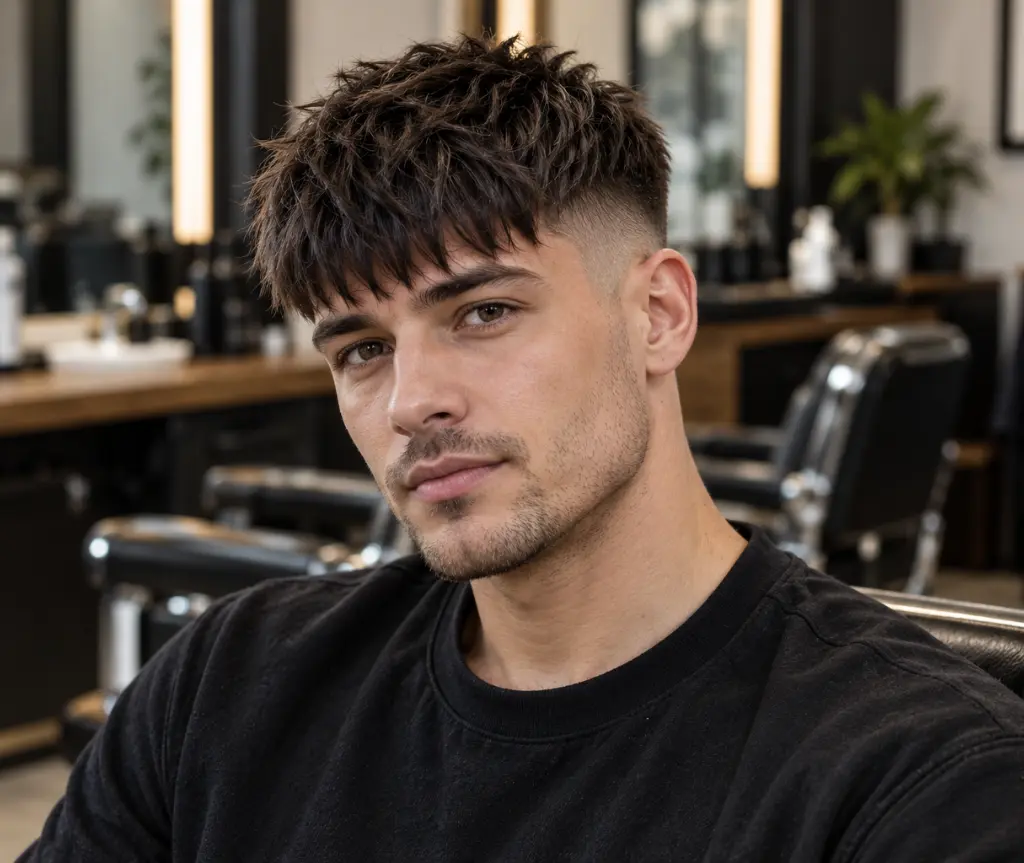
The textured crop for straight hair is a modern short haircut that adds dimension by introducing choppy, separated sections across the crown. Since straight hair can sometimes lie flat, texturizing helps create movement and prevents the style from looking overly smooth. The sides are usually tapered or faded while the top remains short enough to stay manageable. A short fringe may be pushed forward or slightly broken up for a more relaxed finish.
Styling a textured crop usually requires only a small amount of matte clay, paste, or texture powder. Product should be worked through the top with the fingers rather than combed into a perfectly uniform shape. Men with thick straight hair benefit from having some internal weight removed, while finer hair can gain the appearance of volume through separation. The haircut is especially effective for men who want a contemporary, low-maintenance style with a bit more personality than a basic crew cut.
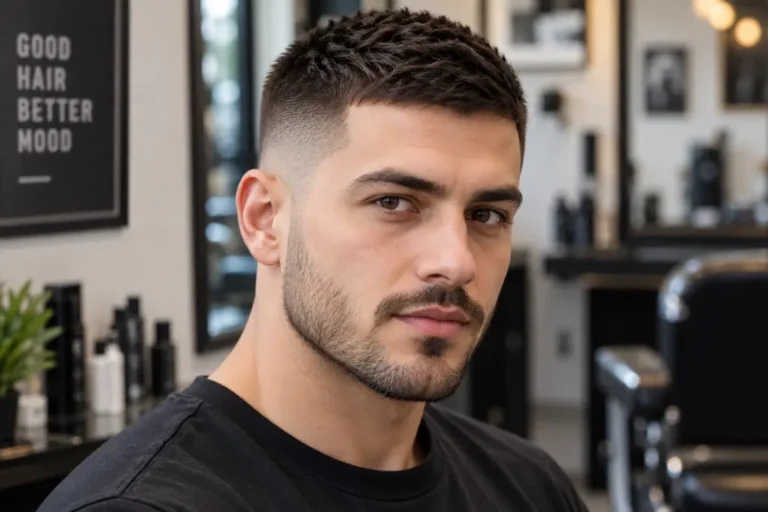
4. High Fade with Short Top
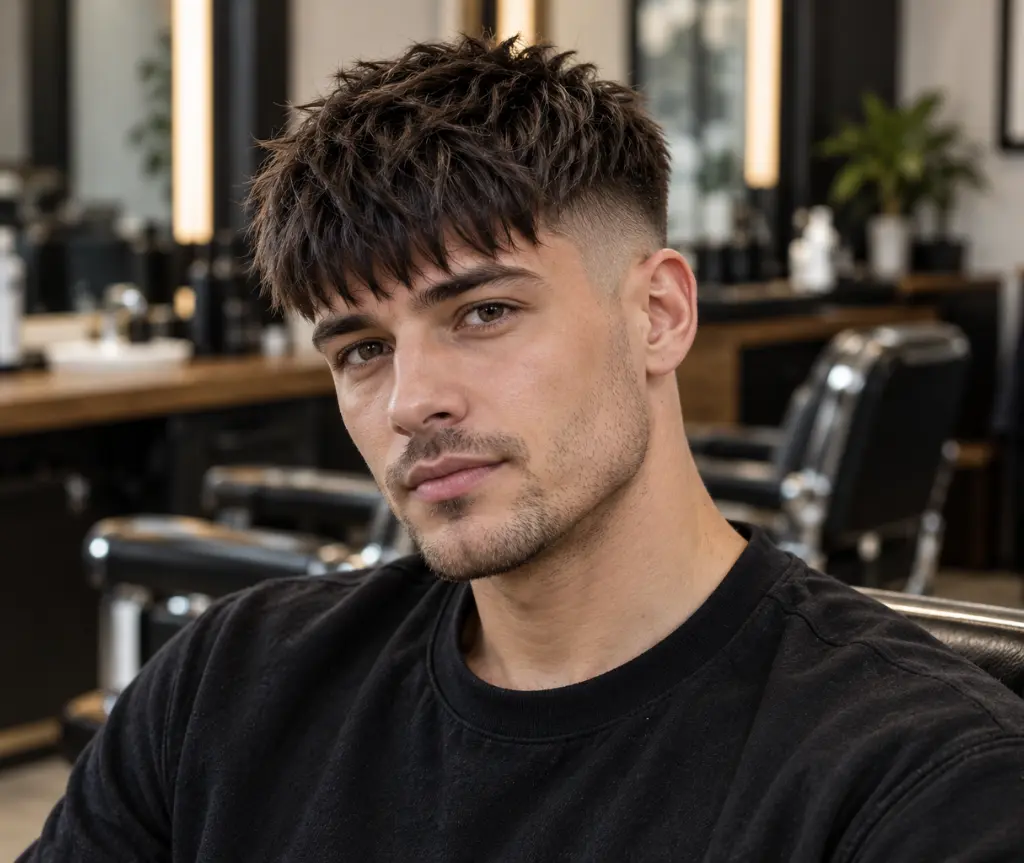
A high fade with a short top creates strong contrast by removing most of the side bulk while keeping the crown compact. The fade begins high around the temples and gradually blends upward into the short top. On straight hair, this creates exceptionally clean lines because the strands sit close to the head and show the transition clearly. The haircut can make the face appear more structured and is particularly popular among men who prefer crisp, modern grooming.
The top can be styled forward, brushed slightly upward, or left naturally flat depending on the desired look. Thick straight hair may only need a small amount of matte paste for control, while fine straight hair can benefit from light volumizing powder. The fade itself requires regular barber maintenance to remain sharp, but daily styling is minimal. This makes the haircut a strong option for men who want a bold appearance without committing to long hair or a complicated routine.
5. Short Side Part
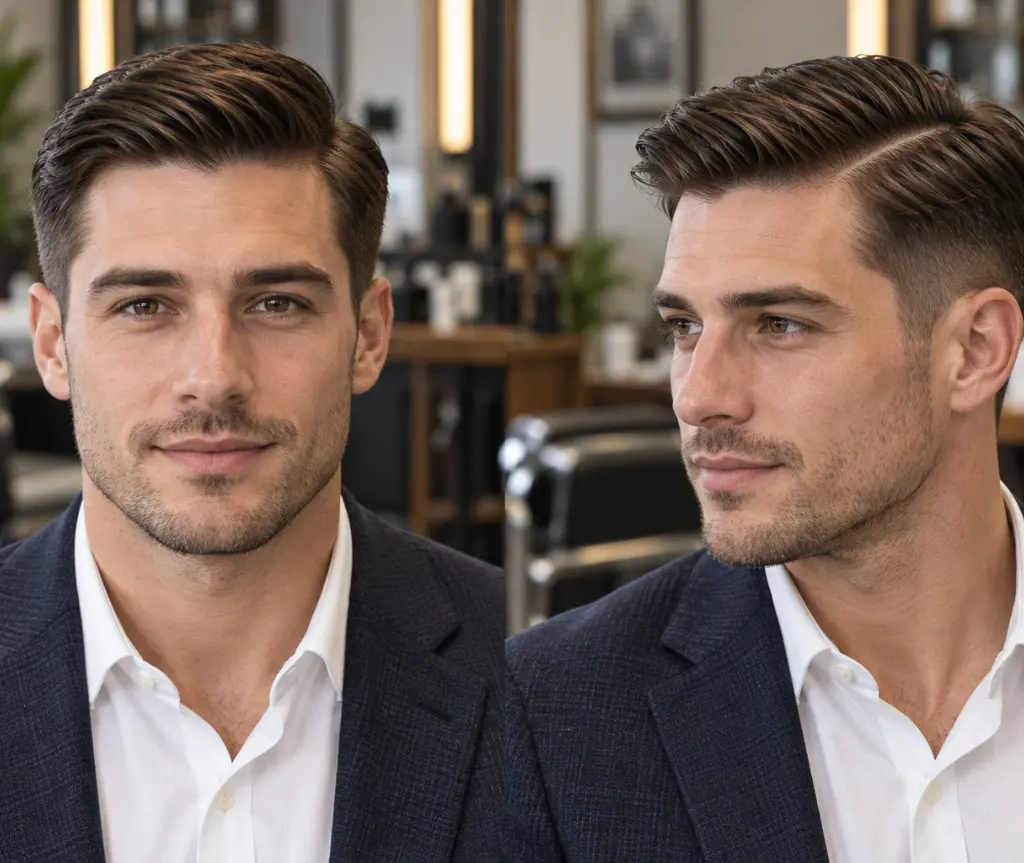
The short side-part haircut for men with straight hair is a timeless option that combines structure with a professional finish. The sides are kept relatively short while slightly more length is left on top so the hair can be directed neatly to one side. Straight hair naturally emphasizes the clean separation created by the part, making the style look polished even with minimal product. It works especially well in offices, formal settings, and occasions where a refined appearance is preferred.
The part can be subtle and natural or more defined by the barber depending on personal taste. Lightweight styling cream gives a softer finish, while pomade can create stronger control and shine. Men with fine straight hair may benefit from a slightly deeper side part because moving the hair away from its usual position can create extra root lift. Overall, the short side part is dependable, elegant, and easy to adapt to different face shapes and lifestyles.
6. Short Quiff
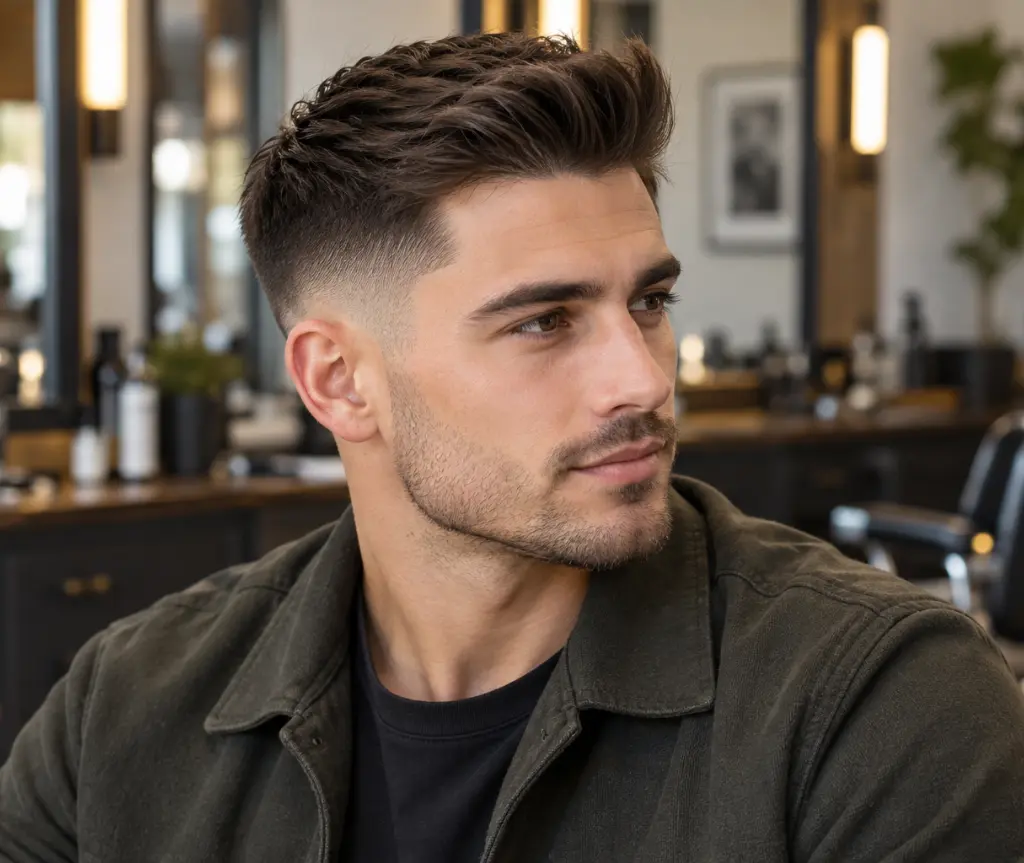
A short quiff for straight hair adds height at the front while keeping the rest of the haircut compact and manageable. The sides can be faded, tapered, or kept relatively short, while the front section retains enough length to be lifted upward and slightly backward. Straight hair works particularly well with this style because the strands can be directed cleanly and usually hold shape more easily than highly curly textures.
A lightweight blow-dry can establish the basic direction, while matte clay or paste adds support. The goal is to create natural lift rather than a rigid wall of hair. Men with thick straight hair can often achieve the quiff with minimal product, while finer hair may benefit from volumizing mousse or texture powder. The short quiff adds personality without becoming overly dramatic, making it suitable for both casual and professional wear.
7. French Crop
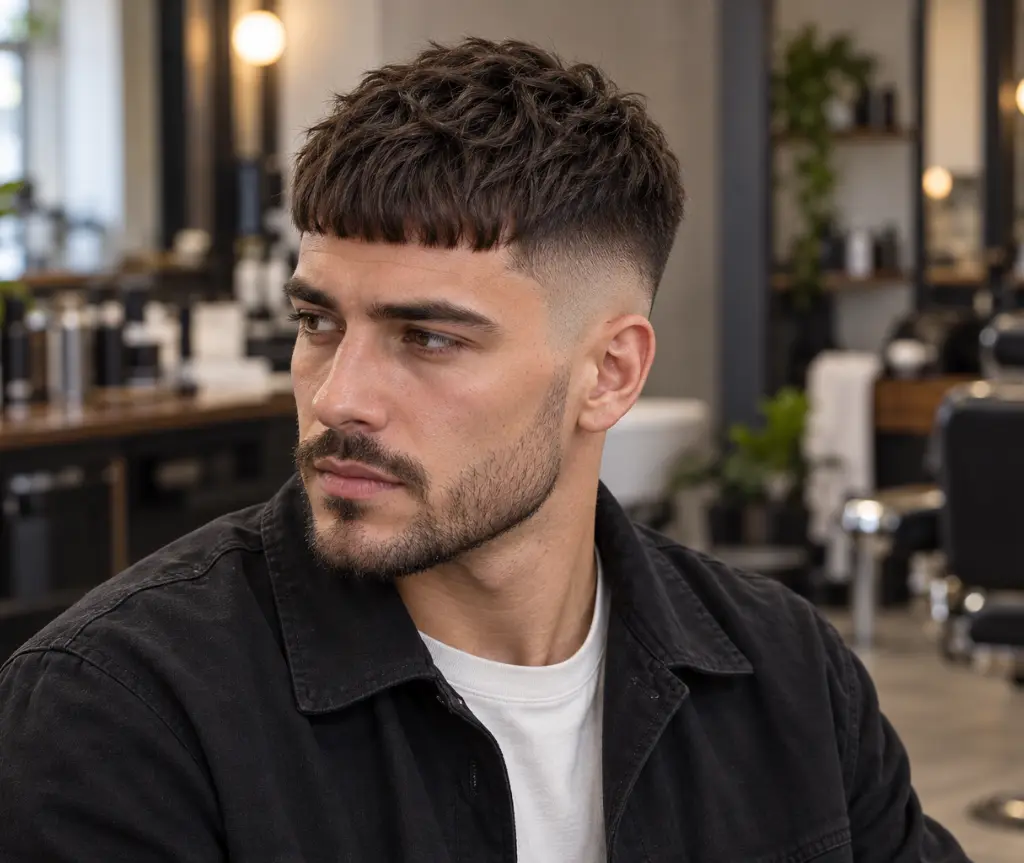
The French crop for men with straight hair is defined by a short textured top and a compact fringe directed forward. The sides are usually faded or tapered, while the crown remains controlled and easy to style. Straight hair naturally falls toward the forehead, making this haircut especially practical for men whose hair growth pattern already moves forward. The fringe may be blunt for a sharper appearance or lightly textured for a softer, more contemporary finish.
One reason the French crop is so popular is that it looks intentional without requiring daily blow-drying. A small amount of matte clay or texture paste can be worked through the crown to create separation, while the fringe can be arranged with the fingers. Thick straight hair can be texturized to reduce bulk, and fine hair can benefit from the short length because it creates a stronger overall shape. This haircut offers modern style with very little daily effort.
8. Ivy League Haircut
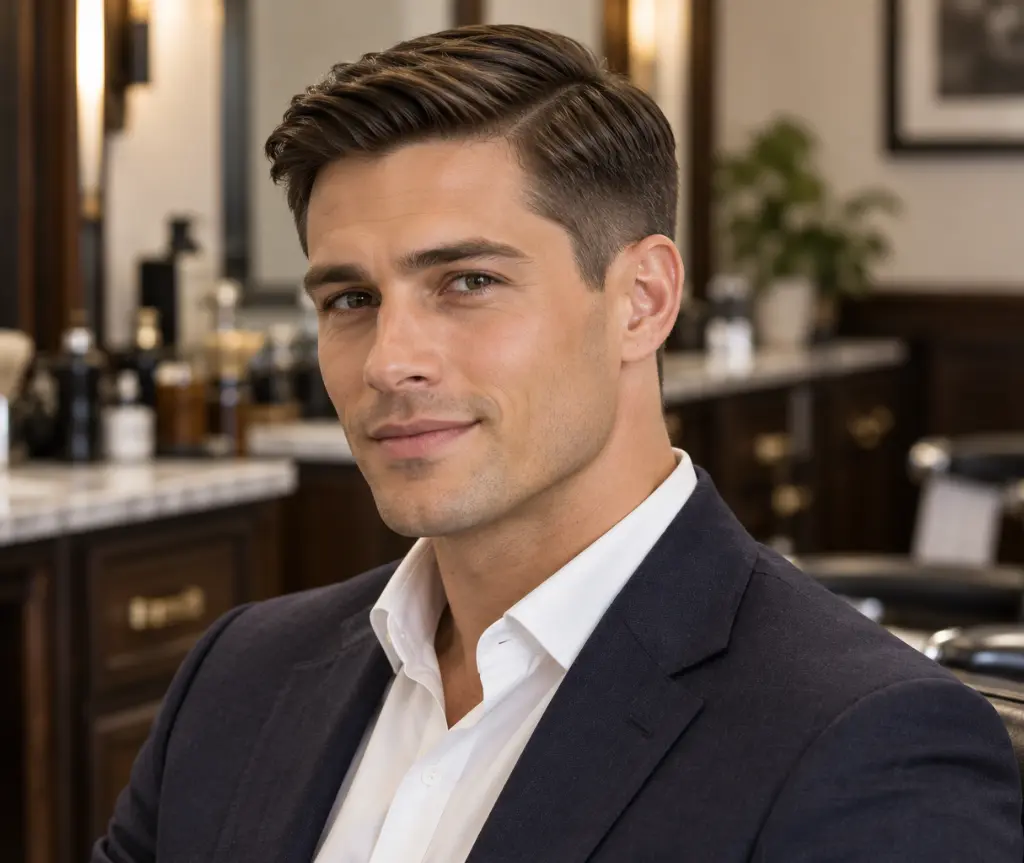
The Ivy League haircut is a refined variation of the crew cut that leaves slightly more length through the top and front. This extra length allows straight hair to be brushed to the side, softly parted, or styled upward without losing the convenience of a short haircut. The sides remain neatly tapered, giving the hairstyle a polished, professional quality. It works especially well for men who want a versatile cut that can transition easily between business and casual settings.
Straight hair is particularly well suited to the Ivy League because the smooth texture emphasizes the clean direction of the styling. Lightweight cream or matte paste can provide enough control for the front without making the hair look greasy. A subtle taper around the temples and neckline helps the haircut grow out naturally between appointments. The result is classic, masculine, and adaptable enough to suit many different face shapes and personal styles.
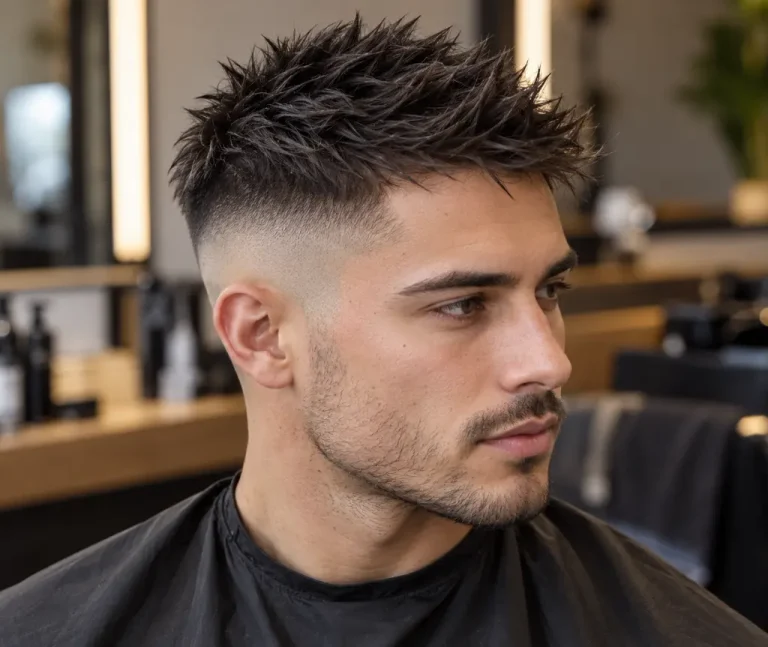
9. Short Spiky Hair
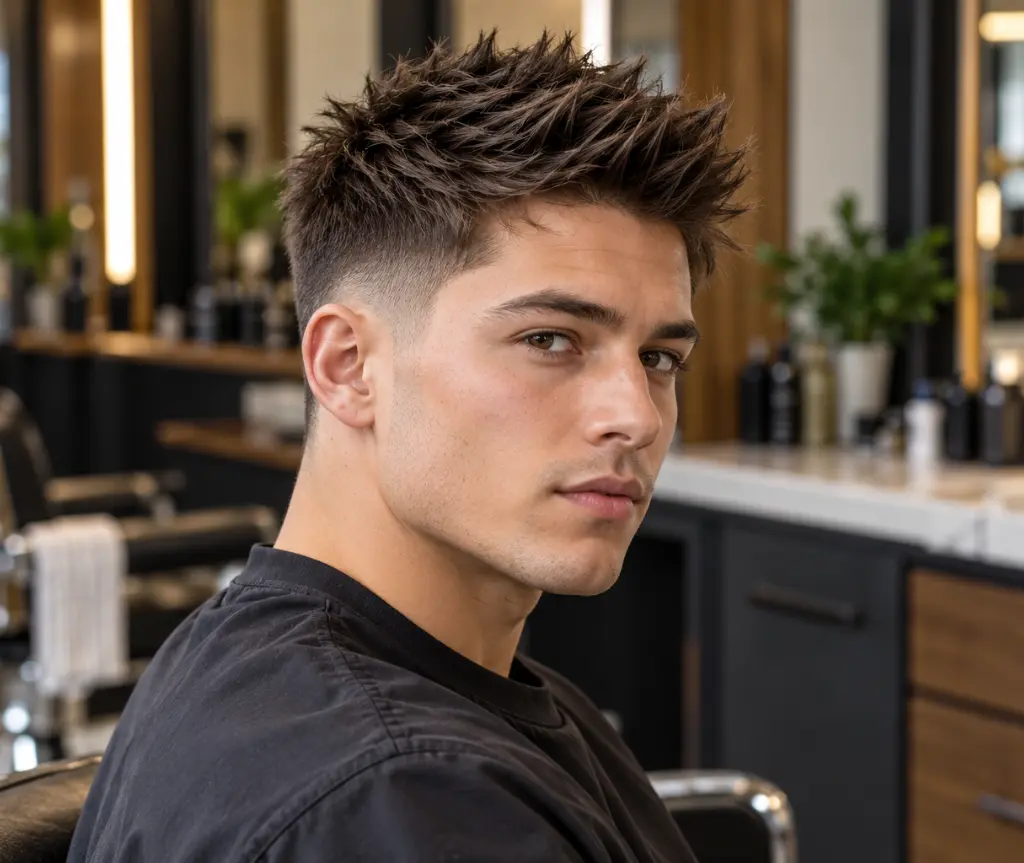
Short spiky hair for men with straight hair uses natural strand direction to create texture and vertical definition. The sides are kept short while the crown is cut into multiple short sections that can be directed upward or slightly forward. Straight hair works especially well for spikes because the strands respond easily to styling products and maintain separation without curling back into themselves. Modern spikes are typically softer and more natural than the heavily gelled styles of earlier decades.
A small amount of matte clay or wax can be applied to the fingertips and used selectively on individual sections. The goal is to create separation and movement rather than coating the entire head. Men with fine straight hair may benefit from texture powder, while thicker hair can usually hold the shape with relatively little assistance. Keeping the spikes short ensures the style remains easy to maintain and suitable for everyday wear.
10. Caesar Cut
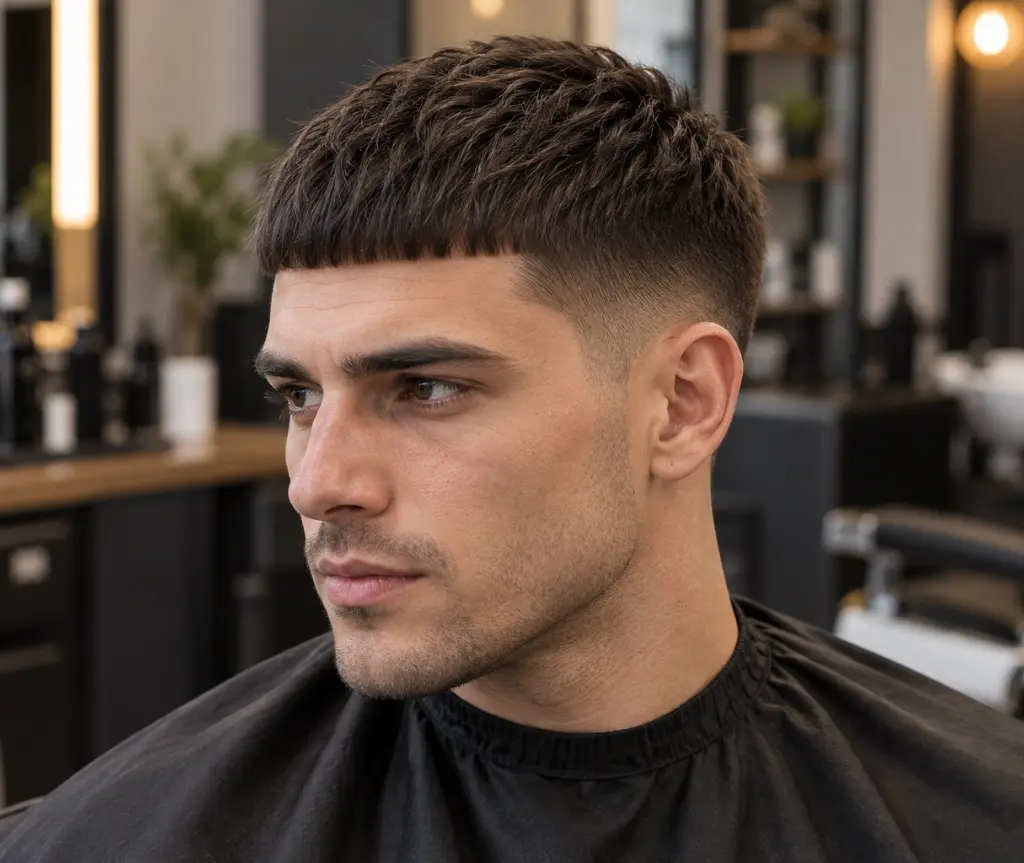
The Caesar cut for straight hair is a classic short hairstyle characterized by relatively uniform top length and a short fringe directed forward. Unlike a quiff or side part, the style does not require volume or directional blow-drying. Straight hair lies naturally into the forward shape, making this one of the easiest haircuts to maintain. The fringe can be blunt, slightly broken, or textured depending on whether the desired result is traditional or contemporary.
The Caesar cut is also useful for men who prefer a structured hairstyle with minimal morning effort. After washing, the hair can often be towel-dried and arranged with the fingers. A small amount of matte cream can create additional separation if desired. The sides may be tapered, faded, or scissor-cut depending on personal preference. Because the fringe covers part of the forehead, the haircut may also be appealing for men who like a more compact facial frame.
11. Low Fade with Straight Crop
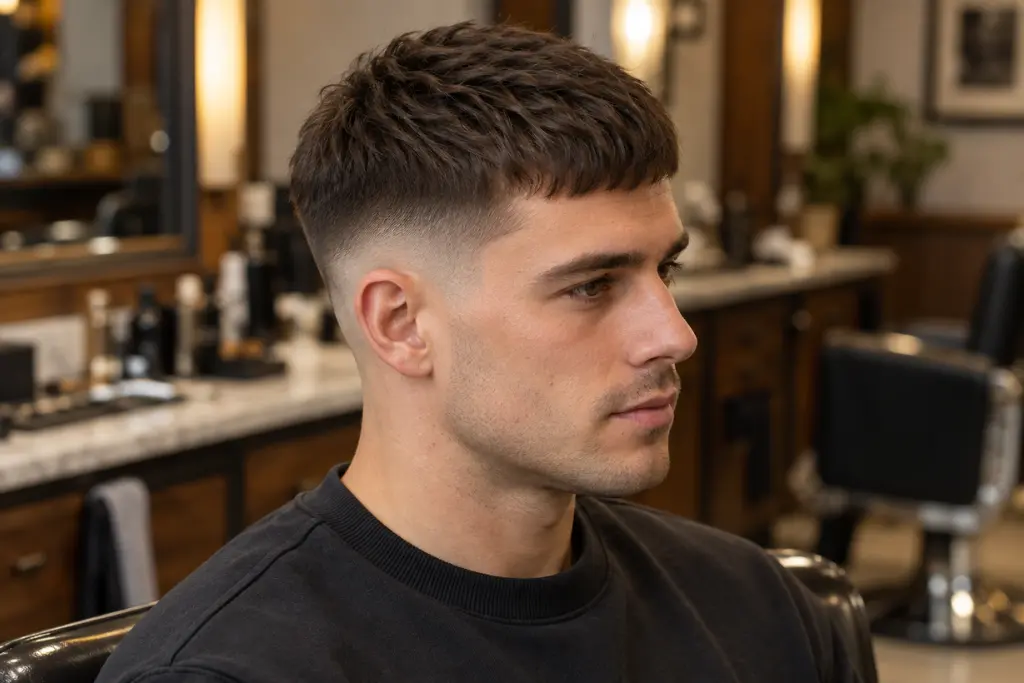
A low fade with straight crop keeps the transition concentrated near the ears and neckline while preserving more fullness through the upper sides. The top remains short and lightly textured, creating a balanced haircut that feels less dramatic than a high fade. Straight hair works well with this shape because the contrast between the clean fade and structured crown remains visible without requiring significant styling.
The lower placement of the fade also makes the haircut relatively forgiving as it grows out. Men who do not want extremely frequent barber appointments may prefer this softer transition. The top can be worn naturally, brushed forward, or separated with lightweight matte product. Because more hair remains through the upper sides, the style can also complement longer or narrower face shapes by avoiding excessive visual height.
12. Mid Fade with Short Top
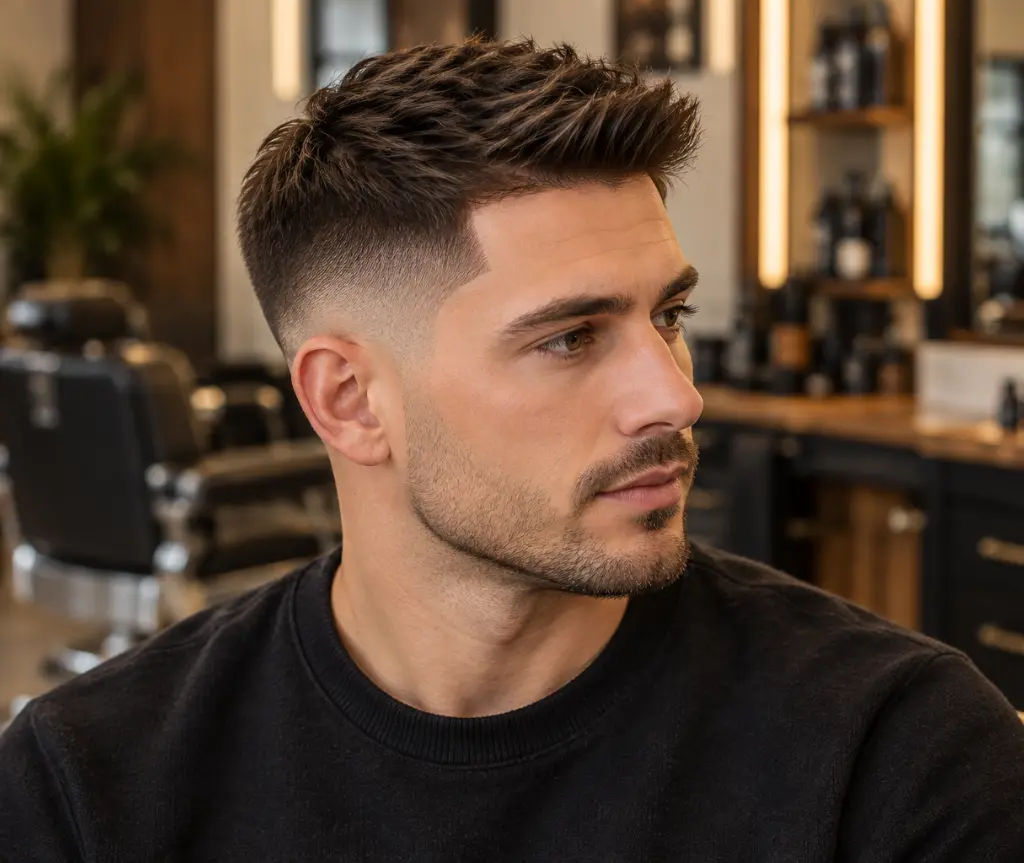
A mid fade with short straight hair offers a balanced level of contrast by beginning the fade around the middle of the sides. This placement is more noticeable than a low fade but less aggressive than a high fade, making it suitable for a wide range of lifestyles. Straight hair creates a clean upper shape that blends naturally into the fade, especially when the crown is kept short and slightly textured.
The mid fade can be paired with a crop, crew cut, side part, or small brush-up depending on the desired finish. Men with thick straight hair may benefit from removing some weight through the crown, while fine hair can be kept slightly longer at the front for additional structure. Styling can remain minimal, usually requiring no more than a small amount of clay or cream. The overall result is modern, balanced, and easy to adapt.
13. Skin Fade with Straight Top
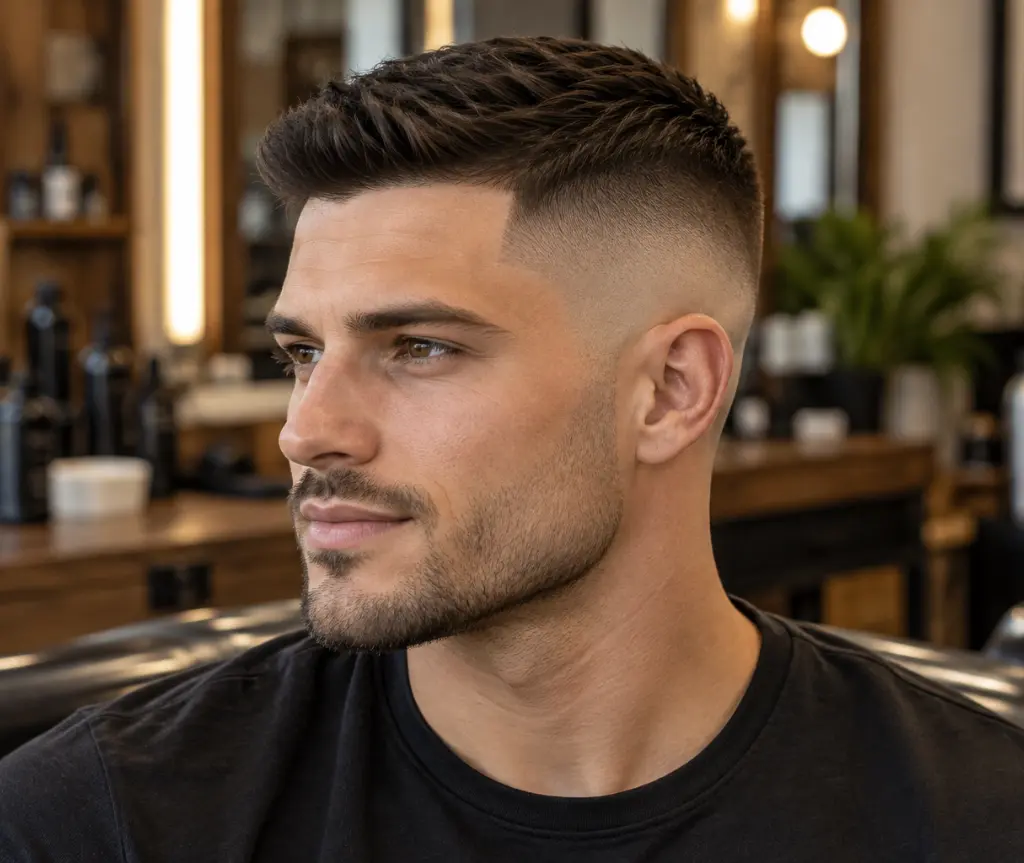
A skin fade with straight top creates maximum contrast by blending the lower sides down to bare skin while preserving short hair through the crown. Straight hair makes the transition especially crisp because the upper strands lie cleanly and create a strong boundary between the crown and faded sides. The style is bold, contemporary, and particularly popular among men who prefer a very fresh barbershop appearance.
Although the crown requires little daily maintenance, the fade itself needs more frequent trimming to remain sharp because regrowth becomes visible quickly. The top may be styled forward, slightly upward, or left natural. Thick straight hair can be texturized for movement, while fine straight hair can remain compact for a denser-looking finish. This haircut is ideal for men who want strong contrast without maintaining long hair.
14. Short Pompadour
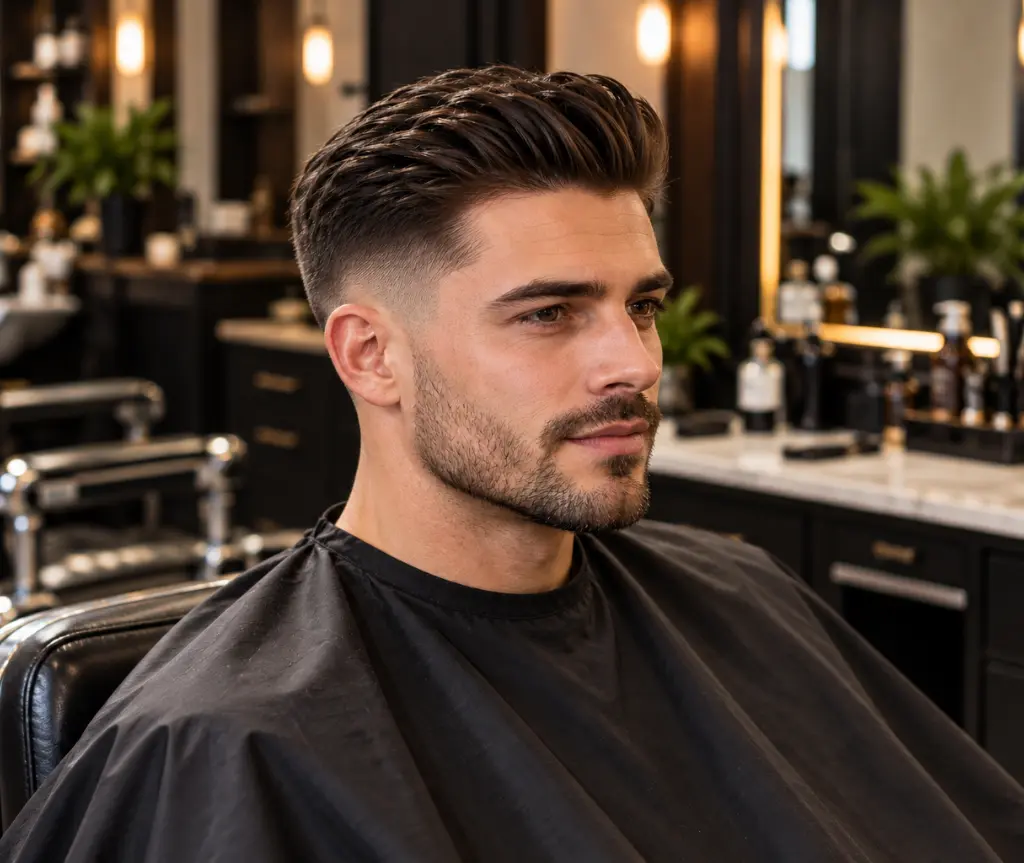
A short pompadour for straight hair preserves the iconic lifted front of a classic pompadour while reducing the overall length and styling commitment. The sides are usually tapered or faded, and the top gradually becomes longer toward the front. Straight hair is especially compatible with this style because it can be directed backward smoothly without the unpredictability of tight curls.
A blow-dryer is useful for creating the initial lift, though the short length means styling usually takes only a few minutes. Matte pomade or clay can provide structure without excessive shine. Men with thick straight hair often achieve the shape naturally, while finer hair may need a volumizing pre-styler. The result is polished and masculine while remaining much easier to maintain than a full traditional pompadour.
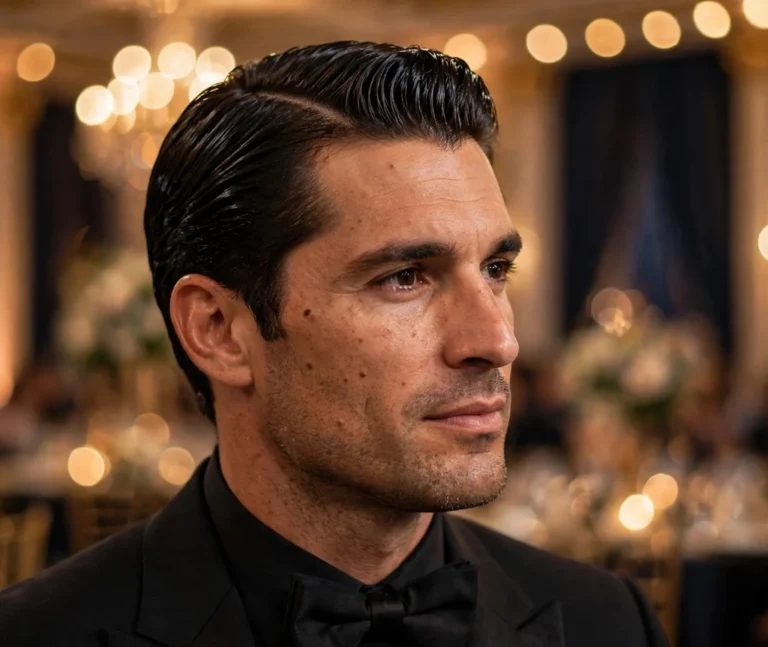
15. Short Slick Back
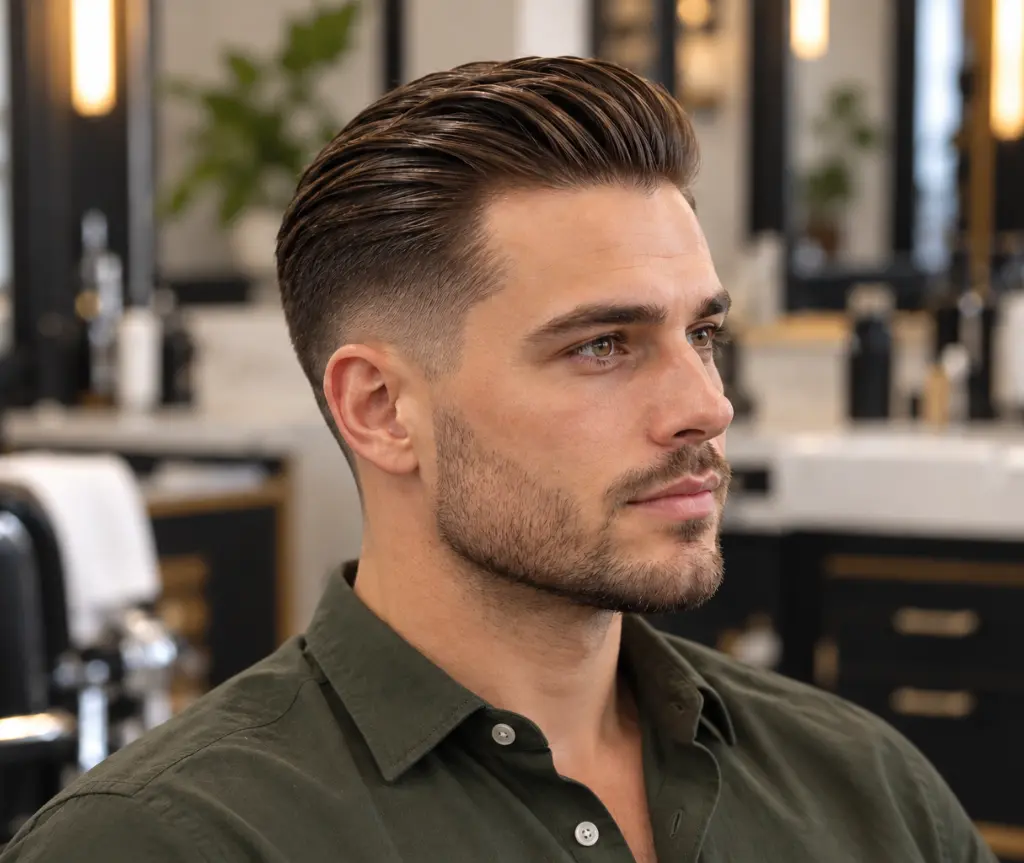
A short slick-back haircut offers a polished appearance without requiring medium or long hair. The sides remain short while the top retains just enough length to be directed backward. Straight hair naturally supports this movement, making it easy to achieve a smooth finish with relatively little product. The hairstyle works particularly well for professional settings, formal occasions, and men who prefer a clean, mature appearance.
The finish can be customized according to product choice. Matte paste produces a more contemporary, natural effect, while pomade creates a classic glossy slick-back. Because the top remains short, heavy product is unnecessary and can actually make fine hair look flat. Blow-drying backward before applying a small amount of product helps maintain the direction. The hairstyle combines sophistication with practical everyday wearability.
16. Brush-Up Haircut
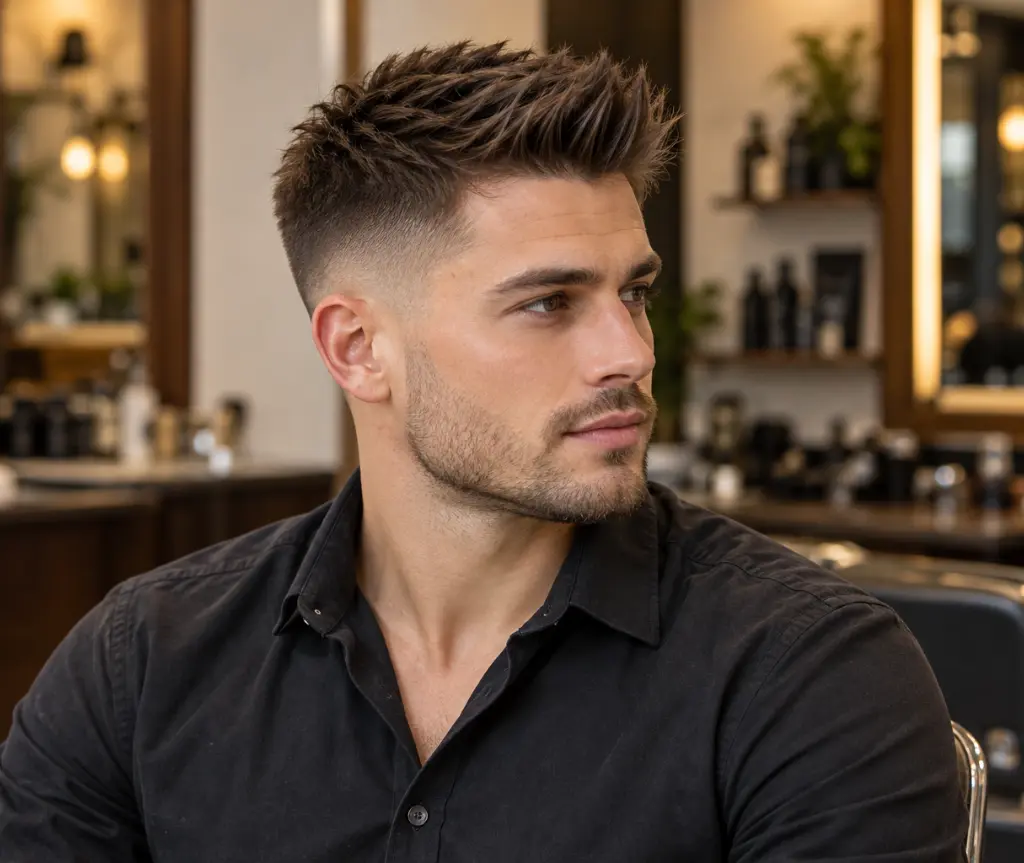
The short brush-up haircut for straight hair creates height by directing the crown upward rather than backward or sideways. The sides are kept tapered or faded to emphasize the vertical movement, while the top remains compact enough to avoid becoming high maintenance. This style can visually elongate rounder face shapes and create a more structured silhouette.
Straight hair responds particularly well to brush-up styling because the strands can be lifted and separated with minimal resistance. Matte clay or texture paste provides enough grip, while a quick blow-dry can establish the basic direction. Fine hair may benefit from lightweight texture powder at the roots. The goal is a soft, textured lift rather than stiff spikes. The result looks modern, clean, and suitable for everyday wear.
17. Hard Part Haircut
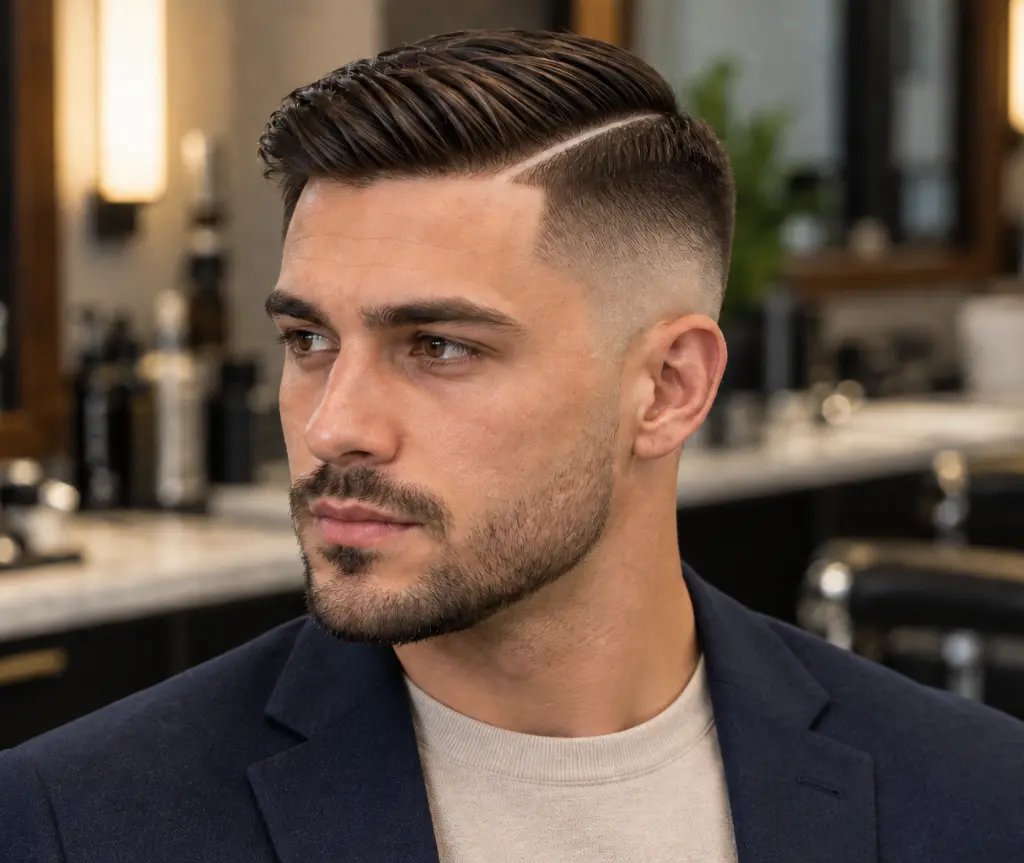
A short haircut with a hard part adds precision by shaving a defined line along the natural part. This creates stronger visual separation between the top and sides, giving straight hair a highly structured appearance. The top can remain short and be brushed neatly to one side, while the sides are tapered or faded. Because straight hair follows direction easily, the hard part reinforces a clean, polished finish.
The shaved line will gradually become less visible as the hair grows, so regular barber maintenance is necessary if you want the design to remain crisp. Daily styling, however, is relatively simple. A small amount of cream or pomade can guide the top into place. This haircut is particularly effective for men who prefer classic grooming but want an additional modern detail. It looks sharp without requiring long hair or complicated styling.
18. High and Tight
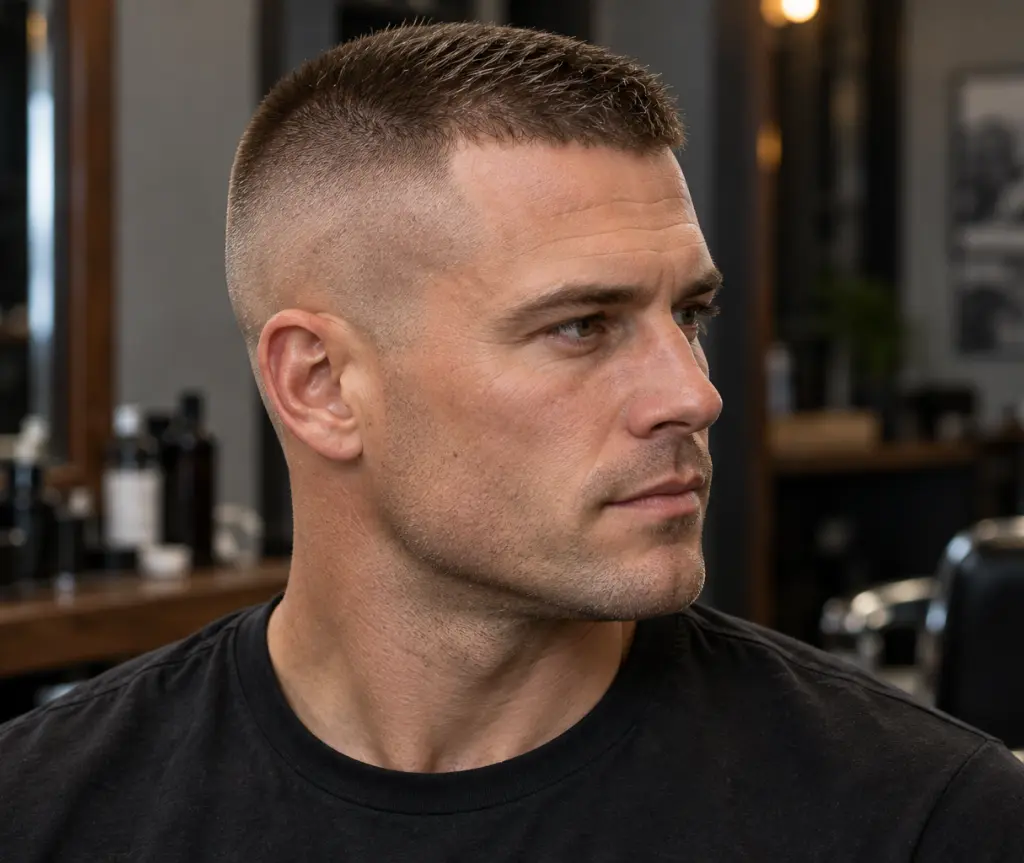
The high and tight haircut is a military-inspired short style known for its clean proportions and very low maintenance. The sides and back are clipped extremely short and high around the head, while a narrow section of slightly longer hair remains on top. Straight hair works especially well because the top stays neat with virtually no styling. The dramatic contrast creates a strong, disciplined silhouette.
Men with active lifestyles often appreciate the high and tight because sweat, helmets, heat, and movement have little impact on the hairstyle. Different guard lengths can soften or intensify the contrast depending on personal preference. The haircut also highlights facial features and beard lines because there is very little hair competing for attention. For practicality and structure, it is difficult to find a simpler option.
19. Butch Cut
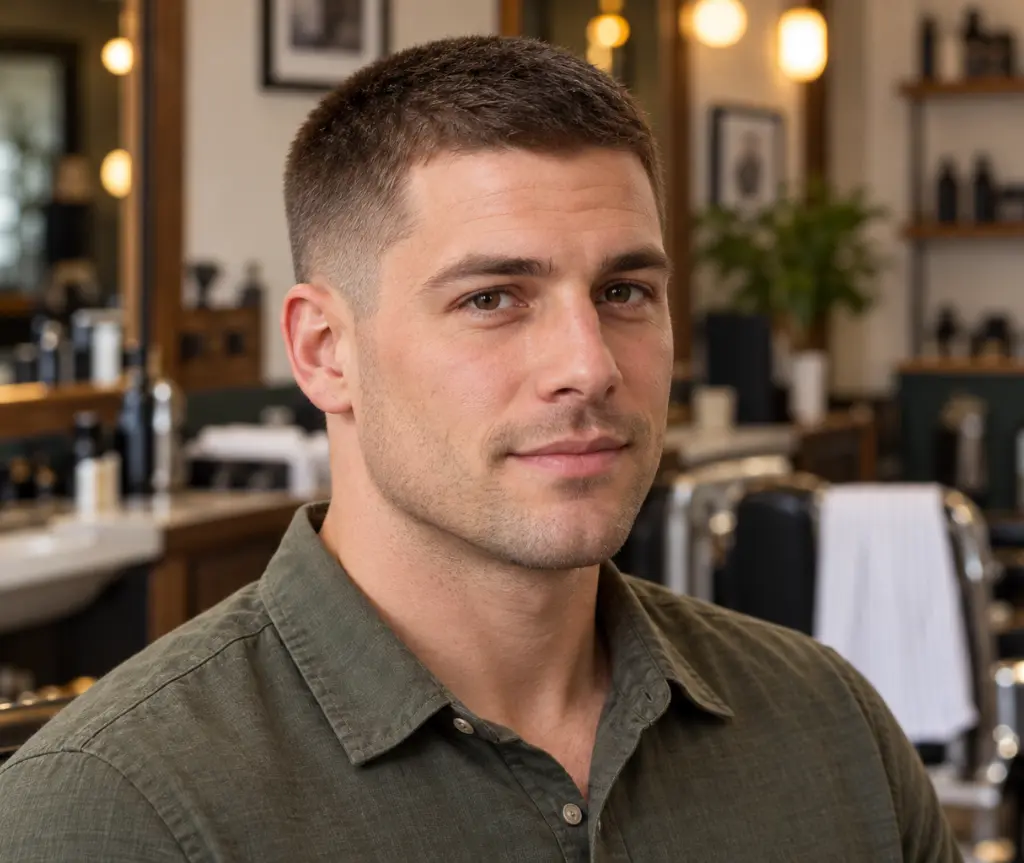
The butch cut for straight hair is a slightly longer variation of the traditional buzz cut, providing a uniform clipped appearance without exposing quite as much scalp. Straight hair creates an even, smooth texture across the head, making the cut especially clean and low maintenance. It is suitable for men who want an extremely practical style but prefer a softer look than a near-skin buzz.
A subtle temple taper or clean edge-up can give the basic butch cut additional refinement. Daily styling is unnecessary, although regular washing and scalp care remain important. The haircut works well for thick straight hair because the natural density produces a strong finish. Fine straight hair can also benefit because the short uniform length reduces the visual contrast between different density areas. The result is simple, masculine, and dependable.
20. Short Faux Hawk
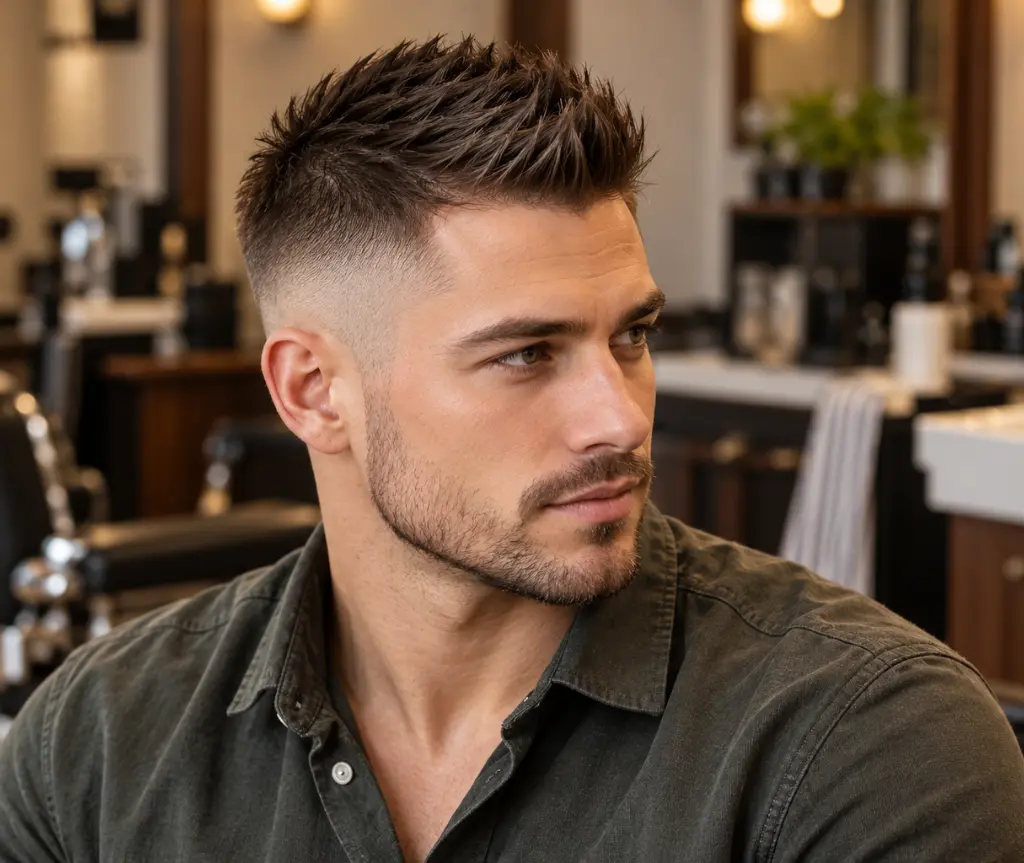
A short faux hawk for straight hair creates an edgy central shape without requiring the extreme length of a traditional mohawk. The sides are faded or tapered while slightly longer hair remains through the center. Straight strands can be styled upward and inward easily, producing a controlled ridge rather than a dramatic spike. The short length keeps the style wearable in everyday settings.
Matte clay or paste provides enough grip to guide the center sections while maintaining a natural finish. Men with thick straight hair often need very little product, while fine hair can benefit from texture powder for added support. The style can be worn more subtly during the day and emphasized further for evenings. It is a good choice for men who want something more expressive than a basic crop without committing to a complicated routine.
21. Taper Fade
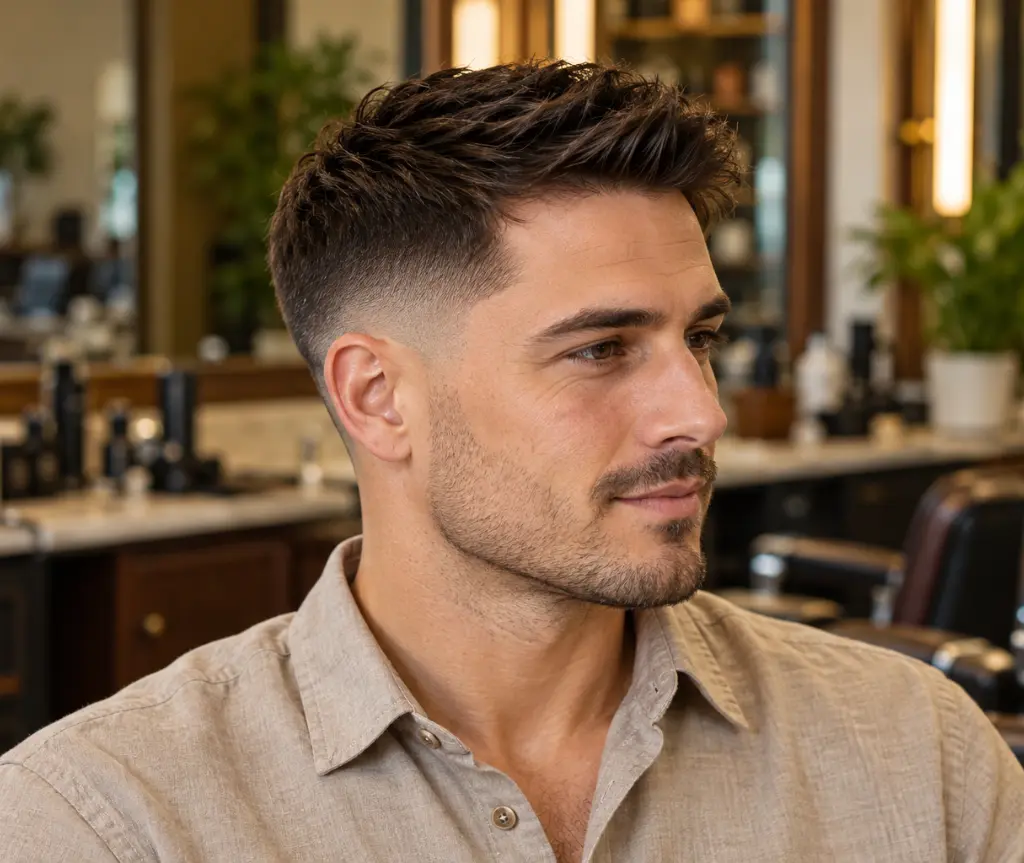
A taper fade for men with straight hair gradually reduces length around the temples, sideburns, and neckline while keeping more fullness through the sides and crown. Compared with a dramatic skin fade, the transition is softer and easier to grow out. Straight hair emphasizes the clean structure while preserving a natural look, making the taper fade suitable for professional and casual environments.
The top can be paired with almost any short style, including a crew cut, side part, crop, or short quiff. Because the taper is concentrated around the edges, much of the hairstyle retains natural density. Men who prefer fewer barber visits may appreciate how gracefully the cut grows out. Minimal product is usually enough to control the top, making the taper fade one of the most versatile and practical options for straight hair.
22. Short Messy Crop
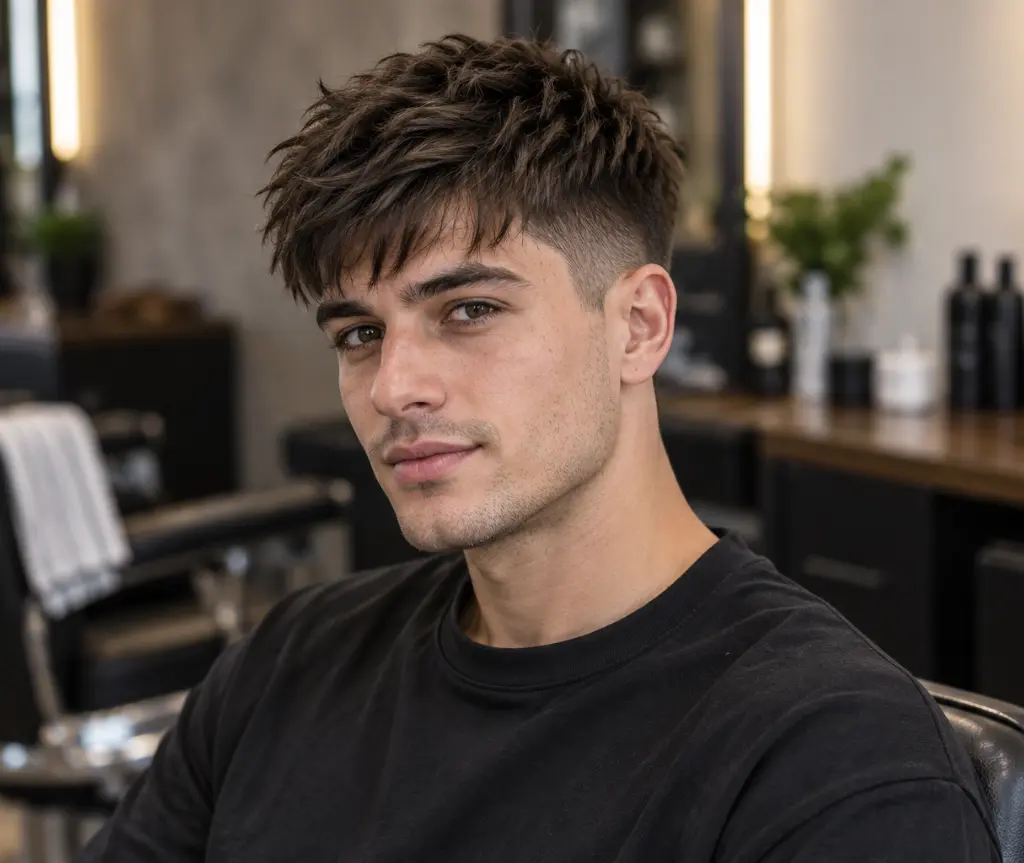
A short messy crop for straight hair uses deliberate irregularity to create a relaxed, contemporary finish. The crown is cut into short uneven sections that fall in slightly different directions, while the sides stay tapered or faded to preserve structure. Straight hair can sometimes look overly flat, so this textured arrangement creates additional visual movement and gives the haircut more dimension.
A small amount of texture spray, paste, or dry powder is usually enough to create the messy effect. Rather than using a comb, the hair should be arranged with the fingers so the strands remain separated. Fine hair benefits from the extra lift, while thick hair can be texturized internally to prevent heaviness. The haircut is particularly useful for men who want a casual style that still looks intentional even after a busy day.
23. Short Natural Taper
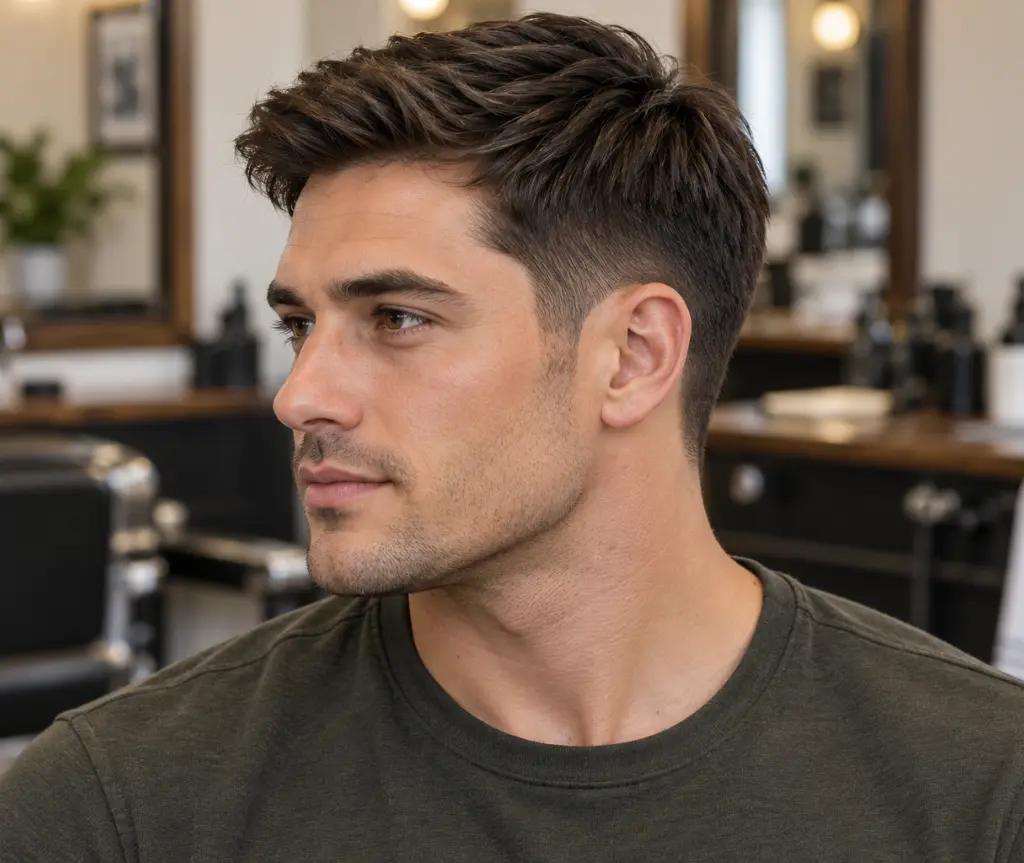
The short natural taper for men with straight hair is one of the most understated and timeless options. Hair remains relatively natural through the top and upper sides while becoming gradually shorter around the sideburns, temples, and neckline. This preserves the straight texture without creating the dramatic contrast of a high fade or skin fade. The result feels clean, balanced, and suitable for almost any age or setting.
Because the taper transition is soft, the haircut grows out more gracefully than sharper faded styles. Men can wear the top product-free or use a small amount of cream or matte paste for definition. The crown can remain slightly longer if additional styling flexibility is desired. For anyone seeking a simple straight-hair haircut that remains professional, comfortable, and easy to maintain, the natural taper is an excellent final choice.
Best Short Haircuts for Men with Fine Straight Hair
Fine straight hair can sometimes appear flat because the strands naturally lie close together and lack built-in texture. Short hairstyles such as textured crops, crew cuts, Caesar cuts, Ivy League cuts, and short brush-ups can help create stronger shape without relying on excessive length. Keeping the sides controlled also makes the crown appear fuller by creating more contrast. Heavy thinning should usually be avoided because removing too much density can expose additional scalp.
Lightweight styling products are especially important for fine straight hair. Texture powder, volumizing mousse, root spray, and small amounts of matte clay can create lift without coating the strands heavily. Blow-drying the roots briefly against their natural direction can also improve volume. Heavy pomades and oily products may flatten fine hair quickly, so they should be used carefully. The right haircut should create most of the structure before styling products are added.
Best Short Haircuts for Men with Thick Straight Hair
Thick straight hair offers strong natural density but can become bulky if the haircut does not remove weight strategically. Textured crops, French crops, short quiffs, high fades, side parts, and short pompadours can all work extremely well because the hair has enough body to hold structure. Point cutting and internal texturizing can improve movement without making the ends appear overly thin.
Styling thick straight hair often requires products with moderate hold because the strands can resist direction when left too long. Matte clay, paste, and lightweight pomade can provide control while preserving natural movement. Keeping the sides short also reduces unnecessary width around the head. A well-designed haircut can make thick straight hair dramatically easier to manage while still taking advantage of its natural density and strength.
Short Haircuts for Straight Hair and Round Faces
Men with round faces often benefit from hairstyles that create a little vertical height while keeping the sides relatively short. Short quiffs, brush-ups, high fades, faux hawks, and textured crops can visually elongate facial proportions. Avoiding excessive side fullness may also help create a cleaner outline. However, the crown does not need extreme height; even subtle lift can make a noticeable difference.
Side parts can also create useful diagonal movement across the head, breaking up the circular symmetry of a round face. A barber can adjust fade height, fringe length, and crown volume to create a more balanced silhouette. Face shape should be treated as a guideline rather than a strict rule, since hair density, beard style, forehead height, and personal preferences also influence the final result.
Short Haircuts for Straight Hair and Long Faces
Long or rectangular faces generally benefit from hairstyles that avoid excessive vertical height. Caesar cuts, French crops, crew cuts, natural tapers, side parts, and low fades can create balanced proportions because they keep the top controlled. A short fringe can also visually shorten the forehead, especially when worn forward rather than lifted dramatically upward.
Keeping slightly more fullness through the sides can help balance a narrow or elongated facial shape. Very high skin fades combined with tall quiffs may exaggerate length, although they can still work if that is the desired aesthetic. The most flattering approach is usually to distribute volume horizontally rather than concentrating it solely at the crown. A barber can fine-tune these proportions according to the individual.
Low-Maintenance Short Haircuts for Straight-Haired Men
Men who want the easiest daily routine should consider buzz cuts, butch cuts, crew cuts, Caesar cuts, natural tapers, and short crops. These hairstyles remain close enough to the head that washing and drying are fast, and many can be worn without any styling product. Straight hair naturally helps these cuts look neat because the strands lie consistently and reveal the barber’s shape clearly.
The main maintenance requirement is usually regular trimming rather than daily styling. Very sharp skin fades and hard parts may require more frequent barber visits, while natural tapers and softer crew cuts grow out more gradually. Choosing a haircut that matches your preferred appointment schedule can make the overall routine even easier. Low maintenance is not only about styling time; it is also about how gracefully the haircut changes as it grows.
Best Styling Products for Men with Straight Hair
Straight hair often responds well to matte styling products because they add texture without making the strands look greasy or overly flat. Matte clay is useful for crops, quiffs, and brush-ups, while lightweight cream works well for natural tapers and side parts. Texture powder can provide lift for fine hair, and pomade is useful when a smoother, more polished finish is desired.
Using too much product can make straight hair clump together and expose more scalp, especially when the hair is fine. Begin with a small amount and apply primarily through the middle and ends rather than coating the roots heavily. Blow-drying can also reduce the amount of styling product needed because it establishes direction and volume before hold is added. Simple product use generally creates the most natural-looking results.
How to Maintain Short Straight Hair
Short straight hair benefits from regular cleansing because oil can travel down smooth strands more easily than through tightly curled textures. However, washing frequency should still depend on scalp type, activity level, and product use. Conditioner can help maintain softness without requiring heavy formulas. Men who use clay, wax, or pomade regularly should make sure buildup is removed so the hair remains light and responsive.
Regular trims are equally important because short hairstyles depend heavily on shape. When the neckline, temples, or fringe become uneven, the entire haircut may begin to look less polished. Skin fades generally lose their sharpness faster than natural tapers, while crew cuts and crops tend to grow out more gradually. Watching the silhouette rather than following a rigid schedule is usually the best way to know when a haircut needs refreshing.
Conclusion
The best short haircuts for men with straight hair take advantage of the texture’s natural ability to display clean lines, sharp fades, structured crowns, and defined fringe. Timeless options such as the crew cut, buzz cut, Ivy League, Caesar cut, and taper remain popular because they are practical and versatile. More contemporary choices, including textured crops, faux hawks, short quiffs, high fades, and messy crops, provide additional personality without requiring long styling routines.
Whether your straight hair is fine, thick, dense, or relatively flat, the right haircut can improve both shape and manageability. Consider face shape, natural growth direction, product preference, and how often you want to visit the barber before choosing a style. With the right combination of length, tapering, fade placement, and texture, short straight hair can look sharp, modern, and effortless every day.