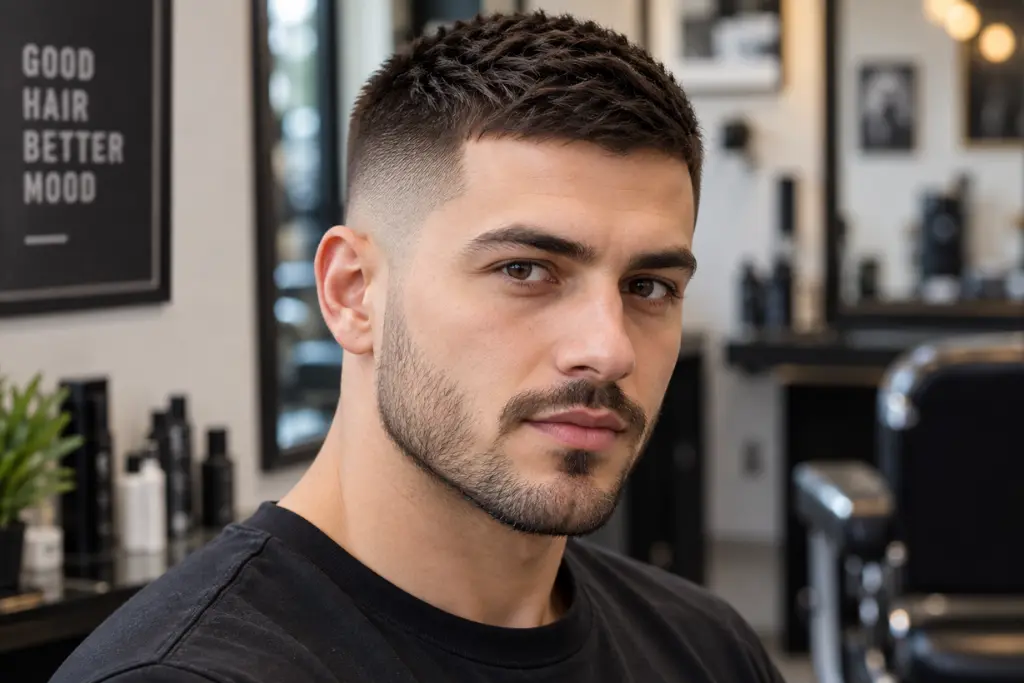
30 Powerful Short Haircuts for Men That Look Sharp and Low Maintenance

A great short haircut for men should do more than simply keep hair out of the way. The best modern short hairstyles combine a clean silhouette, manageable length, flattering proportions, and enough texture to create personality without demanding a complicated morning routine. From timeless crew cuts and buzz cuts to textured crops, fades, quiffs, and modern Caesar styles, short men’s haircuts can work with virtually every hair type, including straight, wavy, curly, thick, fine, and coarse hair.
Low-maintenance does not have to mean boring. Small details such as a taper fade, textured fringe, side part, sharp line-up, or natural curls can completely change the character of a short haircut. The ideal style depends on your face shape, hair density, growth pattern, workplace, and willingness to use styling products. Whether you prefer a polished professional haircut or something more casual and rugged, these 30 short haircuts for men deliver a sharp appearance without unnecessary styling effort.
1. Classic Crew Cut
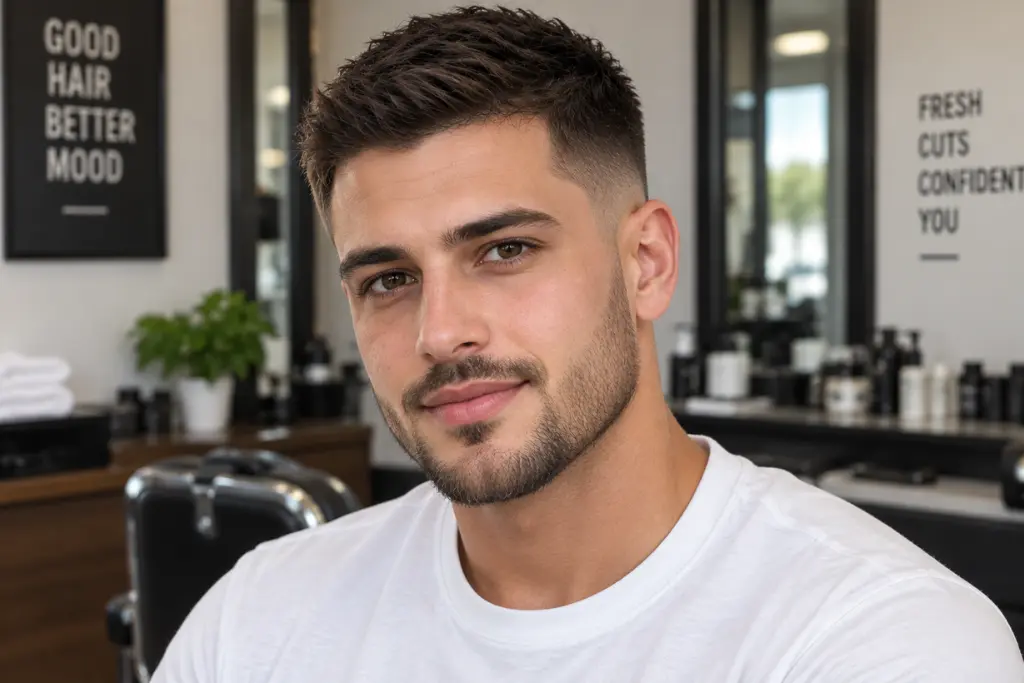
The classic crew cut remains one of the most dependable short haircuts for men because it balances clean structure with everyday practicality. Hair is kept short around the sides and back while slightly more length is preserved through the top, creating enough contrast to give the haircut shape without requiring elaborate styling. The gradual transition from shorter sides to a longer crown also creates a masculine silhouette that suits professional, casual, and athletic settings. Because it is not extremely short, the crew cut still provides enough flexibility to adapt to different face shapes.
One of the biggest advantages of the crew cut is how little maintenance it requires between washes. Men with straight or slightly wavy hair can often simply towel-dry the hair and allow the natural texture to settle into place. A small amount of matte clay or lightweight paste can add definition when a cleaner finish is desired. Thick hair may need some internal texturizing, while finer hair can benefit from slightly more length on top. Regular trims help keep the sides controlled and preserve the haircut’s sharp proportions.
2. Buzz Cut
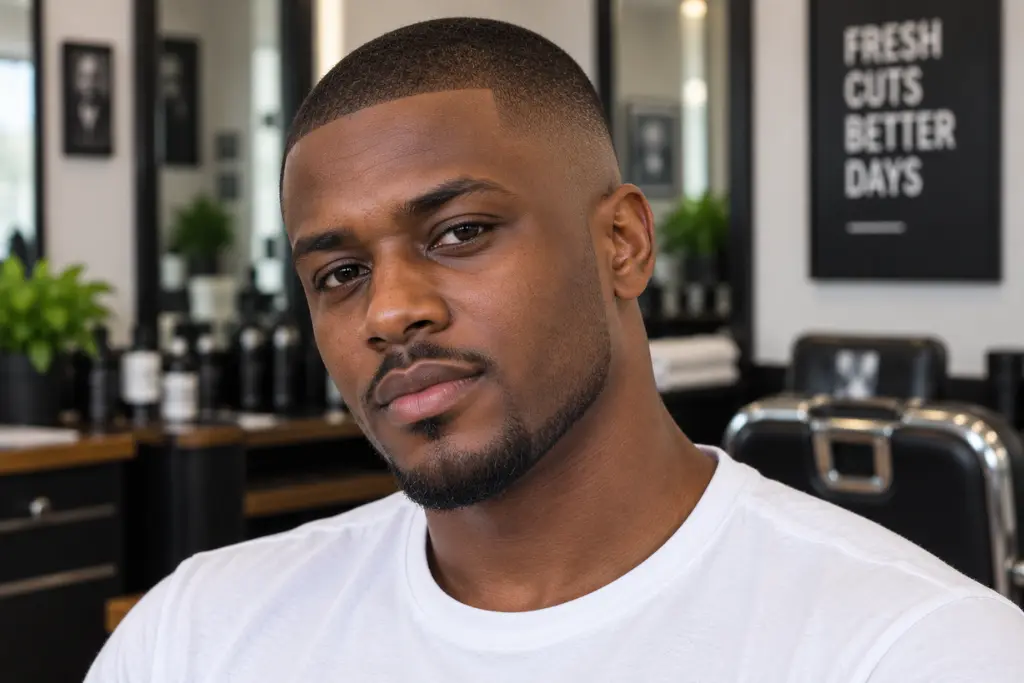
The buzz cut is one of the simplest and lowest-maintenance short hairstyles available for men. The hair is clipped very close to the scalp using a consistent guard length or a slight variation between the top and sides. Because there is almost no daily styling involved, it is especially practical for men with active schedules, hot climates, or a preference for minimalist grooming. The clean shape places greater emphasis on facial features, beard lines, and head shape, giving the overall look a strong and straightforward character.
Although the buzz cut appears simple, small barbering details can significantly influence the finished result. A sharp line-up around the temples and forehead can create a more structured appearance, while a subtle fade around the sides can make the style feel contemporary. Men with dense hair often achieve an especially even finish, although the haircut can also work well on finer textures. Because scalp visibility increases as the hair gets shorter, keeping the scalp healthy and protected becomes an important part of maintaining this classic men’s haircut.
3. High Fade with Short Top
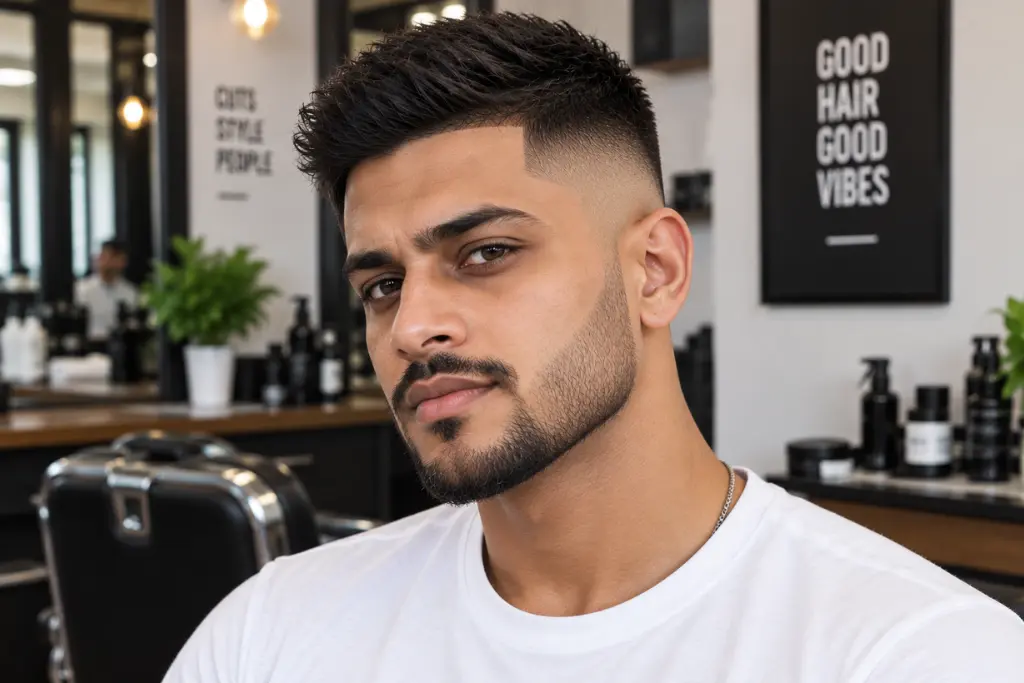
A high fade with a short top creates strong visual contrast by bringing the fade higher toward the temples while keeping the crown compact and manageable. The hair gradually transitions from nearly bare around the lower sides into slightly longer hair near the top, producing a clean and modern silhouette. Because the sides contain very little bulk, the haircut stays tidy even during busy days. The short upper section can be worn naturally, lightly textured, or brushed forward depending on hair type and personal preference.
This haircut works particularly well for men who prefer a fresh barbershop appearance without spending significant time styling. Thick hair benefits from the reduction of weight around the sides, while coarse or curly textures can maintain natural definition through the top. A small amount of matte product can separate the upper strands when additional texture is desired. The fade itself requires regular barber visits to remain crisp, but daily maintenance is minimal. For a bold, clean, masculine hairstyle, the high fade remains an excellent option.
4. Low Fade with Textured Top
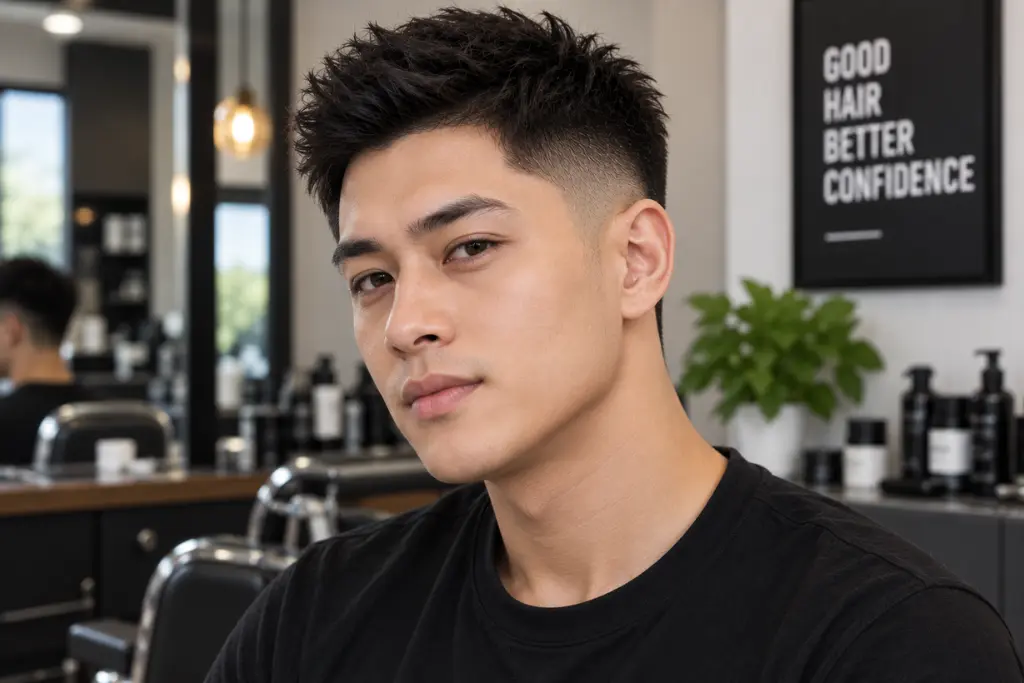
The low fade with textured top offers a more subtle variation of the traditional fade haircut. Instead of removing significant length high around the temples, the fade begins closer to the ears and neckline, allowing more natural fullness around the upper sides. The top is kept short but textured through point cutting or layering, which creates movement and separation without adding excessive height. This softer transition makes the haircut suitable for professional environments while still delivering the clean finish associated with modern men’s grooming.
Styling can remain extremely simple because the haircut itself provides most of the structure. Men with straight hair can use a small amount of matte clay to separate the top, while wavy hair may only require lightweight cream to enhance natural movement. Keeping the top relatively short means the style can also be worn product-free on casual days. Because the fade starts lower, regrowth tends to look less dramatic than with a high skin fade, making this haircut particularly appealing to men who want a neat appearance with slightly easier maintenance.
5. Mid Fade Crew Cut
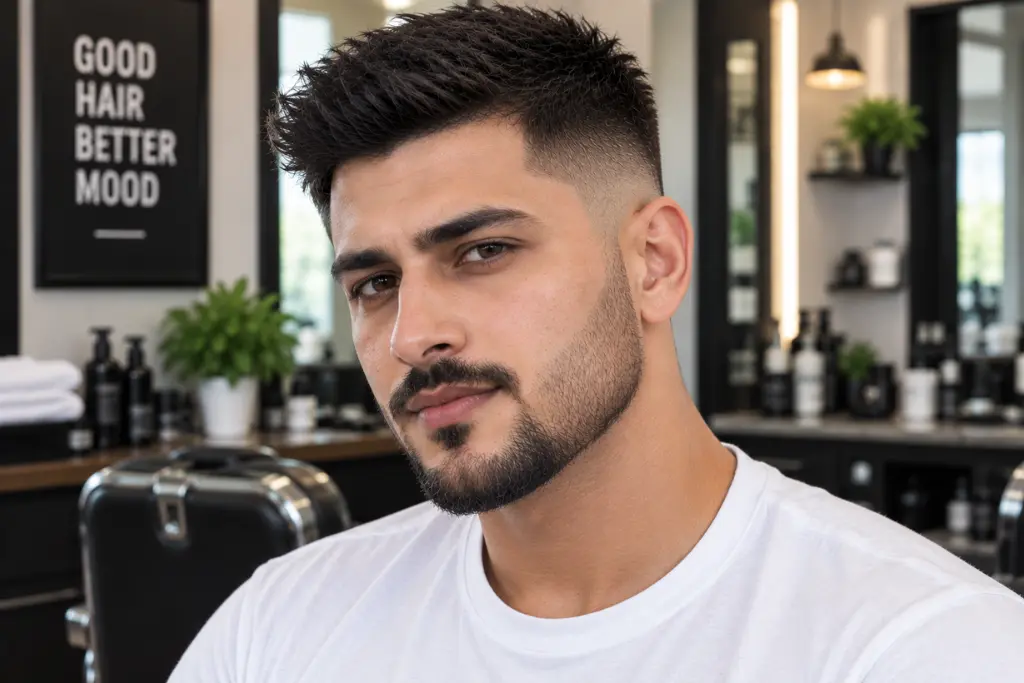
A mid fade crew cut combines two highly practical men’s haircut techniques into one sharp style. The crew-cut top remains short and slightly longer toward the front, while the sides transition into a fade beginning approximately around the middle of the head. This placement provides more contrast than a low fade but feels less aggressive than a high fade. The result is a balanced hairstyle that works particularly well for men wanting a clean modern haircut that can still fit comfortably into business or professional settings.
Because the top is kept controlled, styling usually takes only a few moments. Lightweight wax or matte paste can be pushed through the front when some definition is desired, while the rest of the hair can remain natural. Thick textures benefit from the reduced side bulk, and straight hair works particularly well with the structured silhouette. The fade will gradually soften as it grows, so regular barber visits help maintain the sharpest appearance. Overall, this combination delivers a polished masculine look with minimal daily effort.
6. French Crop
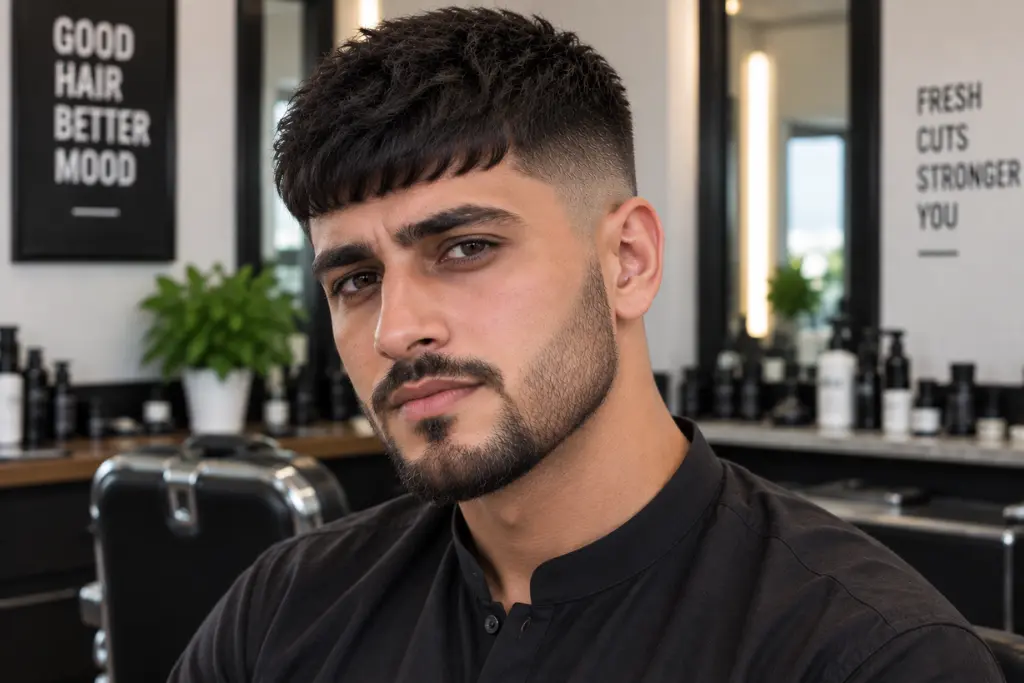
The French crop is a stylish short haircut defined by compact sides, textured hair on top, and a short fringe directed forward across the forehead. Unlike styles that rely on volume or slicked-back length, the French crop embraces natural forward movement, making it particularly easy to manage. The fringe can be cut blunt for a stronger graphic appearance or softened with texture for a more relaxed finish. This adaptability allows the haircut to complement straight, thick, wavy, and moderately curly hair.
One reason the French crop has remained popular is its ability to look intentional even without significant styling. The hair naturally falls toward the front, which means a quick finger-style can often be enough for everyday wear. Matte clay or texture powder can be used to emphasize separation without creating shine. The sides may be tapered, faded, or kept slightly fuller depending on personal taste. Men who want a contemporary short hairstyle with strong shape and minimal daily effort will find the French crop particularly practical.
7. Textured Crop Fade
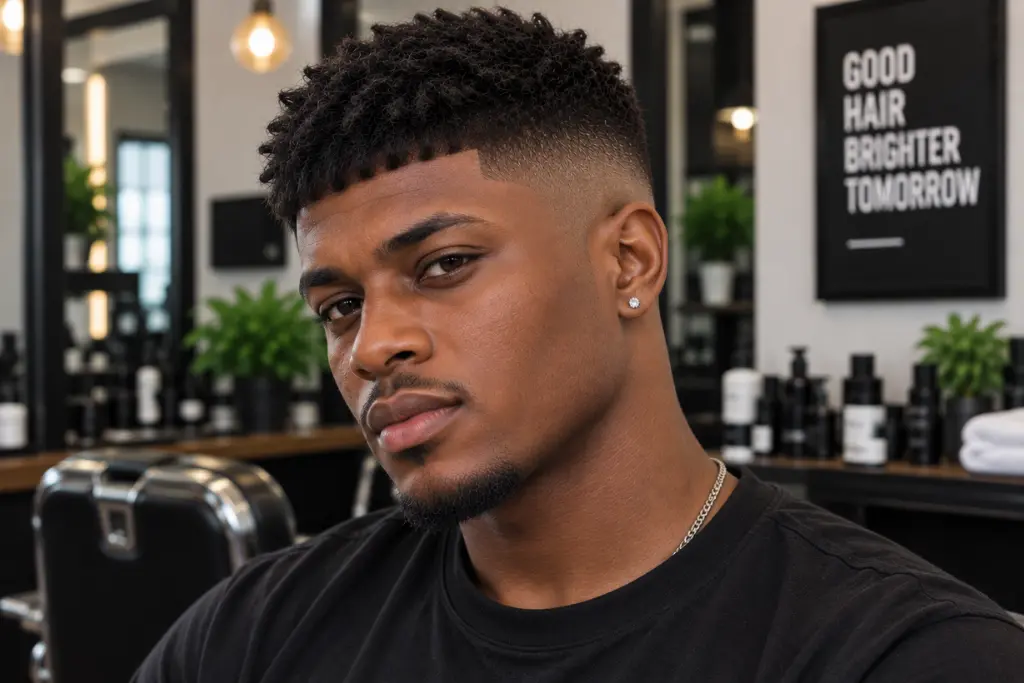
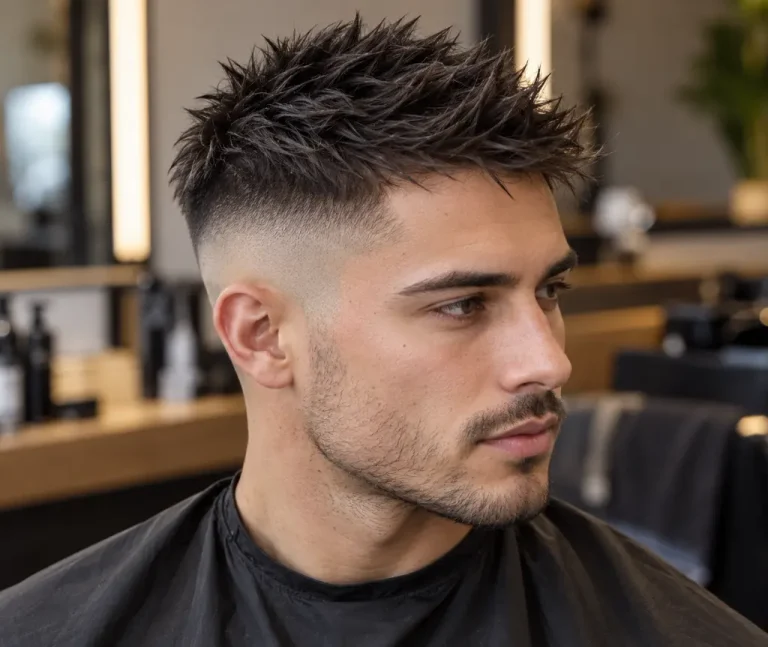
The textured crop fade combines a short layered crown with closely faded sides to create a haircut full of movement and contrast. Choppy sections through the top produce a deliberately separated appearance, while the fade eliminates unnecessary bulk around the ears and neckline. This hairstyle is especially effective on thick or straight hair because the texturizing process prevents the crown from looking heavy. It can also work well with wavy hair, where natural bends add another layer of dimension.
Styling is straightforward because the haircut is designed to look slightly imperfect. Rather than combing every strand into a precise position, men can work a small amount of matte clay, paste, or texture powder through the top using their fingers. This creates separation while maintaining a natural finish. The short length also allows the haircut to recover quickly after wearing hats or helmets. For men searching for a modern low-maintenance haircut that still looks fashionable, the textured crop fade is a strong choice.
8. Caesar Cut
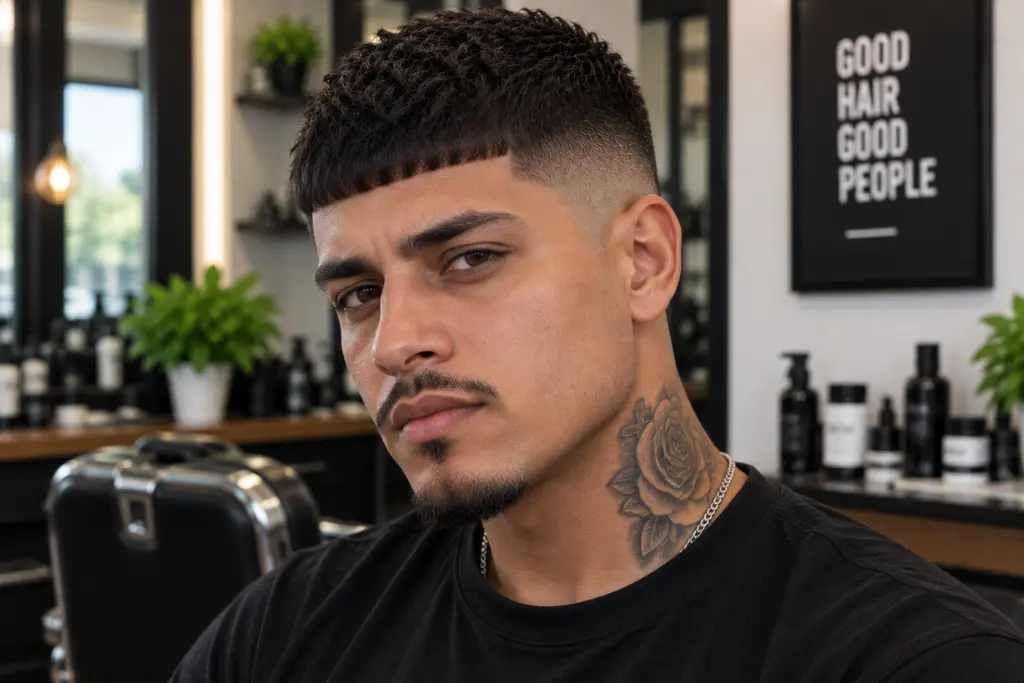
The Caesar cut is a timeless men’s hairstyle characterized by short, relatively even length across the top and a compact fringe directed forward. Inspired by classical Roman styling, the haircut has evolved into a practical modern option that works especially well for men who prefer neat hair without additional height. The horizontal fringe creates structure across the forehead, while tapered or faded sides can give the traditional silhouette a contemporary update. Because the top remains short, the style requires minimal effort to maintain.
The Caesar cut can also be useful for men whose hair naturally grows forward. Instead of fighting the growth pattern with constant brushing or styling, the haircut works with it. A small amount of lightweight texture cream can enhance separation, although many men can simply towel-dry the hair and leave it alone. The fringe length can be customized according to forehead proportions and personal preference. With its clean geometry and uncomplicated routine, the Caesar remains one of the most practical short men’s hairstyles.
9. Ivy League Haircut
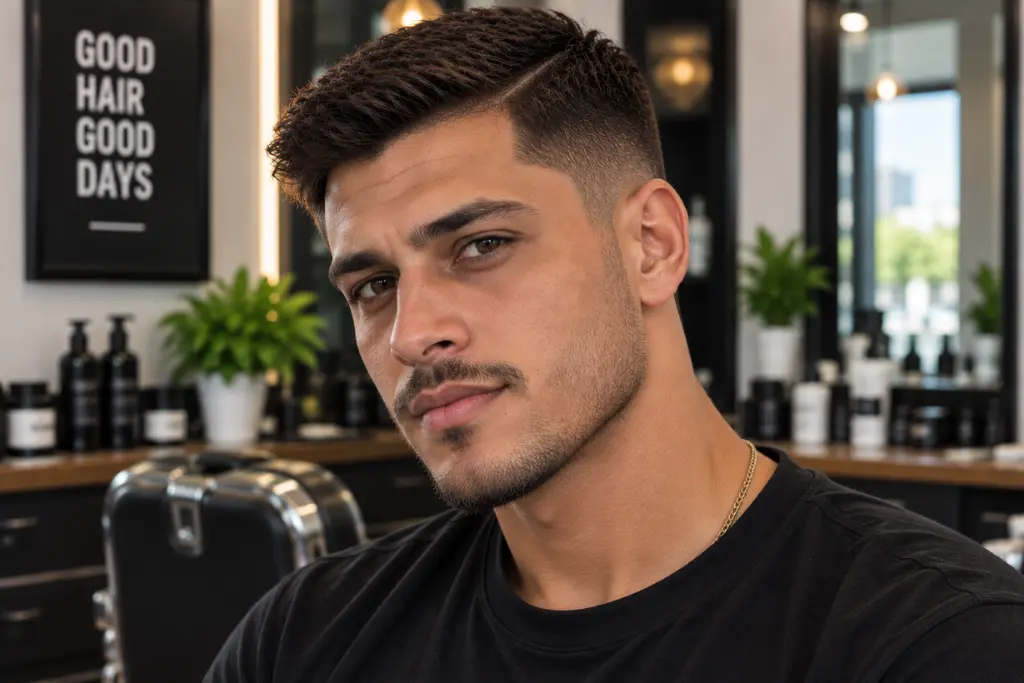
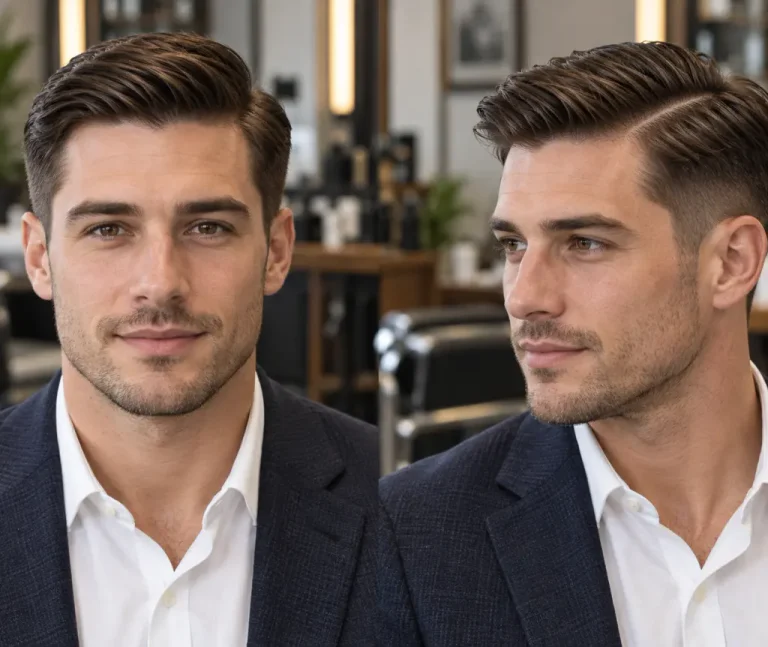
The Ivy League haircut takes the structure of a crew cut and adds slightly more length through the front and top. That additional length allows the hair to be brushed to the side, softly parted, or styled upward while the sides remain neatly tapered. The result is a refined short hairstyle that has long been associated with clean professional grooming. It works particularly well for men who want a haircut suitable for offices, formal occasions, and everyday wear without committing to longer hair.
Despite its polished appearance, the Ivy League haircut is surprisingly low maintenance. Because the crown remains relatively short, only a small amount of styling cream, pomade, or matte paste is usually required to guide the front section into place. Men with straight and slightly wavy hair can achieve the look especially easily. A subtle taper around the temples and neckline keeps the silhouette clean between barber appointments. This style offers an excellent balance between classic gentlemanly grooming and modern convenience.
10. Short Side Part
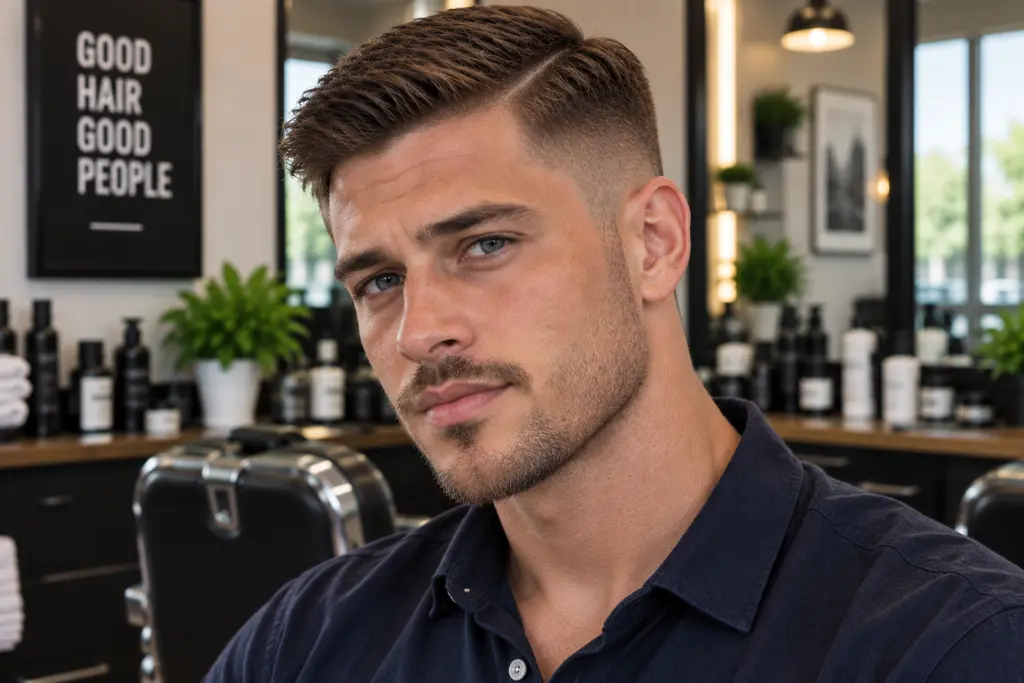
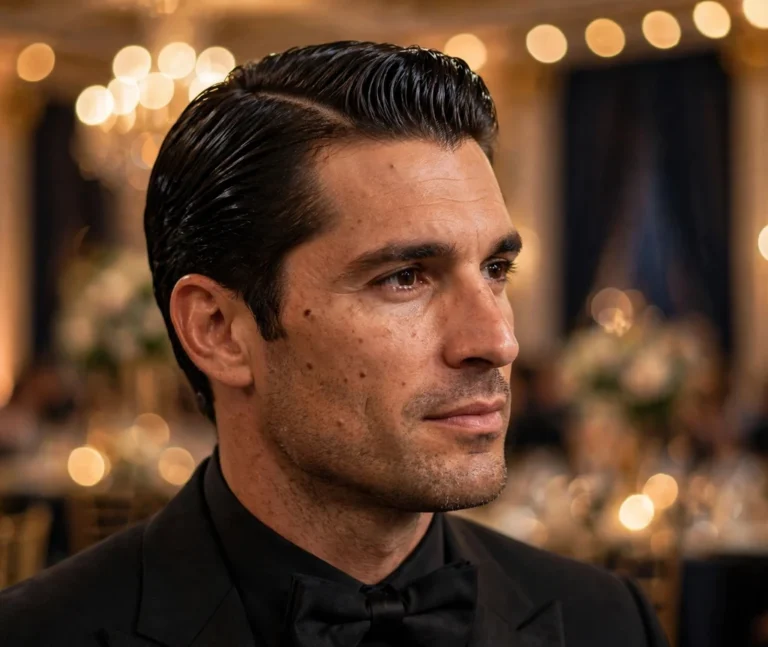
A short side-part haircut remains one of the most versatile options for men who prefer classic grooming. The sides are kept relatively short while slightly more length is left across the top, allowing a natural or defined part to direct the hair neatly to one side. Unlike longer comb-over styles, the short side part maintains a compact silhouette that does not require extensive blow-drying or heavy product. It works especially well in professional environments where clean structure and understated styling are often preferred.
The amount of definition in the part can be customized according to taste. A softer natural part creates a relaxed appearance, while a sharper barber-created line produces greater contrast. Lightweight styling cream gives the hair a natural finish, whereas pomade can provide more control for formal occasions. Straight and slightly wavy textures are particularly compatible with this haircut. Because the top remains short enough to stay manageable, the side-part haircut delivers classic sophistication without introducing unnecessary daily styling time.
11. Short Quiff
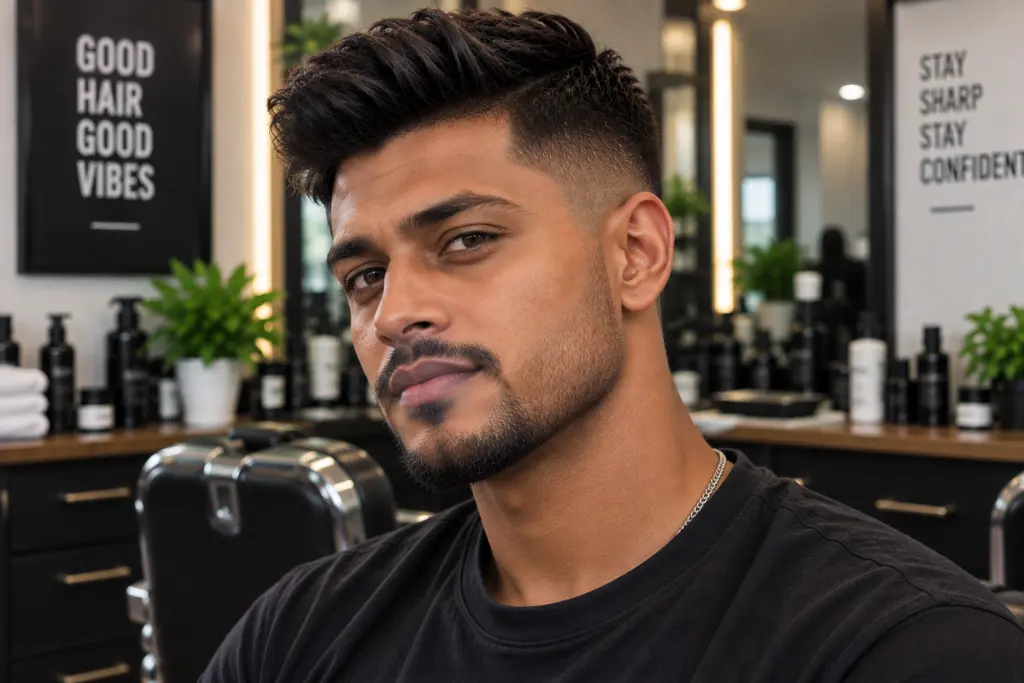
A short quiff adds controlled height at the front without requiring the longer length associated with traditional voluminous quiffs. Hair is kept short through the sides and back while the front section retains enough length to lift slightly upward and backward. This creates a flattering vertical line and gives the haircut personality without making it difficult to manage. The short quiff can be combined with a fade, taper, or classic scissor-cut sides depending on the desired level of contrast.
Styling typically requires only a small amount of matte paste or clay. The front can be pushed upward with the fingers after blow-drying, while the rest of the top remains relatively relaxed. Men with naturally thick or straight hair often find the style particularly easy to maintain because their hair provides enough structure to hold the shape. Fine hair may benefit from lightweight volumizing powder. By keeping the overall length short, the quiff delivers fashionable height without transforming into a high-maintenance hairstyle.
12. Short Pompadour Fade
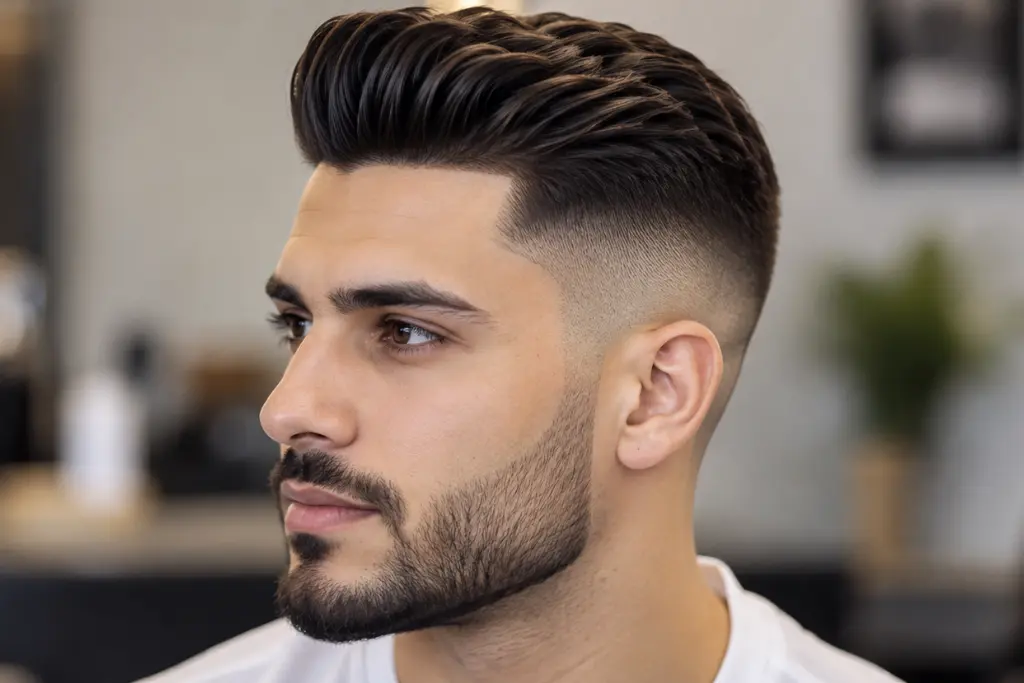
The short pompadour fade provides the recognizable shape of a pompadour while keeping the dimensions compact enough for everyday convenience. The sides are faded or closely tapered, while the top gradually increases in length toward the front. Instead of creating dramatic height, the front is styled into a controlled lift that gives the haircut structure. This makes the short pompadour suitable for men who appreciate classic barbering but prefer a more manageable interpretation of the traditional style.
A blow-dryer can help establish the basic direction of the front, but the short length means styling usually takes far less time than with a full pompadour. Matte pomade, clay, or styling cream can provide enough hold while preserving natural texture. Thick straight hair is particularly well suited to this haircut because it naturally supports the front shape. Regular maintenance of the fade keeps the overall silhouette sharp. The result is polished, masculine, and contemporary without requiring an elaborate routine.
13. Taper Fade
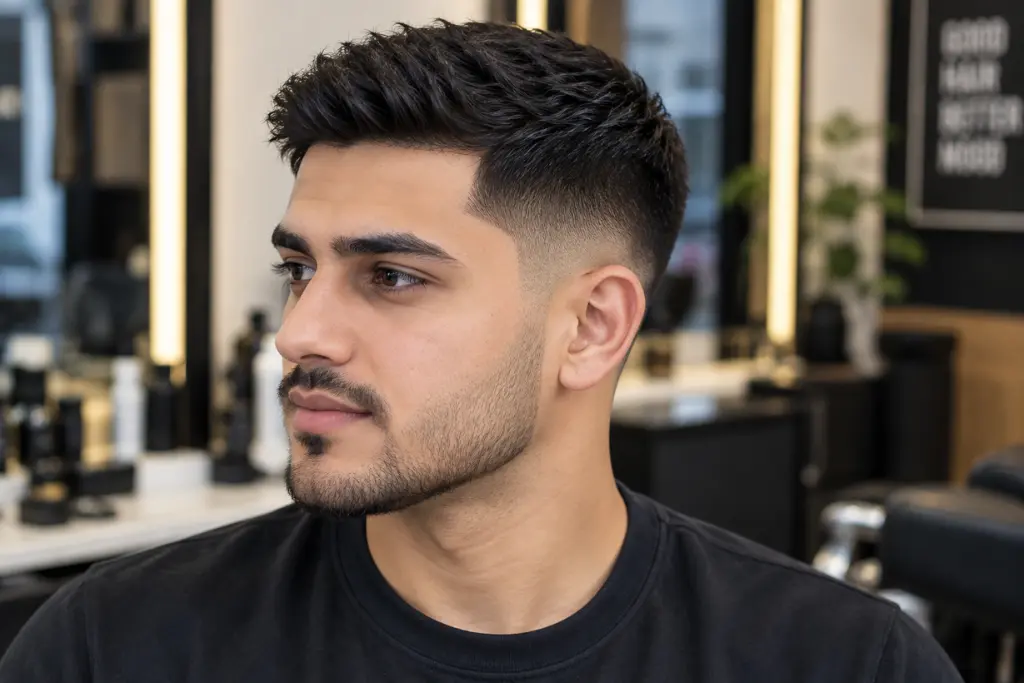
The taper fade haircut gradually shortens the hair around the sideburns and neckline while preserving more length through the upper sides and crown. Compared with a dramatic skin fade, a taper creates a softer transition that works beautifully for men who want clean edges without removing too much hair. This understated structure makes the haircut extremely versatile because the top can be paired with a crop, crew cut, curls, waves, or simple natural texture.
Maintenance is straightforward because the taper does not expose as much scalp as higher fades. As the hair grows, the transition generally remains wearable for longer, which can extend the time between barber visits. The top can also be kept short enough to require almost no daily styling. A lightweight product may be used when extra definition is desired, but many versions look great with natural texture. For men searching for a polished haircut that does not feel overly aggressive, the taper fade is an excellent option.
14. Skin Fade with Short Top
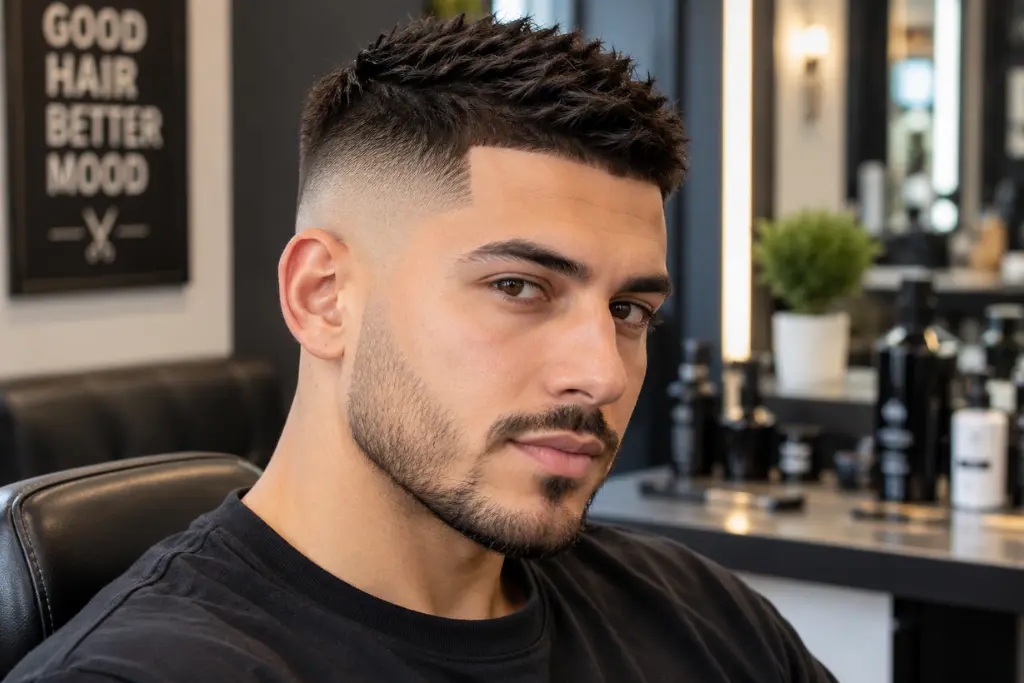
A skin fade with short top creates maximum contrast by blending the lower sides completely down to the skin before transitioning into short hair above. This produces an exceptionally clean and sharp appearance around the ears and neckline. Keeping the crown short prevents the haircut from becoming overly dramatic and maintains its practical character. The combination works especially well for men who prefer a crisp modern style and are comfortable with exposing more of the scalp around the sides.
Although daily styling is minimal, the skin fade itself requires more regular barber maintenance than softer tapers because even small amounts of regrowth quickly change the transition. The top can be textured with matte paste, brushed forward, or simply left natural. Thick hair benefits from having side bulk removed, while curly textures can create attractive contrast against the closely faded perimeter. For a fresh-from-the-barber appearance with a strong masculine silhouette, the skin fade remains one of the sharpest short haircuts available.
15. Military High and Tight
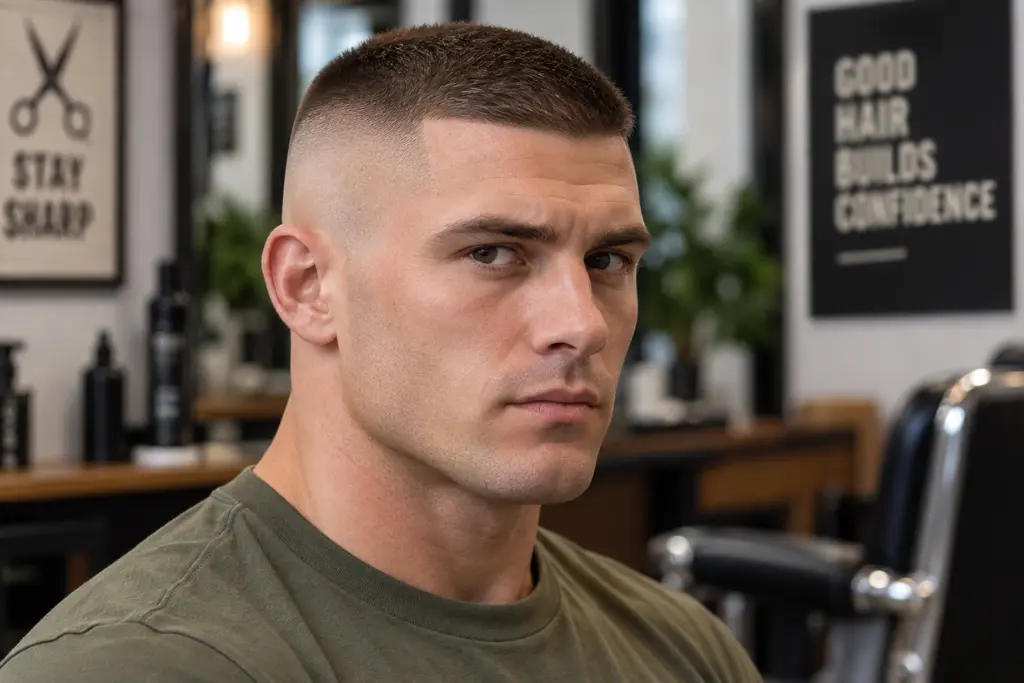
The high and tight haircut originated from military grooming traditions and remains popular because of its exceptionally practical structure. The sides and back are clipped very short and high around the head, leaving a narrow section of slightly longer hair through the top. This dramatic difference creates a strong, straightforward silhouette with virtually no daily styling required. The haircut is particularly useful for active lifestyles because the hair stays controlled regardless of weather, exercise, or frequent helmet use.
Different guard lengths allow the high and tight to range from extremely close to slightly softer. Men who prefer less scalp exposure can keep the sides somewhat longer while preserving the basic shape. A clean line-up can further emphasize the haircut’s precision. Since the style places significant attention on head shape and facial structure, discussing proportions with a barber can help determine the most flattering length. For pure functionality combined with a disciplined aesthetic, few hairstyles compete with the high and tight.
16. Butch Cut
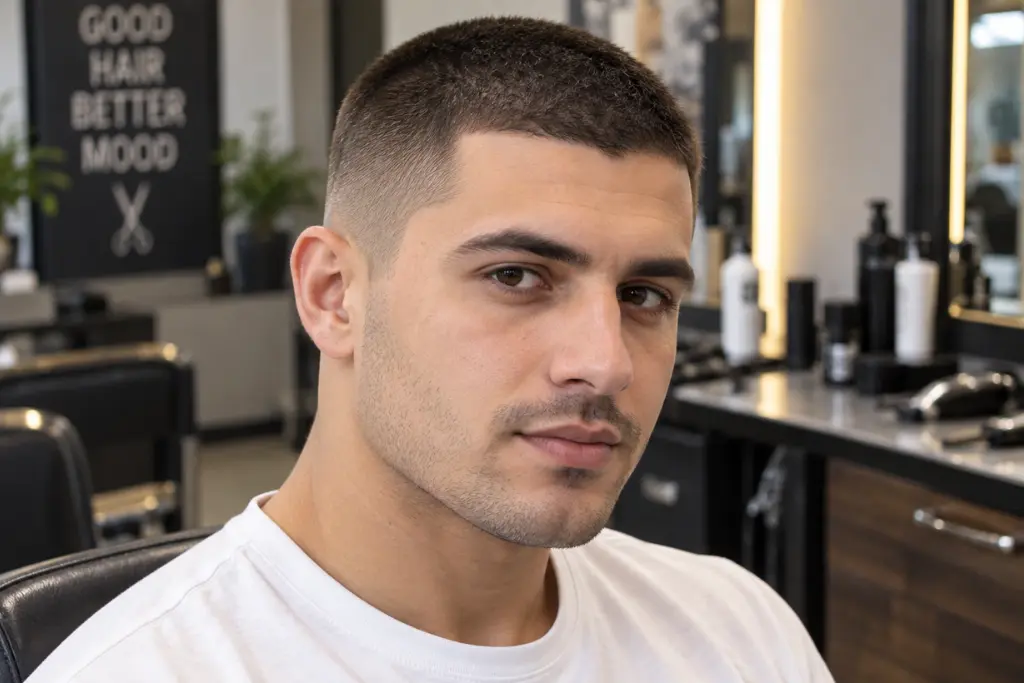
The butch cut is a practical variation of the buzz cut in which the hair remains uniformly short but generally retains slightly more length than an ultra-close clipper shave. This additional length makes the hairstyle feel softer while maintaining the low-maintenance benefits associated with short military-inspired cuts. Because the hair is usually kept at a consistent guard length across the head, there is little need for daily styling, making it a strong option for men who value simplicity.
A butch cut can be customized with a subtle taper or clean line-up to give the basic shape additional polish. Men with dense hair often achieve a particularly full and even appearance, while coarse textures benefit from the controlled short length. Scalp care remains important because more skin becomes visible than with longer hairstyles. The haircut is also especially practical during warmer weather and active routines. Simple, masculine, and dependable, the butch cut continues to be one of the easiest short hairstyles to maintain.
17. Short Afro Fade
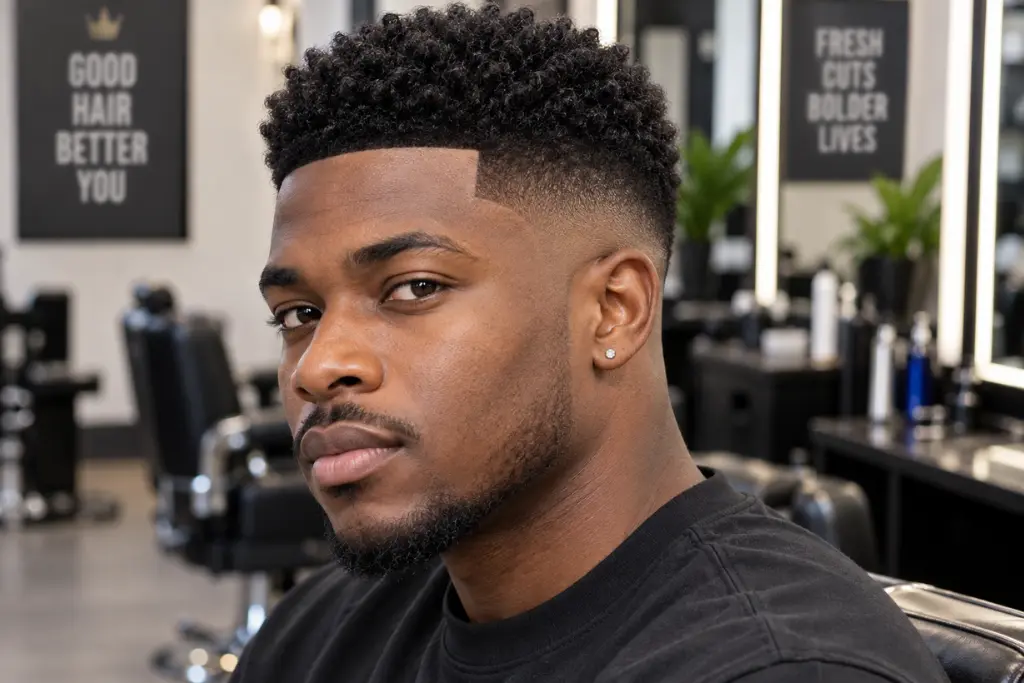
A short Afro fade allows natural tightly coiled texture to remain visible through the top while keeping the sides and back cleanly tapered or faded. The controlled height makes the haircut easier to manage than a larger Afro, while the natural curl pattern provides texture and visual interest without requiring complicated styling. The fade also creates a strong contrast that emphasizes the shape of the crown and can be customized to begin low, medium, or high depending on personal preference.
Moisture is important for maintaining healthy-looking coils, even when the hair is short. Lightweight leave-in conditioner or curl moisturizer can keep the texture soft without creating buildup. A barber can shape the top so that the silhouette remains balanced from every angle, while a precise line-up can add additional definition around the forehead and temples. Because the natural texture does most of the visual work, daily styling is minimal. This makes the short Afro fade an excellent combination of style, identity, and convenience.
18. Short Curly Fade
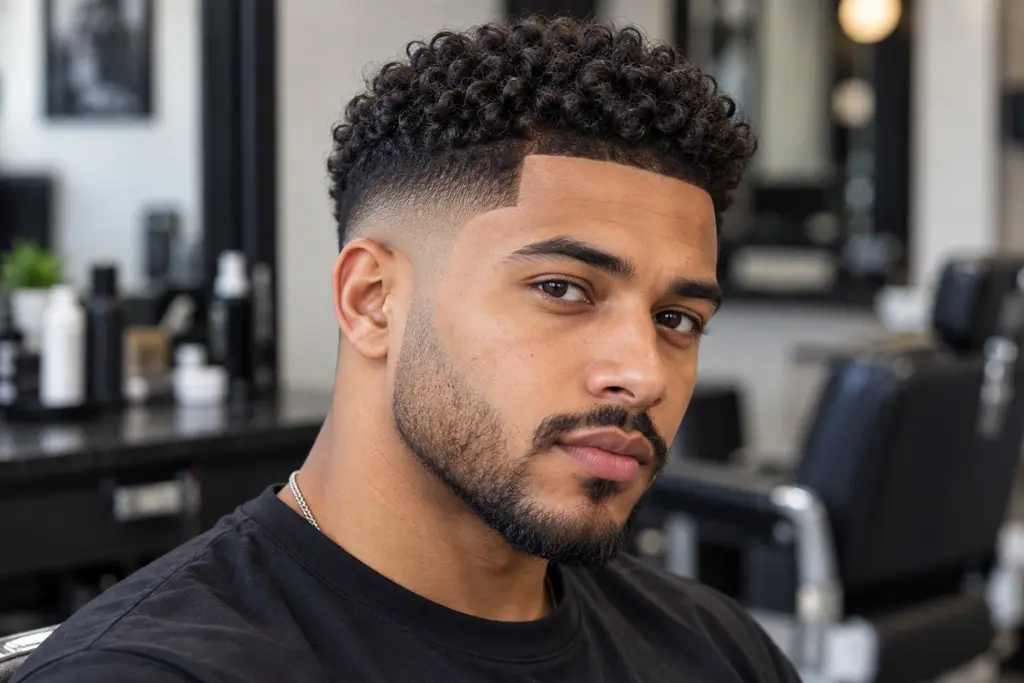
The short curly fade is ideal for men who want to showcase natural curls while keeping the haircut compact and easy to manage. Hair on top is left just long enough for the curl pattern to become visible, while the sides gradually fade shorter toward the ears and neckline. This contrast prevents curls from creating excessive width around the head and directs attention toward the textured crown. The haircut can work with loose waves, medium curls, and tighter curl patterns.
Styling should focus primarily on enhancing definition rather than forcing the hair into a completely different shape. A lightweight curl cream or leave-in conditioner can help separate curls and control frizz, while excessive brushing is usually unnecessary. Because the sides remain short, daily maintenance mostly involves refreshing the crown with moisture. A sharp edge-up can make the overall haircut appear even cleaner. The combination of natural texture and controlled proportions makes the curly fade one of the most versatile modern men’s haircuts.
19. Short Wavy Crop
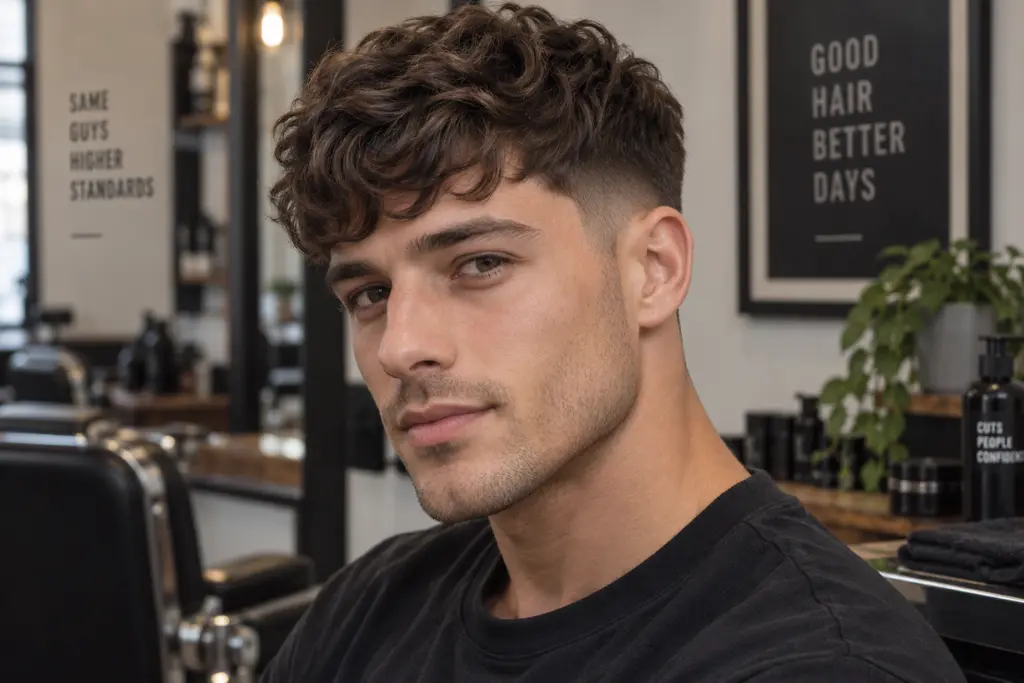
A short wavy crop takes advantage of natural movement rather than trying to straighten or control every bend in the hair. The sides and back remain compact, while slightly longer layers on top allow waves to form naturally. Texturizing can remove unnecessary weight and encourage individual sections to separate, creating an effortlessly styled appearance. Because natural wave patterns add dimension automatically, this haircut often looks visually detailed even when very little styling product is used.
Men with wavy hair can usually style the crop by applying lightweight cream or sea-salt spray to damp hair and allowing it to dry naturally. Finger-styling helps preserve the wave pattern better than excessive brushing. The fringe may be worn forward, slightly lifted, or pushed casually to one side. Since the overall length remains short, the hairstyle is resistant to becoming overly messy. For men who want to work with their natural texture while keeping grooming uncomplicated, the short wavy crop is a practical solution.
20. Short Brush Up
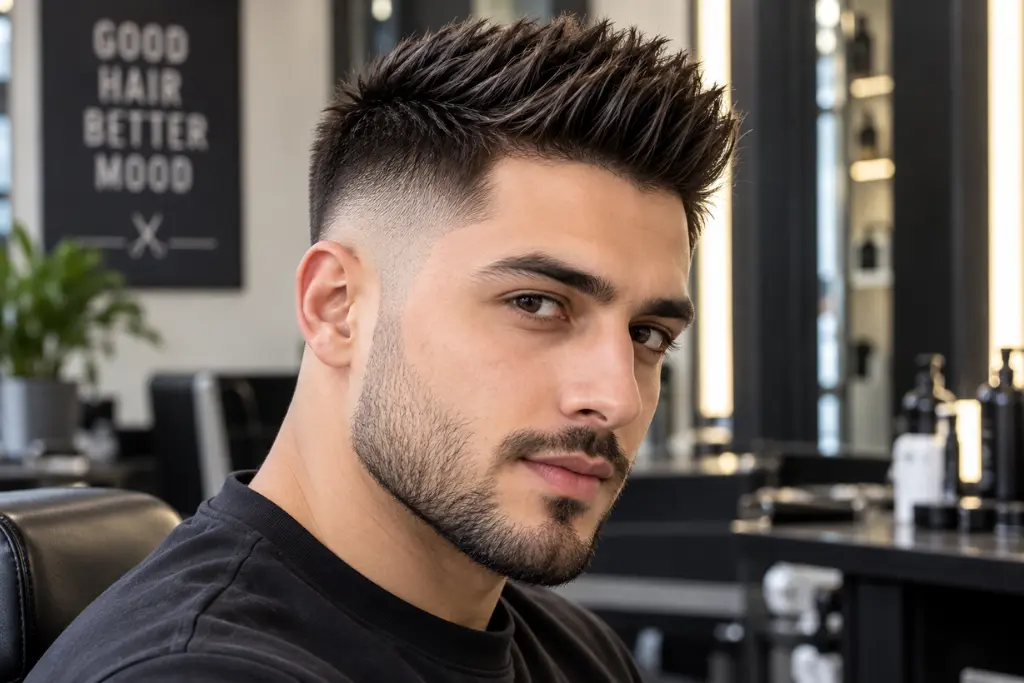
The short brush-up haircut creates controlled height by directing the top hair upward rather than forward or sideways. Unlike longer spiky or quiff hairstyles, the crown remains compact, which makes the haircut easier to style and maintain. Tapered or faded sides keep the silhouette clean while the vertical movement on top creates the appearance of additional height. This can be especially flattering for rounder facial proportions because the hairstyle visually lengthens the overall shape.
A short brush-up generally works best with straight, thick, or slightly wavy hair that can hold some natural structure. After drying, a small amount of matte clay or paste can be worked through the crown and pushed upward with the fingers. The goal is not to create rigid spikes but rather a textured lifted finish. Because the top is relatively short, styling can usually be completed quickly. The final result feels modern, masculine, and polished while remaining suitable for everyday wear.
21. Short Spiky Hair
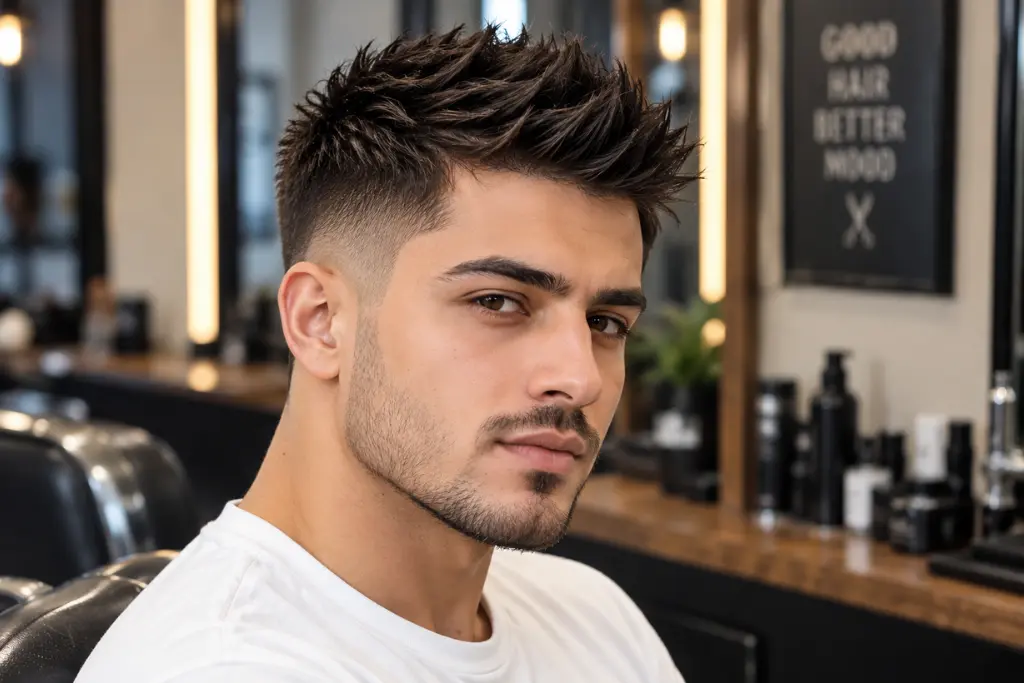
Short spiky hair offers a casual and energetic option for men who want visible texture without maintaining longer strands. The sides are typically kept short while the crown is cut into layered sections that can be directed upward or slightly forward. Modern spikes are generally softer and more separated than the heavily gelled styles associated with previous decades. This creates a more natural appearance while retaining the sharp definition that makes the haircut distinctive.
Matte styling clay, wax, or paste works particularly well because it provides separation without creating excessive shine. Product can be applied selectively to individual sections rather than coating the entire head. Thick and straight hair usually holds the spiky shape easily, while finer hair may benefit from texture powder for additional lift. When the crown is kept compact, styling requires only a few moments. This haircut works particularly well for casual lifestyles and men who prefer short hair with a little personality.
22. Short Slick Back with Fade
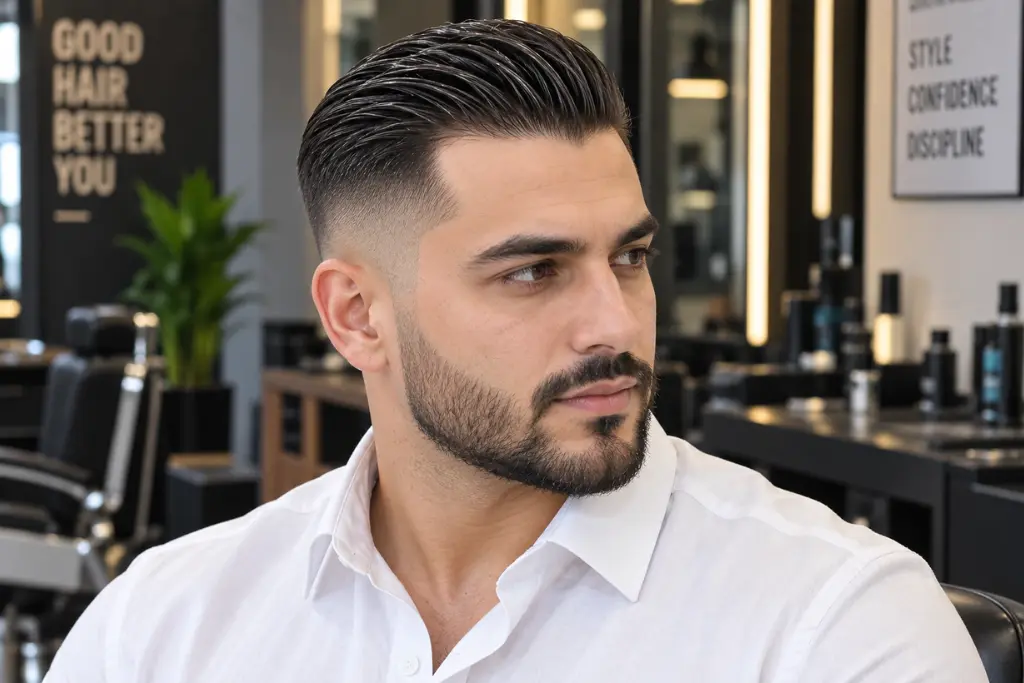
A short slick back with fade combines clean barbered sides with a slightly longer top that can be directed backward. Unlike traditional slicked-back hairstyles that require significant length, this version keeps the crown relatively short, making it quicker to wash, dry, and style. The fade creates a sharp transition around the sides while the backward movement gives the top a polished shape. This combination works especially well for men who want a sophisticated hairstyle without committing to medium-length hair.
Styling products can determine whether the haircut appears contemporary or more traditional. Matte paste creates a natural, textured slick-back, while pomade provides additional shine and formality. Because the hair is short, only a small amount of product is necessary to maintain direction. Men with thick or straight hair often find the style particularly cooperative, although light waves can add attractive movement. Regular fade maintenance keeps the sides crisp, while daily styling remains uncomplicated and efficient.
23. Drop Fade with Short Hair
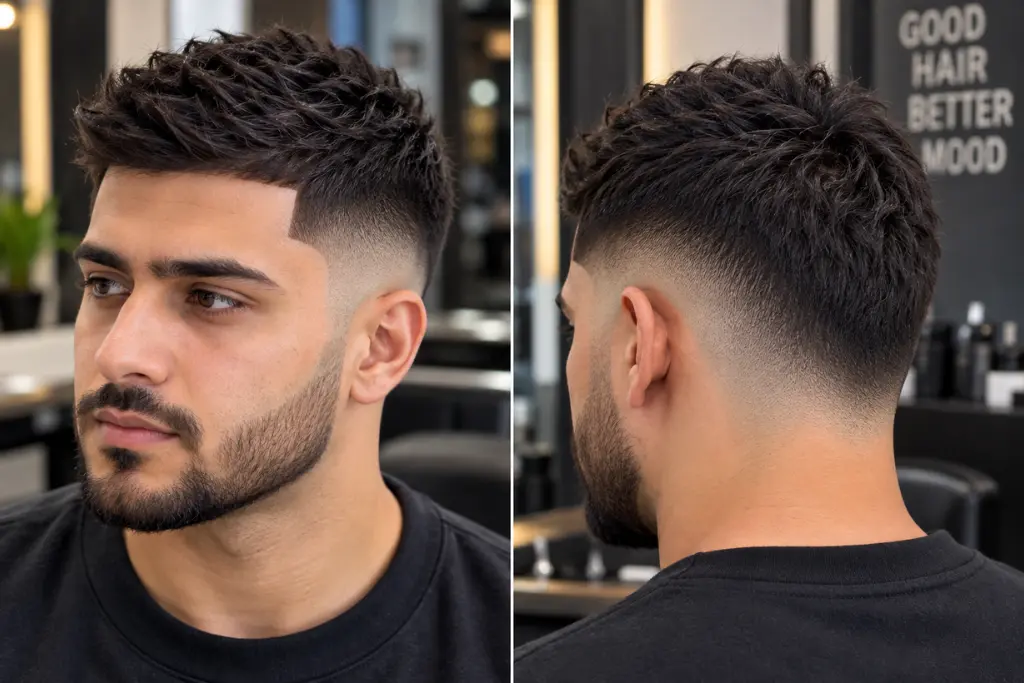
A drop fade with short hair introduces additional shape by allowing the fade line to curve downward behind the ears rather than remaining level around the head. This contour follows the natural structure of the skull and creates a distinctive transition around the back. The top can remain extremely simple, whether worn as a short crop, curls, crew cut, or textured style. Because the detailing occurs primarily through the fade, the haircut can look sophisticated even when the crown requires almost no maintenance.
The curved transition can help emphasize the shape of the head and create a cleaner outline around the occipital area. Men with dense, curly, or textured hair often use the drop fade to control bulk while preserving natural movement on top. Daily styling depends largely on the chosen crown length, but keeping it short allows for an easy routine. Although the fade requires skilled barbering to execute correctly, the finished haircut provides visual interest without demanding additional styling from the wearer.
24. Temple Fade
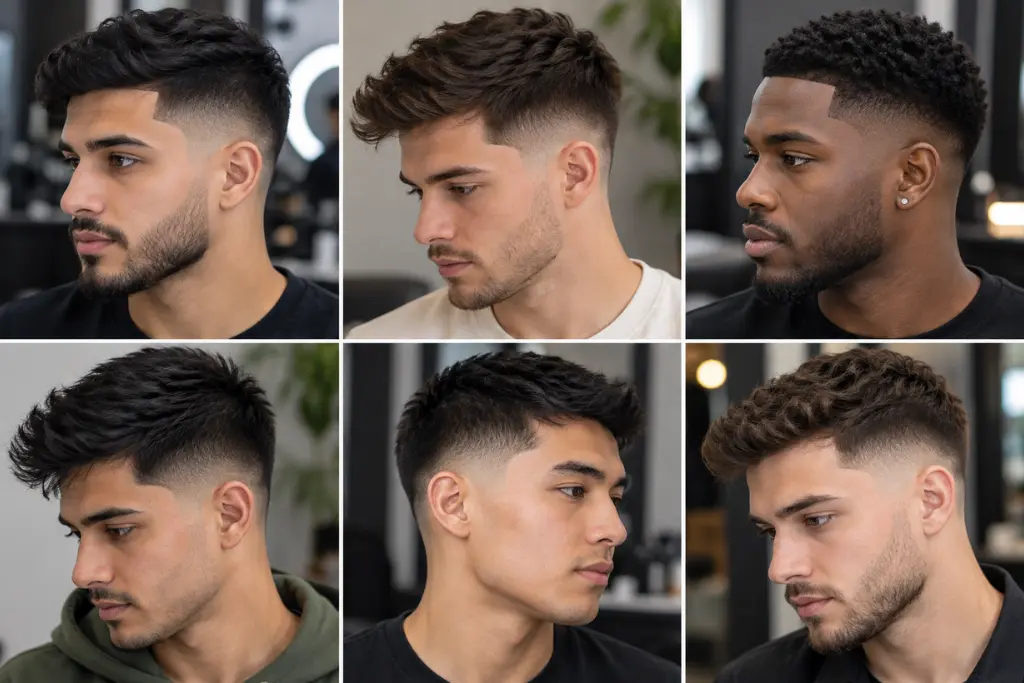
The temple fade, sometimes called a temp fade, concentrates the shortest transition around the temples and sideburn areas while preserving more fullness elsewhere. This subtle technique can sharpen a short haircut without dramatically changing its overall shape. It works especially well with curls, waves, Afro-textured hair, crew cuts, and short crops because the fade creates definition around the face while allowing natural texture to remain prominent through the crown.
Because less hair is removed than with a full high fade, the temple fade often grows out more naturally and can require slightly less frequent maintenance. A clean line-up around the forehead can complement the fade and provide additional structure. The haircut is especially useful for men who want a fresh barbered finish while retaining more density through the sides and back. Its understated character allows the hairstyle to move easily between professional and casual environments while keeping daily styling requirements minimal.
25. Short Hair with Hard Part
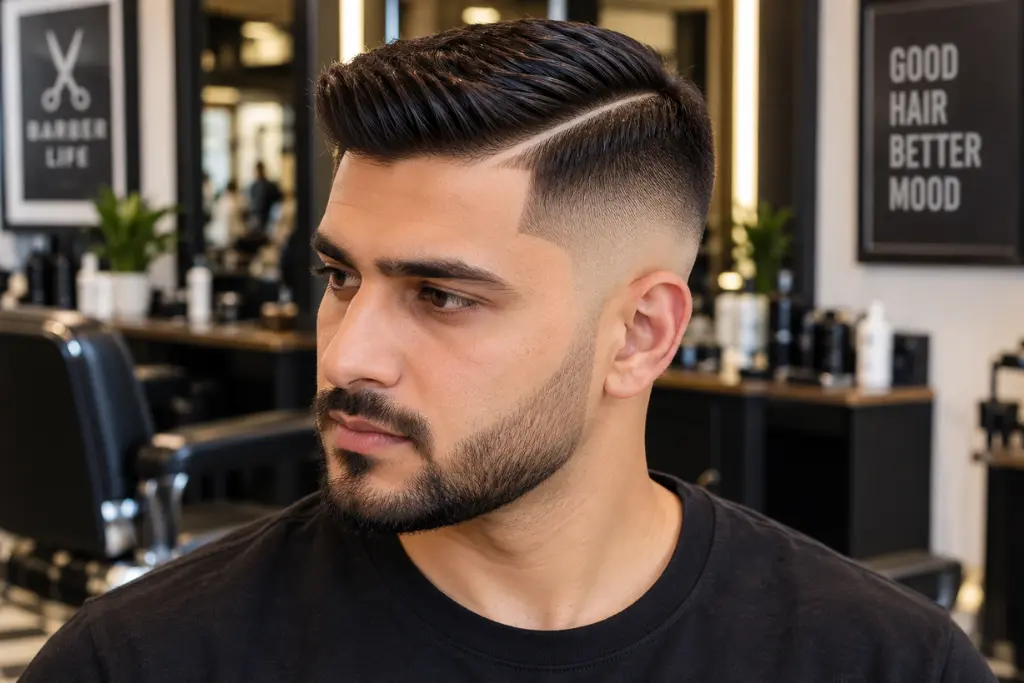
A short haircut with a hard part uses a precisely shaved line to emphasize the natural separation between sections of the hair. The part introduces a strong geometric detail that makes even a simple short haircut appear more deliberate. The sides can be tapered or faded while the upper section remains long enough to sweep slightly to one side. Because the hard part establishes the direction of the style automatically, relatively little daily effort is needed to maintain a polished appearance.
A small amount of styling cream or pomade can help keep the top aligned with the part, especially for straight or thick hair. The shaved line gradually becomes less visible as the hair grows, which means barber maintenance is necessary if a consistently crisp appearance is important. Despite that requirement, day-to-day styling remains easy. The hard part works particularly well for men who prefer clean, structured grooming and want a noticeable detail without adopting a dramatically longer or more complicated hairstyle.
26. Bald Fade Buzz Cut
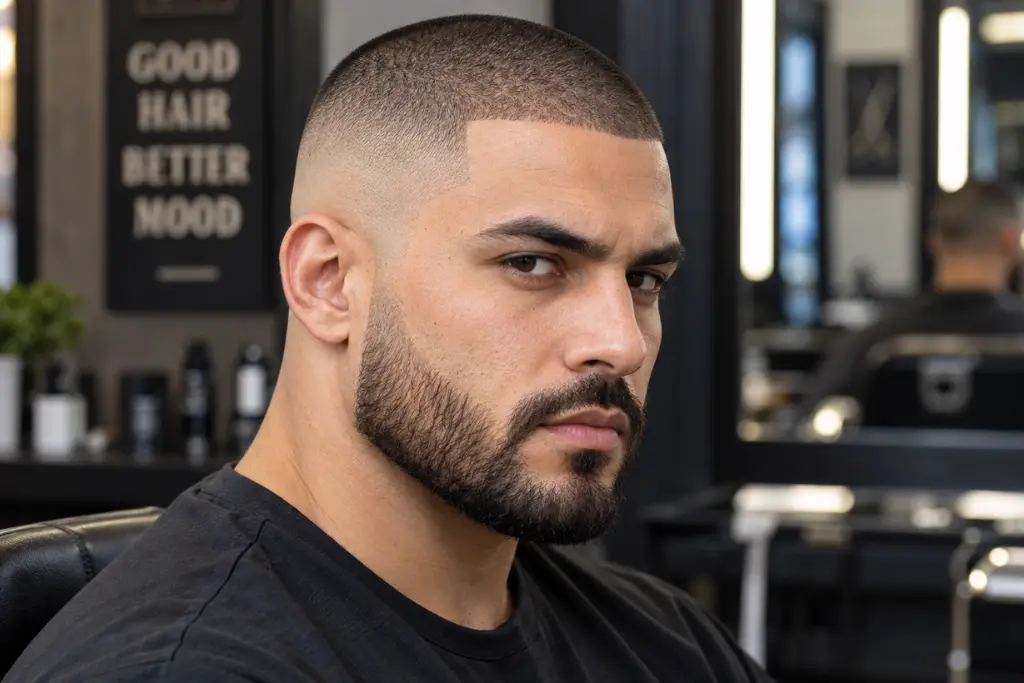
A bald fade buzz cut combines the simplicity of an ultra-short top with a fade that blends completely into the skin around the lower sides and neckline. The result is one of the cleanest and most minimal men’s haircuts available. Because there is virtually no length to style, daily grooming is limited largely to washing and scalp care. The dramatic fade introduces enough detail to prevent the haircut from appearing completely uniform.
This style works particularly well for men who prefer a strong, athletic appearance and do not mind regular barber appointments. The transition from skin to slightly longer hair needs precision to look its best, so maintaining the fade is more important than styling the crown. A sharp line-up can further define the forehead and temples. Facial hair can also be blended into the fade for a cohesive finish. The haircut is straightforward, masculine, and exceptionally practical for anyone prioritizing minimal styling time.
27. Short Faux Hawk Fade
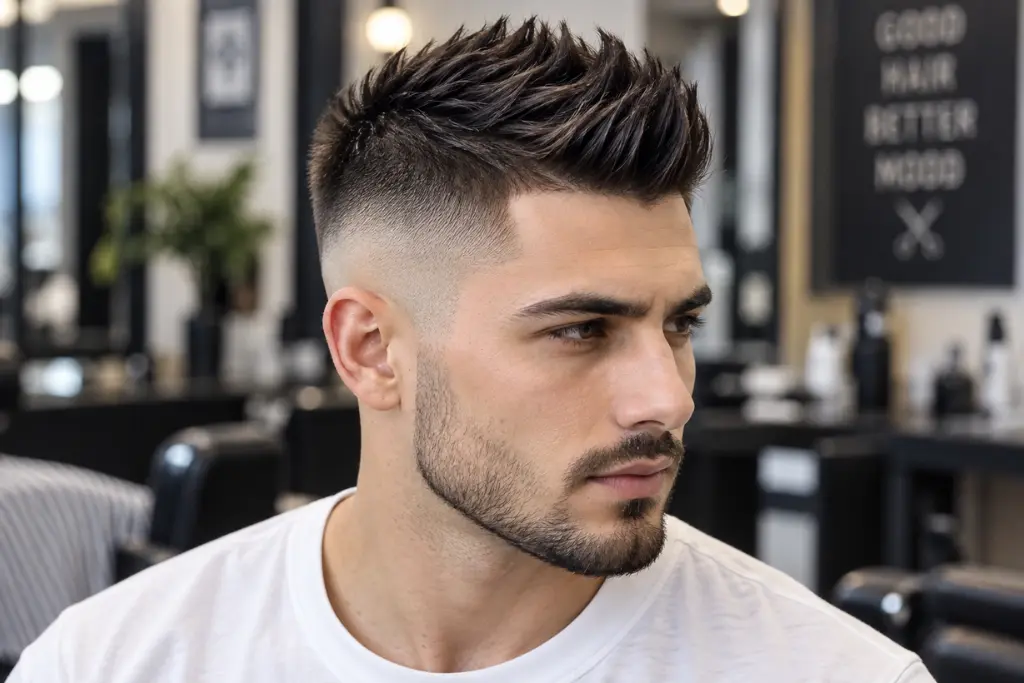
A short faux hawk fade adds edge without requiring the dramatic length or commitment of a traditional mohawk. The sides are faded while slightly longer hair remains through the central strip of the crown. Instead of creating a rigid point, the hair can be styled upward and inward to form a subtle directional texture. Keeping the top short ensures that the hairstyle remains wearable in everyday settings and does not require extensive product or blow-drying.
The faux hawk can be styled more dramatically for evenings or kept relaxed for work and casual occasions. Matte clay or paste provides enough grip to guide the central sections together without creating a hard, glossy finish. Men with thick or coarse hair often achieve the shape particularly easily because their natural density provides structure. The fade reduces side bulk and keeps the overall silhouette sharp. This hairstyle is ideal for men who want something more expressive than a crew cut while still prioritizing convenience.
28. Short Messy Crop
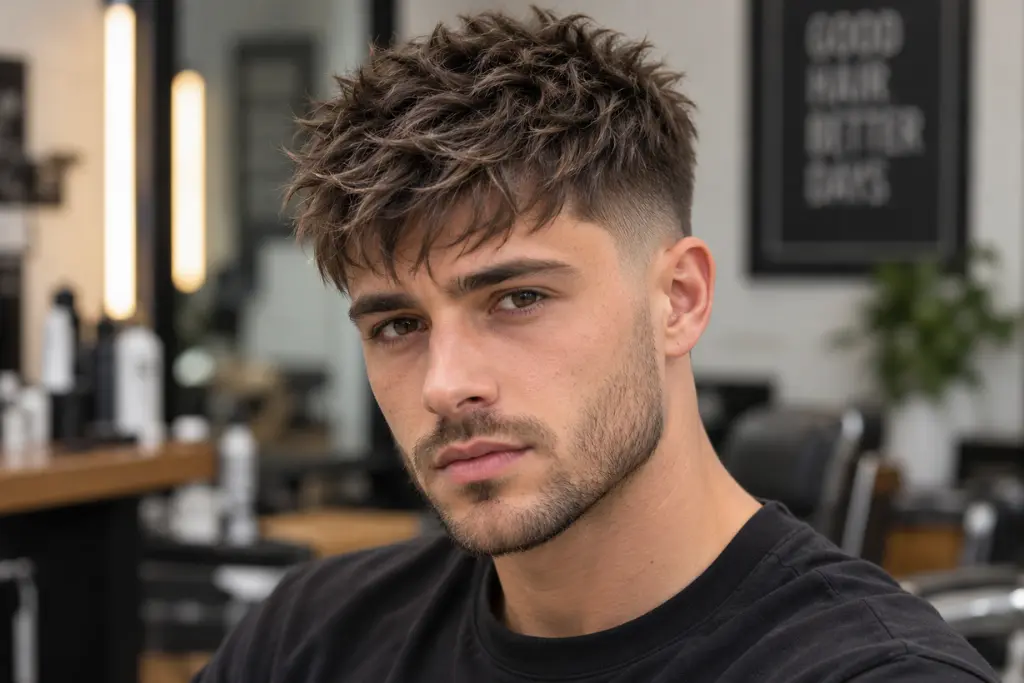
The short messy crop embraces irregular texture and natural movement to create an intentionally relaxed finish. The crown is cut into multiple short layers that fall in slightly different directions, while the sides remain tapered or faded to preserve structure. Because the hairstyle is not supposed to look perfectly combed, small changes throughout the day generally enhance rather than ruin the appearance. This makes it particularly practical for men who dislike constantly checking or readjusting their hair.
Styling requires only a small amount of texture paste, matte clay, or even no product at all depending on the natural hair type. Men with thick and wavy hair can often simply towel-dry the crown and use their fingers to create separation. Straight hair may benefit from lightweight texture powder to encourage movement. Keeping the fringe short prevents it from becoming difficult to control. The resulting haircut feels casual, modern, and effortless while retaining enough barbered structure to look intentional.
29. Short Hair with Beard Fade
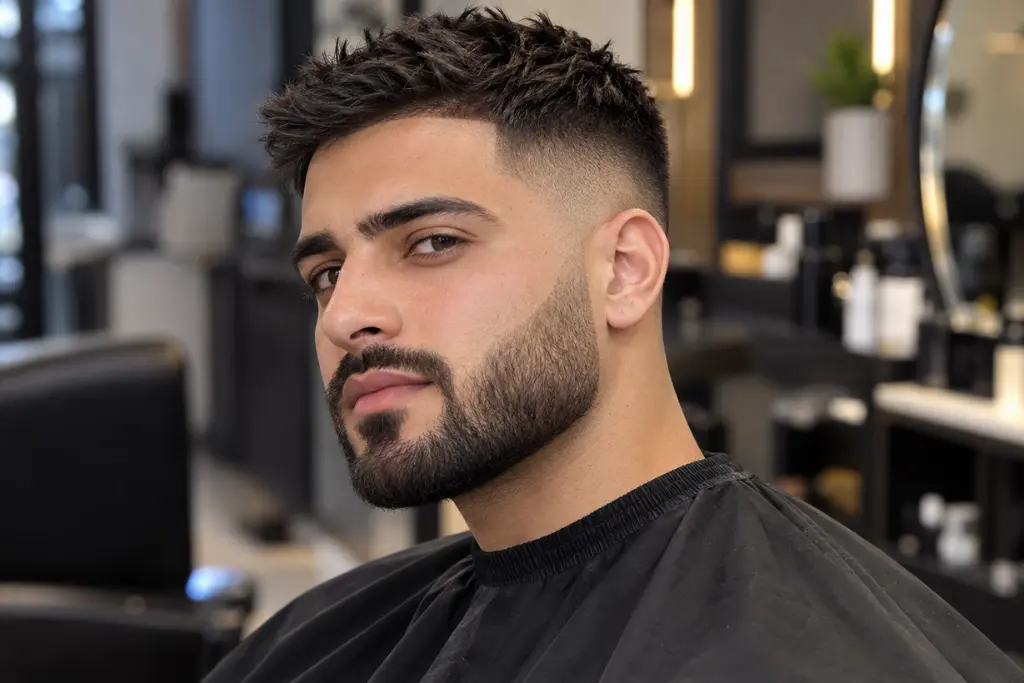
A short haircut with a beard fade creates continuity between the hairstyle and facial hair by gradually blending the sideburn area into the beard. The hair itself may be styled as a crew cut, crop, buzz cut, or short textured fade, while the beard transition provides an additional layer of polish. This technique prevents a heavy disconnect between the head and facial hair and can produce a particularly balanced appearance for men who wear short or medium-length beards.
Maintaining the look involves paying attention to both the haircut and beard lines. The fade around the sideburns should transition naturally, while the cheek and neckline of the beard can be kept clean for a structured finish. A small amount of beard oil or balm can improve control without affecting the simplicity of the hairstyle. Because the head hair remains short, most daily maintenance focuses on basic grooming rather than styling. The result is cohesive, masculine, and professionally finished.
30. Short Natural Taper
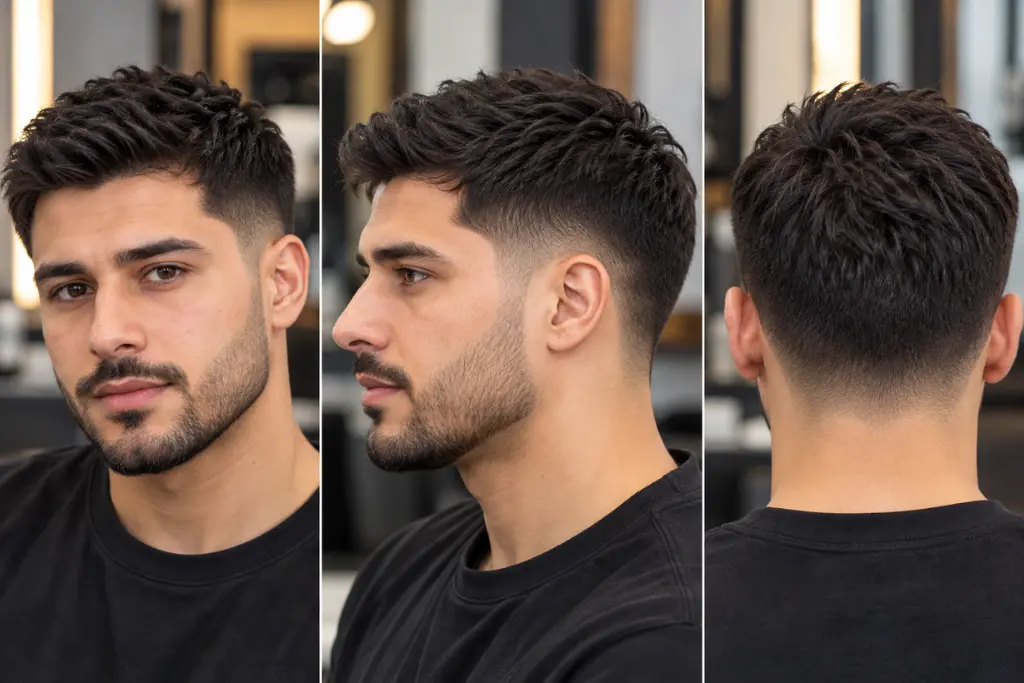
The short natural taper is an excellent final choice for men who prefer a subtle, timeless haircut rather than dramatic fades or heavily styled texture. Hair remains relatively natural through the top and upper sides while gradually becoming shorter near the temples, sideburns, and neckline. This preserves the individual’s natural hair pattern and density while cleaning up the areas that tend to look untidy first. The result is a versatile haircut that works across many age groups, workplaces, and personal styles.
The natural taper is also forgiving as it grows because there is no extreme contrast between bare skin and longer hair. Straight, wavy, curly, and coily textures can all be adapted to this basic shape. Styling may involve nothing more than a small amount of cream or matte paste, and some men can wear the haircut completely product-free. Regular trims maintain the outline, but the softer transition allows more flexibility between barber visits. For timeless style and straightforward maintenance, the natural taper is difficult to beat.
How to Choose the Best Short Haircut for Men
Choosing the right short men’s haircut depends on much more than selecting a popular style from a photograph. Hair texture, density, natural growth direction, face shape, head shape, beard style, occupation, and preferred maintenance level should all influence the final haircut. Men with thick hair may benefit from textured crops, crew cuts, or fades that remove excess weight, while fine hair can often appear fuller when kept relatively short with controlled crown texture. Curly and coily hair usually looks best when the haircut preserves enough length to display its natural pattern.
Face shape can also guide haircut proportions. Round faces often benefit from a little height through the crown and shorter sides, while longer faces may look more balanced with less vertical volume. Square faces generally work well with crew cuts, buzz cuts, crops, and tapers because these styles complement a defined jawline. A professional barber can adjust fringe length, fade height, side fullness, and crown texture to make a popular haircut more suitable for your individual features instead of copying a reference image exactly.
Best Short Haircuts for Fine Hair
Men with fine hair often assume that longer length will make the hair appear fuller, but excessive length can sometimes have the opposite effect by pulling strands flat against the scalp. Short crew cuts, textured crops, Ivy League cuts, Caesar styles, and short brush-ups can create stronger shape while reducing unnecessary weight. Keeping the sides tidy can also make crown volume appear more noticeable. Texturizing should be used carefully because removing too much density can make already fine hair look sparse.
Lightweight styling products are usually the best choice for fine hair. Texture powder, volumizing mousse, matte paste, or light clay can provide lift and separation without coating strands heavily. Applying too much wax or wet-look pomade may reduce volume and expose more scalp. Blow-drying the crown briefly against its natural direction can also improve root lift. Combining an appropriate haircut with minimal, lightweight styling can create a fuller and more structured appearance without extending the daily grooming routine.
Best Short Haircuts for Thick Hair
Thick hair offers natural density but can become difficult to manage when excess weight builds around the sides and crown. High fades, textured crops, crew cuts, short quiffs, French crops, and undercut-inspired short styles can remove bulk while allowing the hair’s natural thickness to create a strong texture. A barber can use point cutting or internal texturizing techniques to improve movement without making the haircut appear uneven. Keeping the neckline and temple areas controlled is especially important for maintaining a sharp shape.
Styling thick hair usually requires products with enough hold to control natural volume. Matte clay and medium-hold paste work particularly well because they define strands without creating excessive shine. However, a well-designed short haircut should not need a large amount of product. If the crown repeatedly becomes difficult to control, the problem may be unnecessary weight rather than insufficient styling product. Strategic cutting can often make dense hair significantly easier to manage while preserving the strong appearance that thick hair naturally provides.
Best Short Haircuts for Curly and Wavy Hair
Curly and wavy textures add natural dimension to short men’s haircuts, making them especially compatible with tapers and fades. Short curly fades, wavy crops, temple fades, Afro fades, and textured tops preserve enough length for movement while controlling width around the sides. The exact crown length should depend on curl pattern and shrinkage because hair that appears long when stretched may become significantly shorter after drying. An experienced barber can shape the hairstyle according to the way curls naturally fall.
Instead of trying to eliminate natural texture, styling should usually focus on definition and moisture. Lightweight curl cream, leave-in conditioner, mousse, or texture spray can enhance movement without creating a rigid finish. Excessive brushing can disrupt curls and increase frizz, so finger-styling is often more effective. Keeping the sides short also makes natural texture easier to manage during humid or active days. The combination of controlled barbering and natural movement can produce a distinctive haircut with relatively little daily work.
How Often Should Men Get a Short Haircut?
The ideal haircut schedule depends largely on how precise the chosen style needs to remain. Skin fades, bald fades, line-ups, hard parts, and very tight tapers tend to show regrowth quickly because their visual impact depends on sharp contrast. Men who want a consistently fresh barbershop appearance may therefore choose more frequent appointments. Crew cuts, natural tapers, Ivy League cuts, and softer low fades generally grow out more gradually and can remain presentable for longer.
Hair growth rate also varies from person to person, so there is no universal schedule that works for everyone. Rather than focusing solely on the calendar, watch the areas that define the haircut most strongly. If the neckline becomes untidy, the fade loses its transition, or the crown stops sitting correctly, it may be time for a trim. Choosing a hairstyle that grows out naturally can also reduce the maintenance burden for men who prefer fewer barber visits.
How to Style Short Men’s Hair
Short hairstyles generally require less product than longer cuts, and overusing styling products can make the hair appear greasy, flat, or stiff. Matte clay works well for textured crops, crew cuts, and short quiffs, while light styling cream can control side parts and natural tapers. Pomade is useful when a smoother or more polished finish is desired. Texture powder can create lift in fine hair, while curl cream helps preserve movement in curly or wavy textures.
The easiest routine is often to begin with slightly damp hair, establish the desired direction, and use only enough product to support the haircut’s natural shape. Finger-styling creates a casual textured finish, while a comb produces cleaner lines for side parts and slicked-back styles. A short blast with a blow-dryer can add volume to quiffs and brush-ups, but many of the haircuts in this list can simply be towel-dried and styled within minutes.
Short Haircut Maintenance Tips
A sharp men’s haircut begins with basic hair and scalp care. Regular shampooing should be balanced with the needs of your hair type, since excessive washing can leave some textures dry while insufficient cleansing can lead to product buildup. Conditioners can help maintain softness even on relatively short hair, particularly for curly, coarse, or chemically treated textures. If the scalp is exposed through a buzz cut or skin fade, sun protection becomes especially important during extended outdoor activity.
Keeping grooming tools and styling habits simple can also make short hair easier to maintain. Rather than constantly adding more product to fix an overgrown haircut, schedule a barber visit when the shape begins to disappear. Beard lines, sideburns, necklines, and temple areas should complement the haircut rather than compete with it. By combining the right barbering technique with straightforward home care, short hair can maintain a polished appearance without becoming a time-consuming part of the daily routine.
Conclusion
The best short haircuts for men combine a strong shape with realistic maintenance requirements. Timeless options such as the crew cut, buzz cut, Ivy League, Caesar cut, and natural taper remain popular because they work across different lifestyles and settings. Modern choices such as the textured crop fade, short curly fade, drop fade, faux hawk, and skin fade introduce more contrast while retaining the practical benefits of shorter hair. The right option depends on your natural texture, face shape, profession, personal style, and preferred barber schedule.
Ultimately, a low-maintenance haircut should work with your hair rather than forcing you to fight it every morning. Straight hair can showcase clean structure, thick hair can provide natural texture, waves and curls can create movement, and coily hair can form strong sculpted shapes. With the appropriate length, fade, taper, fringe, and texture, a short men’s haircut can look sharp from the office to the gym while requiring only a few minutes of daily grooming.