26 Gorgeous Short Gray Hairstyle Ideas for Every Age and Hair Type

Short gray hair can look soft, sharp, polished, or beautifully undone. The right cut makes the most of your natural texture and the way silver, white, and salt-and-pepper strands catch the light. Whether you are embracing your first grays or have worn silver hair for years, there is no single age or hair type that defines the look.
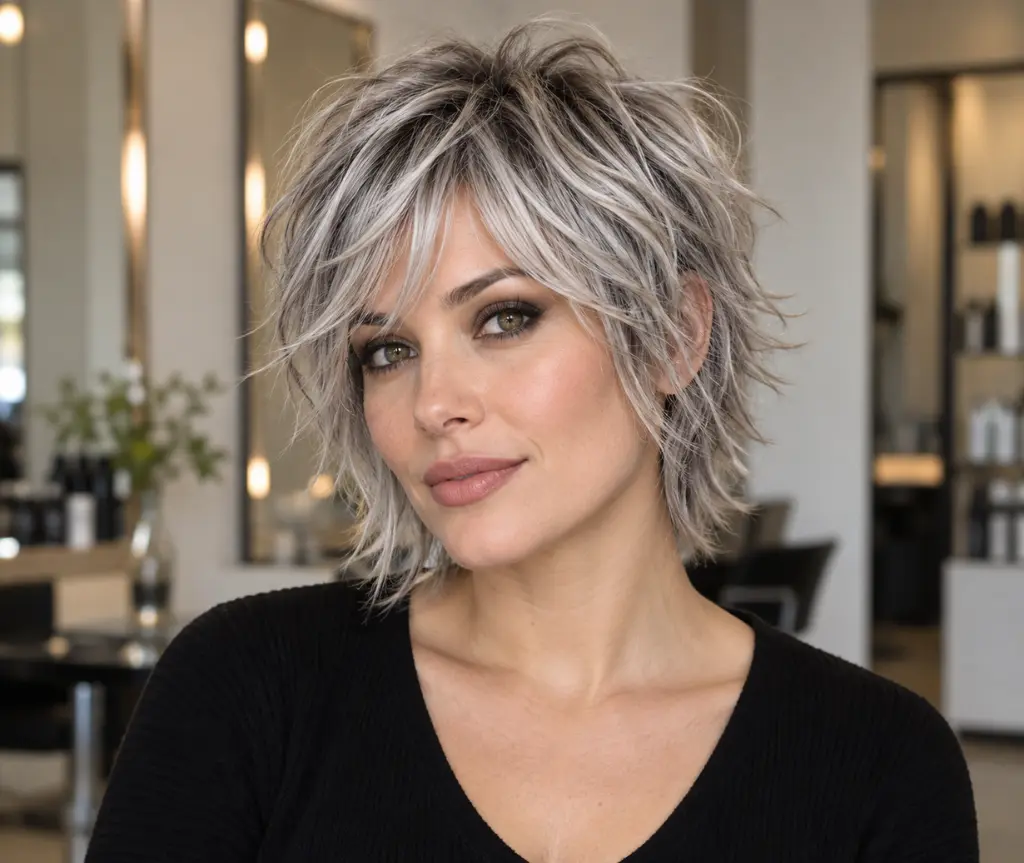
These 26 short gray hairstyles cover straight, wavy, curly, and coily hair, along with options for fine or thick density. Each idea includes styling guidance and an image prompt you can use to create a matching salon portrait. The accompanying lead image shows three different ways to wear short gray hair.
1. Classic Silver Pixie Cut
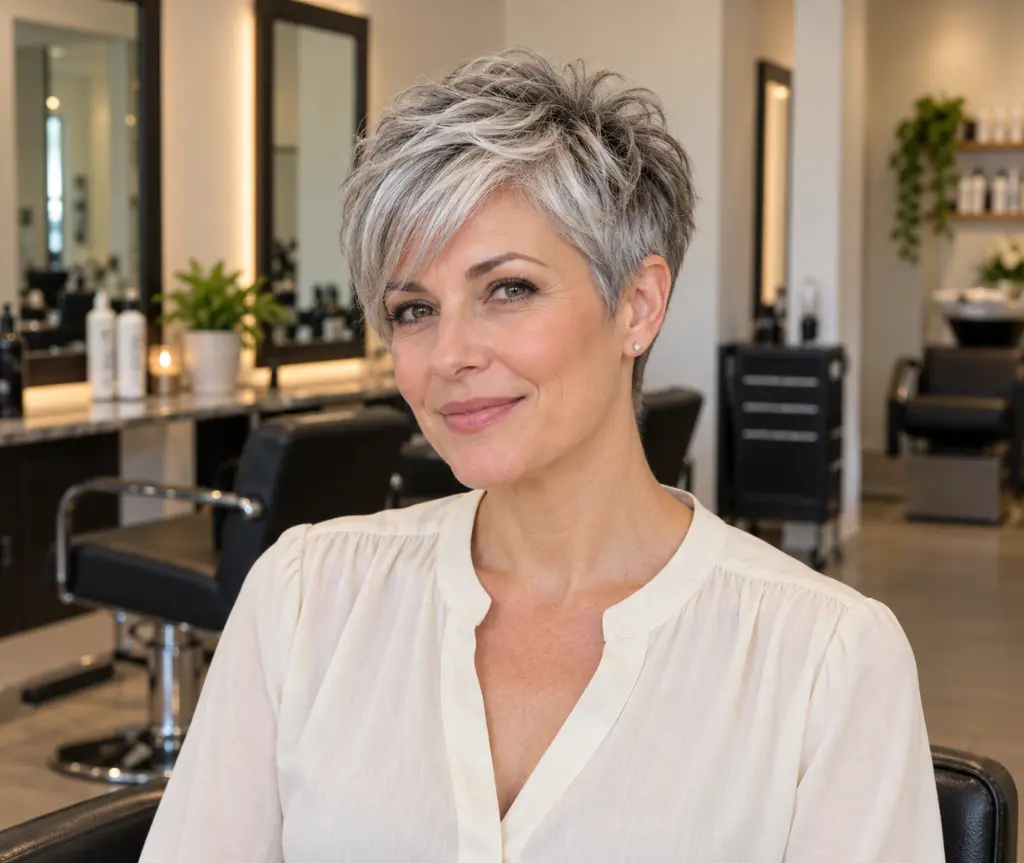
A classic silver pixie keeps the sides and back close while leaving enough length on top to create a gentle shape. It puts the focus on the natural variation in gray hair, from bright white strands to deeper charcoal tones. A little height at the crown can make fine hair appear fuller, while neatly tapered edges keep thick hair under control. Ask your stylist to adjust the fringe to your face shape: a short, broken fringe opens up the forehead, while a longer one can soften the look.
This is a useful choice if you like a quick morning routine, though short hair still needs regular trims to hold its shape. Work a small amount of lightweight cream through damp hair, then direct the top with your fingers as you dry it. For a smoother finish, use a small brush at the crown. Silver hair can sometimes pick up warm or yellow tones, so choose color care products according to your hair’s condition rather than using purple shampoo at every wash.
2. Short Gray Bob with Blunt Ends
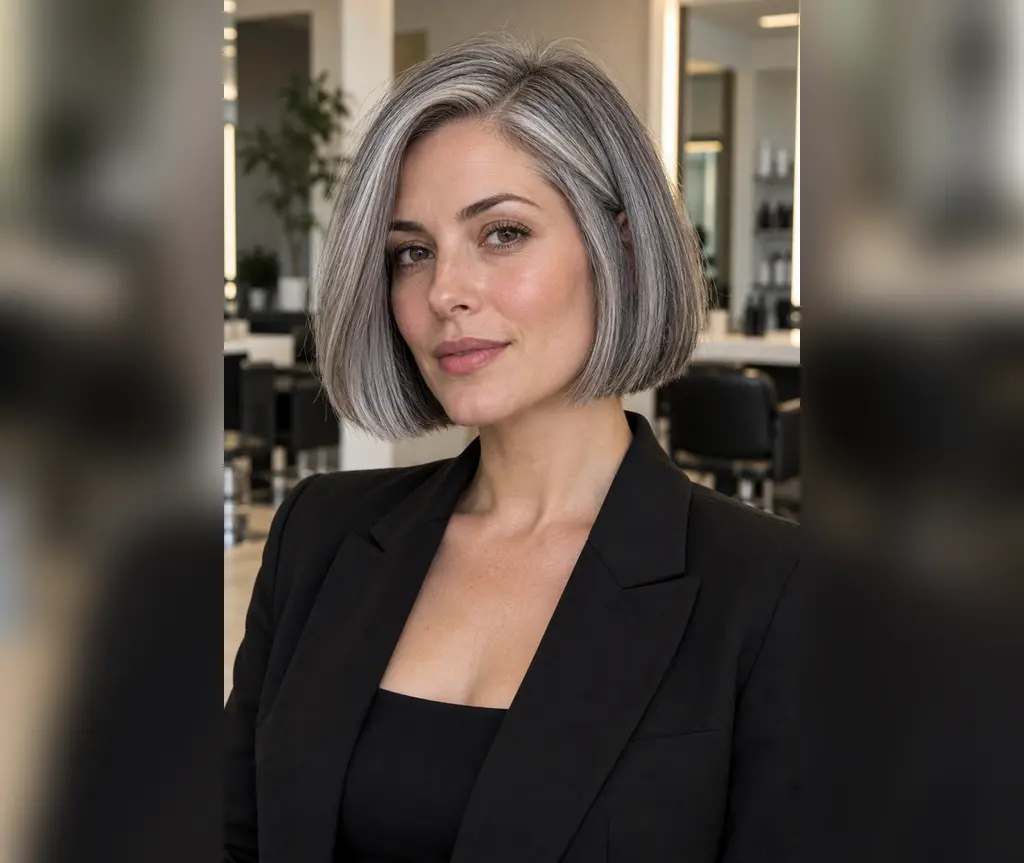
A short gray bob with blunt ends creates a clean outline that makes the hair look substantial. Its straight perimeter sits around the jaw or just below it, giving fine strands a stronger visual edge without requiring lots of layers. On naturally straight hair, the shape looks especially sleek; on slightly wavy hair, it has a more relaxed finish. Silver highlights and darker gray pieces add dimension to the simple cut, particularly when the hair is parted slightly off center.
The key is choosing a length that works with your jawline and the way your hair naturally falls. A bob cut too short at the back may flick outward, while a little extra length gives you room to tuck it behind your ears. Smooth a heat protectant through damp hair before blow-drying, and turn the ends under only slightly. If your hair is fine, ask for minimal internal layering so the blunt perimeter keeps its fullness between appointments.
3. Salt-and-Pepper Layered Pixie
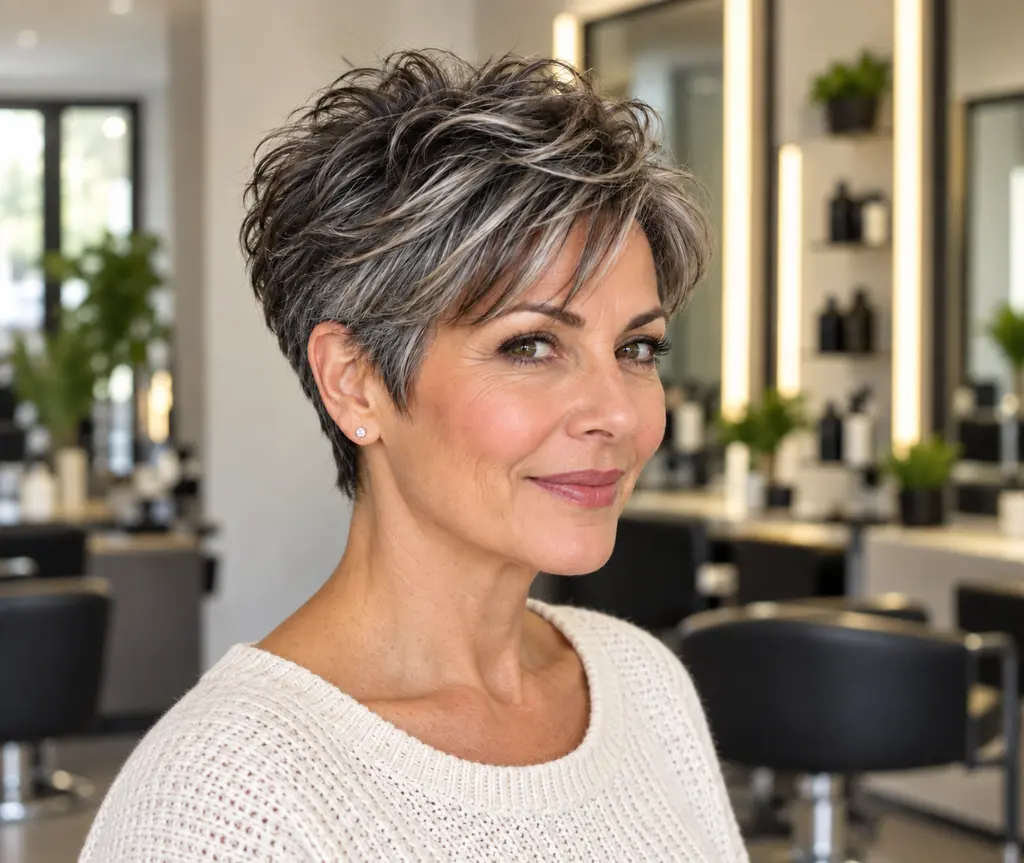
A salt-and-pepper layered pixie turns mixed gray and dark hair into a feature of the cut. Short layers break up a solid shape, allowing lighter strands to stand out across the crown and fringe. This works particularly well when gray grows unevenly, because the haircut gives every shade a place in the finished style. The sides can be softly tapered rather than cut extremely close, making the transition from longer hair feel less dramatic.
For styling, apply a small amount of mousse near the roots and lift sections with your fingers while drying. A dab of matte paste at the ends separates the layers without hiding their natural color variation. If you have thick hair, your stylist can remove weight from selected areas while keeping the surface soft. Fine hair benefits from fewer, carefully placed layers. Bring a photo showing the degree of texture you want, since “layered pixie” can mean anything from subtle movement to a very choppy finish.
4. Soft Gray Pixie with Side-Swept Bangs
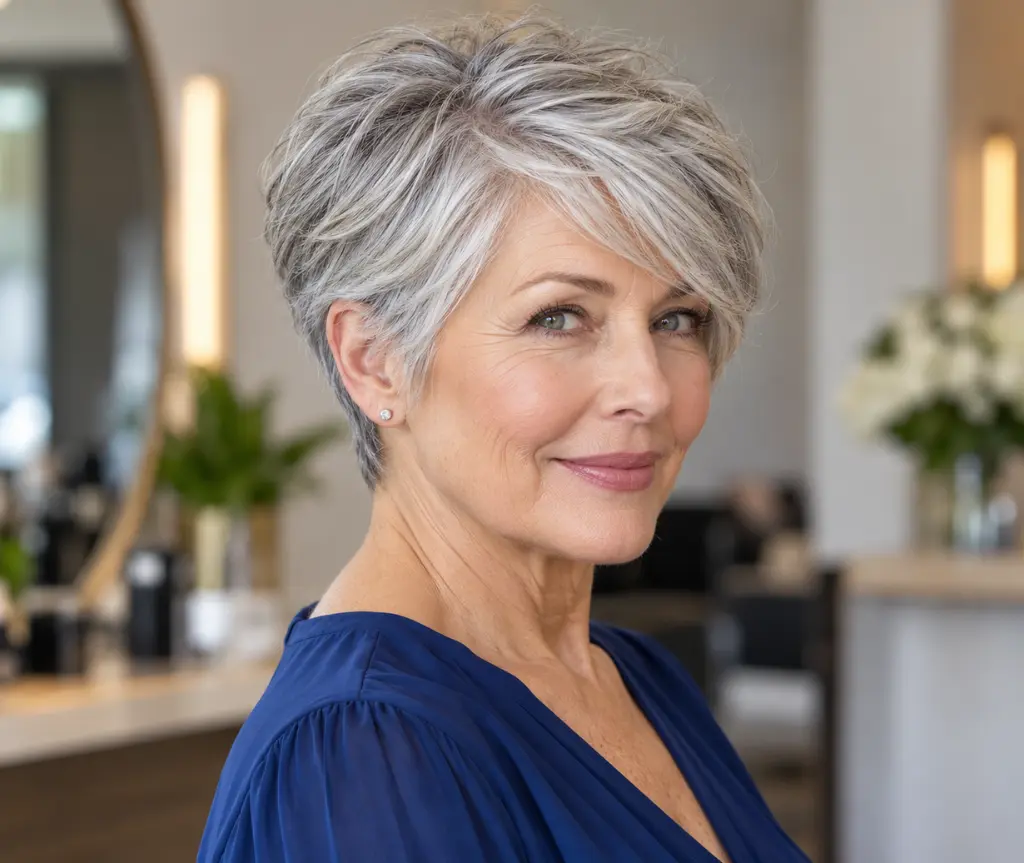
A soft gray pixie with side-swept bangs brings movement across the forehead while keeping the rest of the cut compact. The longer fringe can frame the eyes and soften a strong hairline without covering the face entirely. It is especially appealing if you want a short haircut but still enjoy brushing or changing the direction of some hair. The bangs also provide a place for naturally white strands to catch the light against darker silver sections.
Ask for a fringe that can sweep comfortably to one side without falling into your eyes throughout the day. The length should suit your hair’s growth pattern, especially if you have a cowlick near the front. Blow-dry the bangs in the direction you want them to sit, then finish with a light styling cream. Avoid heavy wax at the roots, which can make silver hair look flat. The result feels gentle and versatile, from a casual daytime look to a more polished evening style.
5. Textured Gray Crop for Fine Hair
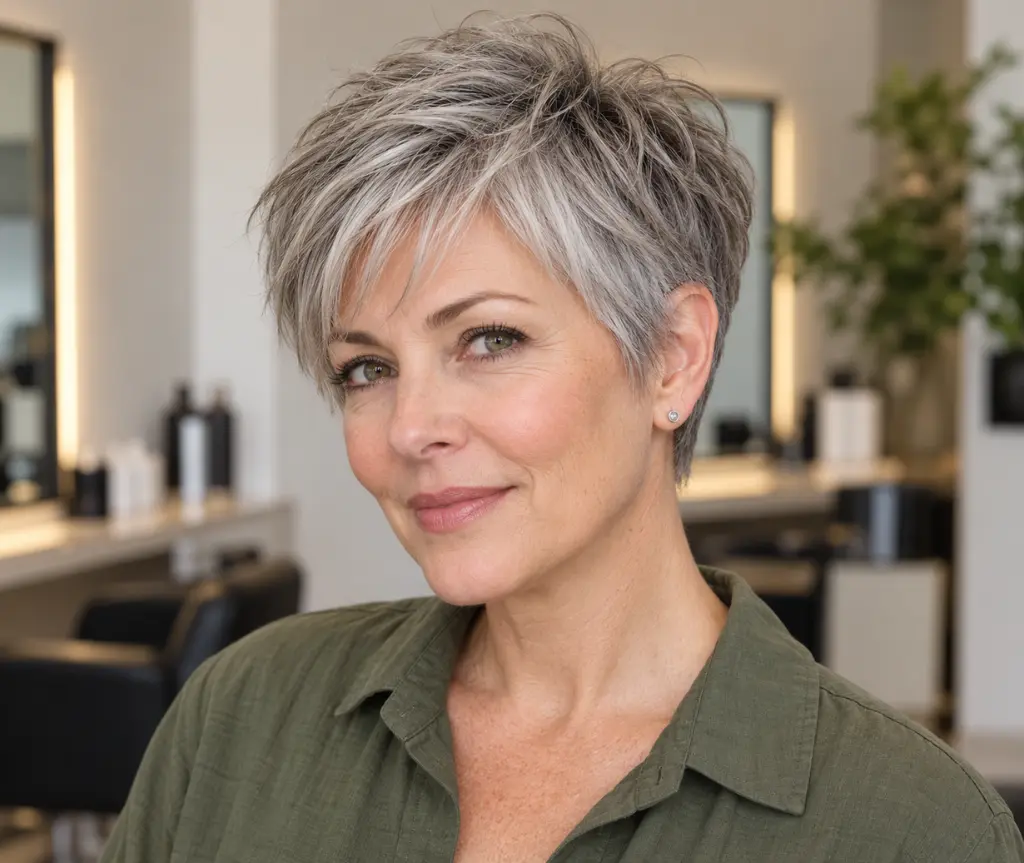
A textured gray crop gives fine hair shape through carefully placed short layers and a slightly lifted crown. The aim is movement without cutting away so much hair that the ends look sparse. Soft, uneven pieces around the top create a fuller impression, while a close but gentle taper keeps the silhouette tidy. Gray and white strands can look delicate under bright light, so a cut that supports the roots often makes a bigger difference than adding more styling product.
Ask your stylist to show you how the layers will sit when your hair is dry and untreated. A good fine-hair crop should still have a visible shape on a low-effort day. To style it, apply a small amount of volumizing mousse at the roots and dry with your fingers lifting the hair away from the scalp. Finish with a light mist of flexible spray if needed. Skip rich oils and thick pomades, which may separate fine gray strands into thin-looking sections.
6. Feathered Silver Bob
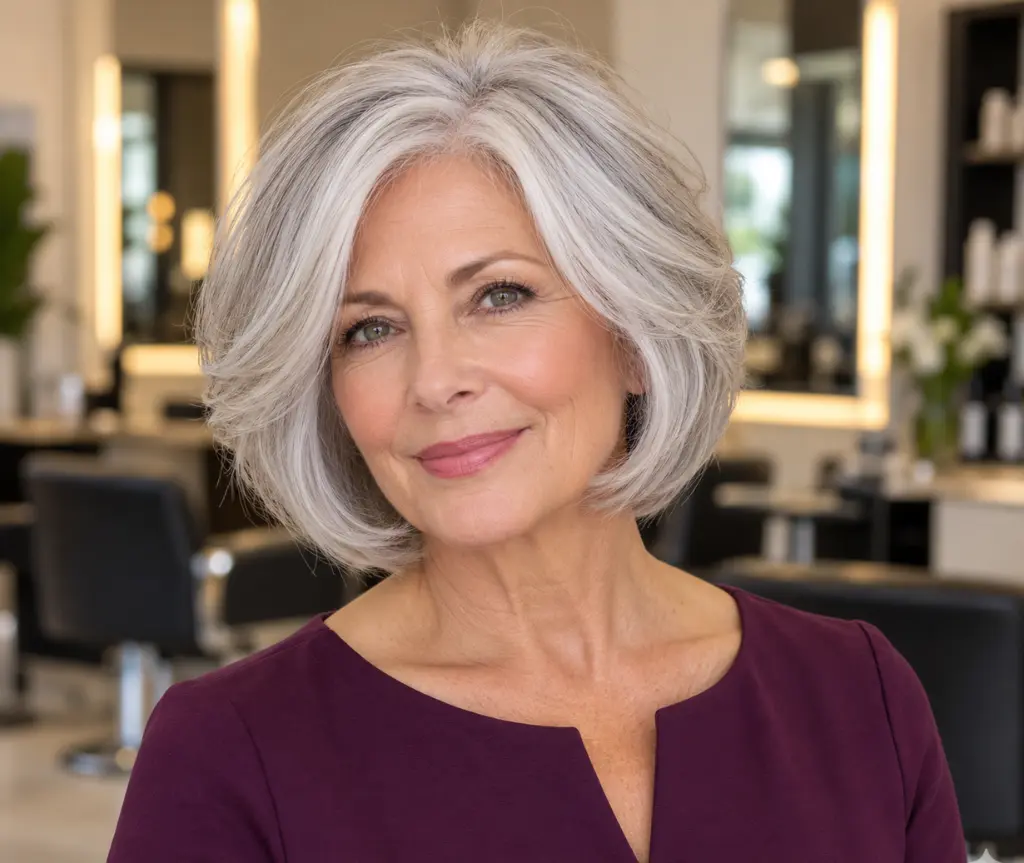
A feathered silver bob has a softer finish than a blunt cut. Light layers around the sides and crown give the hair movement, while the ends curve gently away from the face. It can suit medium-density straight or slightly wavy hair that needs shape without losing too much weight. The feathering is particularly attractive when silver hair contains several tones, because each moving layer reveals a different mix of white, pewter, and darker gray strands.
The cut works best when the feathered pieces are deliberate rather than spread heavily through the whole head. Too many layers can leave the lower edge looking thin, especially if your hair is naturally fine. For a smooth finish, dry the roots first, then use a medium round brush to guide the ends back and away from your cheeks. A light serum on the tips can reduce flyaways. Ask your stylist to keep enough length around the ears if you like to tuck your hair back.
7. Gray French Bob with Wispy Bangs

A gray French bob sits around the cheekbone or jaw and pairs a compact shape with an easy, lightly tousled finish. Wispy bangs make the cut feel softer than a straight, heavy fringe. The short length draws attention to the eyes and cheekbones, while natural silver strands give the familiar bob a distinctive color story. It works especially well on straight to gently wavy hair, where a little natural bend makes the ends look relaxed.
Because the French bob is short, small changes in length can alter its character. Ask for the perimeter to suit where you want the hair to frame your face, and make sure the bangs are cut to work with your natural part. Letting the hair air-dry with a small amount of lightweight cream can bring out a soft wave. If you prefer a neater look, smooth the top with a brush but leave the ends less structured. The appeal is its intentional shape and effortless texture.
8. Short Wavy Gray Bob
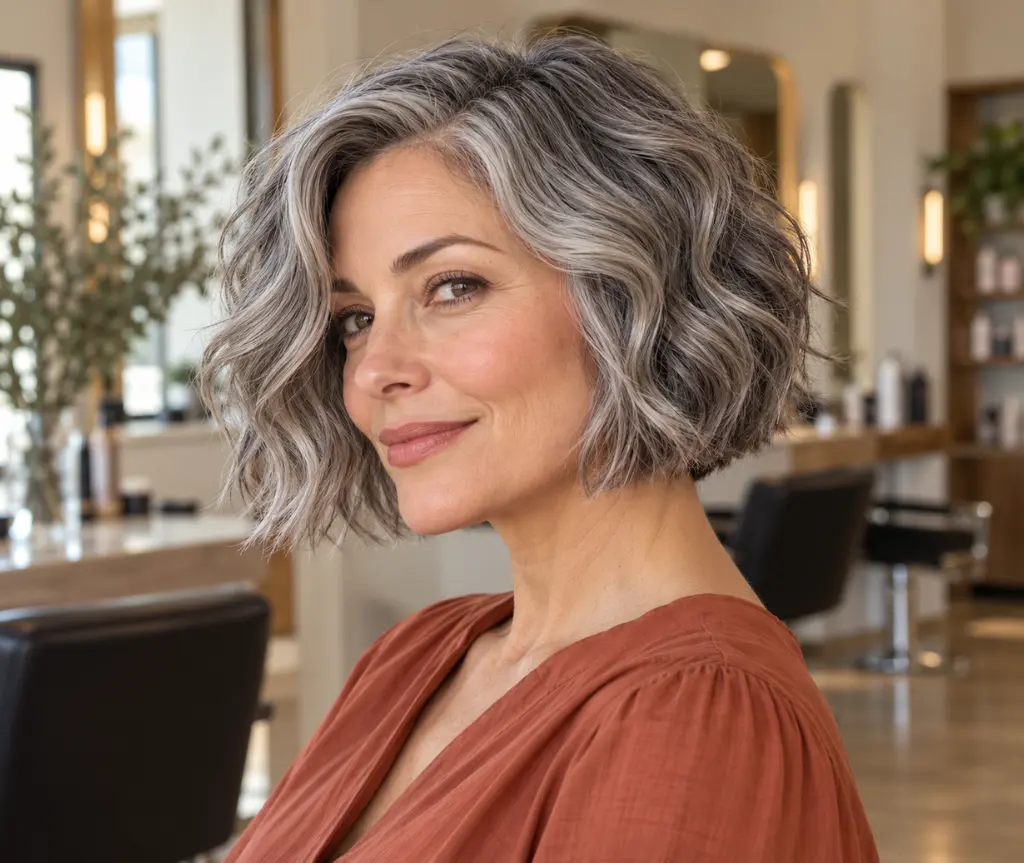
A short wavy gray bob keeps enough length for natural bends to form while removing excess weight from the ends. It can bring softness around the face and show off the contrast between darker roots and brighter silver lengths. For naturally wavy hair, the cut should be planned around how much the waves spring up when dry. A bob that appears chin-length while wet may sit noticeably higher once your texture settles.
Ask for subtle shaping rather than aggressive thinning, which can make wavy gray hair frizz or lose its outline. After washing, scrunch a light curl cream or foam through damp hair and let the waves form with minimal touching. Diffuse on a low setting if you need quicker drying, keeping the airflow gentle. On non-wash days, a little water and leave-in conditioner can refresh flattened sections. This bob is a good choice when you want to wear your natural texture instead of straightening it daily.
9. Silver Curly Pixie
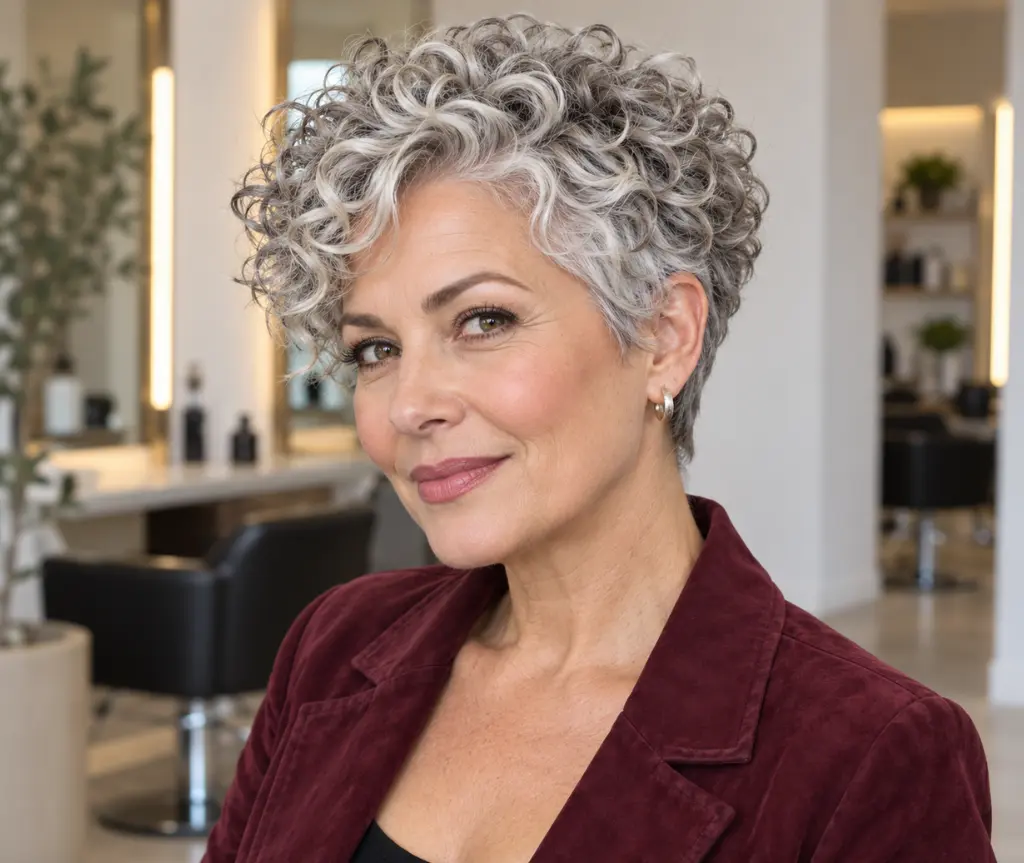
A silver curly pixie keeps natural curls visible on top while bringing the sides and nape into a shorter, balanced shape. The contrast gives the haircut definition without requiring the curls to be stretched or smoothed. Bright silver coils can add striking dimension, especially when some strands are white and others remain darker gray. The cut can be adjusted to your curl size, with enough length at the crown for each curl to form a clear pattern.
A stylist experienced with curly hair can help account for shrinkage before choosing the final length. Ask them to leave the top long enough for the curls you actually want to see, particularly around the fringe. Apply a moisturizing leave-in and a light gel to wet hair, then gently scrunch or finger-coil selected pieces. Once dry, separate only where you want more volume. Regular conditioning matters because gray curls can feel drier as their texture changes, though every head of hair responds differently.
10. Short Natural Gray Afro
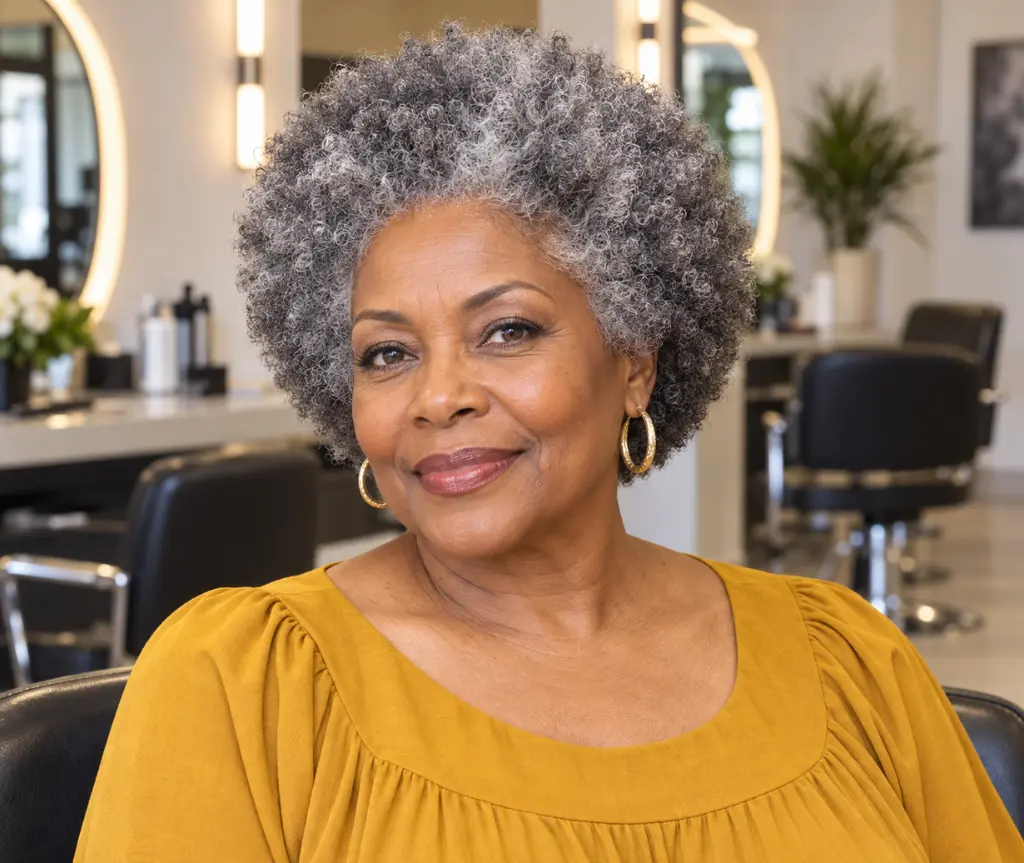
A short natural gray afro celebrates the shape and density of coily hair. Rather than forcing every coil into a uniform finish, the cut creates a rounded silhouette that shows the texture as it naturally grows. White and silver strands can form a beautiful halo effect, while darker gray areas add depth. The style can be worn close to the head or a little fuller at the crown, depending on your preferred shape and the density of your hair.
Work with a stylist who understands how your coils shrink and how the cut will look after washing. A balanced shape often needs careful attention at the temples, sides, and back. Keep the hair hydrated with products that suit your porosity and use a pick gently at the roots for volume without pulling apart the ends. A satin bonnet or pillowcase can help preserve the shape overnight. The result is a short gray hairstyle that makes natural texture the main event.
11. Gray Tapered Natural Cut
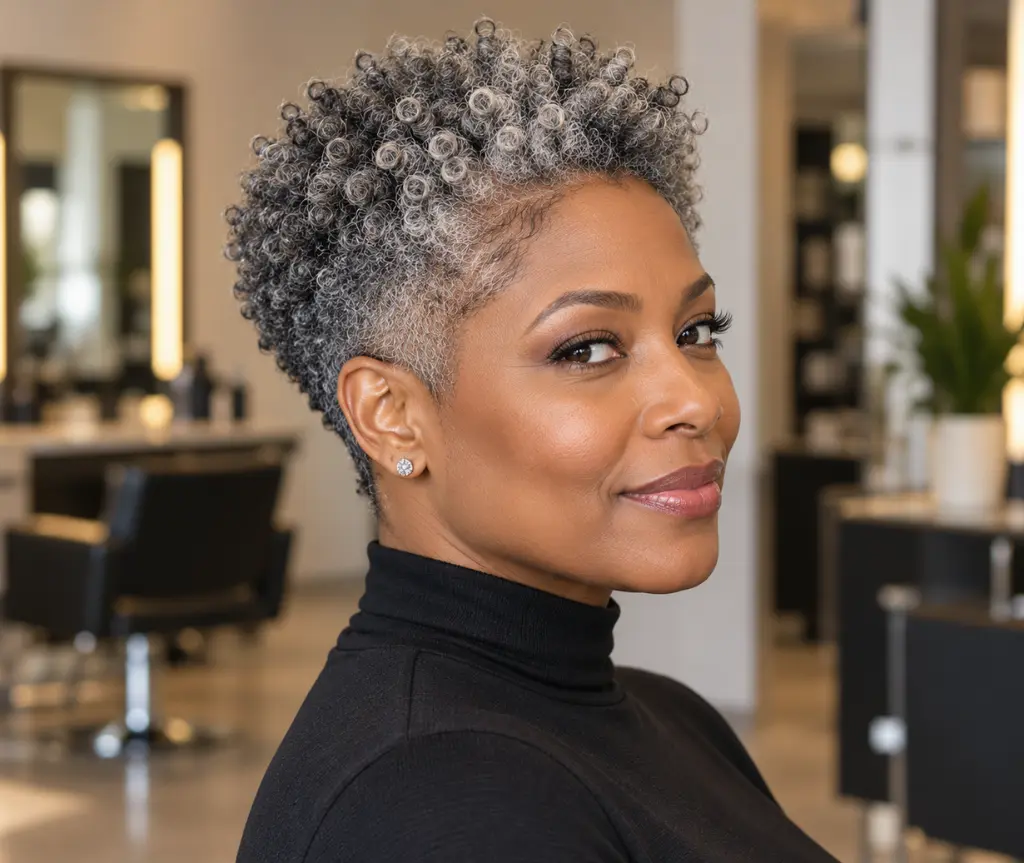
A gray tapered natural cut keeps more coily length at the crown and gradually shortens toward the temples and nape. That change in length creates a strong shape while giving the top room for defined curls, coils, or a softly picked finish. The cut also highlights the way gray appears across different areas of the head. A bright silver crown above darker sides can look especially striking without any added color.
Decide how much contrast you want before the appointment. A gentle taper looks soft as it grows, while a close taper gives a more graphic outline and may need more frequent upkeep. For defined coils, apply leave-in conditioner and styling gel in small sections, then allow the hair to dry completely before separating it. If you prefer volume, lift the roots carefully with a pick. Protecting the hair and scalp from excessive dryness helps the shorter areas look as healthy as the longer top.
12. Salt-and-Pepper Coily Crop
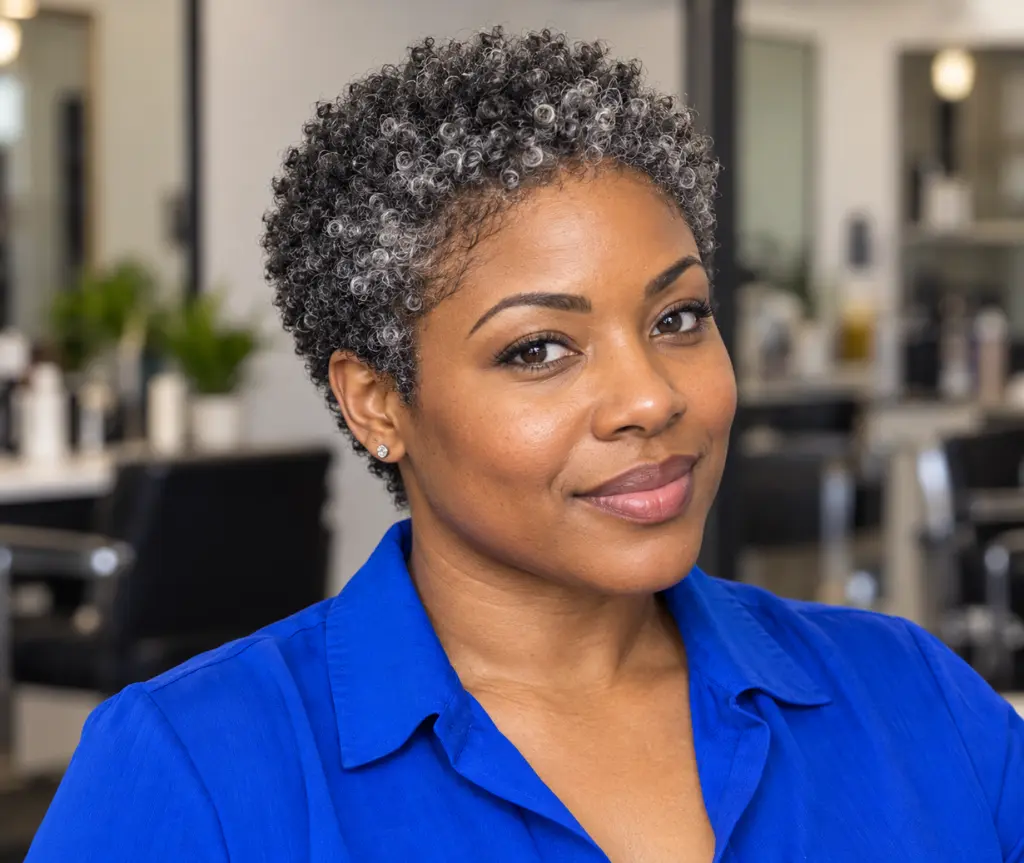
A salt-and-pepper coily crop offers an even shorter way to wear natural texture. The coils stay close enough to reveal the head shape, yet retain sufficient length for their pattern to be visible. Mixed dark and gray strands create a textured, dimensional surface that looks different from every angle. It is a versatile option for someone who wants to simplify styling while keeping the distinctive character of coily hair in the finished look.
The crop can be shaped with a slightly fuller top, a rounded outline, or a neat low taper, depending on your preference. Ask the barber or stylist to preserve a natural hairline unless you specifically want a sharper edge. A small amount of moisturizing cream can soften the coils without making them look coated, and gentle cleansing helps prevent product buildup. If your scalp is visible through the shorter hair, pay attention to sun protection when spending time outdoors. The cut remains expressive even at a compact length.
13. Gray Buzz Cut
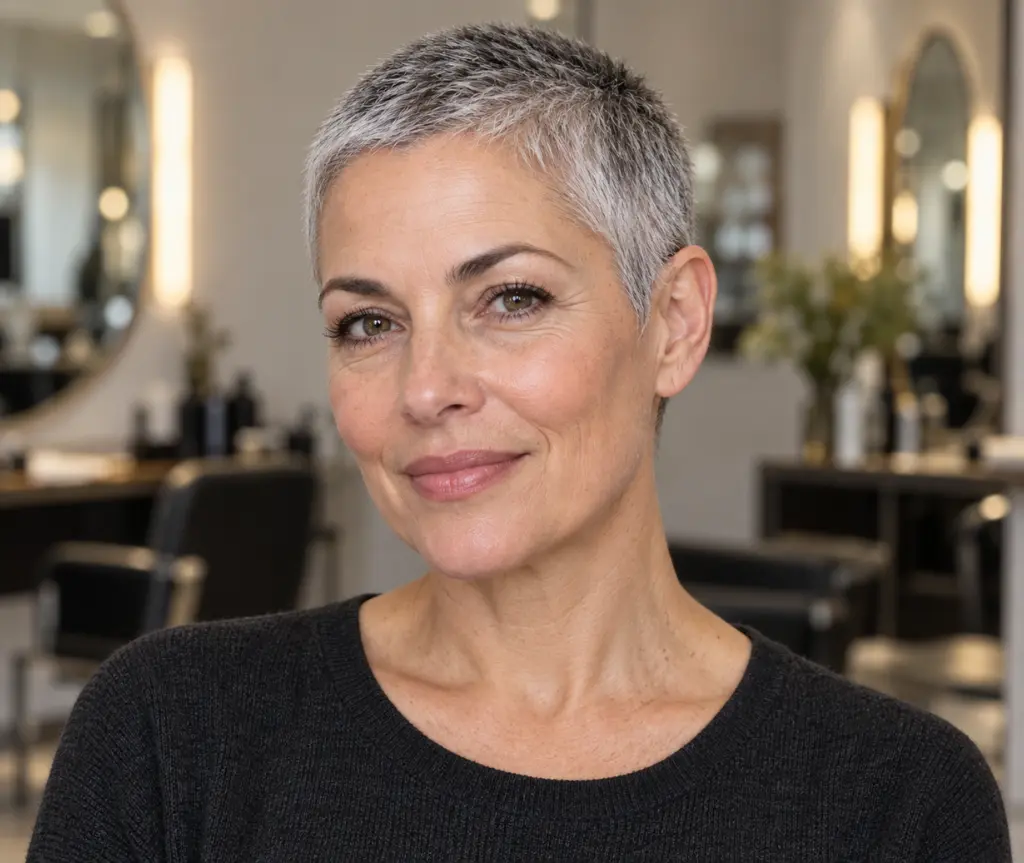
A gray buzz cut places the natural hair color and facial features fully in view. Its close, even length creates a deliberate look that can feel clean and striking at any age. It also reveals the variation in gray growth: some areas may appear almost white, while others retain deeper charcoal pigment. A buzz cut can suit many hair textures, but its exact finish changes with curl pattern and density, so photographs of your own hair type are useful references.
Choose the clipper length with care, especially for your first buzz cut. A slightly longer guard leaves more softness and texture than an extremely close shave, and you can always go shorter later. The style needs little daily manipulation, but its outline grows out quickly. Keep the scalp comfortable with gentle cleansing and suitable moisturizer. If the hair is very short, protect exposed skin from the sun. For added definition, you can ask for a subtle taper around the sides and back.
14. Asymmetrical Silver Pixie
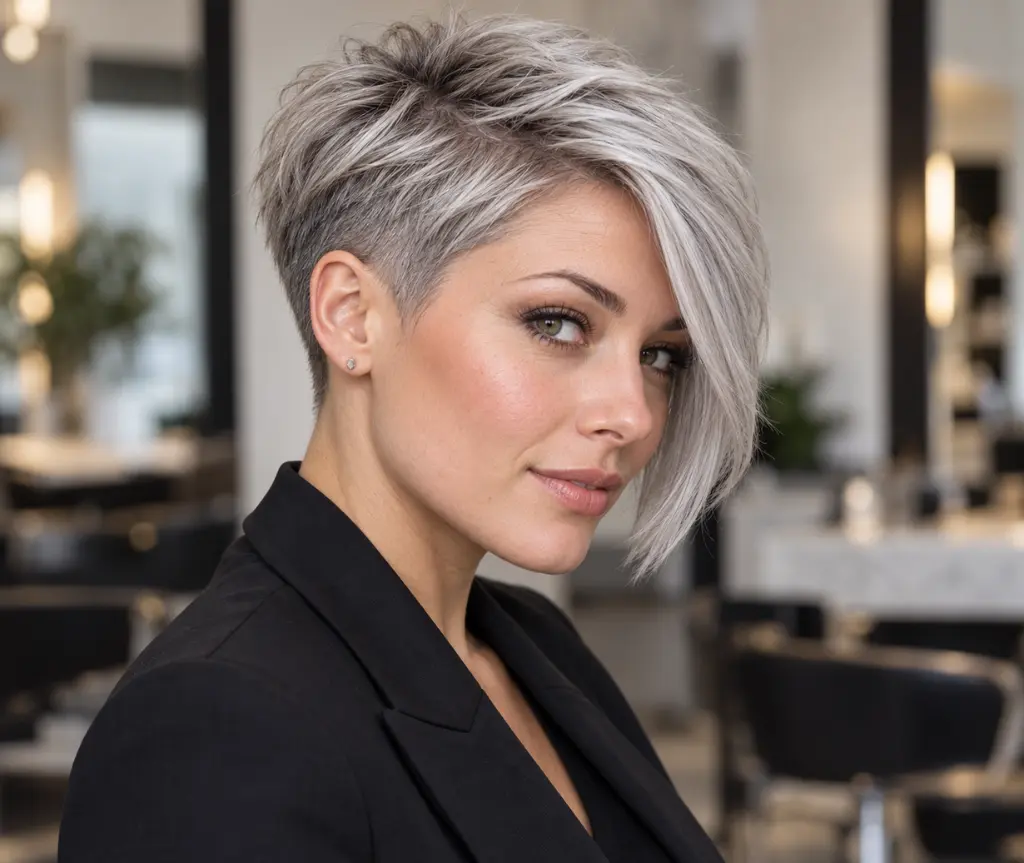
An asymmetrical silver pixie keeps one side noticeably longer than the other, giving a familiar short cut a sharper line. The longer side can sweep across the forehead or skim the cheek, while the shorter side reveals the ear and temple. This contrast looks particularly clear in silver hair, where light reflects along the longer section. The shape can be subtle and wearable or more dramatic, depending on the difference in length.
Bring pictures that show both sides of the haircut to your appointment. Asymmetry only works as intended when the shorter side, longer fringe, and back connect cleanly. If your hair is thick, ask for weight to be removed inside the longer section so it does not overpower the face. Fine hair may benefit from a more modest length difference to preserve fullness. Blow-dry the long side in its natural direction, then use a touch of cream to define the ends without making them stiff.
15. Stacked Gray Bob
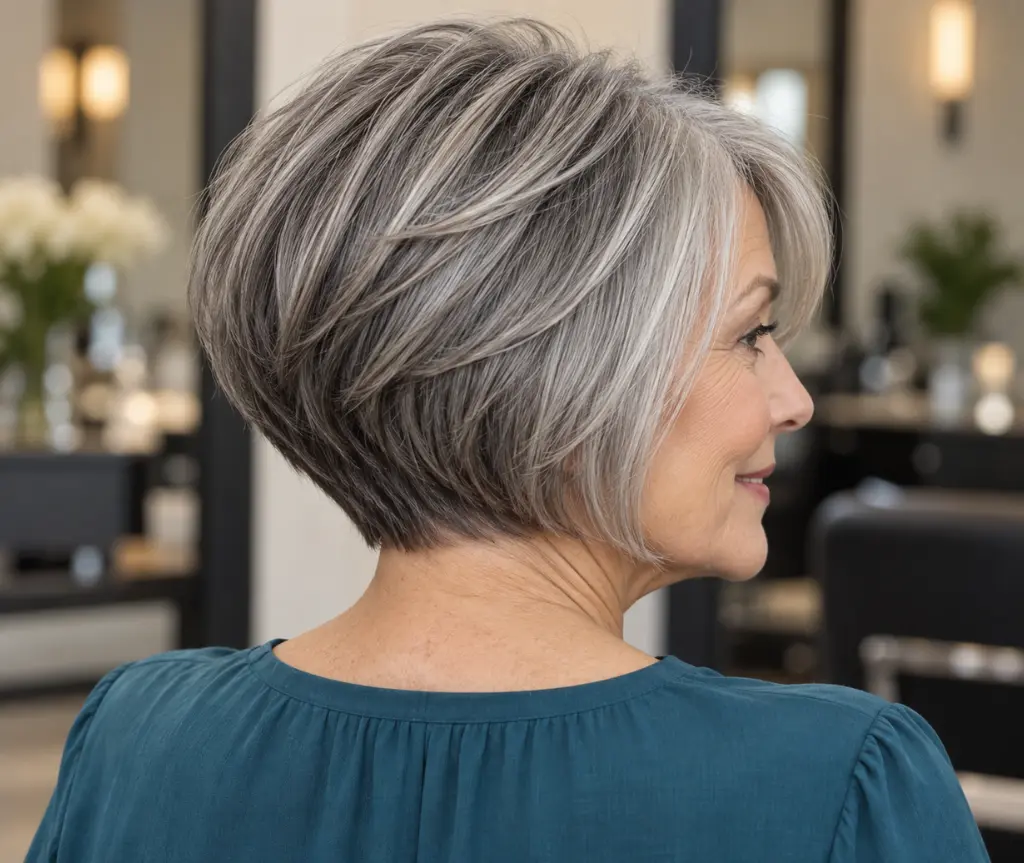
A stacked gray bob uses shorter, graduated layers at the back to build a rounded shape, while the front stays slightly longer. This structure can make the crown look fuller and keeps the nape neat. It is useful for straight or softly wavy hair that tends to fall flat at the back. Silver and salt-and-pepper tones emphasize the graduated layers, especially when the haircut is photographed from a side or rear three-quarter angle.
The amount of stacking determines how dramatic the finished bob looks. A gentle graduation gives lift with a soft outline, while a steep angle produces more volume and a stronger difference between front and back. Ask your stylist which option suits your hair density and growth pattern. For everyday styling, direct the roots upward while blow-drying, then smooth the surface without pressing the volume flat. Book trims when the back begins to lose its rounded shape or the neckline feels too heavy.
16. Gray Bob with Curtain Bangs
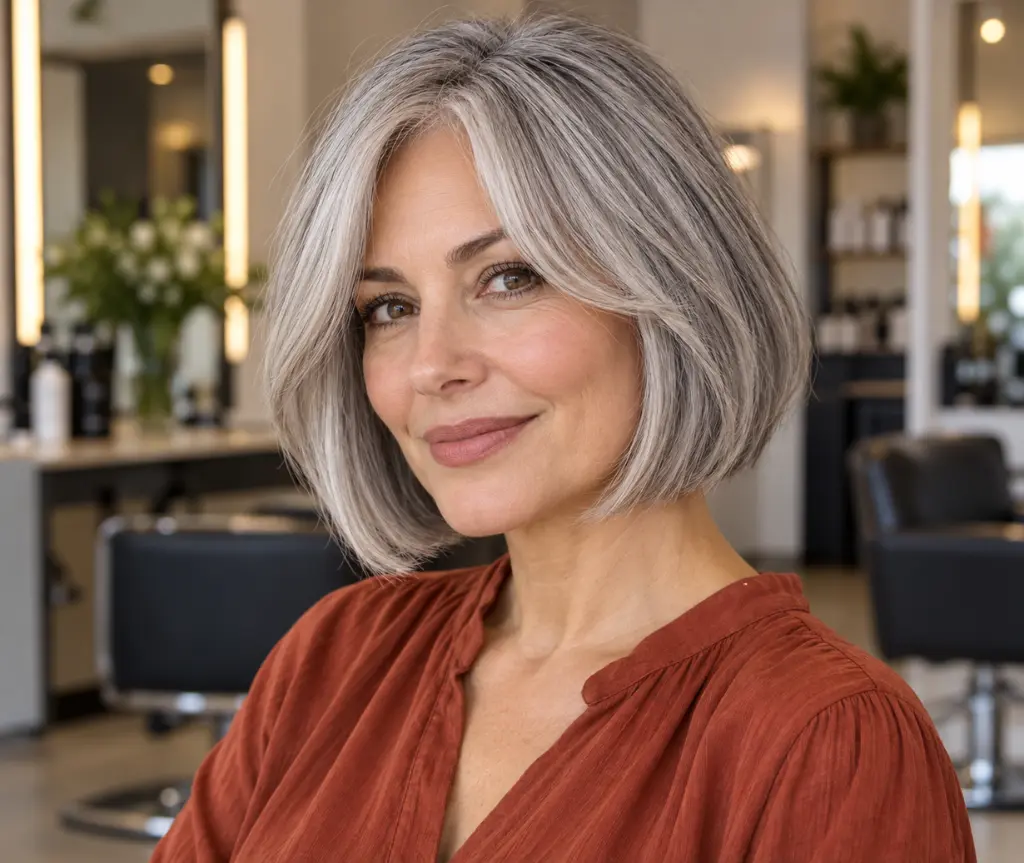
A gray bob with curtain bangs combines a familiar chin-length shape with a fringe that opens around the face. The bangs are shorter near the center and become longer toward the temples, creating soft framing without forming a solid line across the forehead. This is a flexible option if you want to try bangs but still like the ability to sweep them aside. Natural silver strands can make the face-framing sections especially bright.
The most important detail is where the curtain bangs begin to bend. They should fall comfortably beside your eyes rather than require constant adjustment. Ask your stylist to cut them with your natural part and hair texture in mind. Use a small round brush or your fingers to dry each side away from the face, then let the ends settle. On wavy hair, a little styling cream may be enough. Keep the bob’s lower edge relatively full so the fringe and perimeter balance each other.
17. Choppy Silver Shag
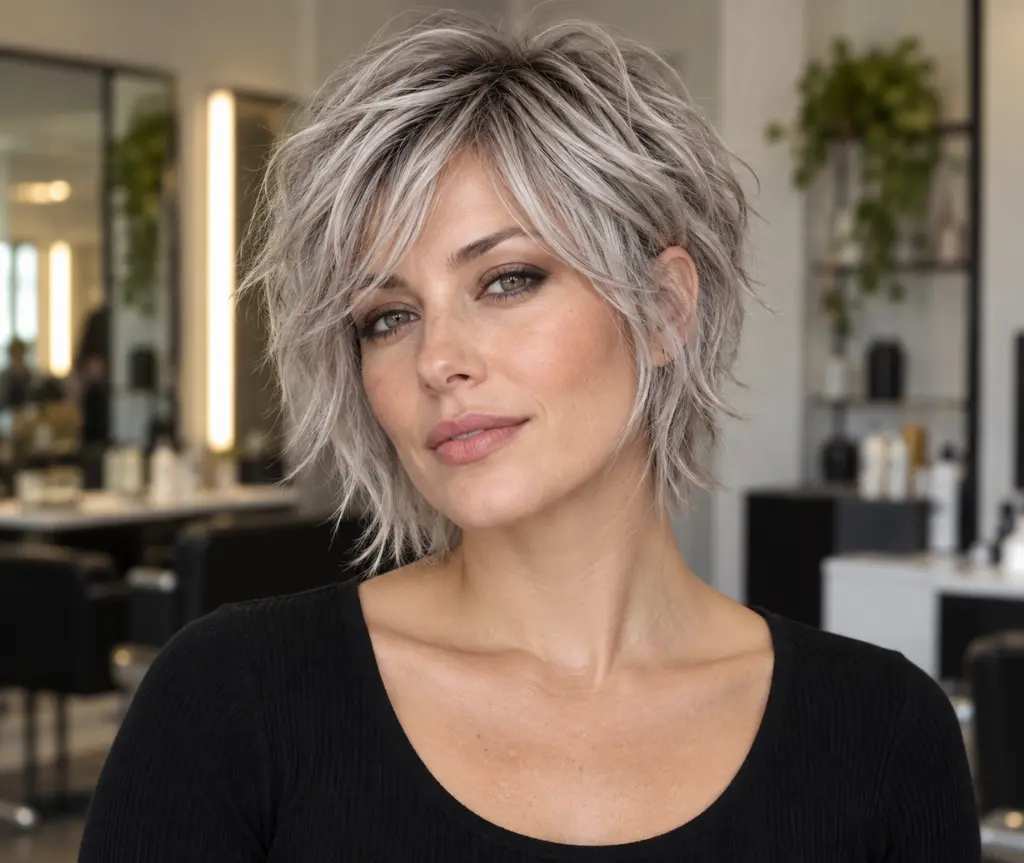
A choppy silver shag uses short, uneven layers to build movement at the crown and around the face. Wispy ends keep the cut light, while a fuller top gives it a lived-in silhouette. It works well for hair with some natural wave, though straight hair can also show the individual layers clearly. Gray color adds another layer of texture: brighter silver pieces become more noticeable wherever the hair separates or bends.
A good short shag needs enough structure beneath the tousled surface. Ask your stylist to keep the perimeter connected so the sides do not become too thin. If your hair is very fine, choose softer layers and less dramatic removal of weight. Scrunch a lightweight foam into damp hair, then let it air-dry or diffuse gently. Once dry, loosen selected pieces with your fingers. The style should feel movable and comfortable, rather than held in place by a thick layer of product.
18. Short Gray Shag with Bangs
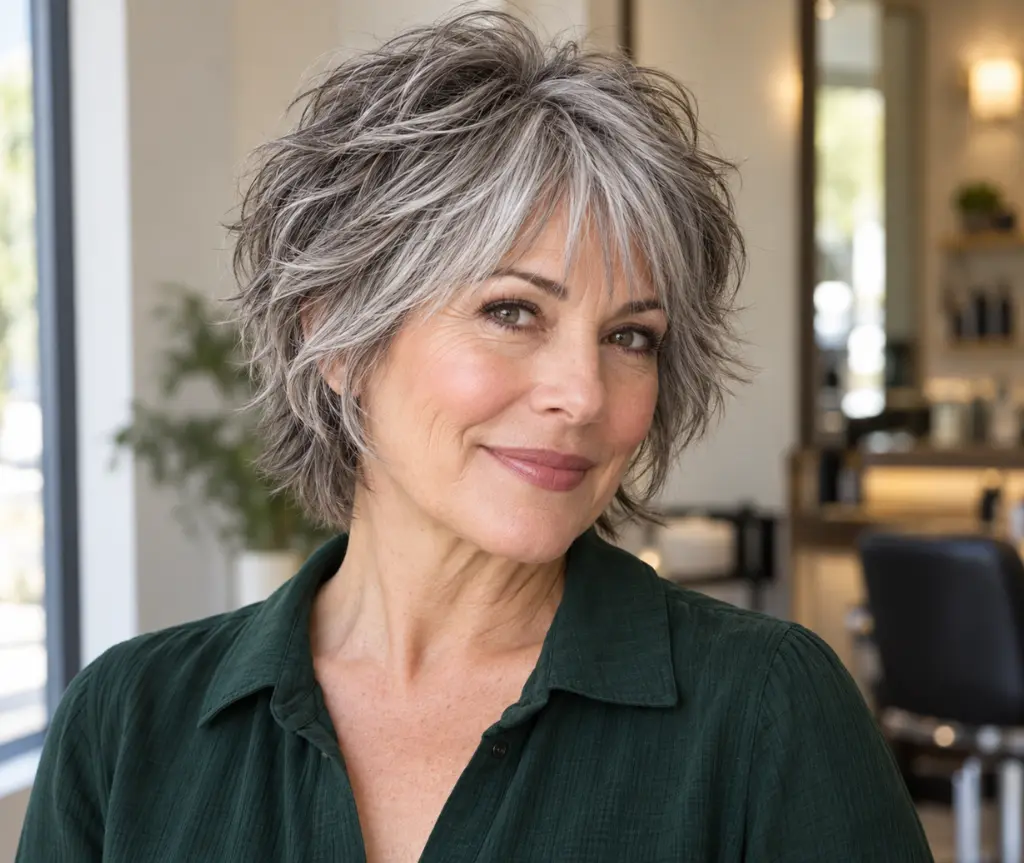
A short gray shag with bangs brings texture across the whole haircut, including the forehead. The fringe can be soft and broken rather than thick, joining the shorter crown layers and longer pieces around the ears. This makes the cut feel cohesive even when the hair dries with a little irregular movement. It can be particularly flattering on wavy hair, where each layer has room to bend without turning into a rigid, rounded bob.
Talk to your stylist about how your bangs behave on a normal day, especially if you have a cowlick or your waves tighten as they dry. A fringe cut too short may spring up more than expected. Work a small amount of curl cream or texture spray through damp lengths, then style the bangs first while you have the most control over them. Let the rest dry naturally if possible. The goal is a short gray hairstyle with visible shape, movement, and a fringe you can actually live with.
19. Gray Wolf Cut at Pixie Length
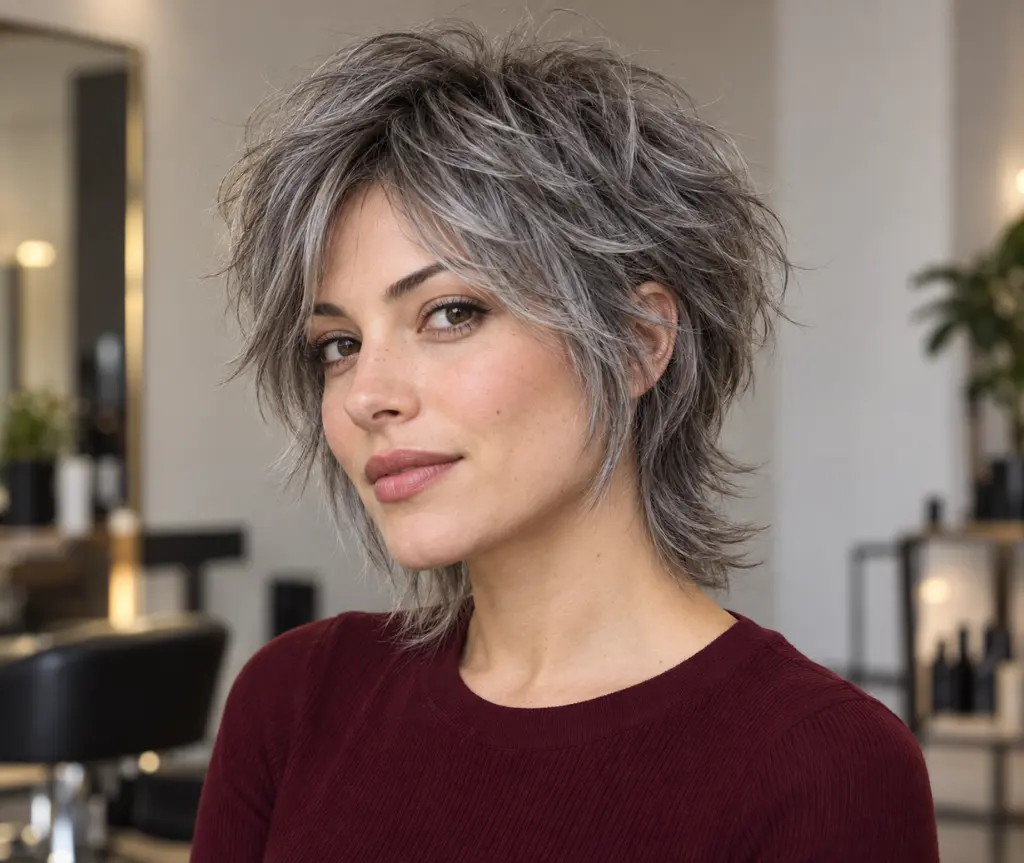
A gray wolf cut at pixie length has a tousled crown, shorter face-framing pieces, and a little extra length around the nape. It borrows the layered energy of a shag while remaining firmly in short-hair territory. The contrast between a lifted top and softer back gives gray hair movement without requiring a sleek finish. It suits someone who wants an expressive cut and enjoys seeing individual silver strands separate through the layers.
The balance is important: too much length at the back can shift the style toward a mullet, while too little may make it read as a standard pixie. Show your stylist the silhouette you prefer from the front and side. For fine hair, keep the crown layers supportive rather than overly thinned. For thick hair, removing internal weight can help the top move naturally. Use a pea-sized amount of paste on dry hair to define a few ends, leaving the rest soft.
20. Rounded Silver Bob for Fine Hair
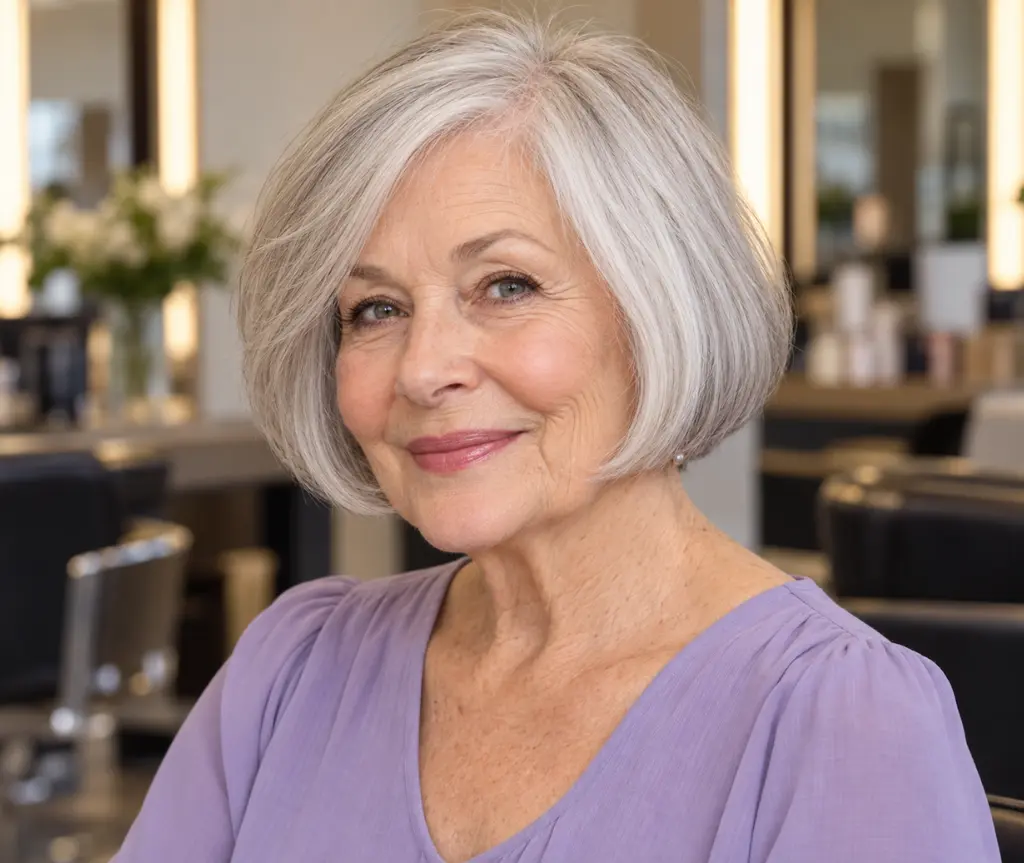
A rounded silver bob offers a softer outline while preserving enough weight to make fine hair appear fuller. The ends curve inward around the jaw, and light graduation near the back supports the shape without exposing thin sections. This cut can look particularly polished on straight hair, where the rounded perimeter is easy to see. Bright white or silver strands add shine across the surface, making the simple shape feel distinctive.
Ask your stylist to avoid heavy thinning and to keep the bottom edge strong. The bob should have movement, but it also needs enough hair at the perimeter to hold its roundness. Blow-dry with a small or medium round brush, lifting the roots before turning the ends inward. A lightweight heat protectant provides slip without weighing the style down. If the hair begins to separate during the day, a gentle brush-through may restore the shape better than adding more product.
21. Short Gray Cut with an Undercut
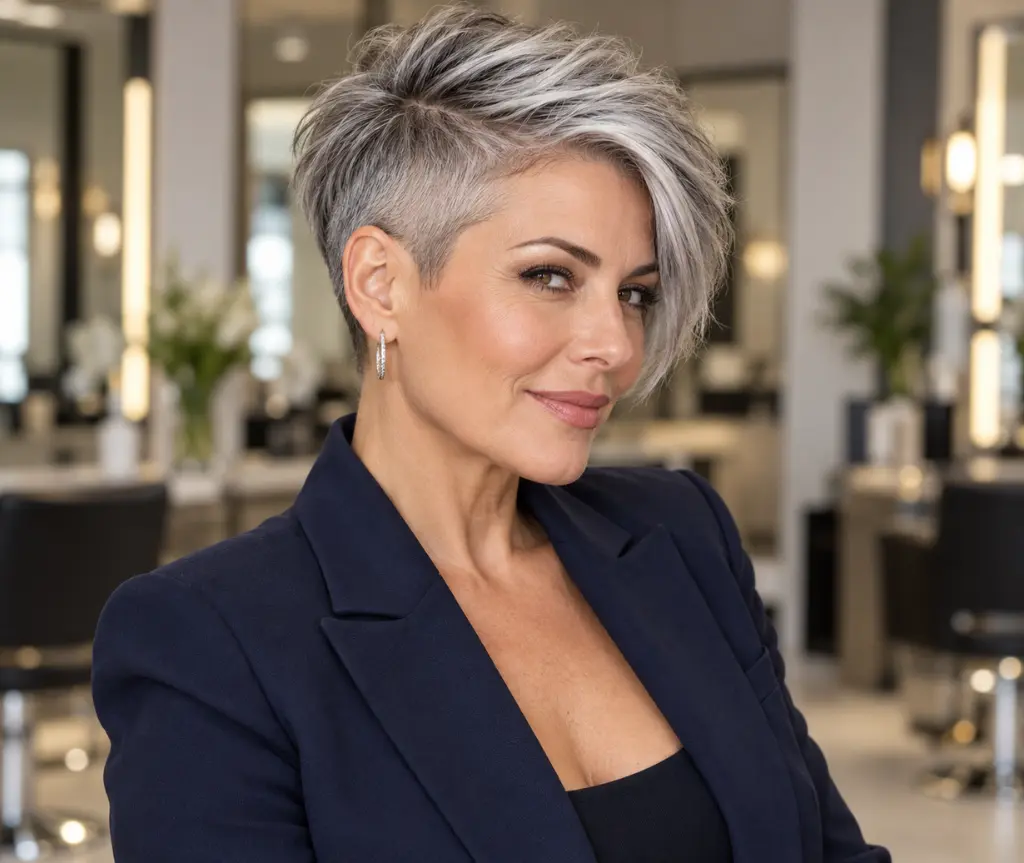
A short gray cut with an undercut pairs visible length on top with closely clipped hair beneath or along one side. It creates a clear contrast in shape and can remove bulk from very thick hair. With a silver top and darker gray underlayer, the difference in color can make the cut even more graphic. The longer section might be brushed back, swept sideways, or worn with natural texture, giving you several looks from one haircut.
An undercut needs a maintenance plan because the clipped section becomes noticeable as it grows. Decide whether you want it openly visible or hidden under the longer hair when worn down. Ask your stylist to place it where it supports your usual part and styling habits. If your hair is fine, keep the shaved area small so the longer section retains enough coverage. Use a light cream or paste on top, focusing on shape rather than forcing every strand into a stiff finish.
22. Silver Finger Waves on Short Hair
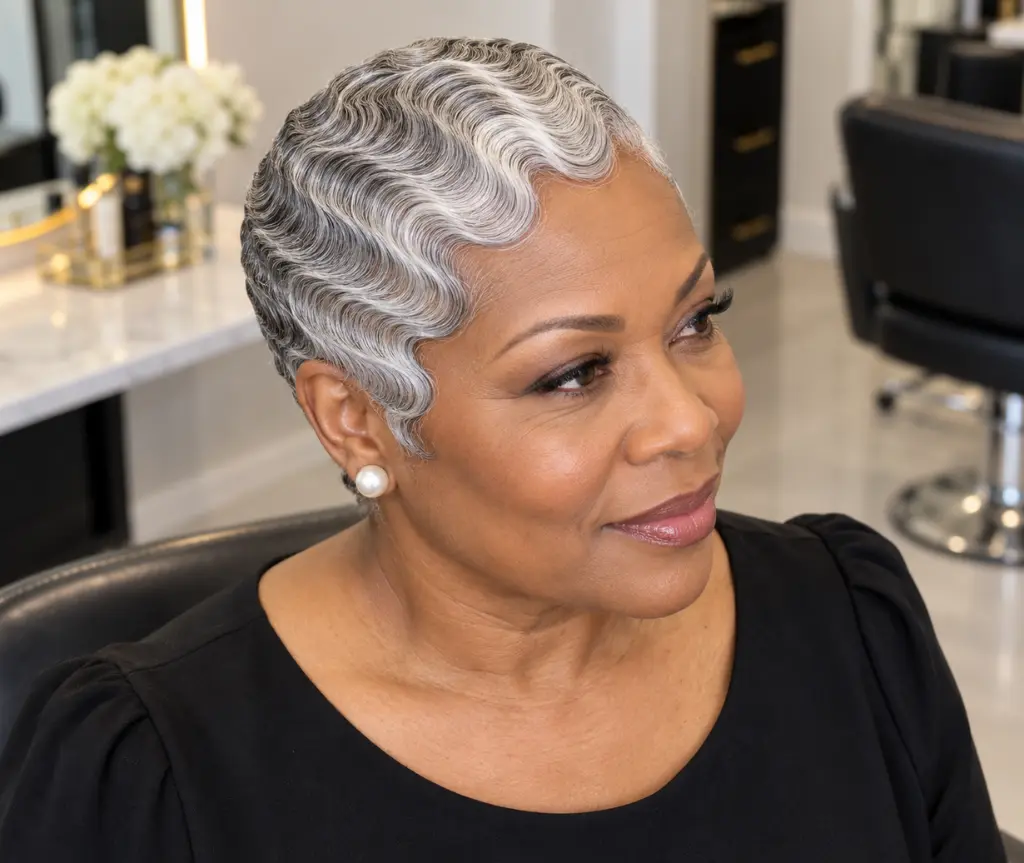
Silver finger waves turn a close short cut into a sculpted style with smooth, repeating curves. The wave pattern is the defining detail, so it looks best when the hair has enough length to form clear ridges while remaining close to the head. White and silver tones catch light along each bend, emphasizing the shape. It can be worn for a special event or incorporated into a regular styling routine if you enjoy a polished, deliberate finish.
This look takes more styling time than a wash-and-go crop. A stylist can show you how to form the waves with a comb, clips, and a suitable setting product. Let the pattern dry fully before touching it, or the ridges may lose definition. Sleep protection and careful refreshing help maintain the finish between washes. If you are planning the style for an occasion, practice ahead of time or book a salon appointment so the wave placement frames your face as intended.
23. Short Gray Curly Bob
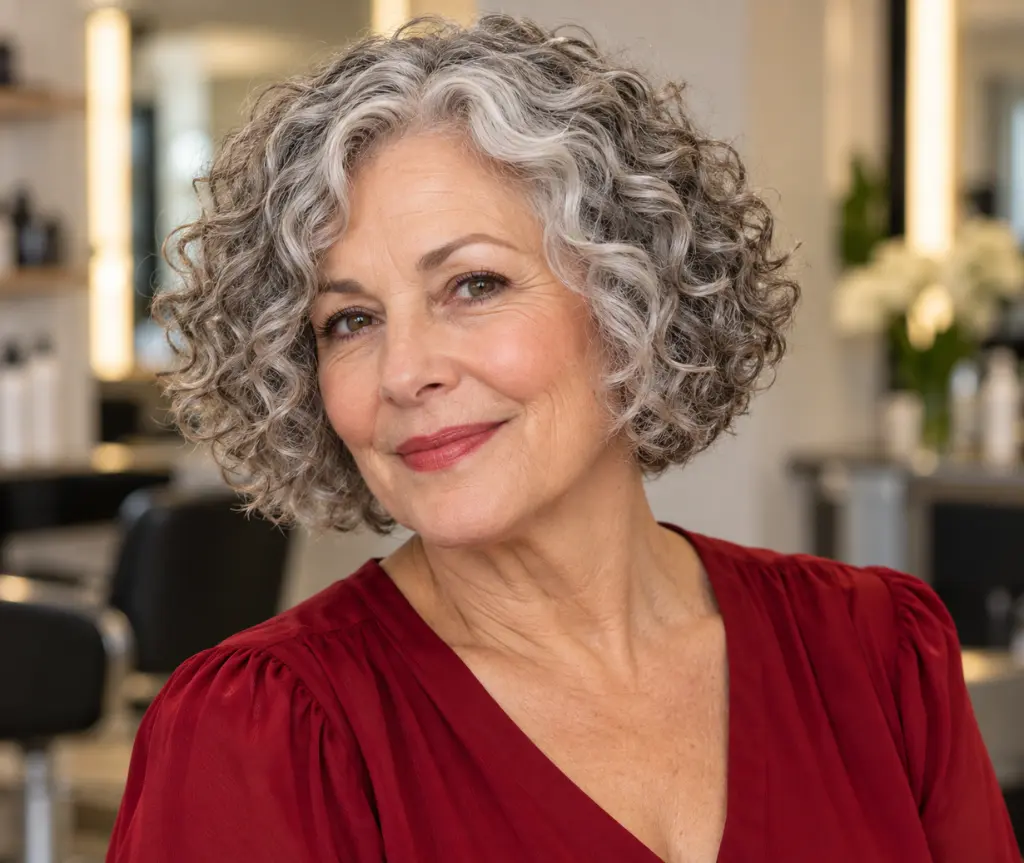
A short gray curly bob sits around the chin while allowing each curl to keep its natural spring. The result is fuller and softer than a straight bob, with a silhouette shaped by curl size and density. Gray hair often shows several shades within one curl pattern, so the style can look highly dimensional without highlights. It works best when the perimeter is planned on dry or naturally settled curls rather than judged only by their wet length.
Ask for shaping that avoids a wide, heavy triangle if that is not the look you want. A few carefully placed layers can create lift around the crown while keeping enough weight at the bottom for a bob silhouette. Apply conditioner and styler to wet hair in sections, then dry with minimal disturbance. A diffuser can add volume when used gently. Refresh individual curls with water and a little leave-in product between wash days, rather than reworking the whole style.
24. Sleek Gray Side-Part Pixie
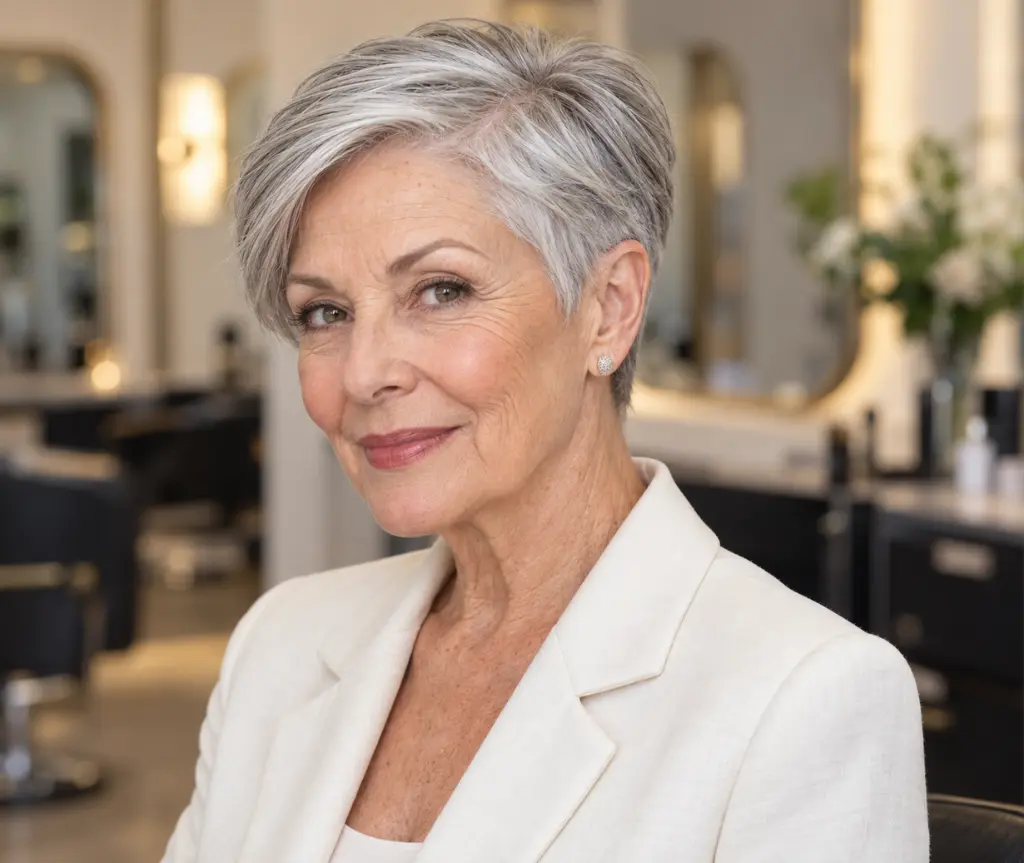
A sleek gray side-part pixie creates a tidy line across the top while keeping the sides and nape short. The visible part gives the cut structure, and the smooth finish shows off silver hair’s natural shine. It is particularly suited to straight or gently wavy hair that can be guided into place without heavy styling. The part can sit close to the center for subtle definition or farther to the side for a stronger sweep.
Ask your stylist to leave enough length on top for the hair to lie in the direction of the part. If it is cut too short, it may stand upright instead of sweeping smoothly. Blow-dry from the roots with a brush, then finish with a small amount of flexible cream or light-hold spray. A polished result does not require a wet-looking coating. If your natural part is strong, working with it will usually make the style easier to repeat at home.
25. Gray Micro Bob
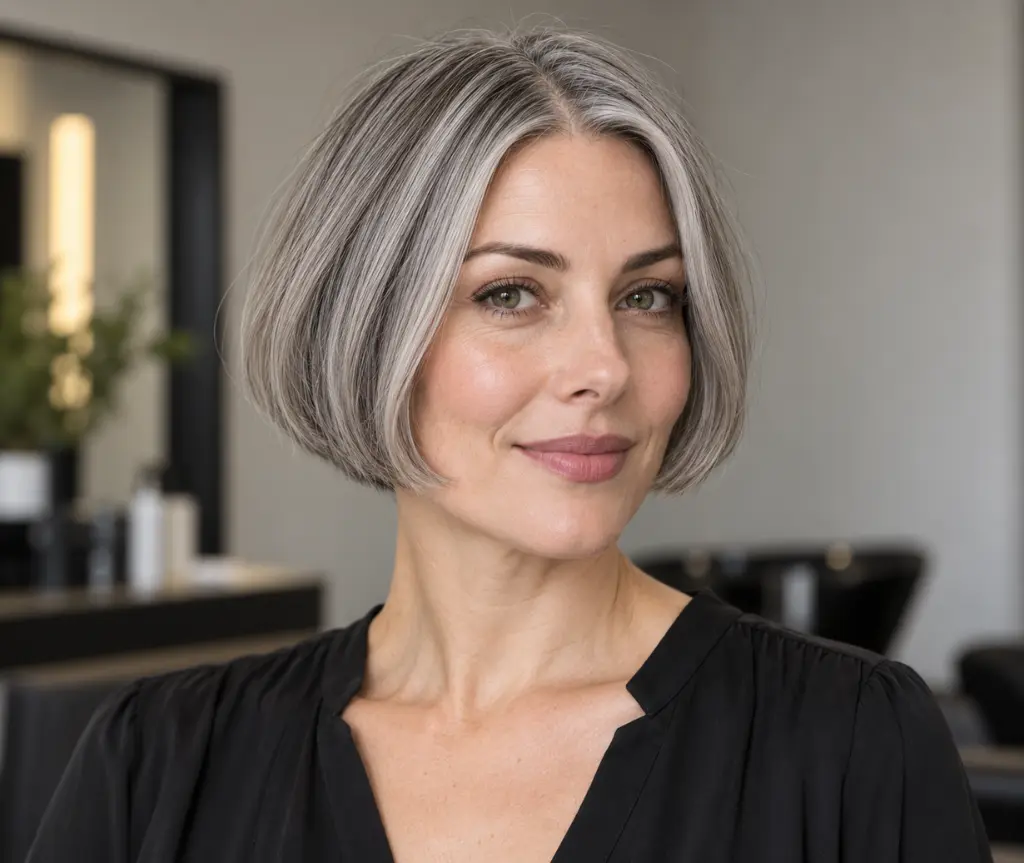
A gray micro bob ends higher than a conventional chin-length bob, often near the cheekbone or upper jaw. Its compact outline places more attention on the eyes and jawline, while the gray color makes the shape look especially crisp. The cut can be blunt and sleek or softened with a slight natural bend. It is an appealing option if you already like a bob and want a more noticeable change without moving all the way to a pixie.
Before cutting, check where the proposed length will sit once your hair is fully dry. Wavy hair may lift above the intended line, and thick hair may need subtle internal shaping to prevent the sides from puffing outward. A micro bob also offers less room for tying hair back, so make sure you enjoy wearing it loose or tucked behind the ears. Smooth styling emphasizes the outline, while a little texture gives it a casual feel without hiding the precise short length.
26. Soft Salt-and-Pepper Bixie
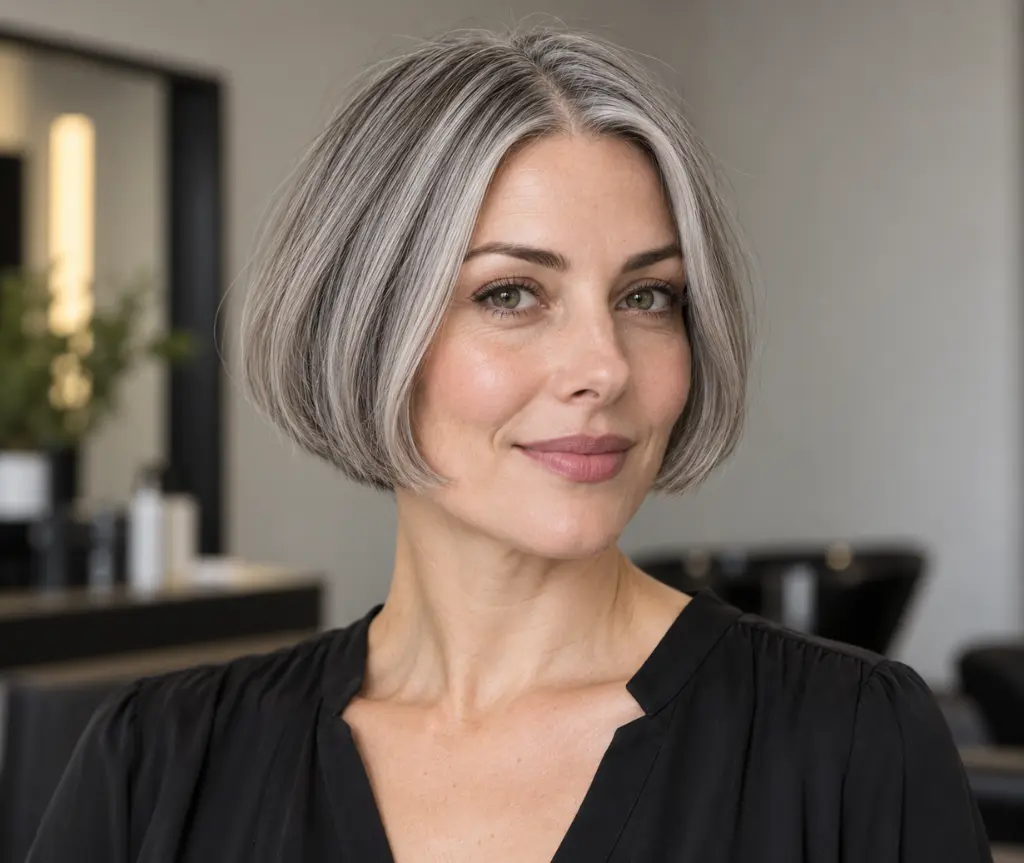
A bixie sits between a bob and a pixie, combining shorter layers at the crown with longer pieces around the ears and nape. In salt-and-pepper hair, that layered shape lets dark and silver strands mingle rather than forming a flat block of color. It is a comfortable middle ground if a traditional bob feels too heavy and a close pixie feels too short. The cut has enough length to frame the face while remaining easy to style.
Ask for a soft perimeter that stays connected as it grows. The top should have lift, but the sides need enough length to give the bixie its characteristic bob-like movement. Style damp hair with a lightweight mousse, lifting the crown and guiding the longer pieces around the face. A little cream can calm flyaways without removing the airy finish. Regular trims maintain the balance, though its slightly longer outline can offer more flexibility between appointments than a very short pixie.
How to Choose Your Short Gray Hairstyle
Start with your natural texture and the amount of styling you enjoy. A blunt bob gives straight, fine hair a strong edge; a curly pixie or short natural afro lets curls and coils set the shape. If you want movement, consider a shag, bixie, or feathered bob. If you prefer a precise finish, look at a sleek pixie, micro bob, or buzz cut.
Bring your stylist pictures that show the front, sides, and back of your chosen cut. Discuss your hair density, growth patterns, and how often you are comfortable getting a trim. Gray hair varies widely in texture and shade, so the best version of any idea is the one shaped for the hair you actually have.
Conclusion
Short gray hair offers plenty of room to make a style your own. You might love the clean shape of a silver pixie, the fullness of a bob, or the movement of a curly crop or shag. The best choice is one that works with your natural texture, suits your styling routine, and makes you feel confident.
Use these 26 ideas as a starting point, then ask your stylist to adjust the length, layers, and fringe for your hair. Your gray strands bring their own mix of tones and texture to the finished look.