24 Gorgeous Short Braided Hairstyle Ideas for Every Hair Texture

Short braided hairstyles can bring a fresh shape, interesting texture, and beautiful detail to everything from a cropped natural cut to a chin-length bob. You do not always need long hair or a full head of extensions to enjoy braids. A small French braid, a braided fringe, or carefully placed cornrows can transform shorter lengths while keeping your haircut recognizable.
The best choice depends on more than your curl pattern. Hair length, strand thickness, density, layering, and the weight of any added hair all influence the finished result. Straight and wavy hair can suit delicate accent braids, while curly and coily textures offer beautiful possibilities for cornrows and individual braided styles. Extensions can help create certain shapes, but they should suit the amount of natural hair supporting them.
1. Chin-Length Box Braid Bob
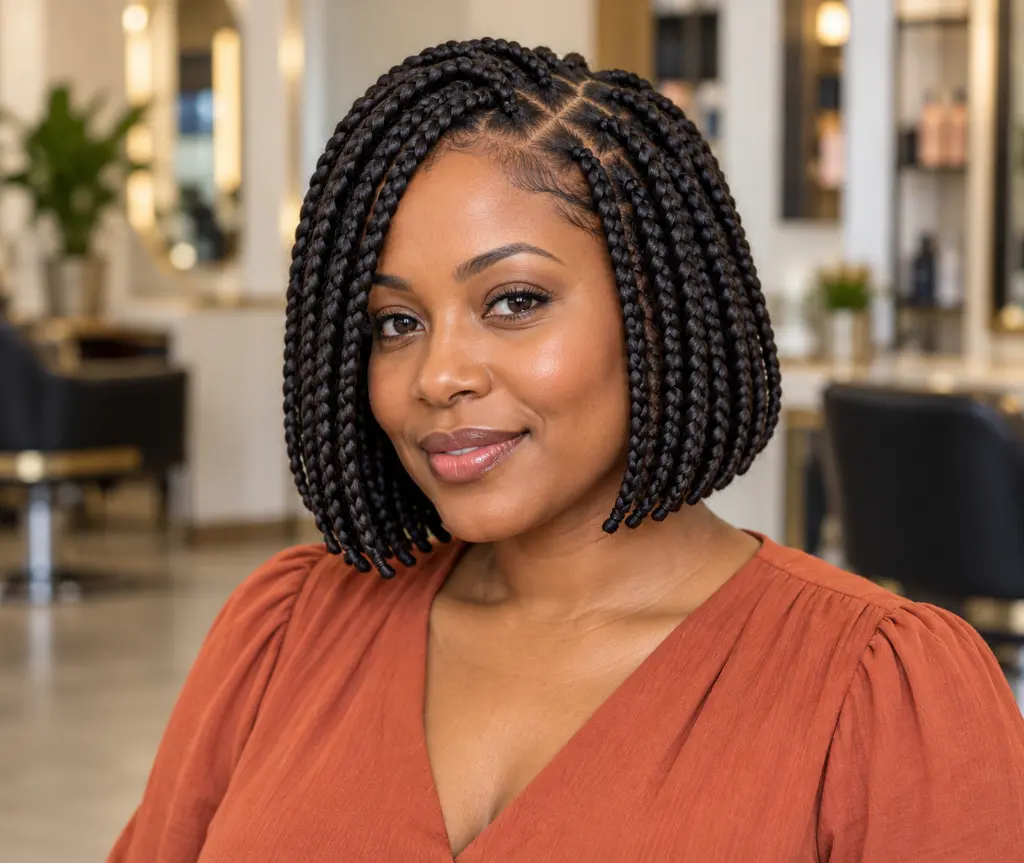
A chin-length box braid bob combines the clean outline of a short haircut with the detail of individual three-strand braids. Square sections at the scalp create the familiar box braid pattern, while neatly finished ends establish a flattering line around the jaw. This style is especially appealing when you want a full braided look without long braids falling across your shoulders. A center part gives the bob a balanced shape, while a gentle side part creates an asymmetric sweep that draws attention to the eyes and cheekbones.
For curly and coily hair, a stylist can work with your natural texture and add extensions when the desired length or fullness requires them. The finished braid size should suit your hair density rather than simply copying a reference photograph. Medium braids provide a clear, structured appearance, while smaller braids offer more individual movement. Keep the overall bob light enough to wear comfortably, particularly around the temples. A simple blouse, small earrings, and a natural hairline allow the braid pattern and chin-length silhouette to become the main features.
2. Short Knotless Braided Bob
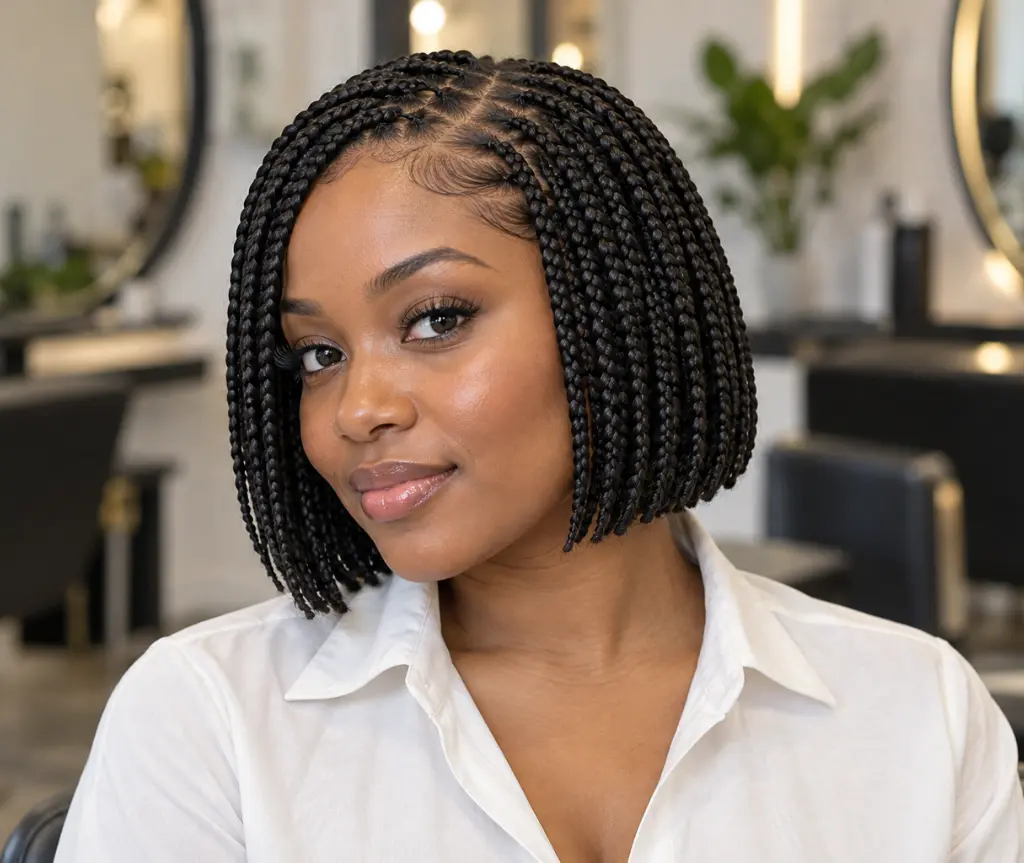
A short knotless braided bob offers a beautifully detailed alternative for anyone who prefers individual braids with a gradual transition from the natural roots. The technique begins with the wearer’s hair, with extension hair introduced progressively when needed. At bob length, the braids can frame the cheeks, skim the jaw, or sit just above the shoulders. The result feels versatile because the short perimeter gives the style a recognizable haircut shape, while the separate braids create movement when you turn your head or change your part.
Knotless braids still need thoughtful sectioning and a comfortable installation. The name alone does not guarantee that a style will feel light, especially if too much extension hair is added to small sections. Discuss your natural density, preferred part, and finished length before the appointment. For a softer everyday look, choose modest braid thickness and minimal accessories. A slightly off-center part can make the bob feel relaxed, while an even lower edge gives it a more polished finish that works with both casual clothing and tailored outfits.
3. Short Cornrows with a Neat Nape Finish
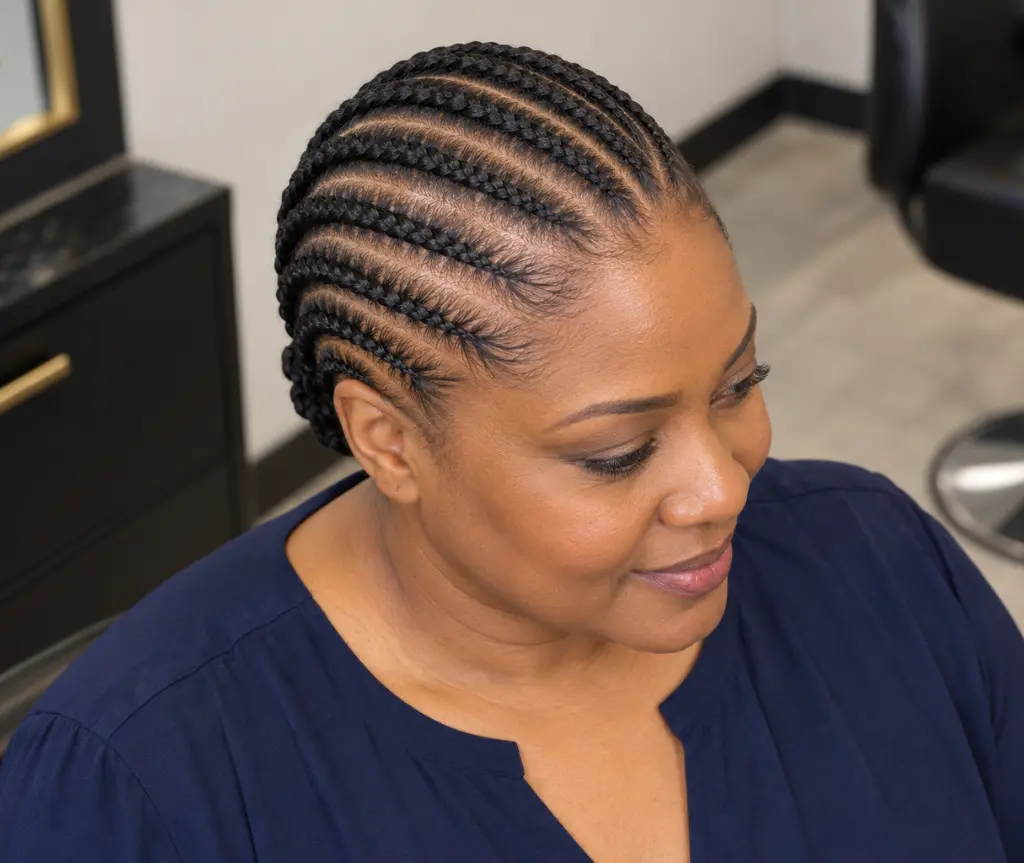
Short cornrows create a close-to-the-scalp braided hairstyle that can make natural texture look beautifully organized without requiring a hanging bob. In this version, evenly spaced rows travel from the front hairline toward the back, finishing neatly near the nape. The visible scalp pattern becomes part of the design, so the direction and width of each row matter as much as the braid itself. This is a strong choice for readers who enjoy a clear, compact silhouette and want their face, earrings, or neckline to remain visible.
The amount of natural length available determines how the cornrows can be formed and secured. Curly and coily hair can work particularly well for this style, although a braider should assess the actual hair rather than relying only on a texture label. Short ends may need discreet securing, and extensions can be used selectively when appropriate. Ask for a finish that feels comfortable from the start. A straight-back arrangement looks simple and elegant, while slightly curved rows offer a softer effect without making the overall design feel busy.
4. Side-Part Cornrow Bob
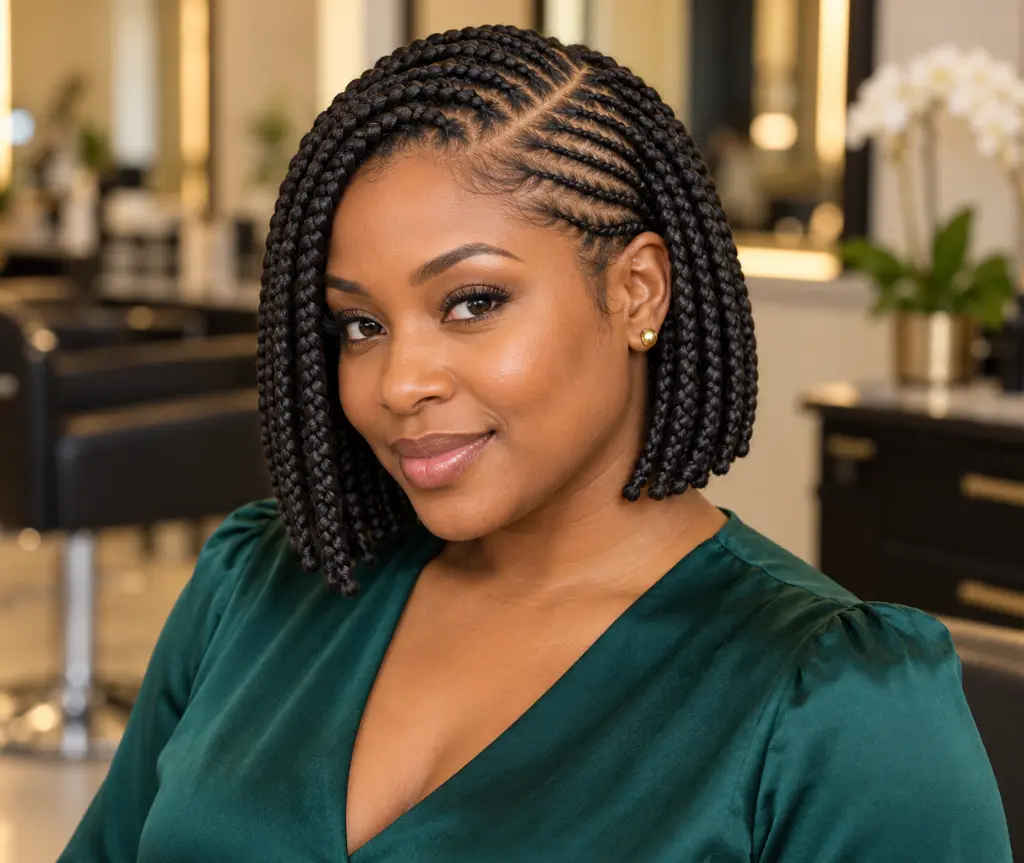
A side-part cornrow bob combines the sculpted roots of cornrows with short braids that fall around the face. The rows follow a planned direction from an offset part, then continue into individual braided lengths that establish the bob shape. This creates a different visual effect from box braids because the scalp design guides the movement of the hairstyle. One side can look gently swept, while the other stays closer to the head, making the overall silhouette feel elegant, intentional, and full of detail.
This style works well when you want a braided bob with a defined part that remains consistent throughout wear. Curly and coily textures can provide a beautiful foundation, with added hair used when needed to achieve the desired length. Bring reference photographs showing both the scalp pattern and the finished perimeter, since one front-facing image may hide important details. Keep the hanging sections proportionate to the roots supporting them. A jaw-length finish highlights the neckline, while a slightly longer front section gives the bob a more dramatic diagonal line.
5. Short Fulani-Inspired Braids
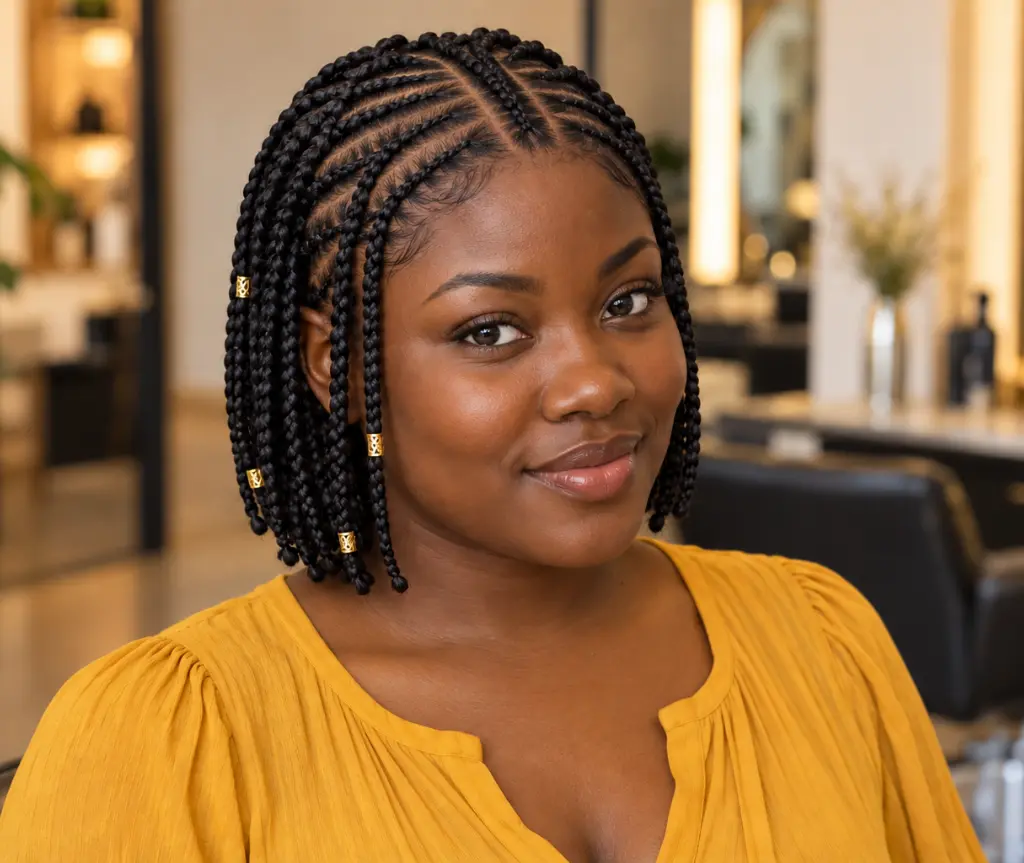
Short Fulani-inspired braids bring together a distinctive scalp pattern and individual braids in a compact, wearable shape. Fulani braiding traditions are associated with the Fulani people of West Africa, and contemporary salon interpretations vary considerably. A short version might include a central cornrow, accompanying side rows, and face-framing braids that end around the jaw. The arrangement creates interest across the crown and temples, making the hairstyle visually rich even when the finished length stays well above the shoulders and the accessories remain minimal.
Choose a stylist who understands the specific pattern you want, rather than assuming that every hairstyle described with this name will look the same. Discuss the placement of face-framing braids and whether beads or cuffs suit the weight of your individual sections. A few carefully selected accents can make the design feel complete without overwhelming a short silhouette. For everyday wear, natural black or dark brown braids provide an understated finish. If you prefer contrast, subtle warm highlights can emphasize the separate braided strands and the direction of the scalp pattern.
6. Short Boho Braided Bob
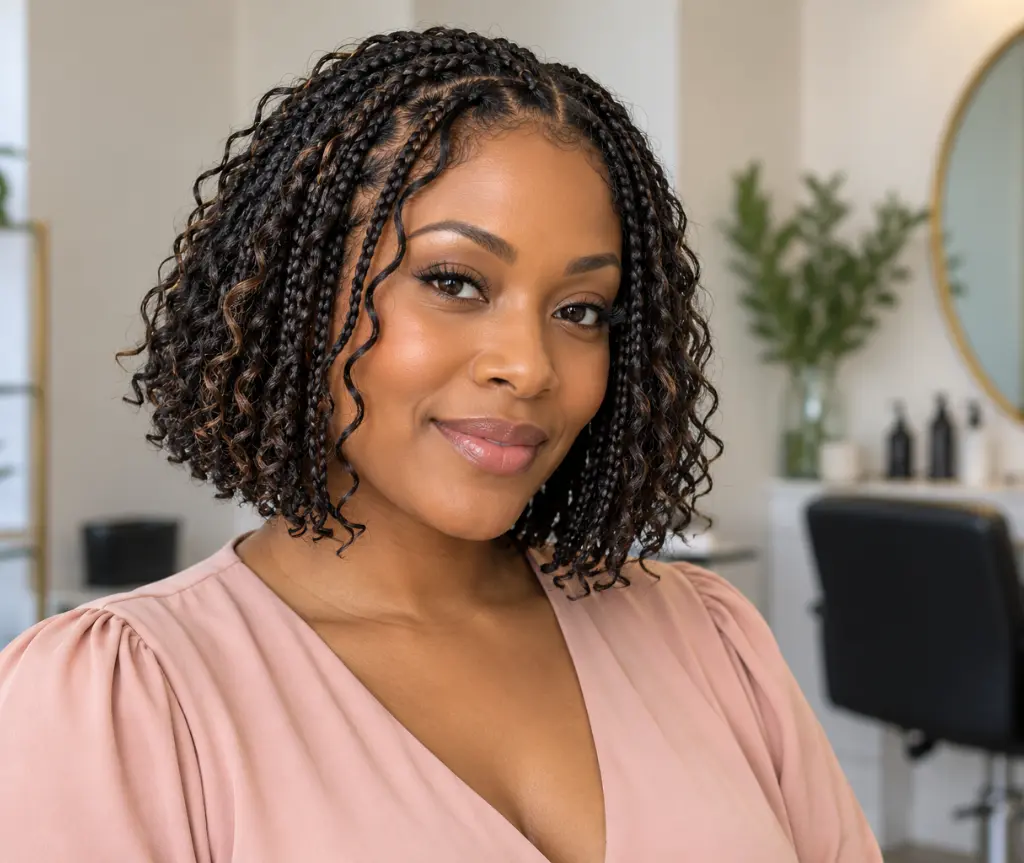
A short boho braided bob mixes individual braids with deliberately loose curls or waves, creating a softer outline than a fully braided bob. The braided sections provide structure, while the unbraided pieces add movement around the cheeks and lower edge. At chin or jaw length, this combination can feel airy and romantic without the volume of a much longer bohemian hairstyle. The key visual feature is the contrast between clearly formed braids and flowing loose texture, with both elements visible rather than blending into an indistinct mass.
Your stylist can use your own curls where suitable or select added hair that matches the finish you want. Loose pieces need their own care because they can tangle even when the braided sections remain tidy. Consider how much daily detangling you are willing to do before choosing a curl-heavy version. A restrained number of loose strands keeps the short bob easier to define visually. For a balanced result, ask for consistent braid placement, believable density, and a perimeter that still reads as a bob from the front and side.
7. Short Braids with Curly Ends
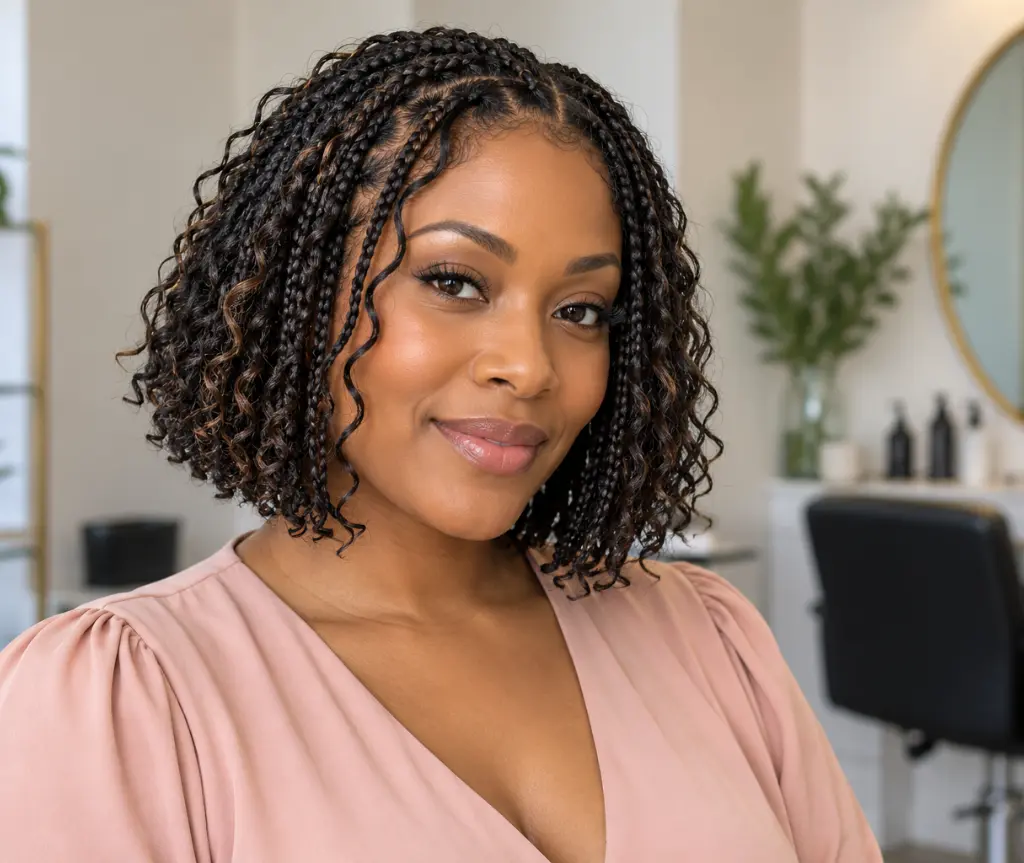
Short braids with curly ends offer a clear division between neat braided lengths and a playful textured finish. The braids can begin as individual box braids or knotless braids, then transition into loose curls near the lower edge. Keeping the entire hairstyle around the jaw makes the curls part of the bob silhouette rather than a long trailing detail. This is an attractive option if you love visible braid definition but want the ends to feel softer, fuller, and more expressive around your face.
The curl size changes the overall appearance considerably. Small spirals create a lively, textured border, while larger curls produce a more rounded finish with fewer individual shapes. Your natural texture and the type of added hair will influence how the ends behave, so discuss the finished look with your braider before installation. Loose ends should remain easy to separate and maintain. A side part can introduce a gentle sweep across the forehead, while a center part lets matching curls frame both cheeks for a balanced everyday hairstyle.
8. Micro Braid Bob
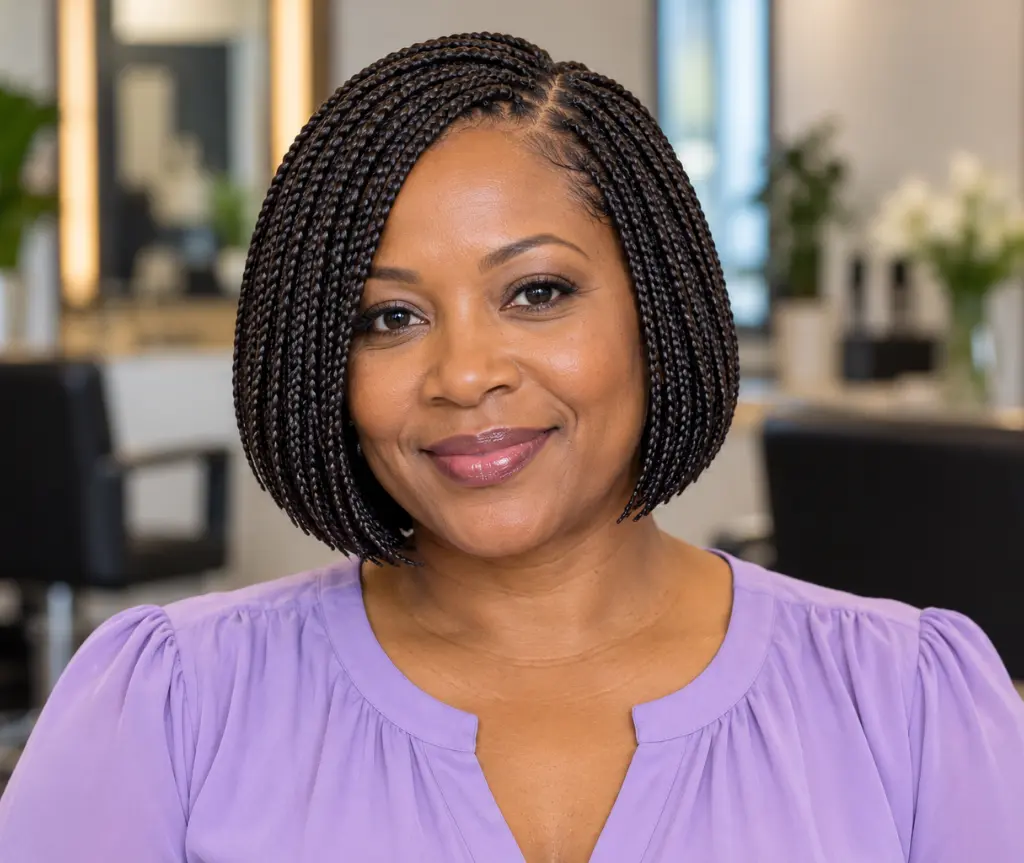
A micro braid bob uses very small individual braids to create a finely textured short hairstyle with plenty of movement. From a distance, the tiny braided lengths can resemble a softly flowing bob, while a closer view reveals the detailed three-strand pattern. The small scale allows for subtle changes in parting and direction, making the style appealing to anyone who enjoys intricate work. A cheek-skimming or chin-length perimeter helps keep the look compact, and a natural hair color allows the delicate braid detail to stand out.
Because micro braids involve many small sections, installation and removal can require considerable time. The size should suit your natural density and the condition of each section rather than aiming for the smallest possible braid. Avoid pairing tiny sections with disproportionate amounts of added hair. Before booking, discuss how the braids will be secured, how you will clean your scalp, and how much time you can devote to removal. A simple side part and understated clothing complement the detailed texture without competing with the fine pattern across the crown.
9. Chunky Braided Bob
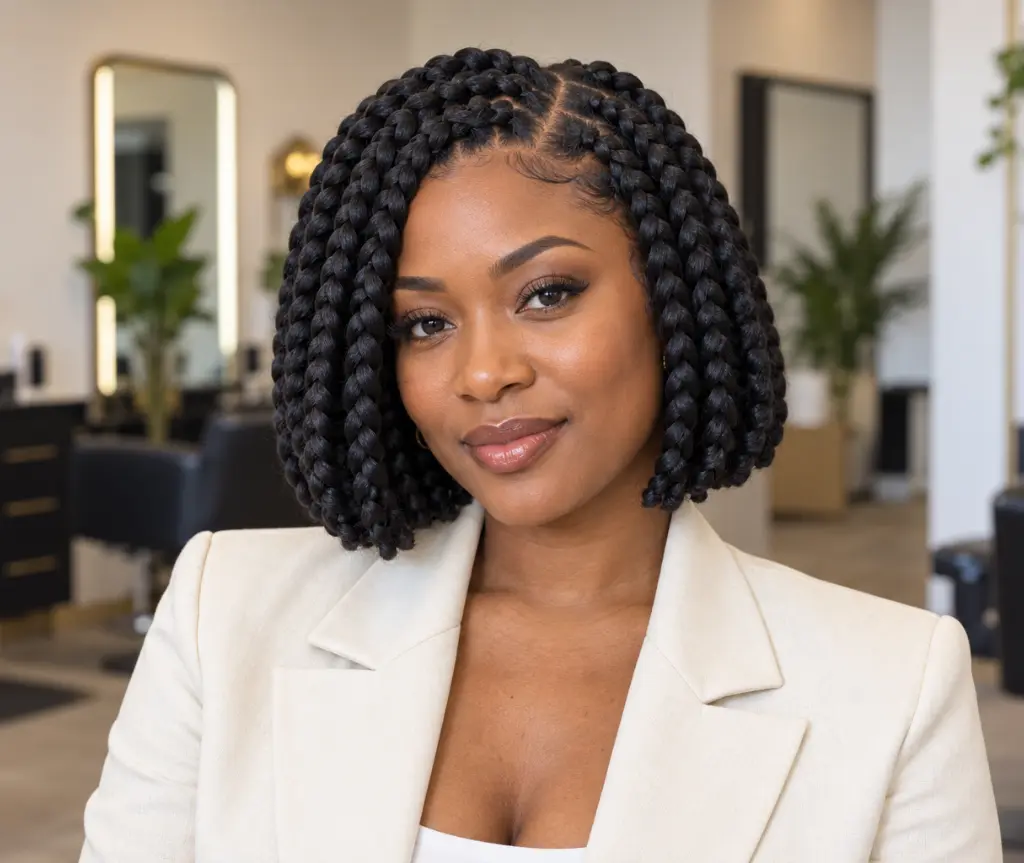
A chunky braided bob creates a bold short silhouette using fewer, thicker individual braids. The larger braid diameter makes the woven structure easy to see, while a jaw-length finish prevents the look from becoming visually overwhelming. This style can feel especially striking with a clean part and a consistent lower edge. It is a good inspiration choice for readers who prefer pronounced shapes over very fine detail and want their hairstyle to make a clear impression with relatively simple clothing and accessories.
The word chunky describes the appearance, but the amount of hair used should still match the natural sections underneath. A stylist can help you decide whether your density supports the desired braid thickness and whether extensions are needed to establish the bob shape. Larger braids can feel bulky if too much added hair is used, so prioritize a comfortable overall weight. An offset part creates a sculptural sweep, while natural brown or black coloring keeps the focus on the generous braid pattern and the strong, short outline.
10. Asymmetrical Braided Bob
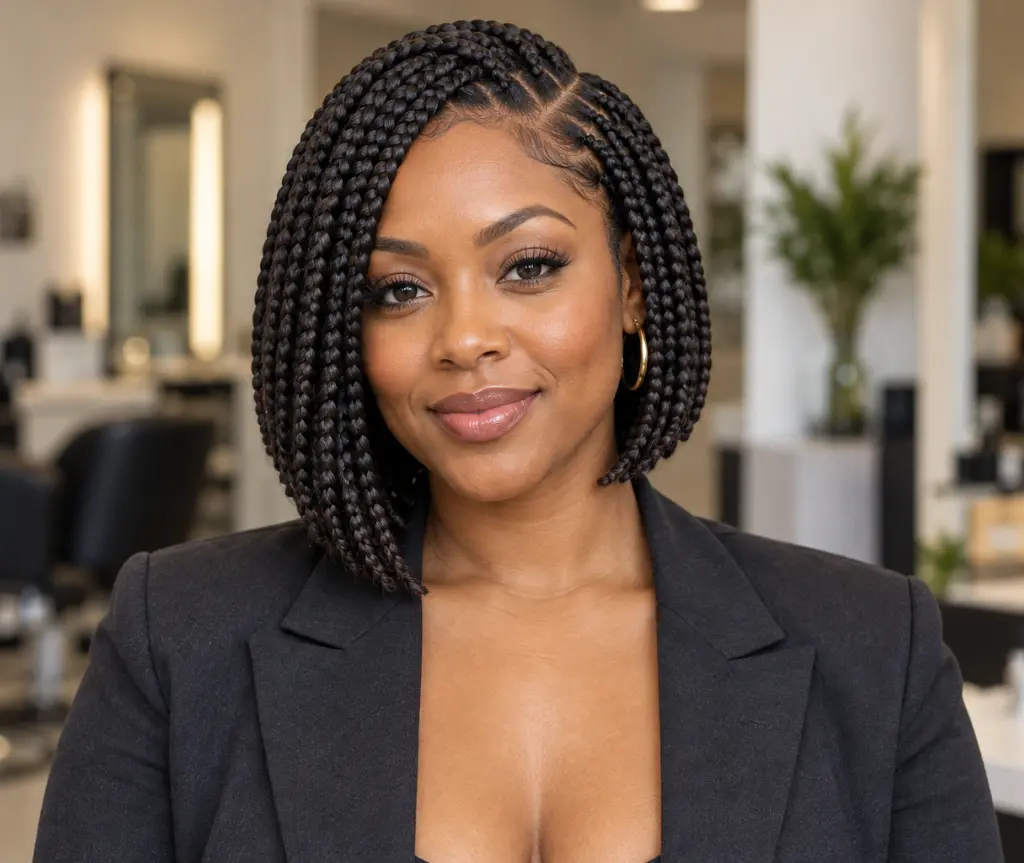
An asymmetrical braided bob introduces a deliberate difference in length between the two sides of the hairstyle. One side might finish near the cheek or jaw, while the other falls a little lower toward the neck. This diagonal perimeter gives familiar individual braids a more fashion-forward shape and creates a beautiful frame around the face. The design can be subtle enough for everyday wear or more pronounced for a statement look, depending on how much length contrast you choose and where the part sits.
The asymmetry should come from a planned finish rather than uneven trimming or inconsistent braid tension. Show your stylist the angle you want and discuss how the braids will fall when you move or change your head position. Smaller or medium braids can make the diagonal outline easier to read, while a restrained side part reinforces the direction of the style. Natural dark tones look sleek, and carefully placed color can highlight the longer side. Keep earrings simple if you want the distinctive braided perimeter to remain the main attraction.
11. Short Braids with Beads
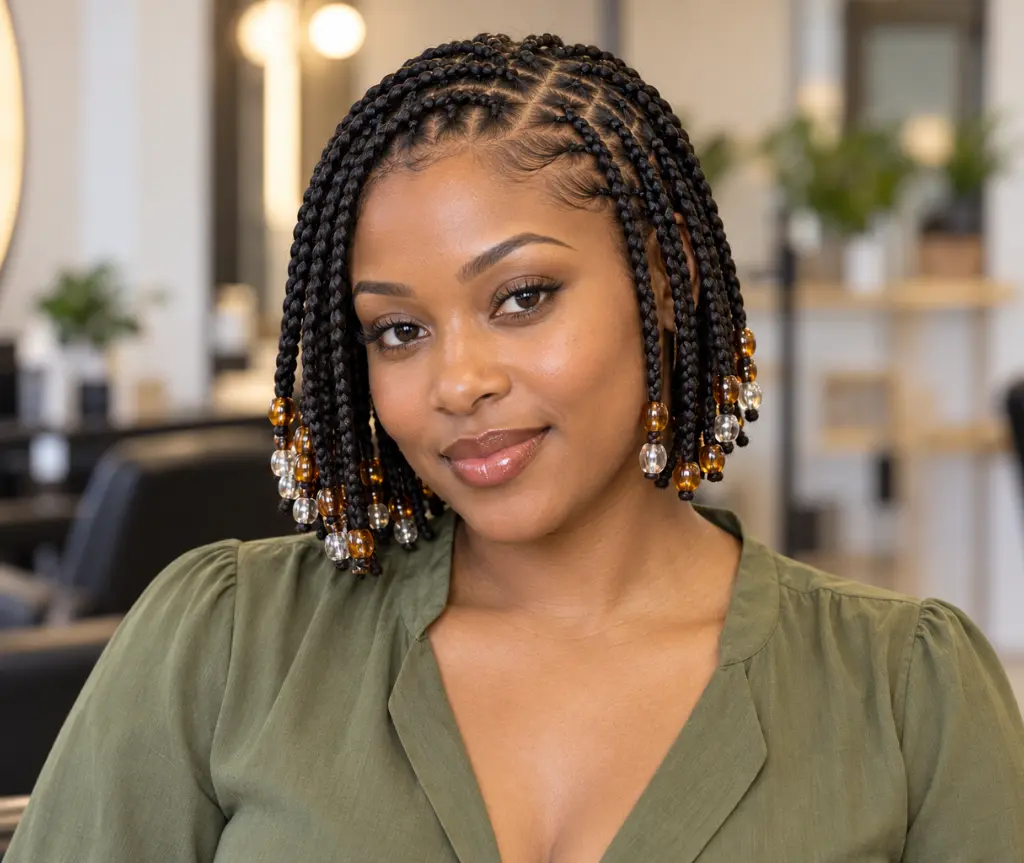
Short braids with beads combine a compact braided hairstyle with decorative details that move around the lower edge. A few beads at the ends can emphasize the bob shape, introduce a favorite color, or create a distinctive finishing touch. Clear, wooden, or muted metallic-look beads each produce a different effect. This idea works especially well when the braids remain visually dominant and the accessories support the design. A simple chin-length arrangement makes the bead placement easy to appreciate without requiring a complicated scalp pattern.
Choose bead size and quantity with the weight of each braid in mind. Several heavy accessories on a small braid can change how the hairstyle feels and moves. A braider can help secure the beads and recommend a balanced arrangement for your length and density. You might decorate only the face-framing braids or repeat a small accent around the perimeter. Matching every bead is optional; a limited palette can look beautifully coordinated. Pair the finished style with minimal jewelry if you want the braided ends to provide the main decorative detail.
12. Natural Mini Braids Without Extensions
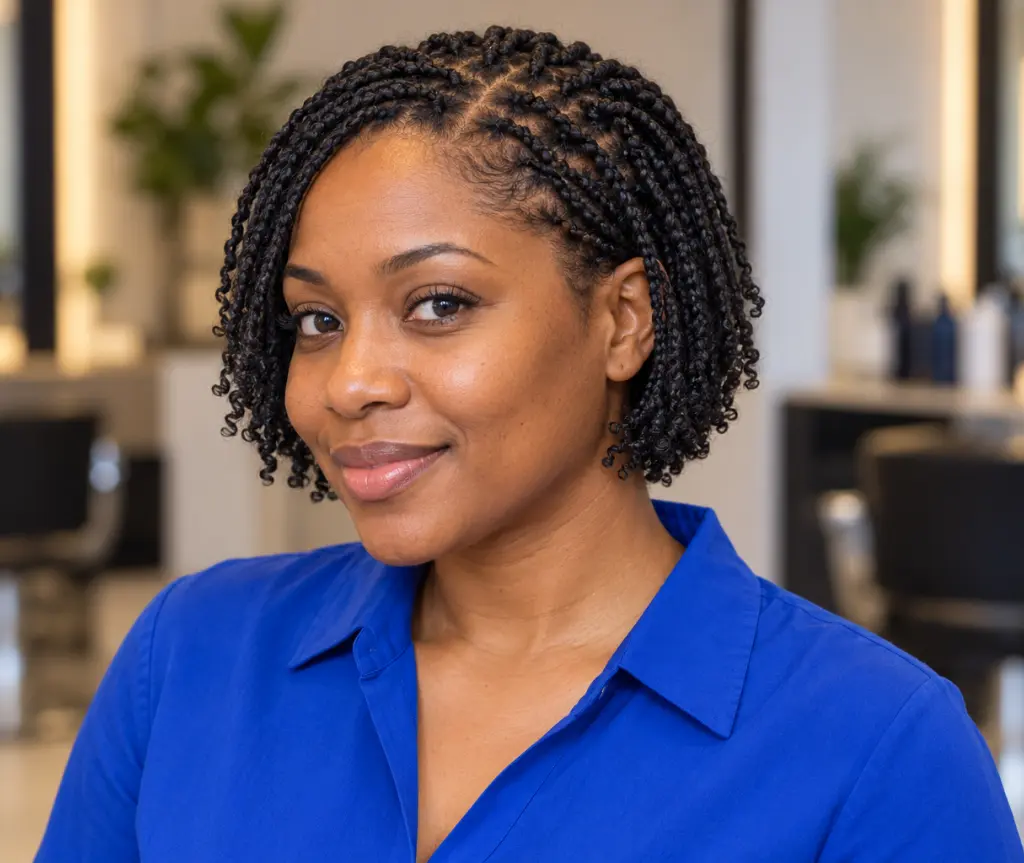
Natural mini braids without extensions celebrate the wearer’s own length, density, and texture. Small sections are braided individually, producing a detailed style that can sit close to the head or form a soft short outline depending on the hair. Curly and coily strands may create a more compact finished length than expected, so the result does not need to resemble an extension-based bob. The appeal comes from authentic texture, lightweight movement, and the ability to see how your natural hair behaves in small, clearly defined braided sections.
Before choosing this style, consider whether your current length can form braids with securely finished ends. A stylist can assess shorter layers and suggest a section size that suits your density. The final look may include natural texture at the tips, which can add character rather than requiring every end to appear identical. Keep the styling simple with a center part, soft side part, or gently arranged front sections. This approach is especially appealing if you prefer wearing your own hair and want a short braided hairstyle with a relaxed, personal finish.
13. Two Dutch Braids for a Short Bob
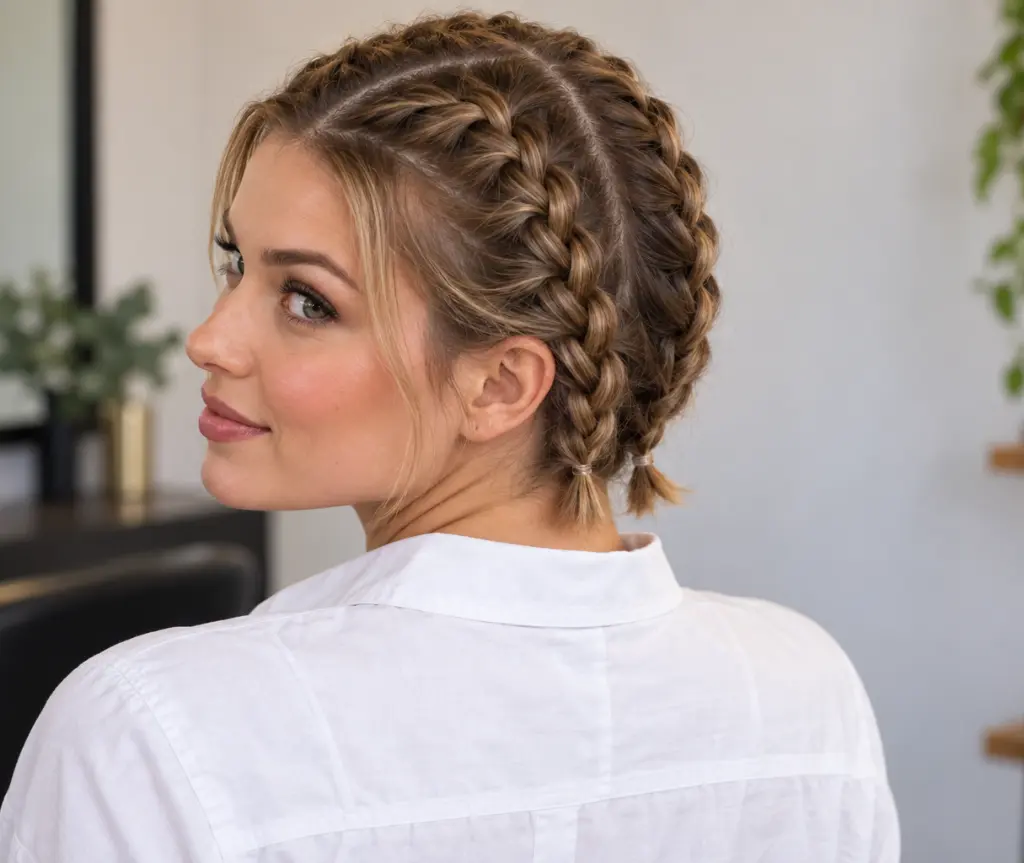
Two Dutch braids give a short bob a sporty, structured finish while showing off the raised braid pattern along the scalp. Each braid is formed by crossing sections underneath, which makes the woven shape stand out visibly. A center part divides the hair into two balanced sections, and the braids can finish in small tails near the nape. This style is an appealing option for straight, wavy, or curly hair with enough length to collect into the rows, particularly when you want the front sections kept away from your face.
A blunt bob may be easier to gather evenly than a heavily layered cut, but shorter pieces can still be incorporated with thoughtful sectioning and discreet pins. The ends do not need to become long pigtails; compact tails can look intentional and suit the short haircut. Use only enough styling products to help manage flyaways without making the hair feel stiff. Slightly fuller braids create a softer finish, while more compact rows emphasize the pattern. Keep the center part clear if you want the two sides to look balanced from the front.
14. Single French Braid on Short Hair
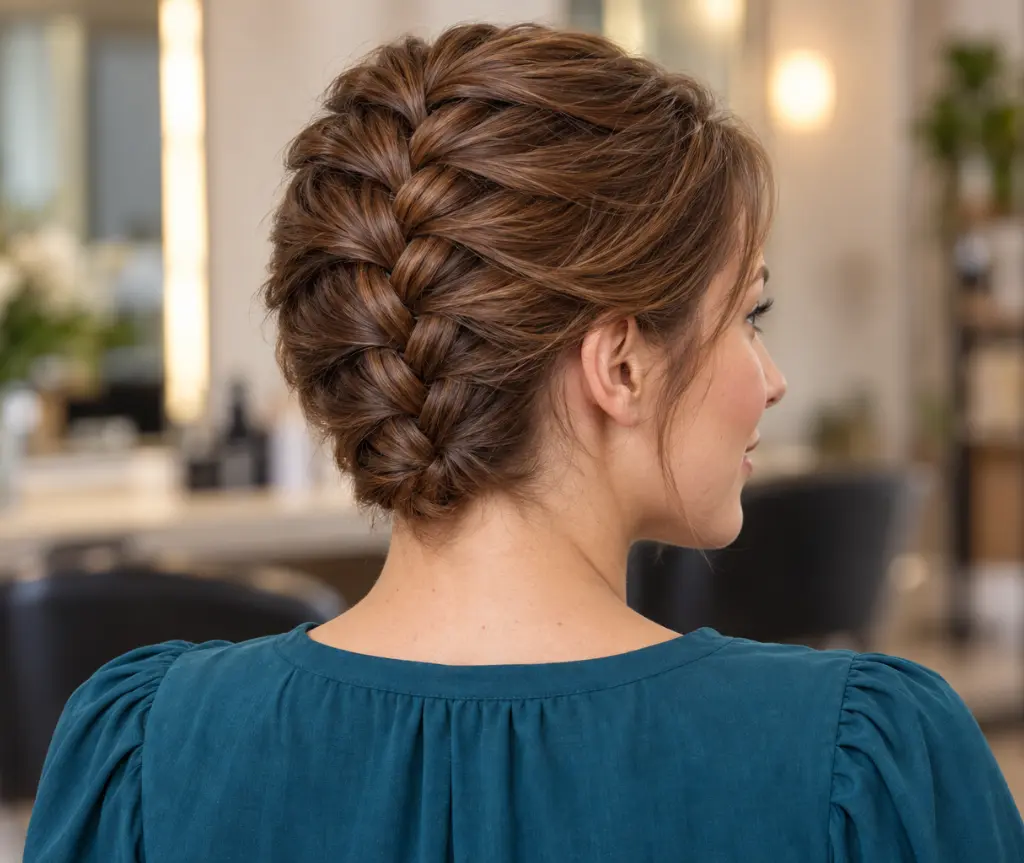
A single French braid offers a classic way to organize short hair into one central woven section. Hair is added progressively as the braid travels from the upper head toward the nape, creating a pattern that sits relatively close to the scalp. On a short bob, the finished tail may be very small or tucked discreetly underneath. This gives the hairstyle a neat, practical shape without requiring long lengths. Straight and wavy textures show the pattern clearly, while curls can introduce a softer, more textured surface.
The shortest layers will determine how far the braid can continue and how many pins may be needed. Start with a realistic expectation of a compact braid rather than a long, full plait. An experienced stylist can incorporate sections gradually and preserve some softness around the face. For an everyday look, leave a few intentional front pieces loose if their length makes them difficult to gather. A smooth crown creates a polished finish, while slightly relaxed sections give the same short French braid a gentler appearance suited to casual outfits.
15. Side French Braid for Fine Hair
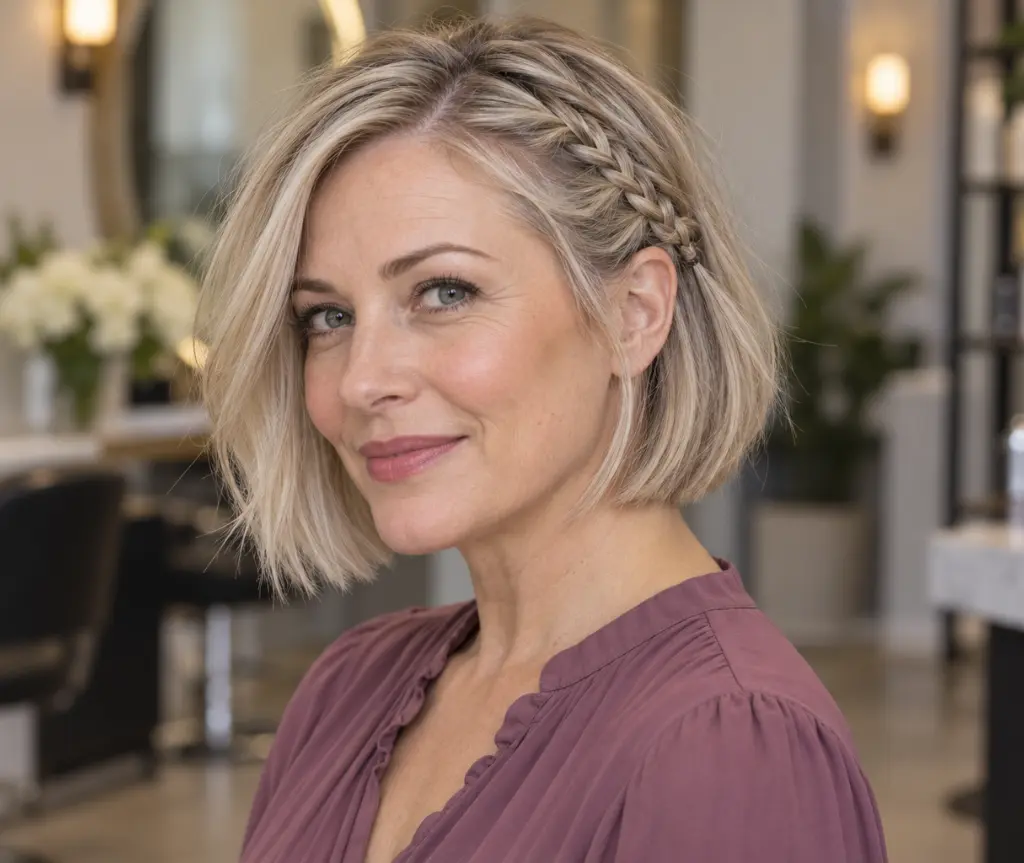
A side French braid can add visible detail to fine short hair without requiring the entire head to be braided. The braid follows one front section from near the part toward the temple or above the ear, while the remaining bob stays loose. This placement gives the hairstyle a point of interest and keeps the face open. Because fine hair refers to strand thickness rather than overall density, the amount of hair available for the braid can vary considerably from one person to another.
Choose a braid width that suits the section you actually have, and avoid pulling it tightly simply to create a sharper pattern. A little styling grip may help slippery strands stay organized, but a large amount of product can weigh down a fine-haired bob. Keep any gentle loosening limited to what the braid can support. The unbraided hair can remain straight or carry a soft bend through the ends. A small pin above the ear completes the style while allowing the natural lightness of the short haircut to remain visible.
16. Waterfall Braid on a Wavy Bob
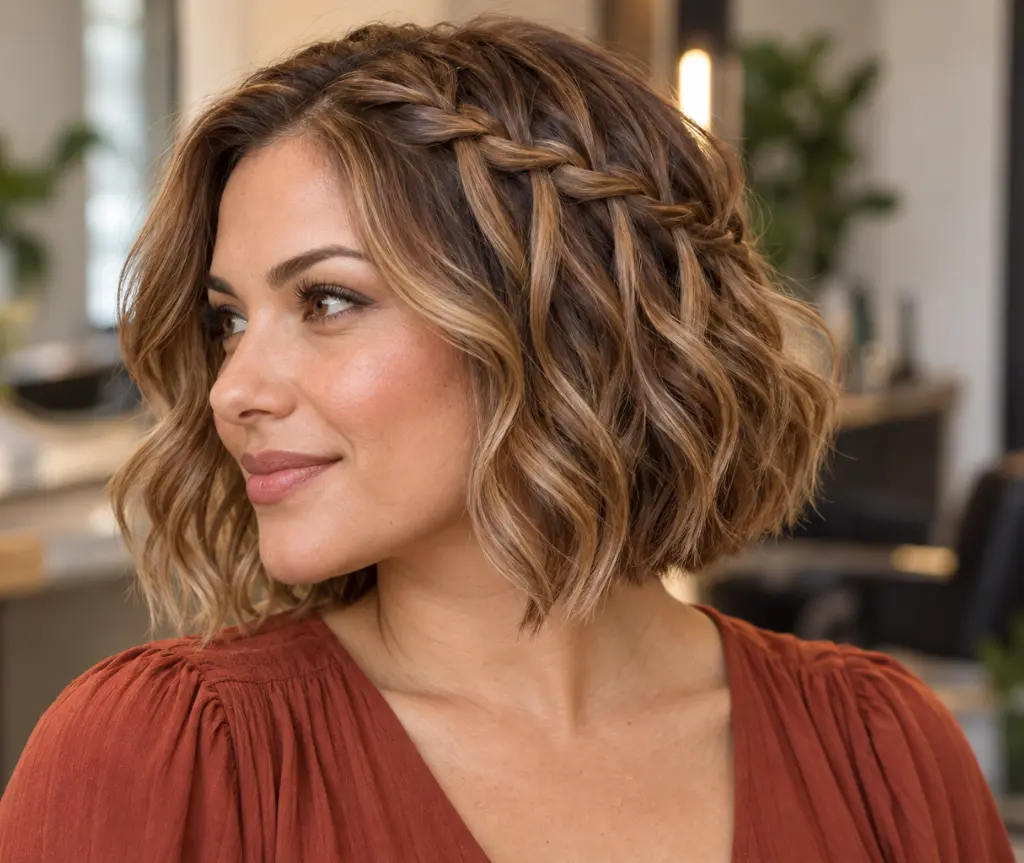
A waterfall braid introduces a delicate woven line across a wavy bob while allowing selected sections to fall through the braid. These released strands create the characteristic cascading effect, which becomes particularly attractive when the loose hair carries soft S-shaped waves. The braid usually follows the side or upper back of the head rather than gathering all the hair into one plait. This makes it a lovely option for readers who want an accent hairstyle that preserves the movement, texture, and recognizable outline of their short bob.
The style is easier to understand visually when the braid and dropped sections remain distinct. Very short layers may not reach far enough to create a continuous pattern, so placement should follow the lengths available. A stylist can keep the woven section smaller or shorten its path if necessary. Gentle waves give the released strands definition without needing exaggerated curls. For a special occasion, a discreet decorative pin can mark the finishing point. Keep the surrounding hair softly arranged so the waterfall detail stays visible from the side and rear.
17. Braided Headband for a Short Bob
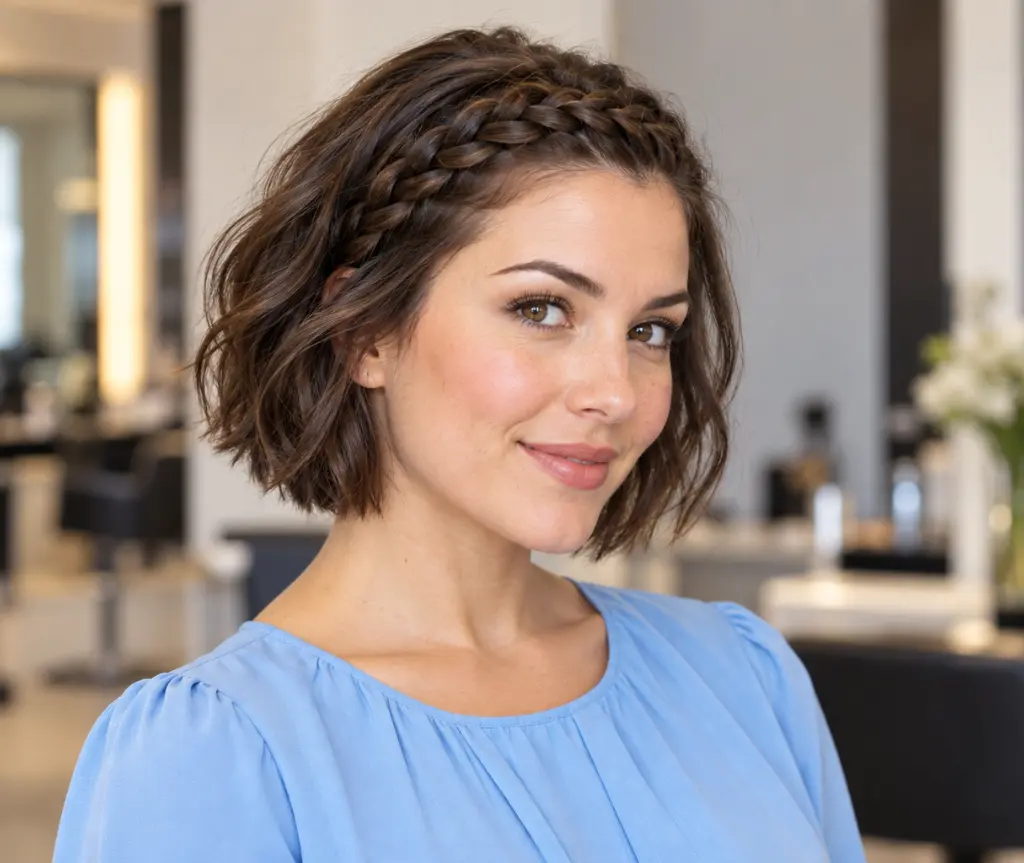
A braided headband creates the appearance of a woven band across the front of the head while leaving most of the bob loose. The braid can follow the hairline from one side toward the other, with the end secured discreetly near the ear. This is an attractive way to keep front sections in place while preserving the fullness of a short haircut. Straight hair produces a clearly defined pattern, wavy hair adds softness, and curls can make the loose portion look especially expressive behind the braid.
The front and side lengths need to be long enough for the intended path, so a deep fringe or very short temple section may require a modified version. A partial braided headband can work beautifully when a full crossing braid is not practical. Discuss whether you want a close, neat finish or a softly relaxed shape before styling. The braid should follow your natural hairline comfortably. A simple center or side arrangement behind it keeps the design readable, while small earrings and an open neckline complement the face-framing effect.
18. Short Halo Braid
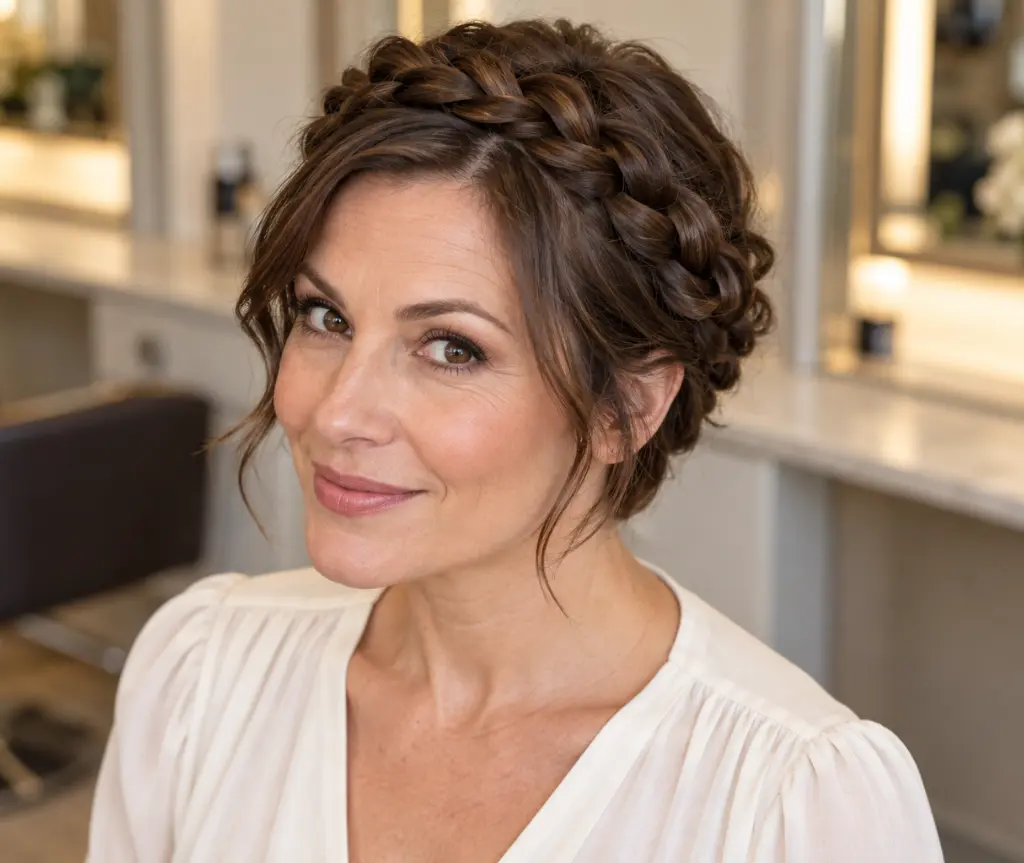
A short halo braid arranges the hair into a circular or nearly circular woven shape around the head. On shorter lengths, the result depends on careful sectioning, discreet securing, and enough hair to connect the intended braid path. It can look elegant for a wedding, celebration, or dressed-up evening because the woven crown frames the face while the ends are tucked away. This style is especially appealing when you want a short haircut to take on the appearance of an updo without building a large bun.
Not every pixie or short bob can form a complete halo using natural hair alone. Longer bobs may offer more flexibility, while a stylist can discuss whether a partial halo or matched added hair better suits your goal. The finished braid should look proportionate to the head and remain comfortable around the hairline. A few soft front pieces can make the arrangement feel relaxed, while a cleaner finish creates a more formal appearance. Choose a simple outfit neckline so the circular braid shape remains the main feature from multiple viewing angles.
19. Half-Up Braided Bob
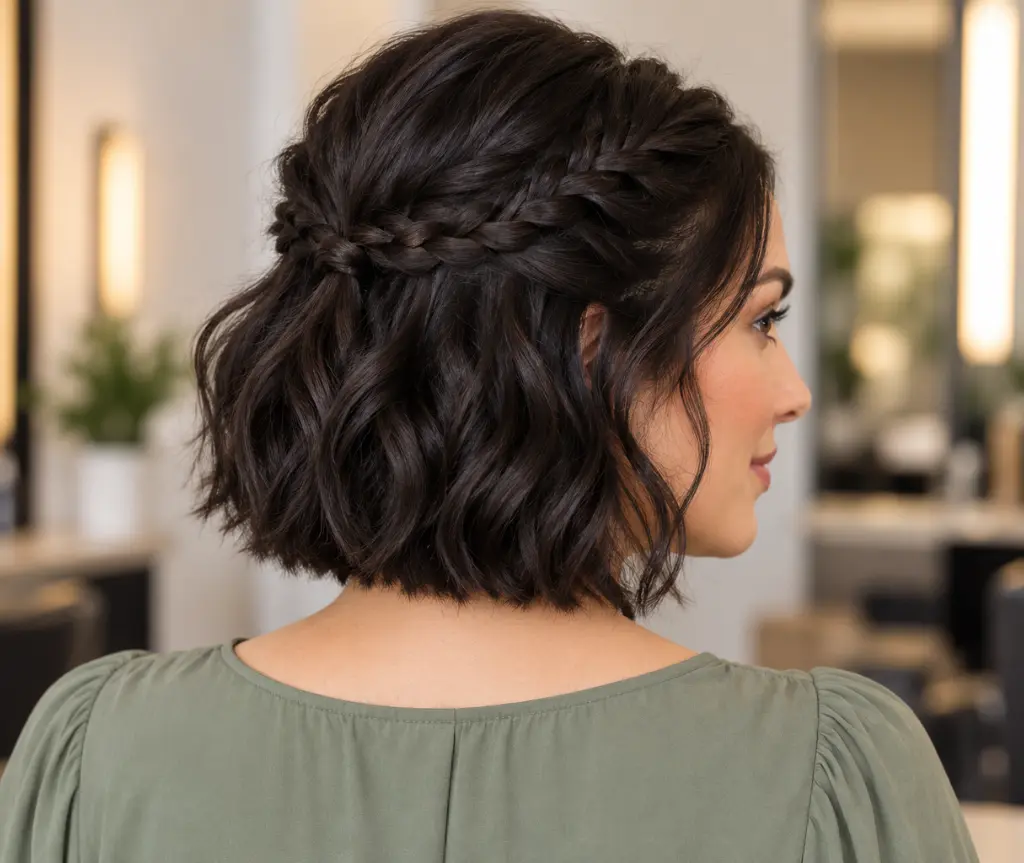
A half-up braided bob combines woven detail on the upper section with loose hair around the lower perimeter. Two small braids can begin near the temples and meet at the back, or one central braid can gather a section from the crown. The remaining hair keeps the familiar bob shape, making this idea easy to adapt to straight, wavy, and curly textures. It is particularly useful when you want a hairstyle that feels more arranged than loose hair but still shows the movement and texture of your haircut.
The size of the braided sections should suit your density and the amount of hair you want to leave loose. Taking too much from the sides can make the lower bob appear sparse, especially on less dense hair. A small clasp, elastic, or discreet pins can secure the meeting point at the back. Leave natural waves or curls intact if texture is part of the appeal. For straight hair, a slight bend at the ends adds softness. The result works well for everyday outings as well as relaxed occasions that call for a little extra detail.
20. Face-Framing Braids on a Short Bob
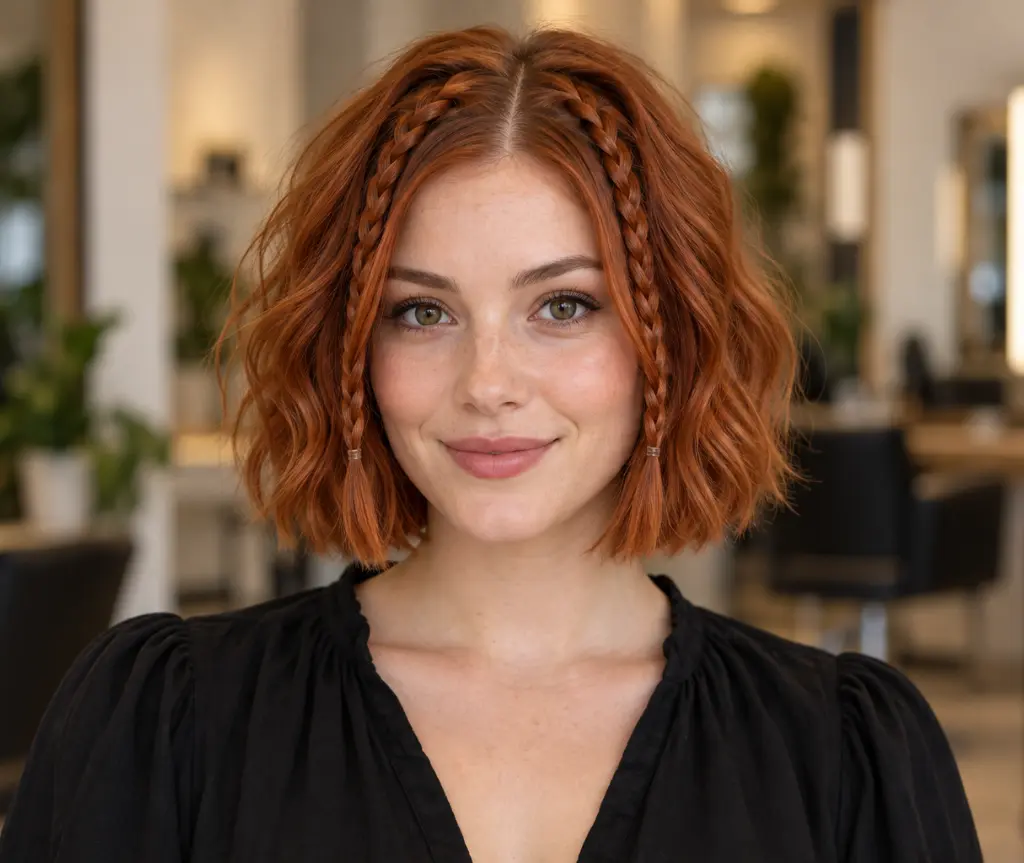
Face-framing braids add two narrow woven accents to the front of a short bob while leaving the rest of the hair loose. Positioned on either side of a center part, they draw attention to the eyes and give the haircut a playful, personalized finish. This is one of the most approachable short braided hairstyle ideas because the entire head does not need to be gathered. Straight strands create crisp little plaits, waves add a relaxed effect, and curls produce a beautiful contrast between braided detail and natural movement.
Keep the braids small enough to suit the surrounding haircut and long enough to reach secure finishing points. A layered bob may produce shorter front braids, which can still look intentional when both sides are thoughtfully placed. Tiny elastics or suitable small accessories can finish the ends without overpowering the design. Avoid making the front sections so tight that the style feels uncomfortable. You can wear the remaining hair with its usual part and texture, making this a simple way to refresh a bob without changing the cut or adding extensions.
21. Braided Fringe for a Pixie or Bixie
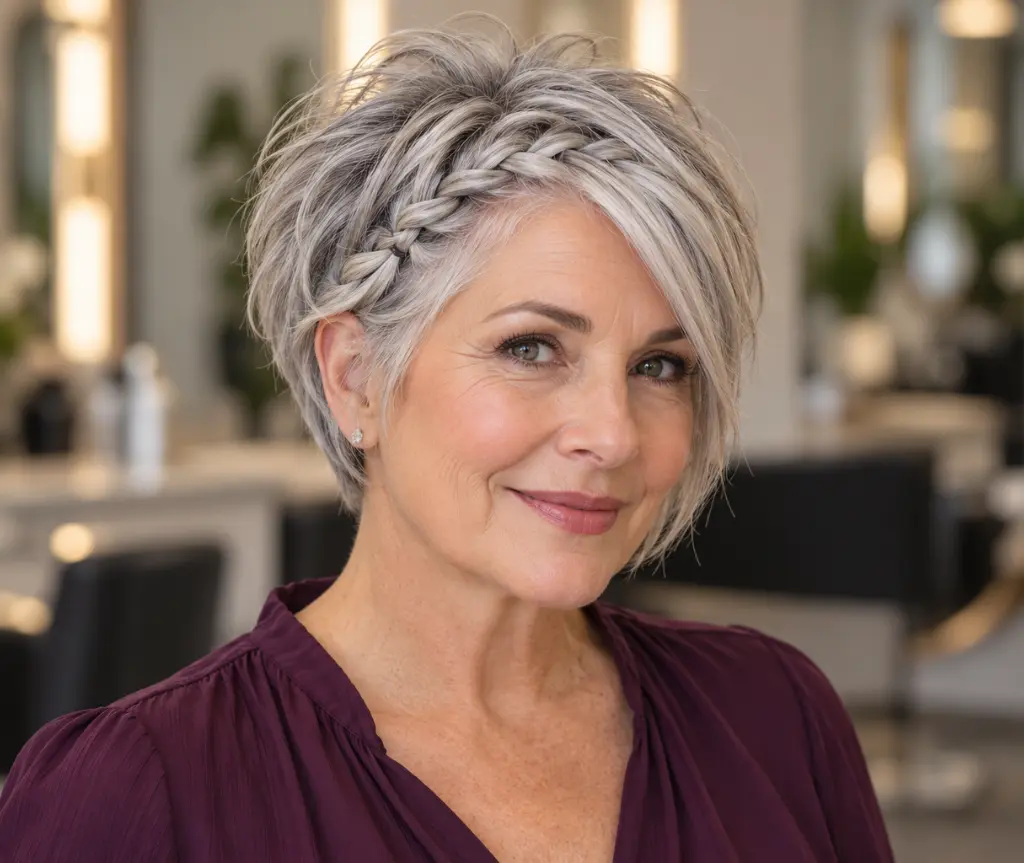
A braided fringe can give a pixie or bixie a fresh focal point when the front section is longer than the sides and nape. The braid follows the fringe across the forehead or along the front hairline, keeping the longer pieces arranged while preserving the cropped silhouette. This idea depends on the actual length of the bangs, so it suits some short cuts more easily than others. It is especially attractive when the braid highlights the contrast between a longer, softly styled front and neatly tapered shorter sections.
Ask your stylist to work with the direction your fringe naturally falls rather than forcing it into an unsuitable pattern. A small French braid can incorporate short pieces progressively, with the end secured near the temple. Very short bangs may be better suited to a smaller accent rather than a complete braid. Keep the crown softly textured so the look still feels like a pixie or bixie. A simple outfit and minimal accessories let the unusual front detail stand out while the overall hairstyle remains compact, practical, and recognizably short.
22. Side Cornrows with a Curly Bob
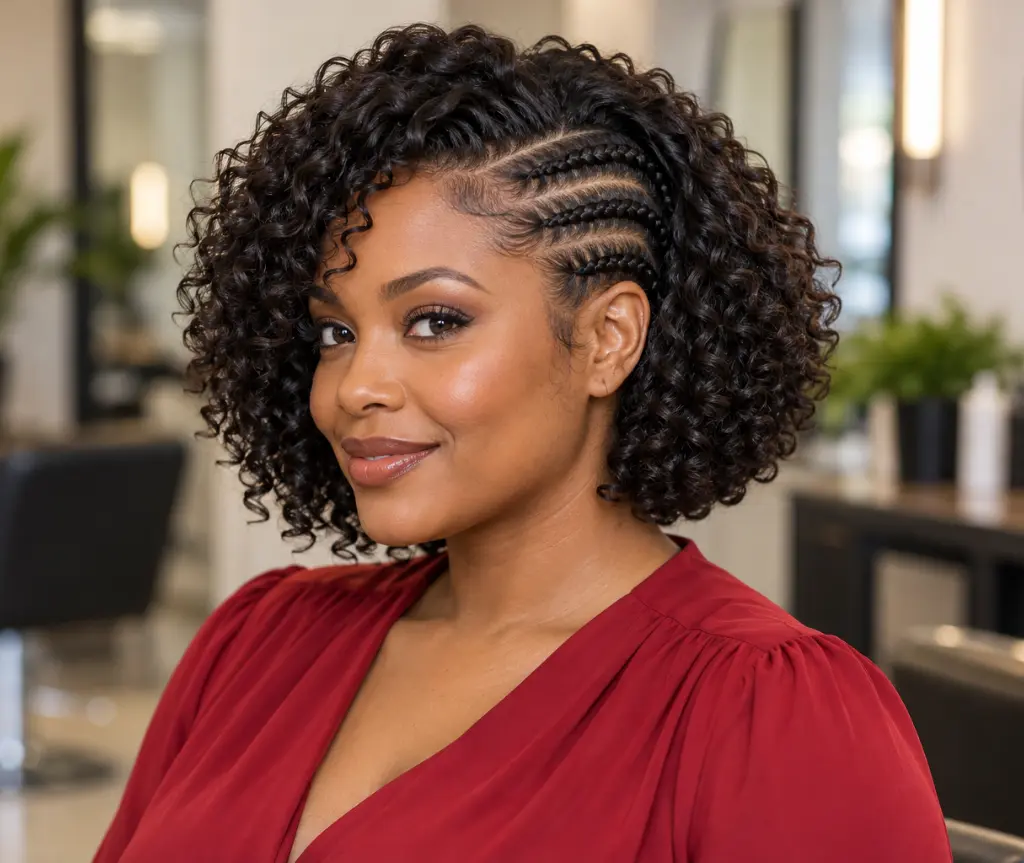
Side cornrows with a curly bob create a striking contrast between close braided detail and loose natural curls. One side of the head is arranged into a few neat cornrows, while the remaining hair forms the rounded bob silhouette. The combination reveals the temple and adds direction to the hairstyle without gathering every curl. It is an appealing choice for readers who love their natural curl pattern and want a braided accent that makes the overall shape feel more intentional, sculpted, and visually interesting.
The cornrow placement should suit the part and the way your curls fall when dry. Taking a modest side section preserves fullness through the rest of the bob, while a larger braided panel creates a more pronounced asymmetric look. Ask for comfortable tension and a discreet finishing point so the braid ends blend neatly into the loose hair. Define the remaining curls using your usual routine, then let them frame the opposite cheek. Simple earrings can emphasize the exposed side without distracting from the contrast between the scalp braids and curly texture.
23. Braided Faux Hawk for Short Coily Hair
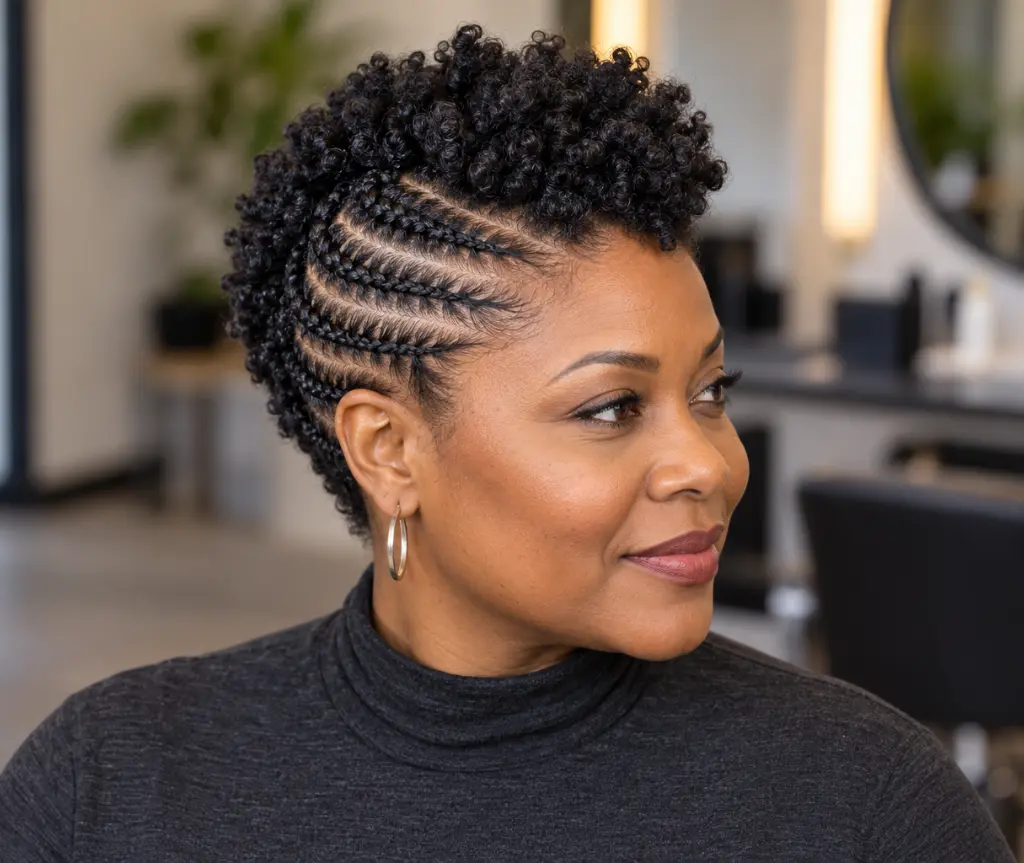
A braided faux hawk brings the sides inward while allowing a raised central section of coily hair to become the main feature. Cornrows can travel from the sides toward the middle, where the remaining texture forms a compact ridge along the crown. The sides are braided rather than shaved, giving the hairstyle its faux hawk appearance. This idea celebrates the contrast between organized scalp patterns and expressive natural coils, making it a bold option for readers who want a short braided hairstyle with a strong silhouette.
The amount of central height depends on your natural length and density, so the style should be planned around your own hair rather than an exaggerated reference image. A softly shaped coil ridge can look beautiful without excessive added volume. Ask your braider how the side rows will finish and whether any discreet pins or added hair are needed. The front should connect visually with the crown so the hairstyle reads as one design. A high-neck top or structured jacket complements the shape and keeps attention on the braid direction and natural coily texture
24. Fishtail Accent Braid on a Short Bob
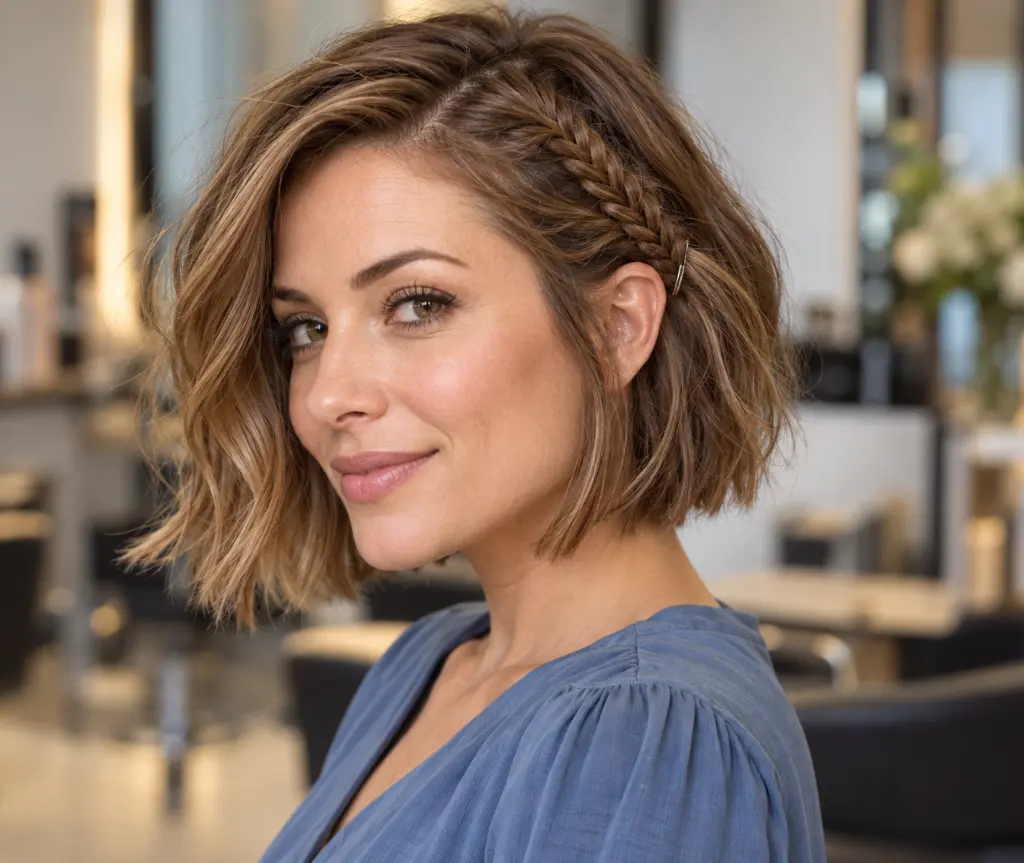
A fishtail accent braid adds a distinctive woven detail to a short bob using small pieces transferred between two main sections. The pattern looks different from a traditional three-strand plait, creating a finer, herringbone-like surface. A small side section is often a practical choice because a full fishtail braid may require more length than a short haircut provides. Straight and softly wavy hair can show the pattern clearly, while the rest of the bob stays loose to preserve its natural shape and everyday movement.
Choose a section that reaches a secure finishing point without needing excessive pulling. Very short layers can make the weave difficult to continue, so a stylist may suggest placing it higher on the side or keeping the braid compact. A discreet pin near the ear can hold the end in place. Avoid loosening the braid beyond what the available length supports, particularly on slippery hair. A soft side part and a gently curved bob perimeter complement the delicate woven detail, making this a lovely option for both casual wear and small celebrations.
Choosing Your Short Braided Hairstyle
Start with your current haircut and the shortest sections you need to incorporate. For straight or wavy bobs, side French braids, waterfall braids, and half-up styles can add detail while leaving most of the hair loose. For curly hair, braided accents can highlight the contrast between woven sections and flowing curls. For coily hair, natural mini braids, cornrows, and short individual braided styles offer a range of compact shapes.
If you want a full braided bob, discuss section size, extension weight, part placement, and the finished perimeter with your stylist. If you prefer a quick change, begin with one small accent braid. The right short braided hairstyle should complement your texture, feel comfortable, and fit the time you want to spend styling it.
Conclusion
Short braided hairstyles offer beautiful ways to refresh your look while celebrating your natural texture. From chin-length box braid bobs and neat cornrows to delicate accent braids, there is an option for straight, wavy, curly, and coily hair. Choose a style that suits your length, density, and daily routine, and prioritize comfortable tension and manageable braid weight. Whether you prefer a bold braided bob or a simple face-framing detail, these 24 ideas can inspire your next hairstyle.