21 Beautiful Short Hair Color Ideas That Are Easy to Maintain

Short hair makes color feel fresh and expressive, but frequent root touch-ups and toning appointments are not for everyone. The easiest colors to maintain usually stay close to your natural shade, soften the line where new growth appears, or place lighter pieces away from the roots. Your hair texture, the amount of gray you have, and the contrast between your natural and chosen color also affect upkeep.
These 21 short hair color ideas pair flattering shades with practical placement. Bring your favorite look to a colorist and ask how it will grow out on your own hair.
1. Dark Brown Bob With Caramel Balayage
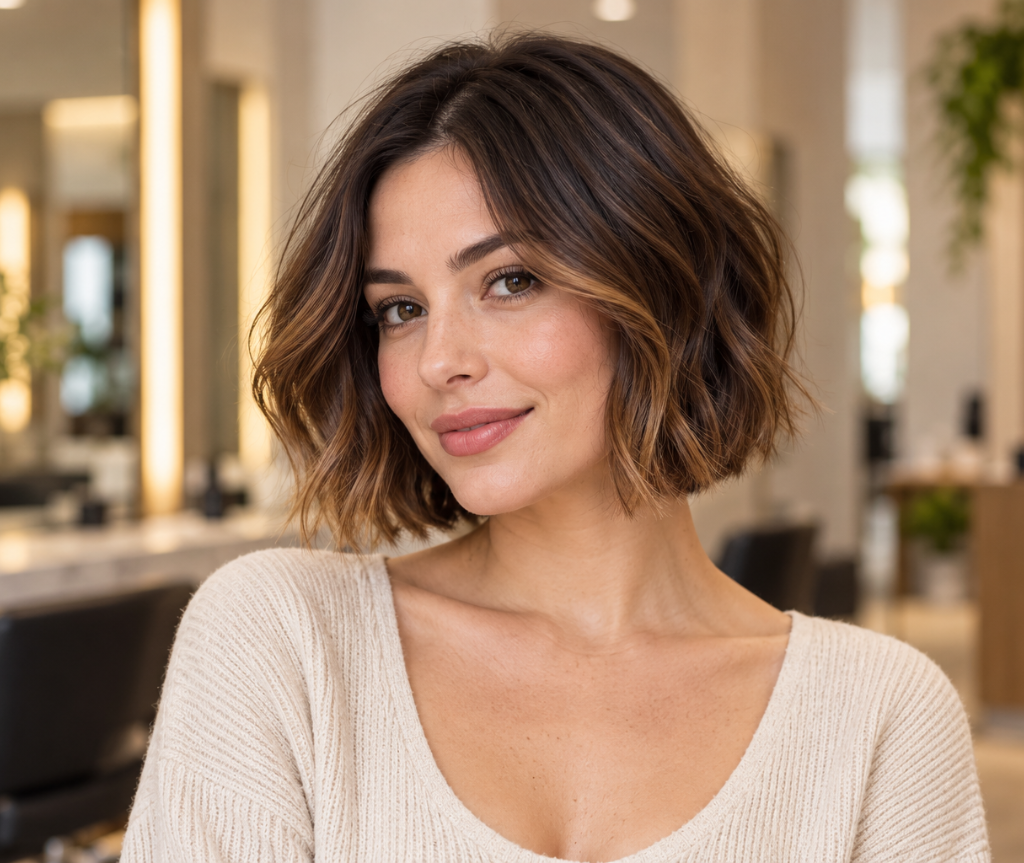
A dark brown bob with caramel balayage gives short hair warmth and movement without covering every strand in lighter color. A colorist can hand-paint a few caramel ribbons through the mid-lengths and ends while keeping your natural brunette base at the roots. On a chin-length or slightly longer bob, these lighter pieces draw attention to the haircut’s shape and make waves look more defined. The result feels dimensional in daylight while still looking like brunette hair overall, which makes it an approachable first step into highlights.
This is an easy-maintenance option because the color begins below the root area, leaving no sharp line as your hair grows. Ask for fine, softly blended pieces rather than wide stripes, especially if your bob is very short. Caramel works particularly well with warm brown undertones, though a colorist can adjust it toward beige if you prefer a quieter finish. Use a conditioner suited to colored hair, limit excessive heat, and refresh the lighter pieces when they begin to look dull instead of following a rigid touch-up schedule.
2. Soft Black Pixie With Espresso Highlights
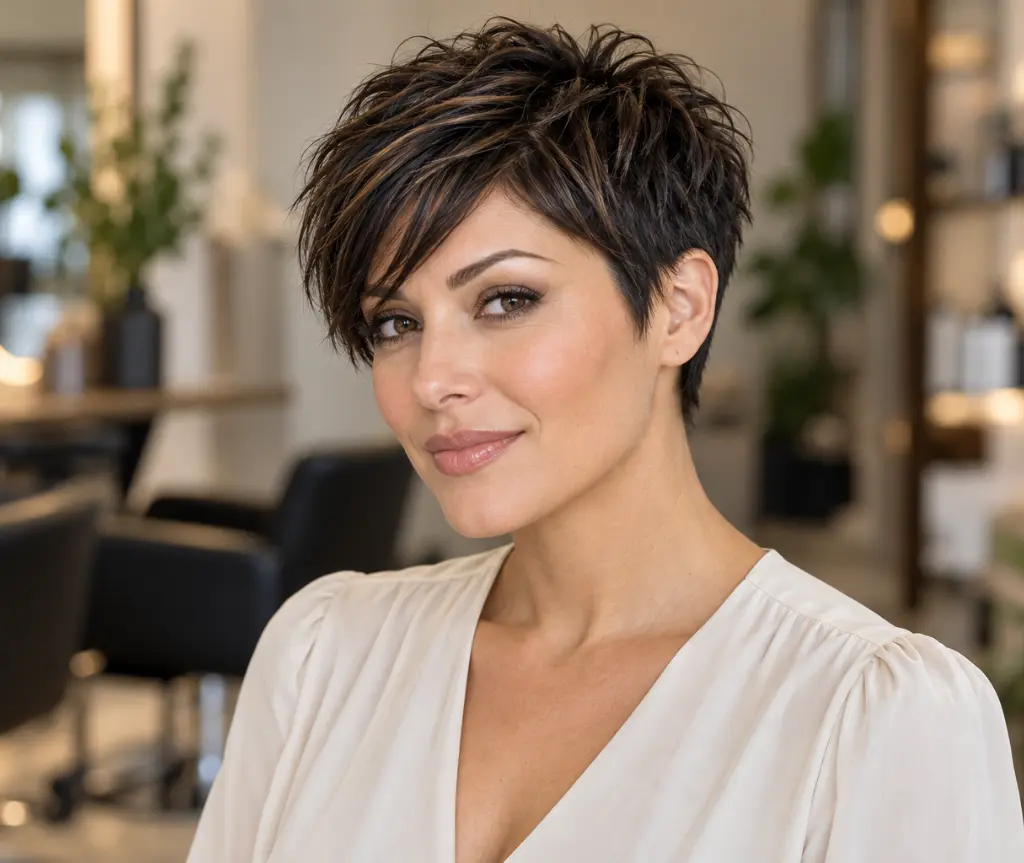
A soft black pixie gains subtle depth from espresso highlights that are only a shade or two lighter than the base. The color difference is small, yet it helps define a textured fringe, crown layers, or a side-swept top. This look suits anyone who loves dark hair but wants the haircut to show more detail in photographs and natural light. Instead of an all-over color transformation, a few carefully placed brunette pieces bring out the movement already built into a short, layered cut.
Because espresso highlights stay close to a naturally dark base, new growth tends to be less obvious than it would with blonde or vivid color. Placement matters on a pixie: your stylist can focus on the longer top and leave closely cropped sides darker for a clean finish. A gentle shampoo and occasional conditioning treatment help the darker shade retain its shine. If your natural hair is already black, you may be able to maintain the look by refreshing only the highlighted sections when you next have your pixie shaped.
3. Chestnut Brown Short Shag
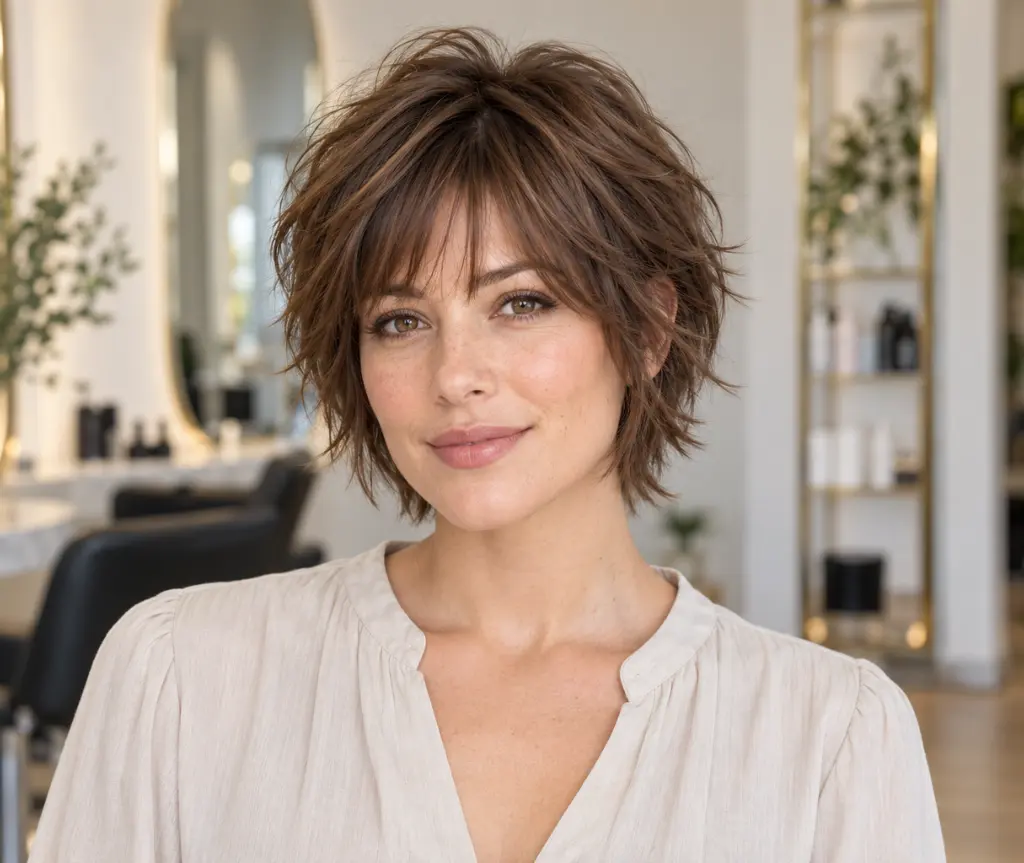
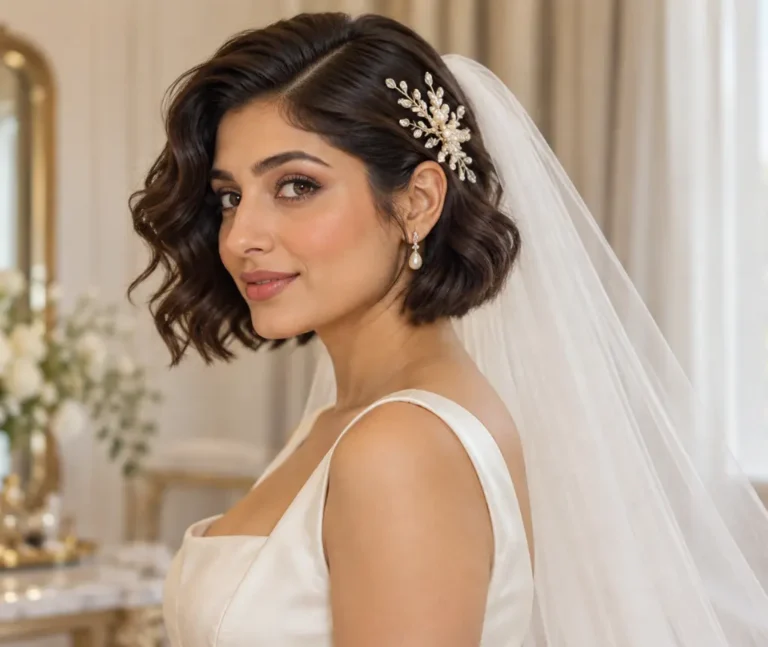
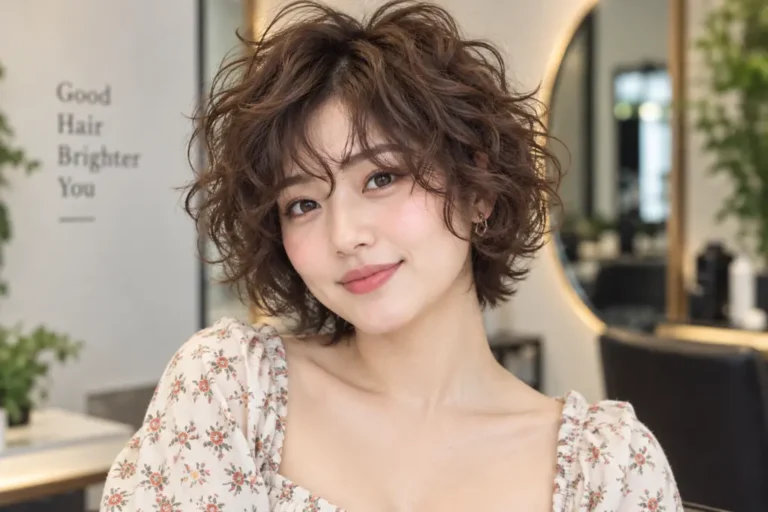
Chestnut brown brings a warm, natural-looking glow to a short shag. Its mix of medium brown and gentle reddish undertones complements the choppy layers, wispy fringe, and tousled shape that define this haircut. The shade looks especially rich in sunlight without requiring bright, high-contrast highlights. If your natural color is medium or dark brown, a colorist can create a chestnut finish that feels like a small enhancement rather than a dramatic change, making the overall look relaxed and wearable.
For simpler upkeep, choose a chestnut shade close to your natural roots and avoid making the red tones too intense. Strong red pigments can lose their brightness over time, while a softer brown-based chestnut remains attractive as it fades. A color-safe wash routine and protection from frequent high-heat styling can help preserve its warmth and shine. Short shag layers also make slight shifts in tone look intentional, so the color can remain flattering between appointments as the cut grows into a softer shape.
4. Mushroom Brown Layered Bob
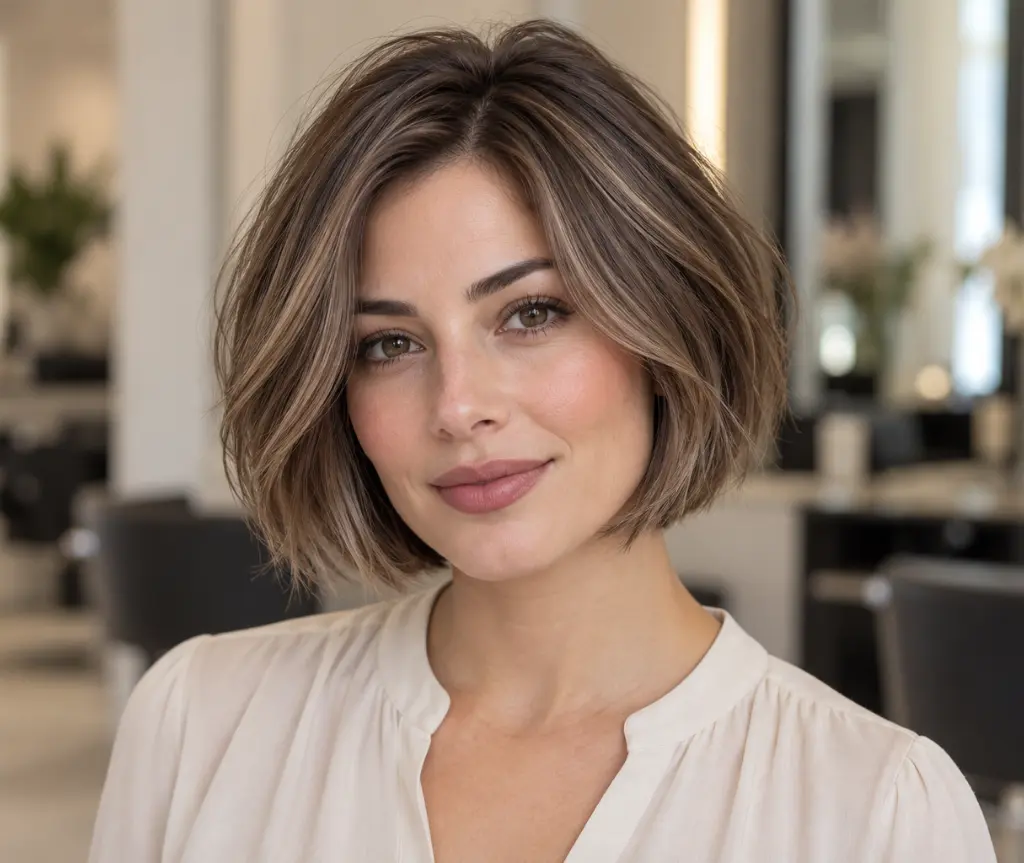
Mushroom brown is a muted blend of cool brown and soft beige tones. On a layered bob, it creates a quiet, polished look that gives the hair depth without obvious streaks. The shade can be especially appealing if you find golden highlights too warm or want a brunette color with a cooler finish. Fine, blended tonal variation helps reveal the shape of rounded layers and face-framing pieces, while the overall color stays understated enough for everyday wear.
The lowest-maintenance version starts with a base close to your natural shade. Ask your colorist to keep any cooler or lighter dimension subtle and away from the scalp so new growth blends in. Cool tones may shift warmer with washing or sun exposure, so maintenance depends on your starting color and water quality. Rather than assuming you will need constant toning, discuss whether an occasional gloss would be enough. A layered bob can continue to look intentional even as the nuanced color gradually softens.
5. Natural Gray Pixie
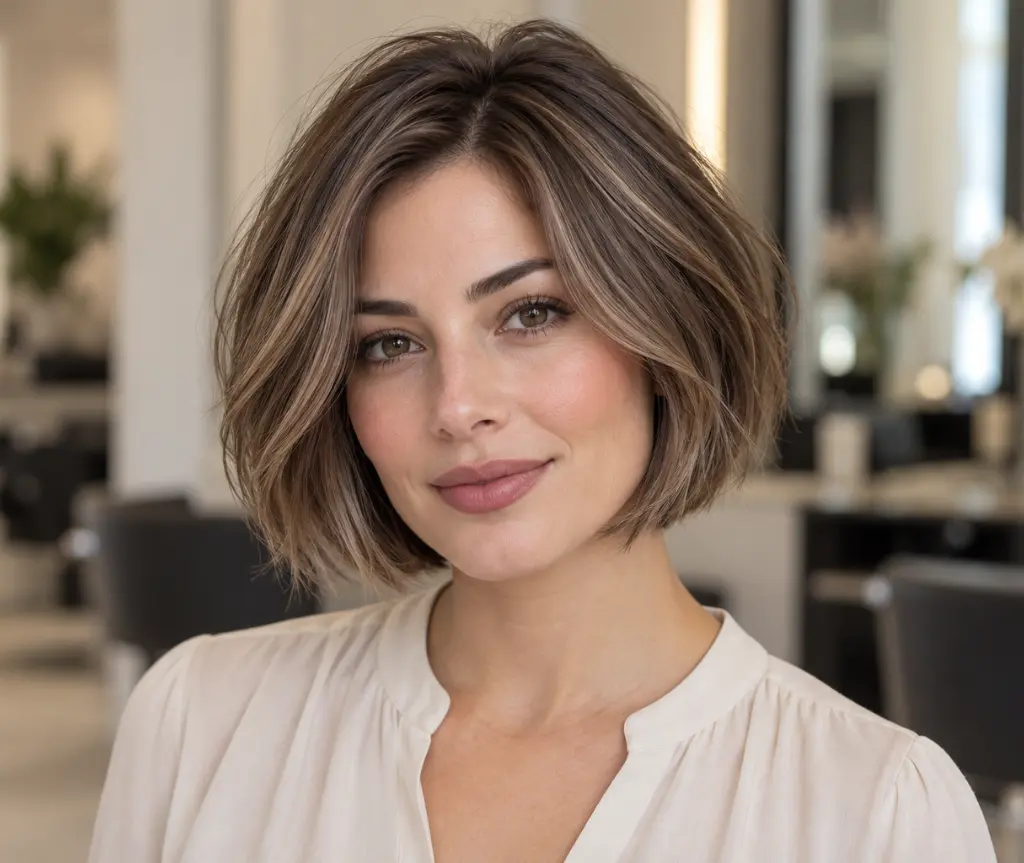
A natural gray pixie makes your existing silver, white, and charcoal strands the feature of the haircut. Closely cropped sides and a textured top can reveal the variation already present in your hair, creating dimension without added dye. This style works for many ages and gray patterns, from scattered silver strands to a fully gray head of hair. The exact effect depends on your natural growth, which makes each pixie distinctive and removes the need to cover visible roots.
Color upkeep is minimal when you embrace your natural gray, although the short shape will still need regular trims if you want to keep its silhouette. Gray and white hair can sometimes pick up yellow tones from environmental exposure or product buildup. A clarifying wash or occasional purple-toning product may help, but use toners sparingly so the hair does not appear violet. Focus on moisture, gentle styling, and a cut that follows your natural texture for a polished look with a simple routine.
6. Salt-and-Pepper Tapered Cut
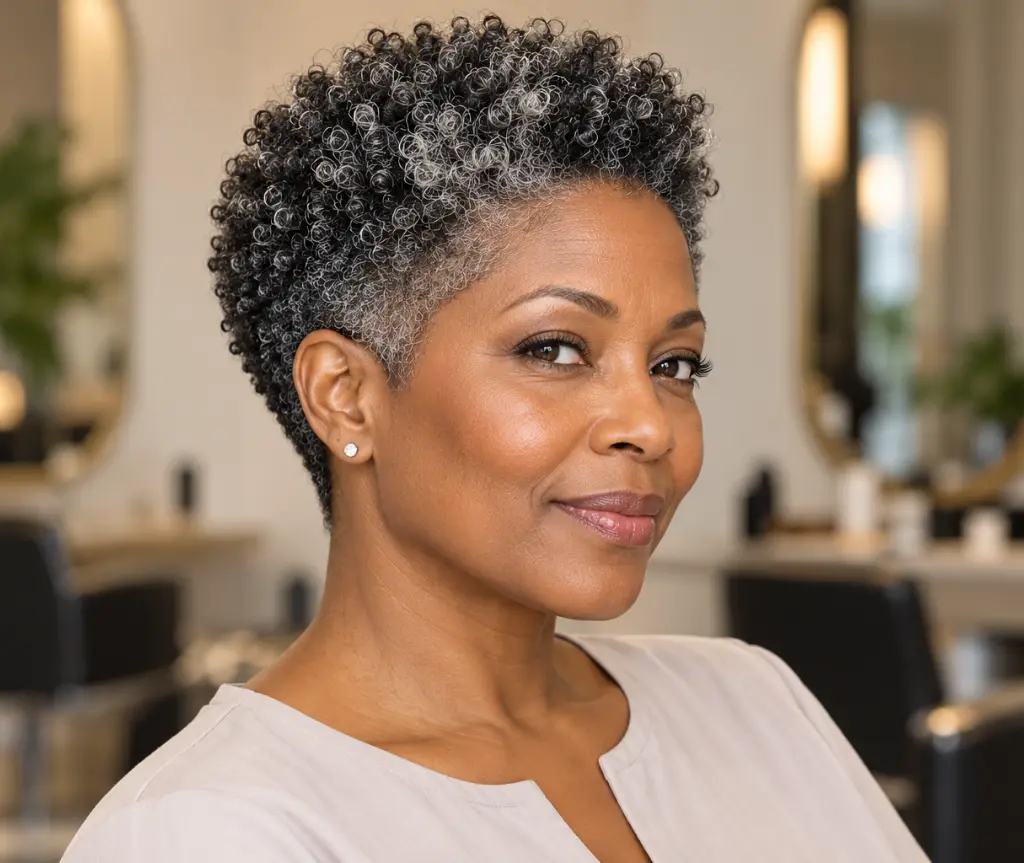
A salt-and-pepper tapered cut turns naturally mixed dark and silver hair into visible dimension. The shorter sides create a neat outline, while a little length at the crown allows the contrasting strands to stand out. On coily, curly, wavy, or straight hair, this color pattern can make texture look more defined without adding highlights. It is a strong option if you are growing out previous dye and want a purposeful haircut that celebrates your changing color rather than hiding it.
Since the shade comes from your own hair, color maintenance centers on keeping it healthy and clear-looking. A trim schedule helps preserve the taper, but there is no all-over root color to renew. If you have old dye on the ends, a stylist can gradually remove it through cuts while the salt-and-pepper growth takes over. Choose lightweight styling products that do not leave a dull coating, and protect fragile ends with conditioner. The contrast often becomes even more interesting as additional silver strands appear.
7. Dark Chocolate Blunt Bob
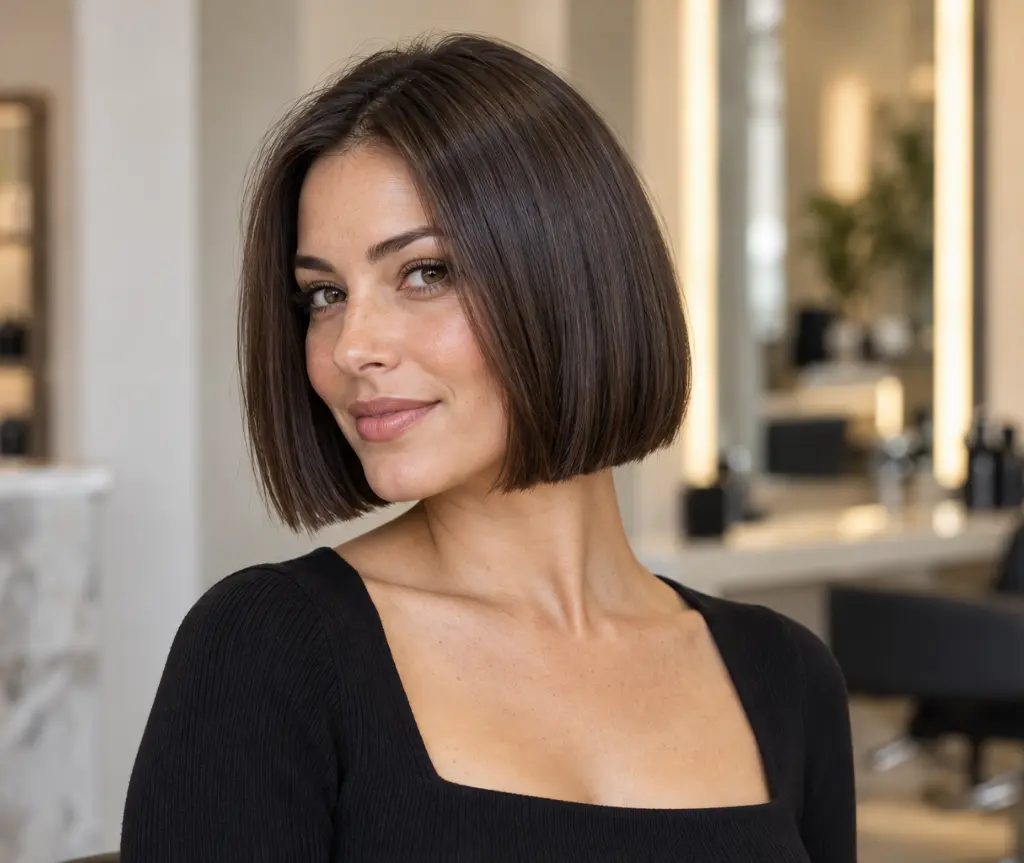
Dark chocolate brown gives a blunt bob a glossy, full-looking finish. The deep shade emphasizes the clean line at the ends, whether the cut sits at the jaw or just below the chin. Unlike a flat black dye, dark chocolate can include a gentle brown warmth that becomes visible when the light hits the hair. It is particularly effective on straight and softly waved bobs, where the smooth surface shows off shine and the precise haircut does most of the visual work.
This color is easiest to maintain when it closely matches your natural brunette hair. A subtle shift toward chocolate can often grow out with less noticeable contrast than a much lighter shade. Ask for a soft, natural finish rather than an overly dark result if you want flexibility at future appointments. Use heat protection when smoothing your bob, as repeated hot-tool styling can make colored ends look dry. Keeping the blunt perimeter tidy will often make the entire look feel fresh even when the color has gently faded.
8. Sandy Blonde With Shadow Roots
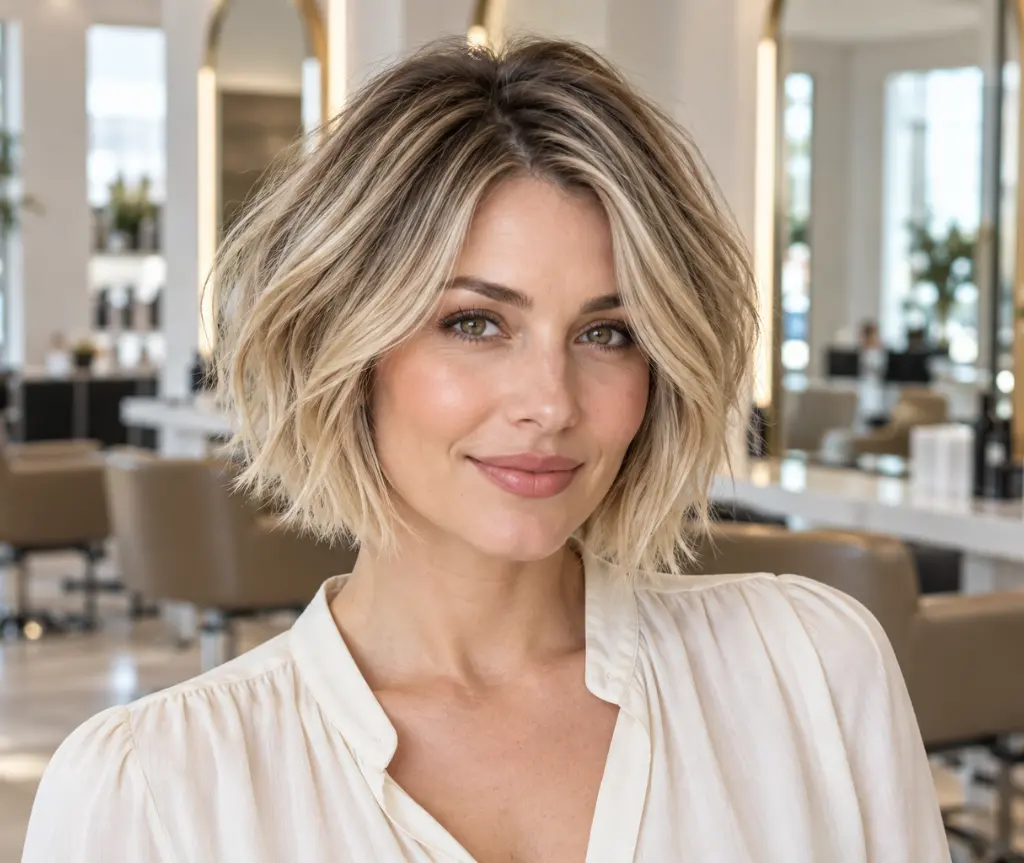
Sandy blonde offers a softer alternative to icy or platinum shades on short hair. Its balanced beige and warm tones look natural on a textured bob or cropped lob, especially when paired with slightly deeper shadow roots. The darker root area connects the blonde to your natural color, creating depth at the scalp and brightness around the face. This placement lets you enjoy an overall blonde impression without asking every new strand to match the lightened lengths.
A shadow root helps soften regrowth, but the amount of upkeep still depends on how dark your natural hair is and how light you want the blonde to be. Ask your stylist for a root shade that looks believable with your brows and complexion. Beige blonde may need an occasional tone refresh if it becomes too brassy, while a gentle shampoo and reduced heat can help preserve the finish. Keeping the ends sandy rather than very pale generally allows more flexibility between color appointments.
9. Bronde Short Lob
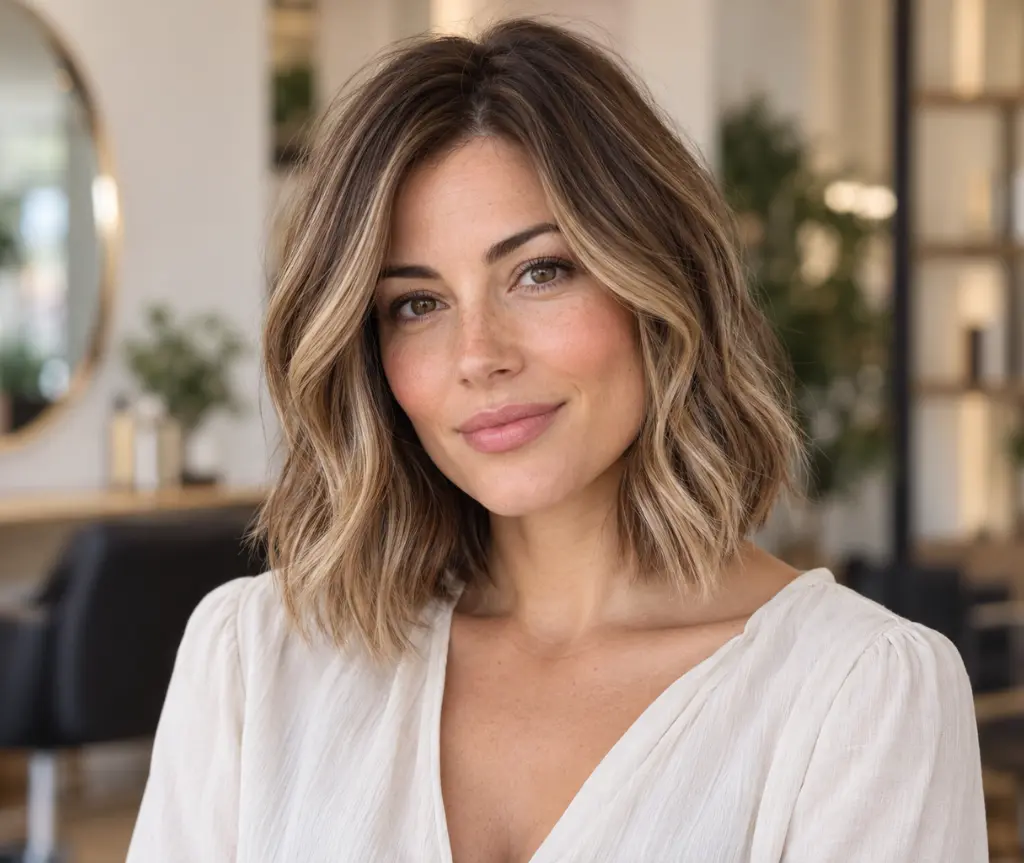
Bronde sits between brown and blonde, making it a versatile choice for a short lob. A brunette base anchors the color while softly lightened sections bring brightness through the lengths. On a collarbone-skimming or above-shoulder cut, bronde can make simple bends and face-framing layers more noticeable. The shade can lean warmer, cooler, darker, or lighter, allowing your colorist to tailor it to your natural hair rather than forcing a dramatic change that requires frequent correction.
For easy upkeep, keep the root area close to your natural shade and ask for blended ribbons instead of heavy highlights from the scalp. As the lob grows, those lighter sections can still look like intentional dimensions. Bronde is also useful if you are deciding whether to go fully blonde because you can see how lighter pieces suit you without committing to an all-over lift. Maintain softness with conditioner and ask for a gloss only when the tone needs refreshing, according to your hair’s actual condition.
10. Honey Brown Curly Bob
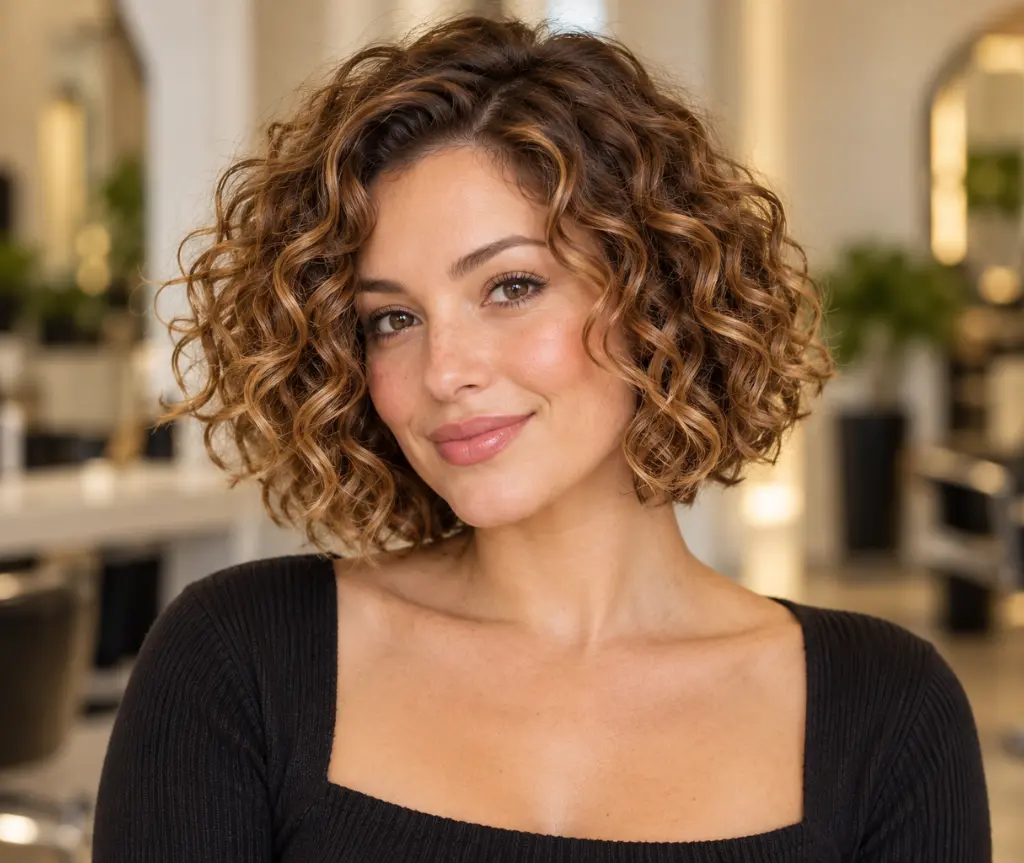
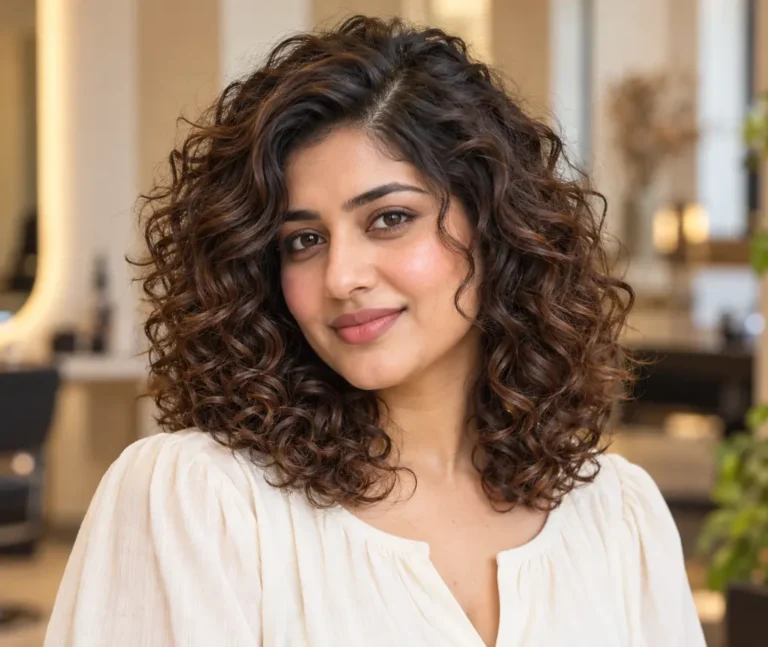
Honey brown brings warmth to a short curly bob while allowing the curl pattern to remain the focus. A medium brown base with restrained golden tones can make individual spirals and ringlets easier to see, especially in diffused daylight. If your natural hair is brown, this color can feel like a subtle brightening rather than a complete makeover. The rounded shape of a curly bob also distributes the color through different layers, creating movement even when you wear the hair with minimal styling.
A brown-based honey shade tends to be easier to live with than very light blonde curls, which may require more lifting and care. Ask for a tone close to your natural base, or place brighter pieces selectively around the face and outer layer. Curly hair can be prone to dryness, so prioritize conditioning and avoid unnecessary processing. Styling products that define curls without heavy buildup will help the color catch the light. As the roots grow, the overall look should remain soft if the transition was blended well.
11. Copper Brown With Natural Roots
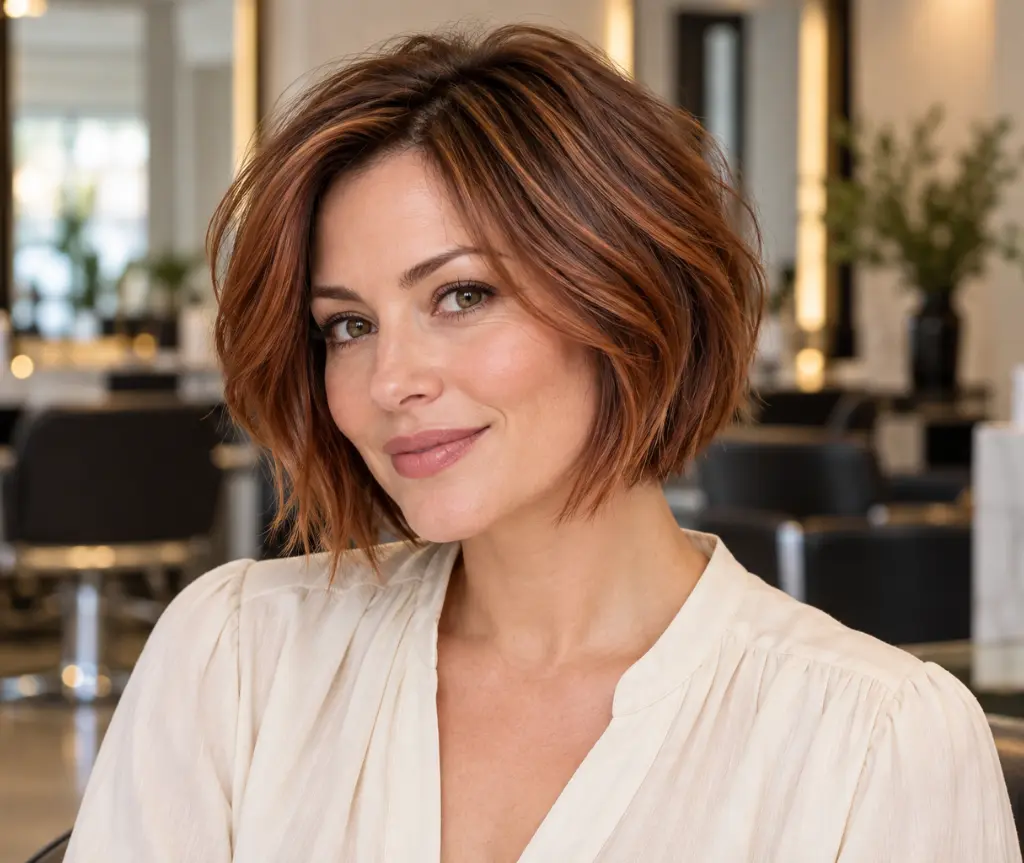
Copper brown gives a short haircut a lively glow without going all the way to vivid orange or bright red. On a cropped bob or layered pixie, the brown base keeps the shade grounded while copper undertones illuminate the top layers. It can flatter a range of complexions when the warmth is adjusted carefully, from a muted cinnamon-brown to a richer auburn-leaning finish. The best low-effort version leaves your natural roots softly blended into the warm lengths.
Copper tones can fade faster than many brunette shades, so “easy to maintain” here means choosing a muted, brown-based copper and accepting a softer fade. Ask your colorist what the shade will look like several weeks later, not only on appointment day. Color-safe cleansing, lukewarm water, and less frequent heat styling can help hold the warmth. If you want the copper to stay especially vibrant, occasional refreshes may be necessary; if you enjoy its gradual return to warm brown, the routine can stay simpler.
12. Auburn Short Waves
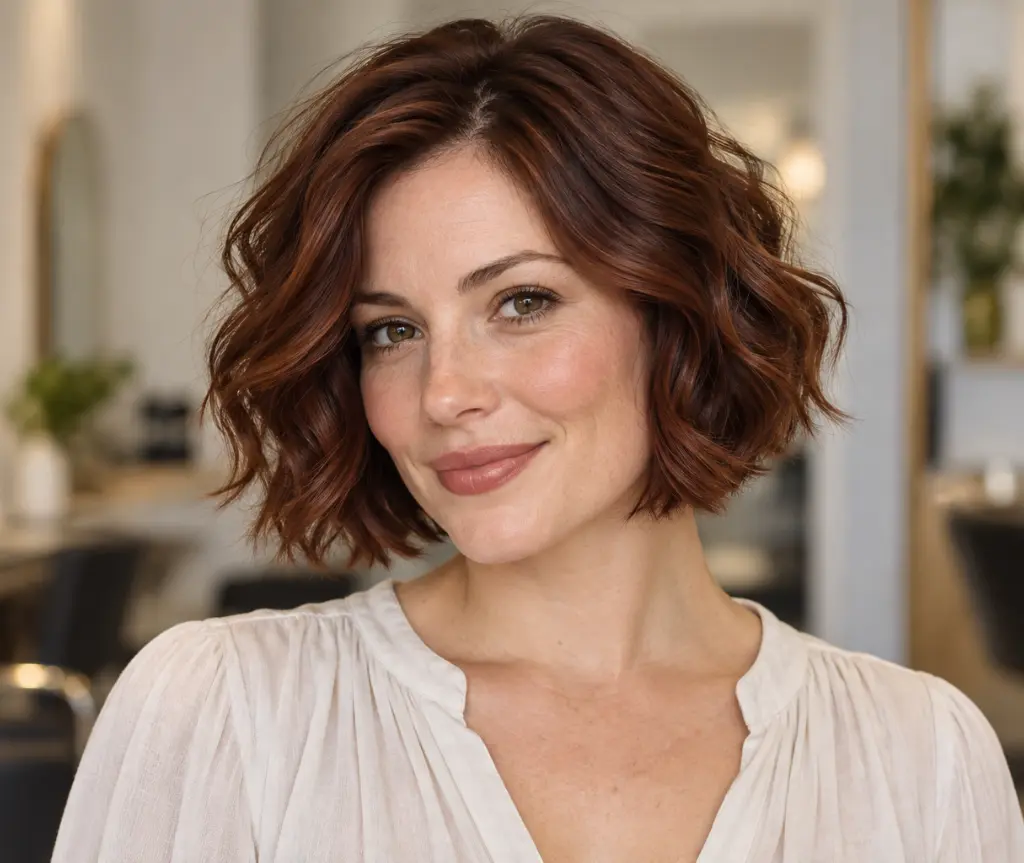
Auburn short waves combine brunette depth with a soft reddish glow. The color gives loose bends and waves extra definition, particularly on a chin-length bob or short shag. Choosing an auburn close to your natural brown can create a refined change without an obvious root line. In indoor light, the hair may read as warm brunette; outdoors, the red undertones become more apparent. This makes the shade a good fit if you want color that feels interesting yet still subtle in everyday settings.
For manageable upkeep, choose a deeper auburn rather than a bright, highly saturated red. Red pigments often lose intensity over time, and a brown-rich formula tends to fade into a wearable warm shade. Your colorist may suggest a gloss when you want to restore shine or deepen the reddish tone. In between, protect the hair from repeated high heat and use a gentle washing routine. The natural movement of short waves also helps slight tonal variation look attractive as the color settles.
13. Ash Brown With Soft Face-Framing Pieces
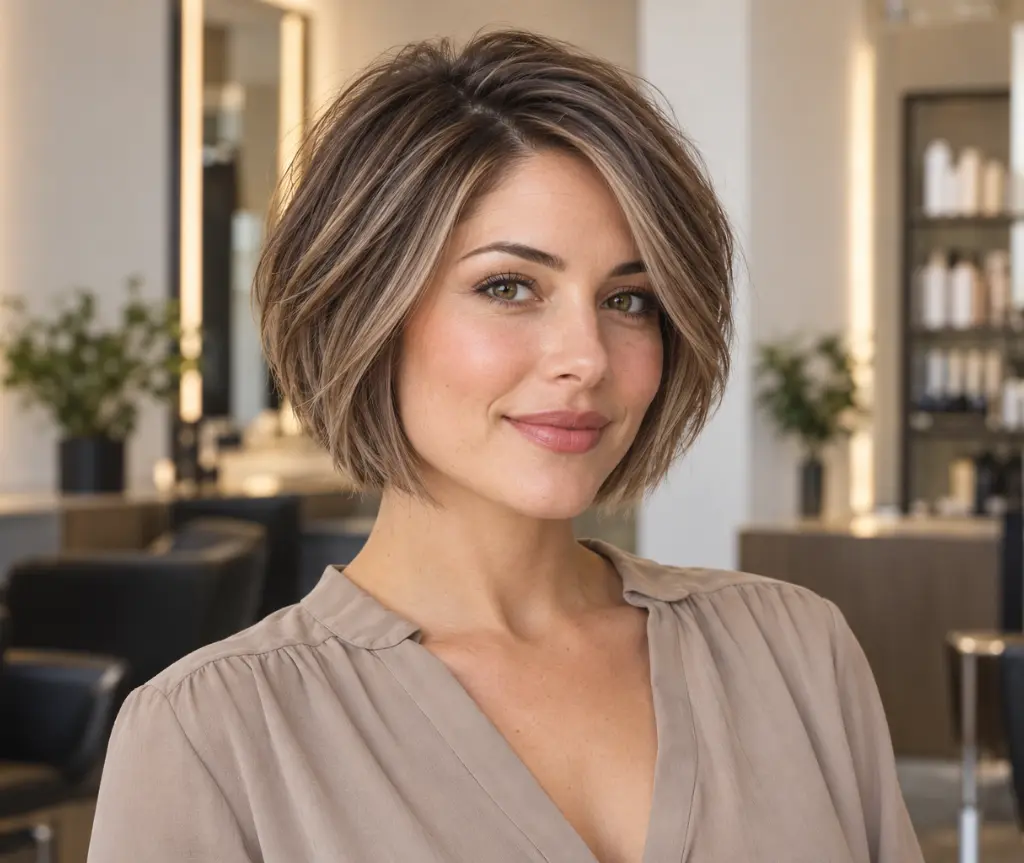
Ash brown is a cool-toned brunette option that looks understated on short hair. Add two or three softly lightened face-framing pieces, and a simple bob gains brightness without becoming a full highlighted style. The lighter strands can draw attention to the eyes and cheekbones while the rest of the hair remains close to its natural shade. This works especially well with a side part, curtain fringe, or gently layered front because those sections are already designed to frame the face.
Keeping the brighter pieces fine and blended makes them easier to grow out than bold blocks of color. Ask for a low-contrast beige or cool brown highlight that harmonizes with the ash base. Cool shades can warm over time, so your stylist can recommend a gloss or toning routine if that change bothers you. A small amount of lightening around the front also means less hair is processed. You can maintain the haircut’s shape while deciding at each appointment whether the color needs any attention.
14. Beige Blonde Tapered Pixie
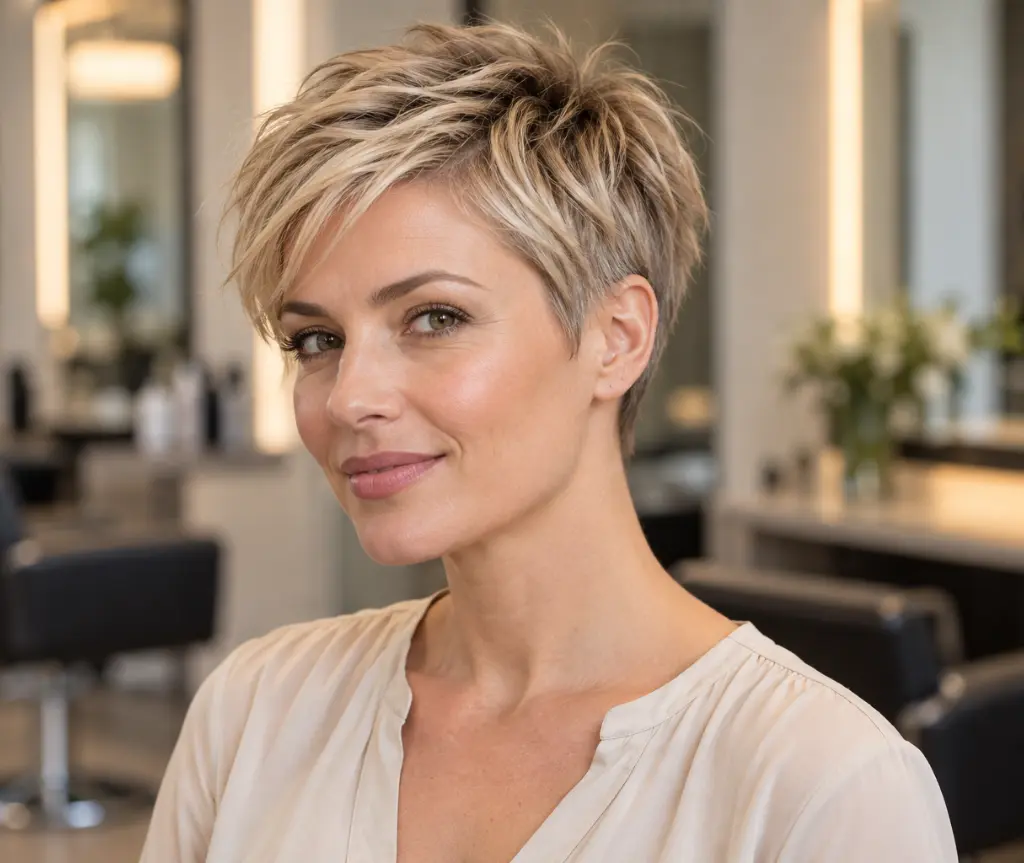
A beige blonde tapered pixie brings softness to a close-cut silhouette. The neutral blonde avoids both an icy-white finish and strong gold tones, while a slightly deeper base can add dimension to the short layers on top. With neatly tapered sides, the color emphasizes the shape of the crown and fringe. It is an appealing option if you want a bright short haircut that still feels natural, particularly when the beige is chosen to complement your starting shade and skin tone.
A pixie can expose new growth quickly because the hair is short, so this color is easiest to maintain when the blonde is not dramatically lighter than your natural hair. A darker root or softly blended base can reduce the need for precise touch-ups. Your regular haircut may also remove some previously colored ends, making color placement a consideration at each trim. Ask your stylist to coordinate cut and color timing. Gentle conditioning and heat protection will help the lightened top stay smooth and touchable.
15. Cocoa Brown Coily Crop
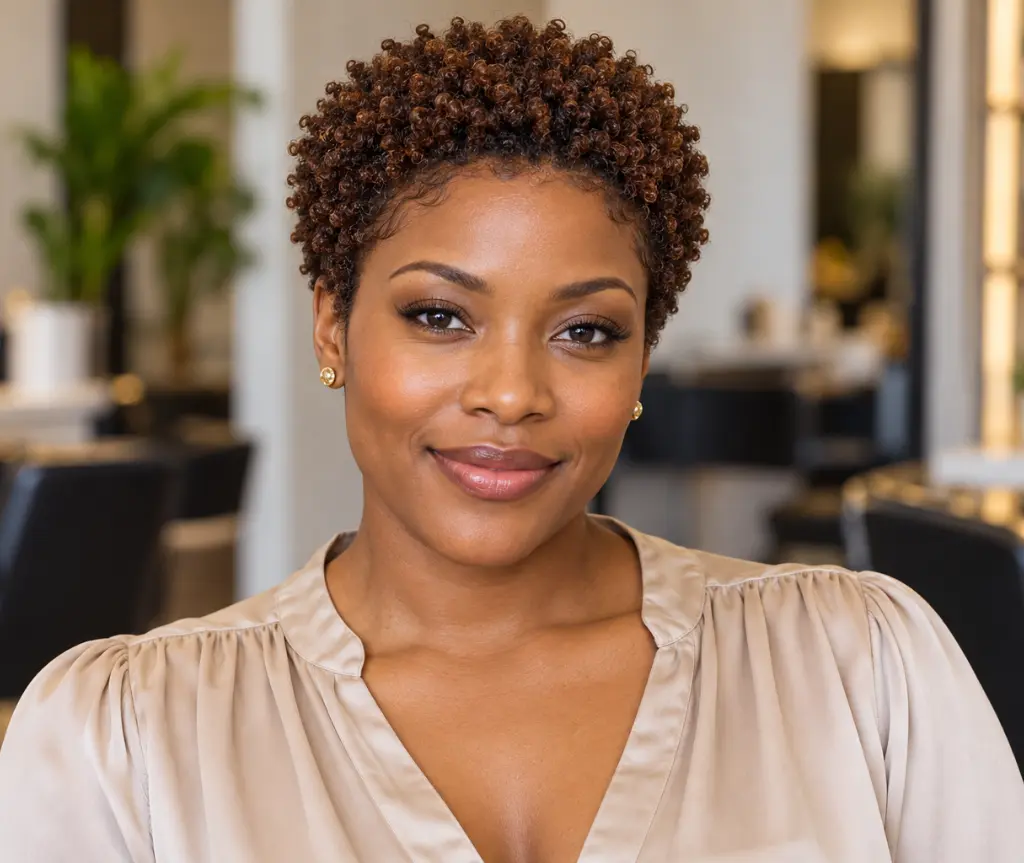
Cocoa brown offers a rich, natural-looking change for a short coily crop. The shade sits within the brunette family, adding visible warmth without overwhelming the pattern of tight curls. On a tapered cut or rounded TWA, color across the top can help the coils catch the light and reveal their definition. A deeper cocoa tone can also look beautiful against dark roots, making it a flexible choice if you want a noticeable but grounded shift from naturally black hair.
For a simpler routine, keep the cocoa shade deep and blend it with your natural base rather than aiming for a very light brown. Lightening tightly coiled hair should be planned with its condition and porosity in mind, so a colorist can determine what level of processing is appropriate. Moisture and gentle detangling remain important after coloring. Because the crop is short, trims will gradually remove colored ends; you can decide whether to refresh the cocoa tone or let your natural color return.
16. Toffee Highlights on a Brunette Pixie
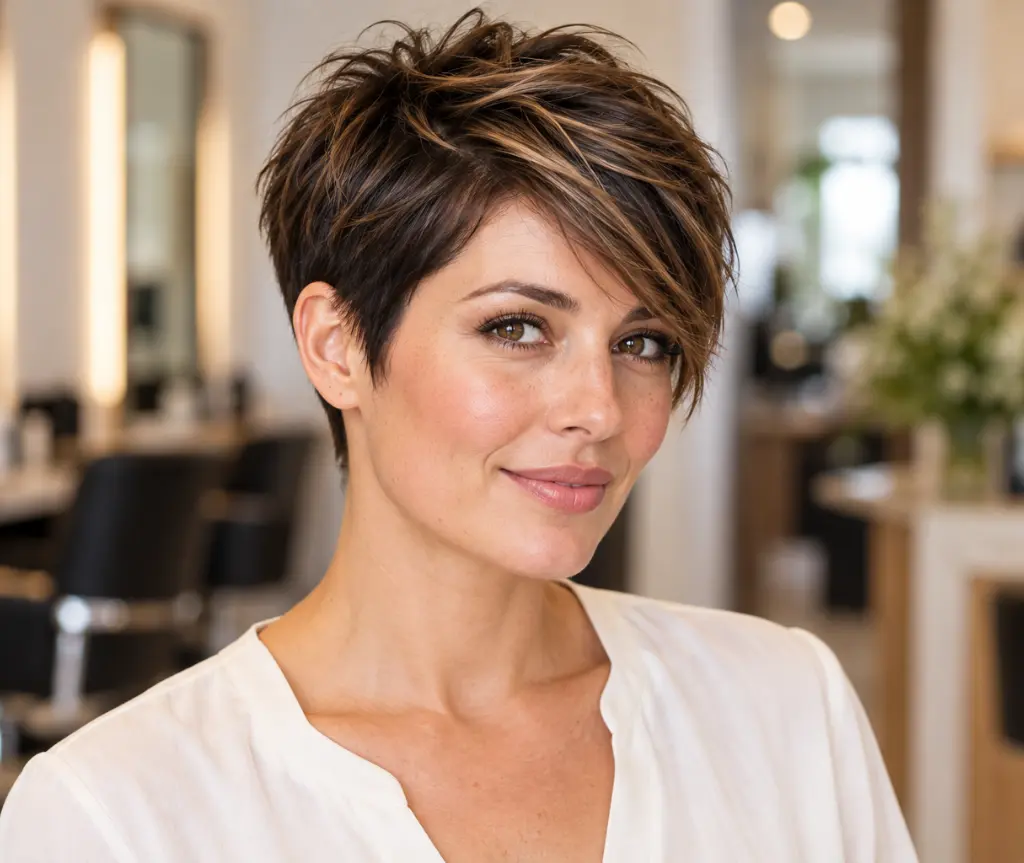
Toffee highlights add warm definition to a brunette pixie without changing the entire head of hair. A few fine pieces through the longer fringe and crown can bring out the haircut’s texture, while the sides and back remain a deeper brown. This focused placement makes the style look intentional from several angles. The toffee tone is warmer than beige blonde and softer than a vivid copper, so it can brighten a dark pixie while preserving its natural brunette character.
A pixie grows and changes shape quickly, but selective highlights give you flexibility when it comes to color. Rather than touching up every root, you can have a stylist reassess the placement when the top is trimmed. Ask for highlights that blend into the base and follow the direction in which you style your fringe. If your hair tends to pull warm during lightening, toffee can work with that warmth. Keep the colored top conditioned so its texture stays soft and easy to style.
17. Smoky Silver With Dark Roots
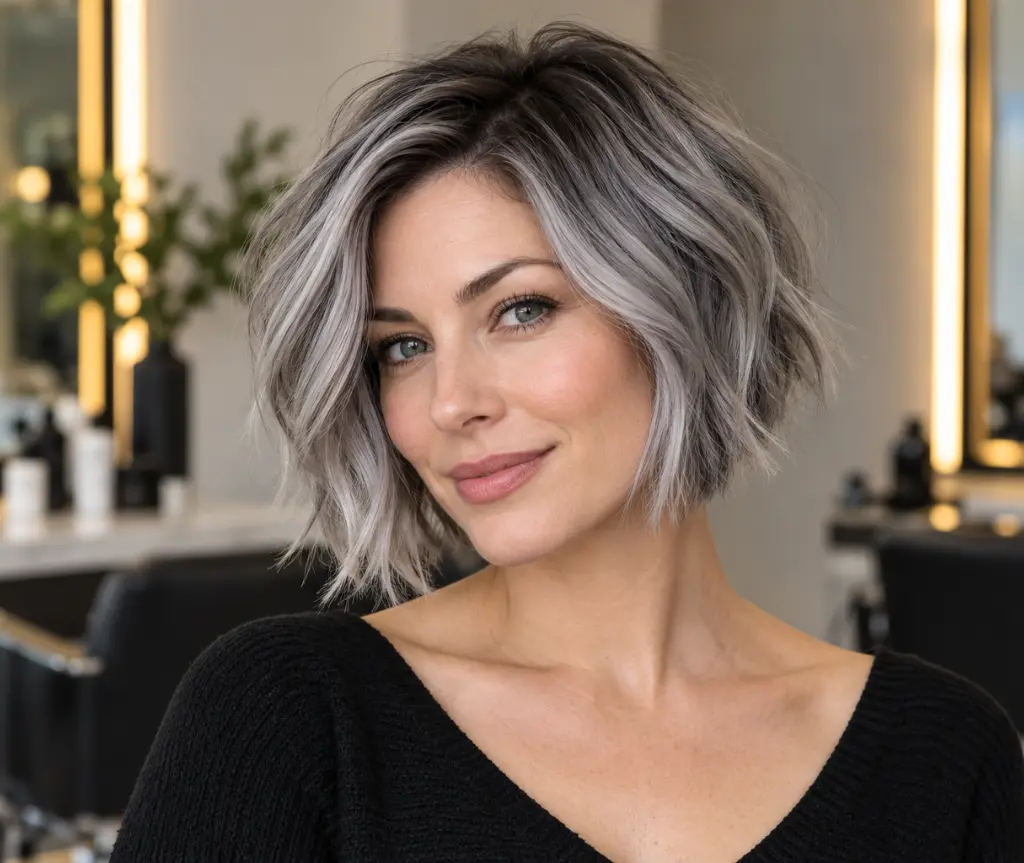
Smoky silver with dark roots creates a striking look on a short bob or pixie while allowing a softer line of regrowth than uniform silver from scalp to ends. The silver can sit over charcoal and cool gray tones, giving the haircut depth rather than a flat metallic finish. This color works particularly well when the darker root area is deliberate and blended. It gives the eye a natural starting point and makes the lighter sections stand out around the face.
This look needs an honest maintenance conversation before coloring. Achieving silver on naturally dark hair may require significant lightening, and the tone can shift between salon visits. The shadow root makes root growth easier to manage, but the silver lengths may still need toning and careful conditioning. If your hair is already naturally gray or light, the process may be simpler. Ask your colorist to assess your starting shade and hair condition, then choose a smoky finish that remains attractive as it gradually fades.
18. Warm Mocha Angled Bob
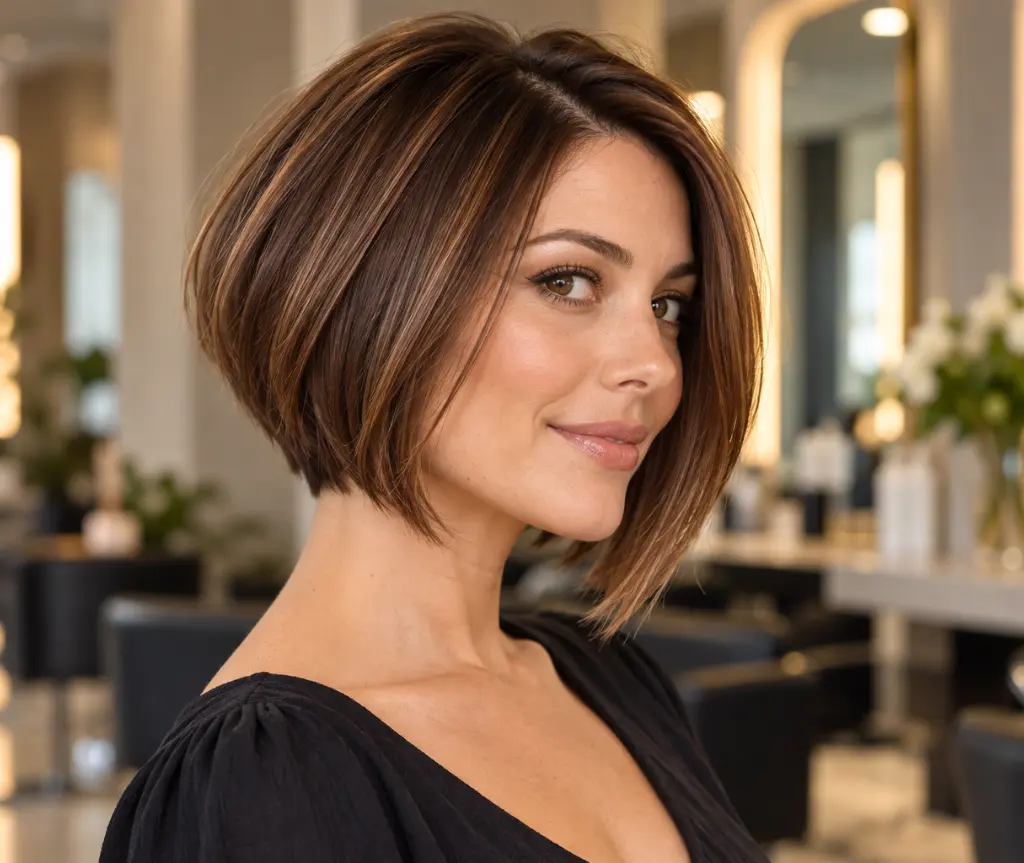
Warm mocha blends medium-to-dark brown with a gentle hint of warmth. On an angled bob, it highlights the longer front sections and gives the shorter back a glossy, compact appearance. The color feels polished without relying on obvious highlights, making the cut itself the main statement. A slight variation between the deeper roots and warmer ends can add movement, but the overall impression remains brunette. This makes mocha an accessible option if you want to update your color while keeping a familiar look.
When the chosen mocha shade is close to your natural brown, visible regrowth is usually easier to handle than it would be with a high-contrast color. Ask for a soft tonal dimension instead of a hard color boundary. Shine is central to this look, so prioritize healthy-looking ends and protect the hair when using a flat iron or blow-dryer. A trim that preserves the bob’s angle may do more for its appearance than frequent color appointments. Refresh the tone when it begins to look flat to you.
19. Subtle Rose Brown Short Bob
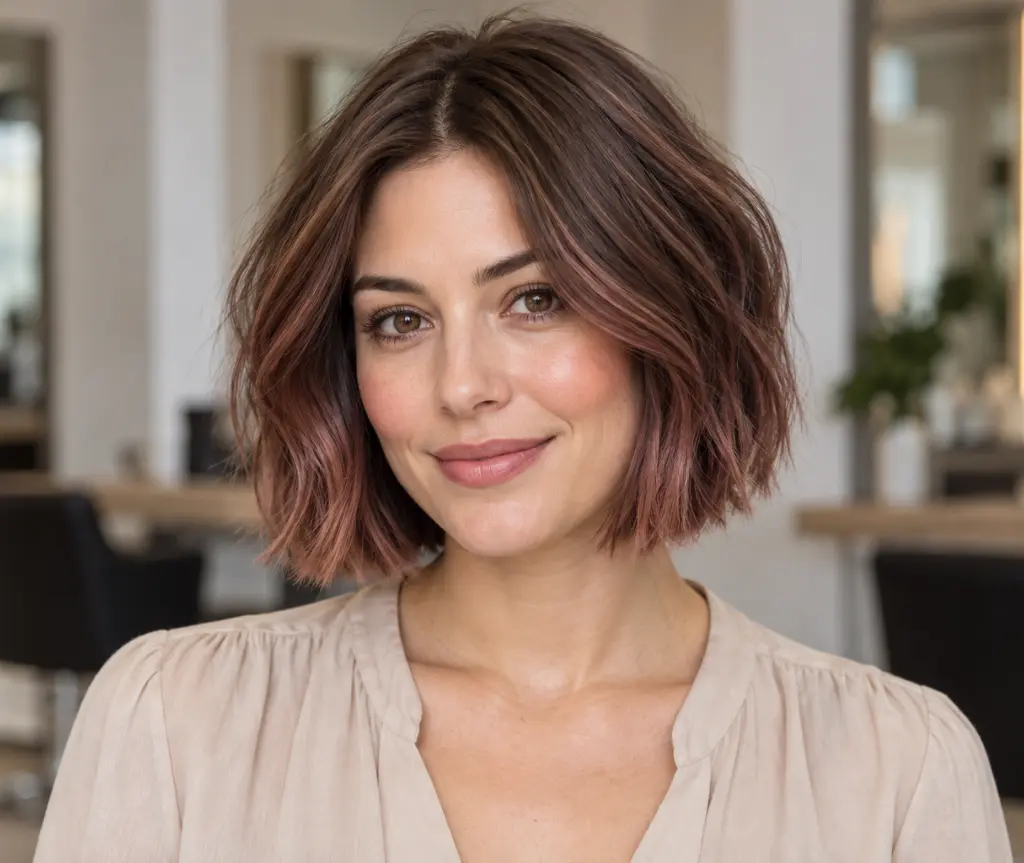
Rose brown introduces a muted pinkish warmth to brunette hair without the brightness of a pastel pink dye. On a short bob, the rose effect can appear softly in the light while the hair still reads as brown indoors. This restrained approach is ideal if you want a playful color idea that remains wearable with an everyday wardrobe. A deeper brown base and delicately toned ends can give the cut personality without requiring every root to be lifted to a pale blonde.
Rose tones may wash out over time, so low maintenance depends on being comfortable with a color that gradually returns to brown. Ask your colorist for a subtle result over a suitable base and find out whether the desired tone requires pre-lightening. Keeping the rose tint away from the scalp helps the roots blend as they grow. Gentle washing and limited heat can extend the color, but it is best to choose this look for its graceful fade rather than expecting the pink tone to remain identical for months.
20. Soft Golden Brown With Curtain Bangs
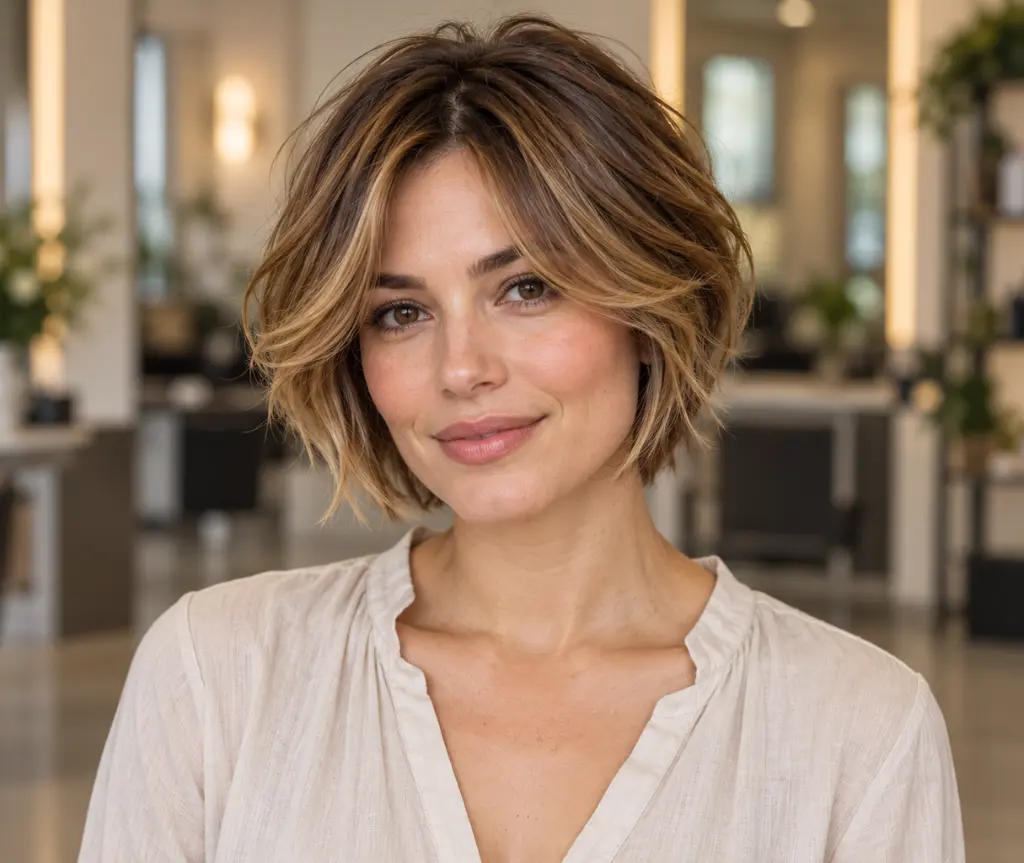
Soft golden brown brings light to a short layered cut with curtain bangs. The warm tone can make the split fringe and cheekbone-length pieces stand out, especially when a few delicate highlights are placed near the face. Because the base remains brown, the result looks more like sunlit hair than a complete blonde transformation. It pairs well with a short shag, bob, or grown-out pixie, giving each style a gentle, approachable finish that works with natural movement.
To keep upkeep manageable, ask for golden pieces that begin slightly away from the scalp and blend back into the base. Curtain bangs require occasional shaping, but the color does not have to be refreshed every time they are trimmed. If your hair naturally develops warm tones, a golden-brown palette can make that change look cohesive. Use heat protection when blow-drying the bangs, and keep the front layers conditioned so the highlighted ends look soft. The color can grow out as subtle warmth rather than a distinct stripe.
21. Natural Dark Roots With Cinnamon Ends
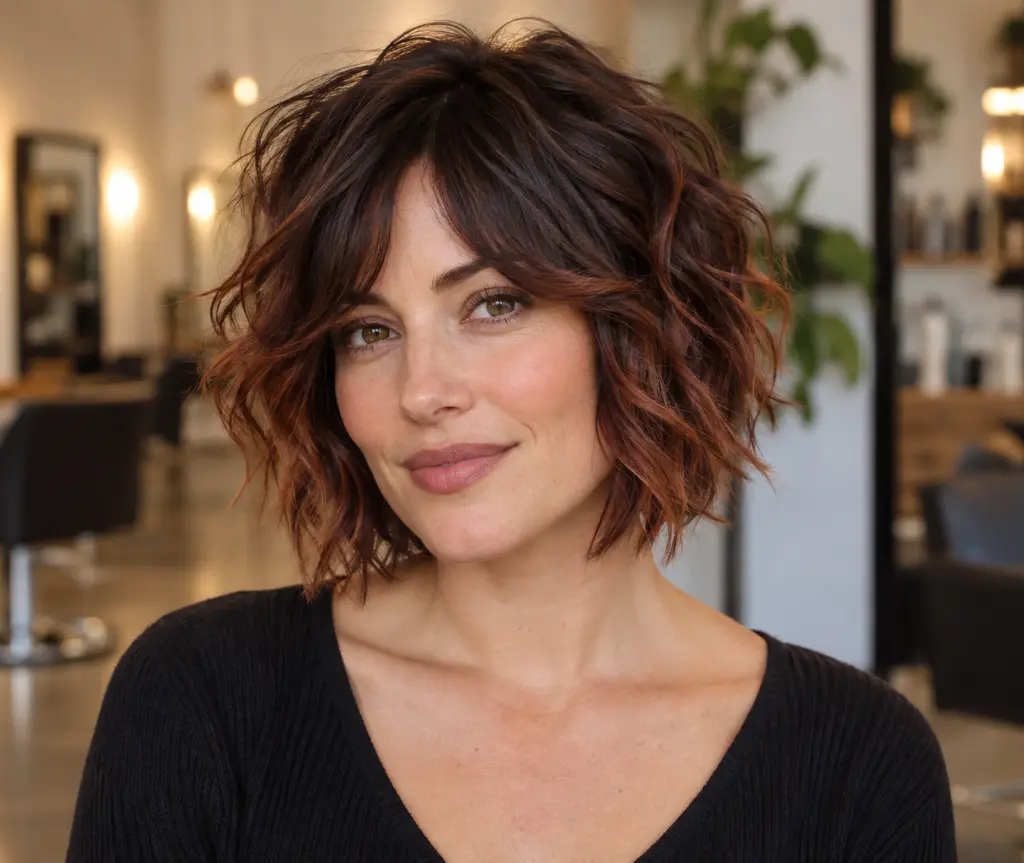
Dark roots and cinnamon ends offer a controlled pop of color on a short shag or wavy bob. The reddish-brown warmth stays concentrated through the lower layers and tips, leaving the natural base visible above. This creates contrast that shows off choppy texture without demanding an all-over dye job. It is particularly effective when the transition is gradual, with a few soft cinnamon pieces reaching upward to connect the colored ends to the darker crown.
Because the roots remain natural, new growth does not create an immediate touch-up problem. The cinnamon ends may fade toward a softer warm brown, which can still suit the style if you choose a muted starting shade. Short haircuts do remove colored tips over time, so discuss with your stylist how the color placement will change at your next trim. You can refresh the ends, try another warm tone, or simply let the cinnamon disappear gradually. This flexibility makes the look fun without a long commitment.
Conclusion
The most practical short hair color is one that works with your natural roots, your haircut, and the amount of upkeep you actually enjoy. Brunette shades such as chocolate, mocha, and chestnut offer subtle change, while balayage, shadow roots, and colored ends make regrowth less noticeable. Natural gray and salt-and-pepper styles remove dye touch-ups altogether. If you love blonde, copper, or silver, choose the shade with a clear understanding of its fading and toning needs. With thoughtful color placement, short hair can look fresh long after you leave the salon.