36 Flattering Curly Hairstyles for Women Over 40 That Look Effortlessly Modern

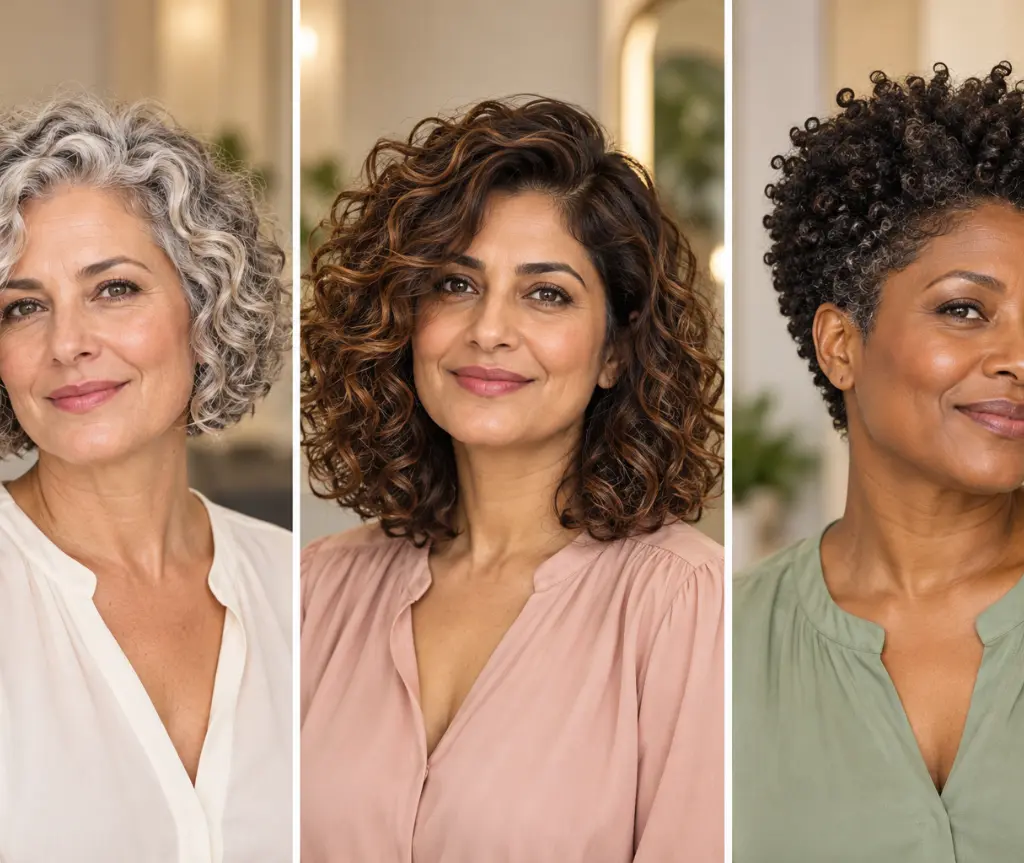
Curly hairstyles for women over 40 can feel fresh, expressive, and easy to wear without following rules about age or length. A well-shaped curly pixie, a shoulder-length lob, or long layered ringlets can all look modern when the silhouette suits your natural texture and everyday routine. The most useful starting points are your curl pattern, hair density, preferred length, and the amount of styling you actually enjoy.
This Style by Seemal guide brings together 36 ideas for loose curls, springy ringlets, and tightly coiled natural hair. You will find short curly haircuts, medium-length styles, longer looks, gray curl inspiration, and practical updos. Use the descriptions to choose a direction, then bring a few reference images to a stylist who understands your texture. Your curls do not need to look identical every morning for your hairstyle to feel polished.
1. Textured Curly Pixie
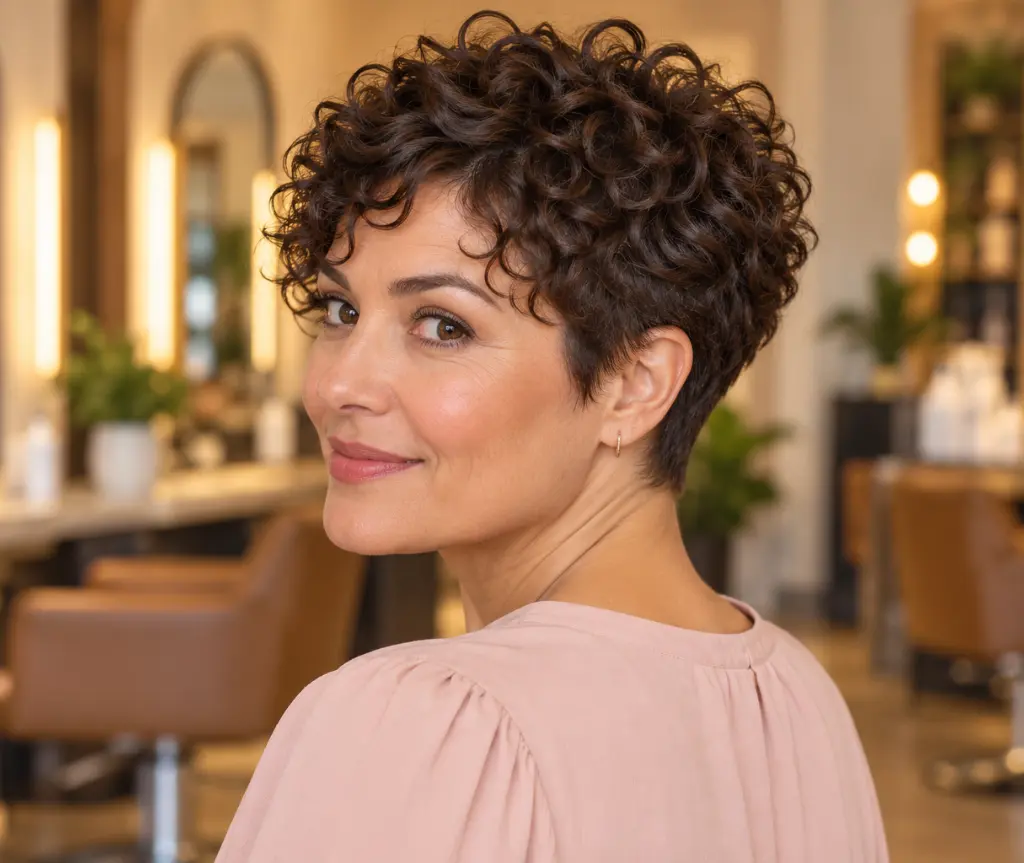
A textured curly pixie puts the focus on the shape of individual curls while keeping the overall haircut compact. The top stays long enough for visible movement, while the sides and nape sit closer to the head. For women over 40 who enjoy a short silhouette, this creates a confident look with plenty of personality. Soft curls around the forehead can make the outline feel less severe, and a little asymmetry keeps the finish relaxed. The result depends on your curl size, so choose references that resemble your own texture.
Ask your stylist to leave enough length on top for your curls to form rather than cutting everything uniformly short. Discuss how much hair you want around the ears and whether a softly tapered nape suits your preferred maintenance schedule. For styling, distribute a small amount of lightweight curl product through damp hair and arrange the front with your fingers. A pixie may shorten drying time, but it still needs occasional reshaping to keep its proportions. Schedule trims according to how quickly the sides and neckline lose their intended outline.
2. Curly Bixi with Soft Layers
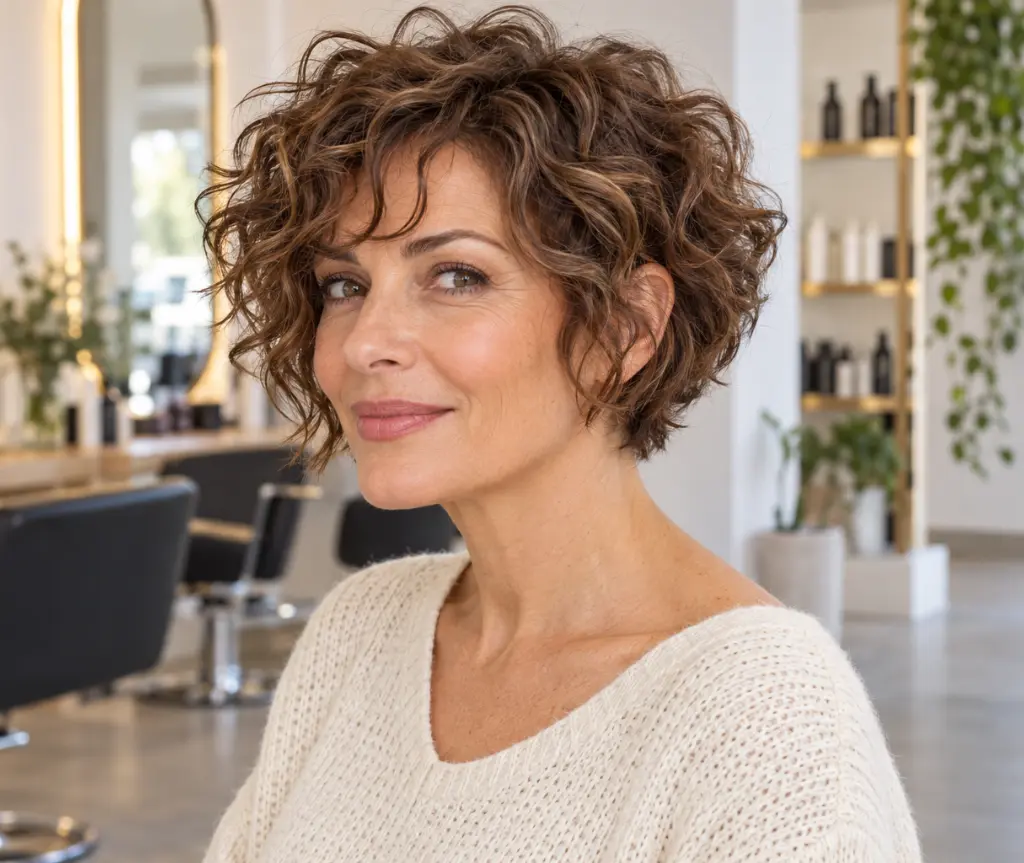
A curly bixie sits between a pixie and a short bob, offering a little more coverage around the ears and neck. It is a useful choice when you want short curly hair without committing to a tightly cropped shape. Longer curls at the crown connect with softly layered sides, creating an outline that can feel playful or refined depending on the styling. For women over 40, the appeal is its flexibility: you can sweep the front back, let a few curls fall forward, or tuck one side behind an ear.
Bring reference photographs showing both the front and the back because the bixie can look quite different depending on the amount of graduation. Ask for connected layers that preserve curl formation around the temples and avoid leaving a disconnected shelf at the crown. When styling, separate only a few finished curls to keep the shape airy without making it overly fluffy. If you are growing out a pixie, this can also be a useful intermediate haircut. Your stylist can balance the longer top with the expanding sides as your hair grows.
3. Chin-Length Curly Bob
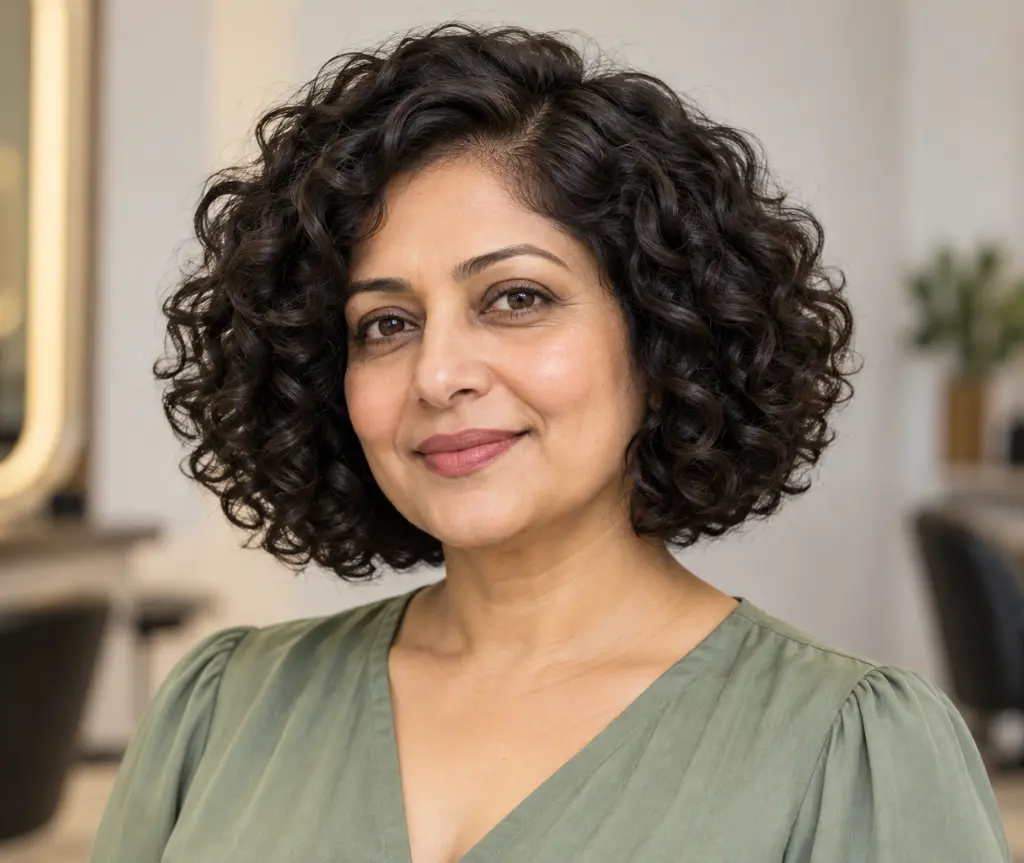
A chin-length curly bob gives natural curls a clear, recognizable silhouette without taking away their movement. The ends sit near the jaw when dry, creating a compact frame around the face. This can be an appealing choice for women over 40 who want a shorter haircut with more fullness than a pixie. Loose curls produce a softer outline, while smaller ringlets create a more rounded shape. A slightly off-center part can introduce movement at the front and make the bob feel relaxed rather than overly symmetrical or rigid.
Talk to your stylist about the finished dry length, especially if your curls spring upward significantly after washing. A bob cut to chin length while stretched may settle much shorter than you expect. Gentle internal shaping can help distribute fullness, but fine curls may need a more substantial perimeter. At home, encourage curls to group together rather than repeatedly separating every strand. Let the hair settle before deciding whether the sides need additional volume. This helps you judge the actual shape instead of reacting to temporary puffiness during the drying process.
4. Rounded Curly Bob
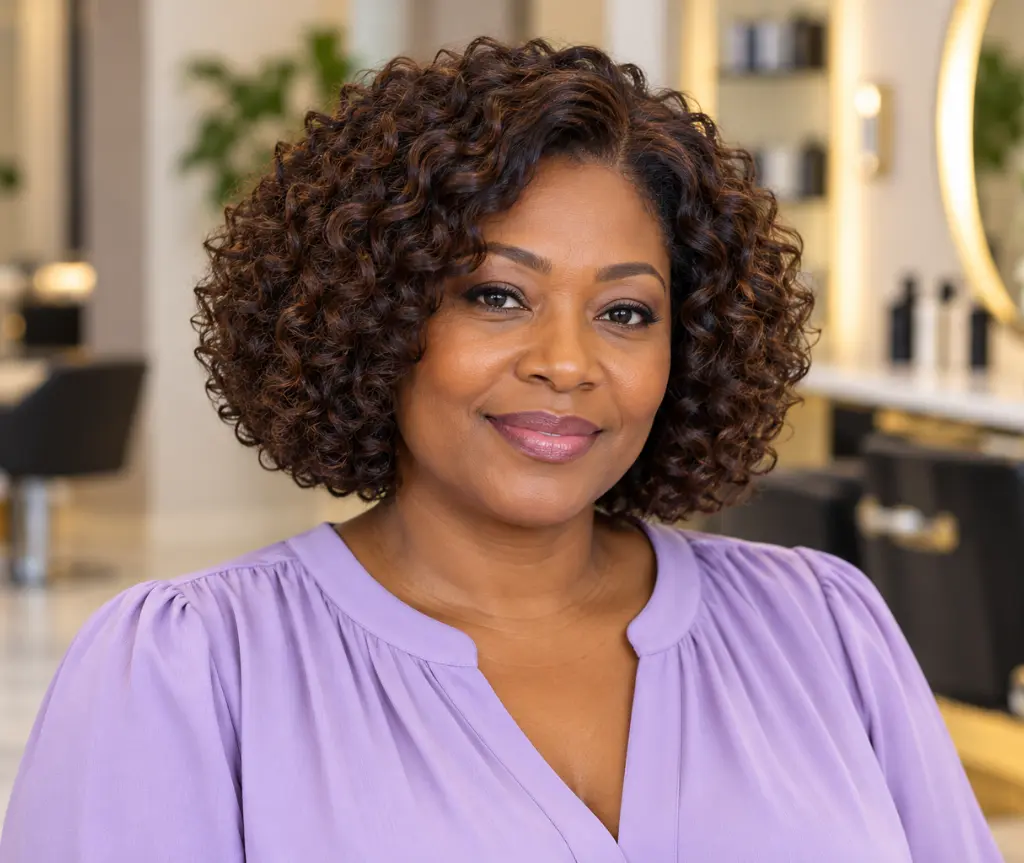
A rounded curly bob creates a softly curved silhouette with balanced fullness at the sides and crown. Compared with a sharper bob, this version emphasizes the overall shape of the curls rather than a precise horizontal line. It can suit women over 40 who enjoy volume and want their natural texture to remain the main feature. The shape works especially well when the stylist considers how different sections shrink. A few shorter curls near the face can open the outline while leaving enough density through the lower portion of the haircut.
Ask for a rounded shape that looks intentional from the front, profile, and back. Too much weight at the bottom can create a wider base than you want, while excessive layering can remove the fullness that makes this bob appealing. Discuss where you prefer the widest point to sit, such as near the cheekbones or slightly below them. Style in sections so the back receives as much attention as the front. Once dry, gently adjust the roots with your fingers and leave the lengths relatively undisturbed to preserve the curl clusters.
5. Asymmetrical Curly Bob
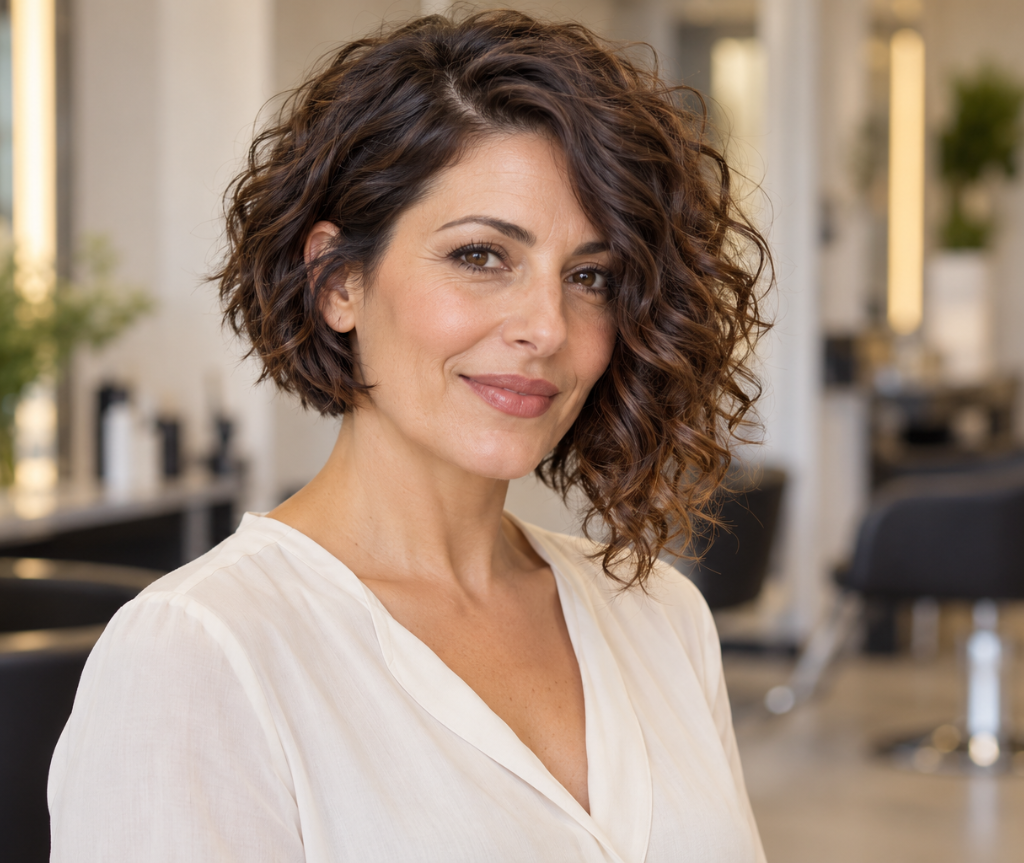
An asymmetrical curly bob introduces a noticeable difference in length between the two sides, creating movement even when the curls are left simple. One side may sit near the jaw while the other falls a little lower, giving the haircut a clear visual direction. For women over 40 who like an expressive short style, this offers a distinctive option without requiring elaborate daily styling. The contrast can be subtle or dramatic, and a side part often helps reveal the shape. Natural curl irregularity makes the outline feel softer than a perfectly straight version.
Before cutting, discuss whether you want permanent asymmetry in the haircut or simply the appearance of it through parting and styling. A deep side part can create a similar effect with less commitment. If you choose an actual uneven cut, ask the stylist to assess both sides in their natural dry state because different curl patterns can change the perceived length. Keep the longer side clearly defined when styling so the design remains visible. Regular reshaping may be useful if the shorter side begins to blend into the rest of the bob.
6. Curly Bob with Side-Swept Bangs
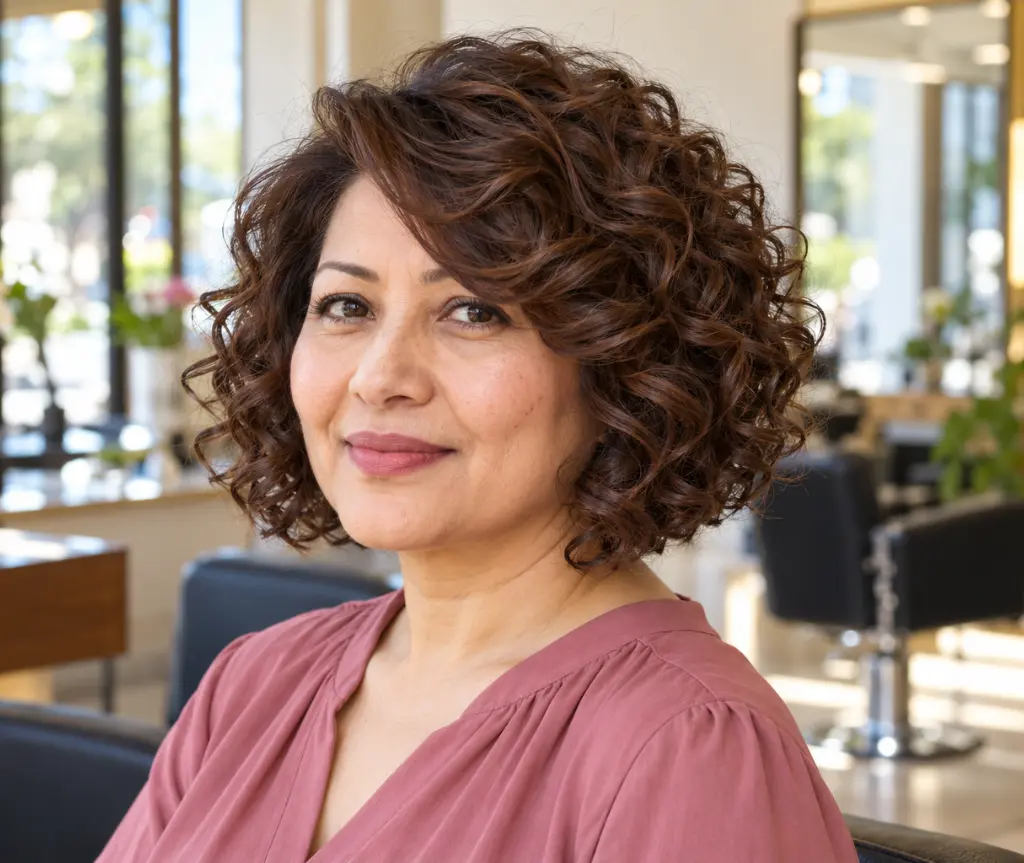
A curly bob with side-swept bangs adds a diagonal line across the forehead while keeping the rest of the hairstyle full and textured. The fringe should feel connected to the side layers rather than sitting as a separate piece. For women over 40 who prefer some forehead coverage, this can offer a soft alternative to a straight, dense bang. The curl pattern determines how strongly the fringe sweeps, so the finished look may include several small ringlets or a broader curved section. Either version can make a familiar bob feel more personal.
Ask your stylist to evaluate the fringe when dry and to preserve enough length for it to fall in the direction you prefer. A very short curled bang may spring upward rather than sweep to the side. During styling, arrange the fringe before it dries completely and avoid pulling it into an unnatural shape. You can use a small clip temporarily to guide the direction, removing it once the roots settle. Keep the remaining curls balanced on both sides so the sweeping front becomes the focal point without making the haircut look uneven by accident.
7. French-Inspired Curly Bob
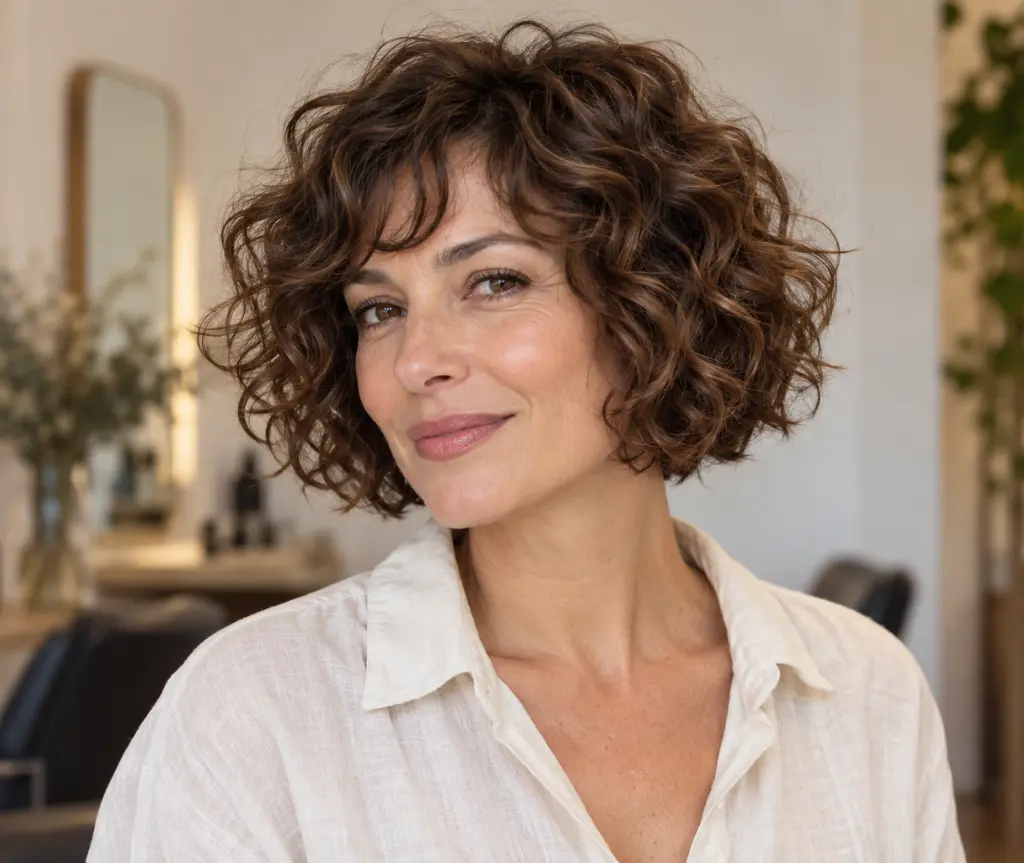
A French-inspired curly bob combines a compact length with a relaxed, lightly tousled finish. It often sits around the jaw or slightly above it, with enough softness at the front to prevent the shape from looking overly structured. For women over 40, this style can feel expressive without needing a highly polished salon finish every day. The emphasis is on a clear haircut and natural movement, not perfect matching curls. A short fringe or a few brow-level pieces can add character, although the bob also works with an open forehead.
Choose the final length with your curl shrinkage in mind, and ask for a perimeter that remains visible beneath the texture. If you want a fringe, discuss how it behaves after sleeping and whether you are comfortable refreshing it separately. Avoid requesting heavy thinning simply to achieve a casual finish, particularly if your hair is already fine. Instead, use the haircut and a restrained amount of styling product to control the silhouette. A slight tuck behind one ear can change the mood while keeping the short, softly rounded outline recognizable from every angle.
8. Angled Curly Bob
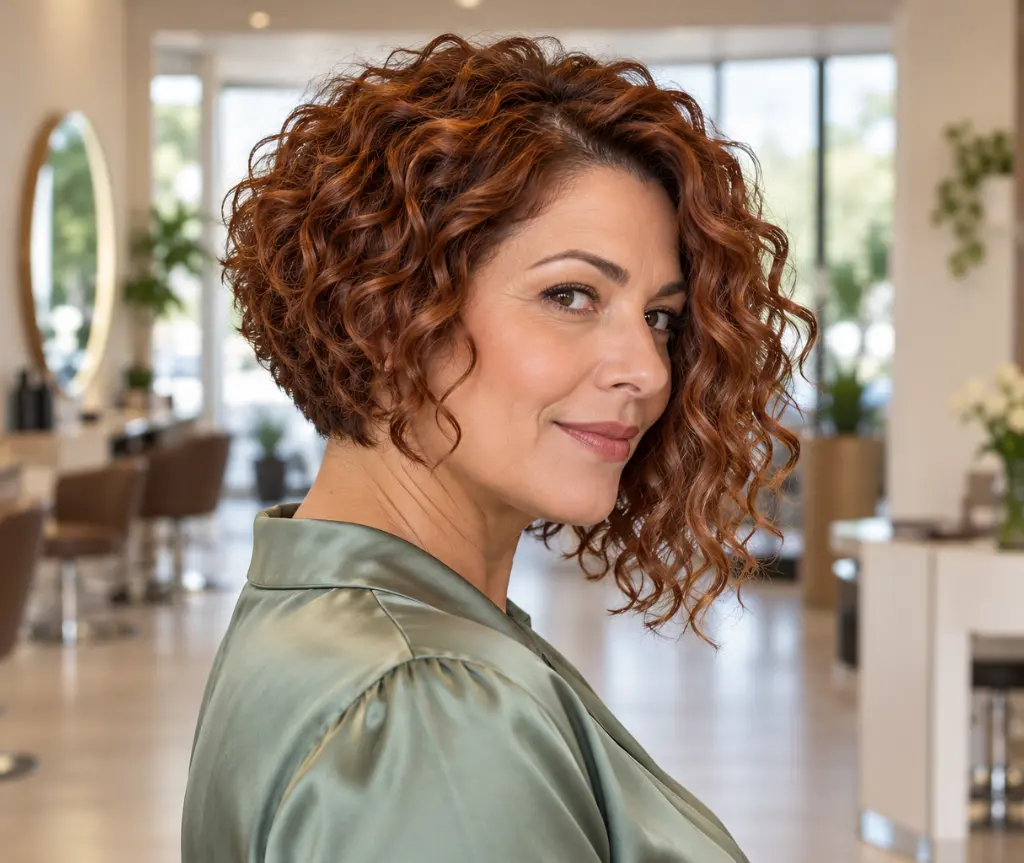
An angled curly bob keeps the back shorter while allowing the front sections to extend toward the chin or below it. This creates a forward-moving outline that feels modern while preserving softness around the face. For women over 40 who want shape without very short front pieces, the longer sections can be especially appealing. The angle does not need to be steep to make an impression. A gentle progression from the nape to the front often reads clearly, particularly when the curl definition reveals the difference between the back and face-framing lengths.
Ask your stylist to distinguish the intended angle from heavy stacking at the back, since those details create different silhouettes. Discuss how much nape exposure you want and whether your curls can support the shorter back length comfortably. A side-front reference image helps, but a rear view is equally useful. At home, make sure the back dries without being flattened against a chair or pillow. Keep the front curls grouped so the longer line remains visible. If the angle disappears as the cut grows, a targeted reshape can restore it without changing everything.
9. Soft Curly Shag
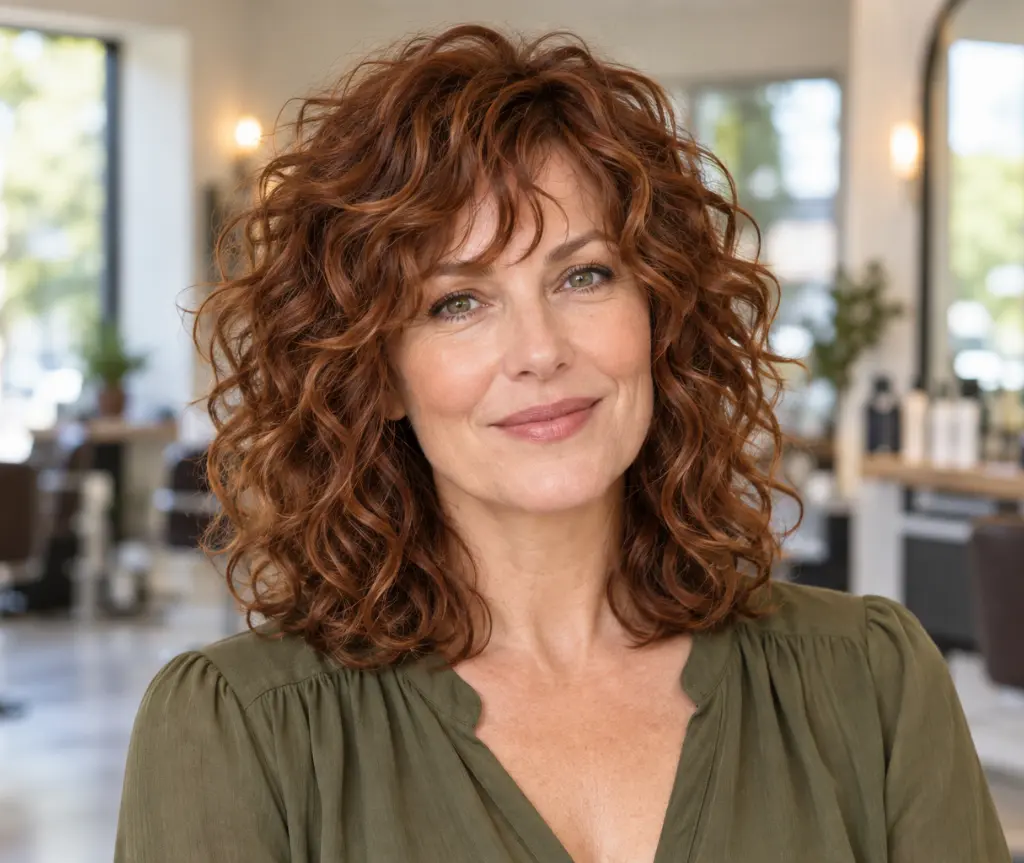
A soft curly shag uses connected layers to create movement around the crown, cheeks, and shoulders. It has a more relaxed outline than a conventional bob, with individual curls forming an airy frame around the face. For women over 40 who like texture and a slightly undone finish, this can be an appealing way to reshape medium-length hair. The word soft matters here: the layers should blend rather than create abrupt gaps between short and long sections. Gentle fringe pieces can complete the look without requiring a heavy or sharply defined bang.
Discuss your density before choosing how short the crown layers should be. Thick curls may welcome extra shaping, while finer hair can lose its substantial ends if too much length is removed internally. Ask the stylist to preserve the silhouette you want after the curls settle naturally. Styling can focus on encouraging the face-framing sections and allowing the rest to dry with movement. If you use a diffuser, keep the heat moderate and avoid repeatedly disrupting the same section. The finished shag should retain recognizable curl clumps rather than becoming uniformly fluffy from roots to ends.
10. Curly Wolf Cut
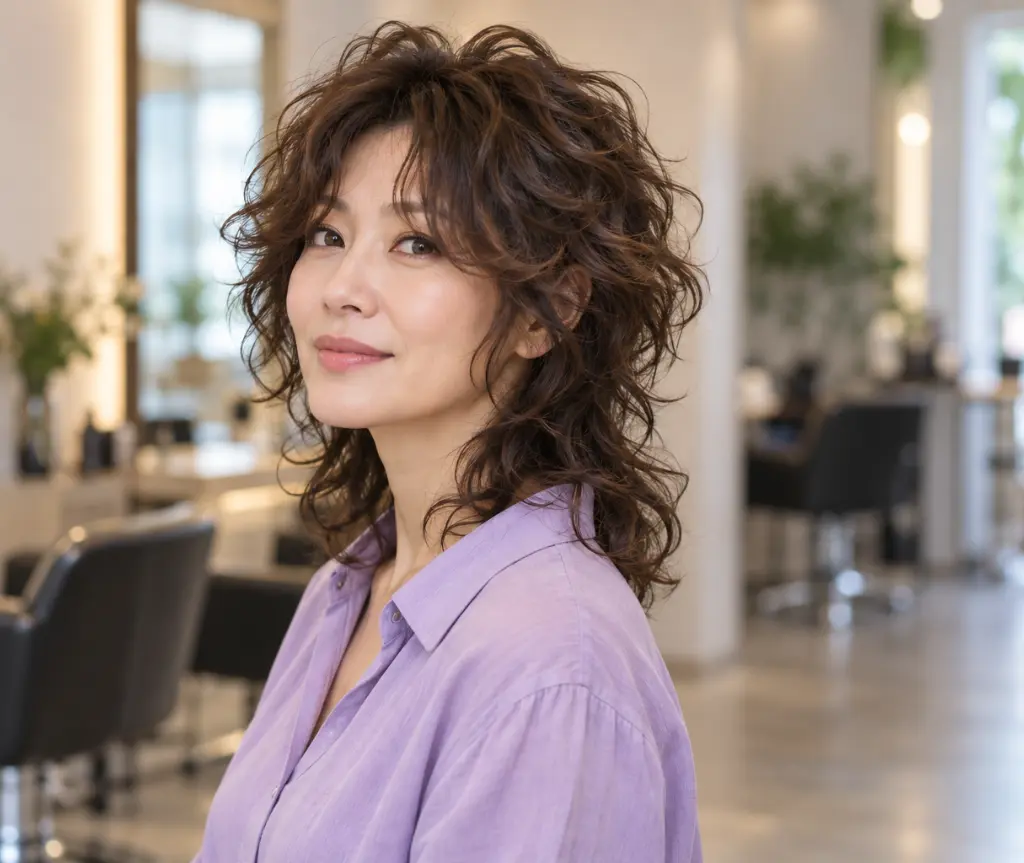
A curly wolf cut brings more contrast between the shorter crown and the longer lower sections than a softly layered shag. The top has visible lift, the face is framed by textured pieces, and the nape or shoulder-length ends remain noticeably longer. For women over 40 who enjoy a bolder haircut, this creates an energetic silhouette without needing straightened sections. Natural curls soften the transitions, but the underlying structure should still be clear. The look can be adapted to a subtle version if you want the movement without an exaggerated difference in length.
Bring photographs with a curl pattern close to your own because a straight-haired wolf cut may translate very differently into ringlets. Ask the stylist how the shortest layers will behave when fully dry and whether the longer perimeter will retain enough density. This is especially relevant if your hair is fine or unevenly full. During styling, support the crown without pulling every curl upward, then define the longer sections separately. Plan for maintenance around the fringe and upper layers, since those areas can lose the intended contrast before the longer hair needs a trim.
11. Short Curly Crop with an Undercut
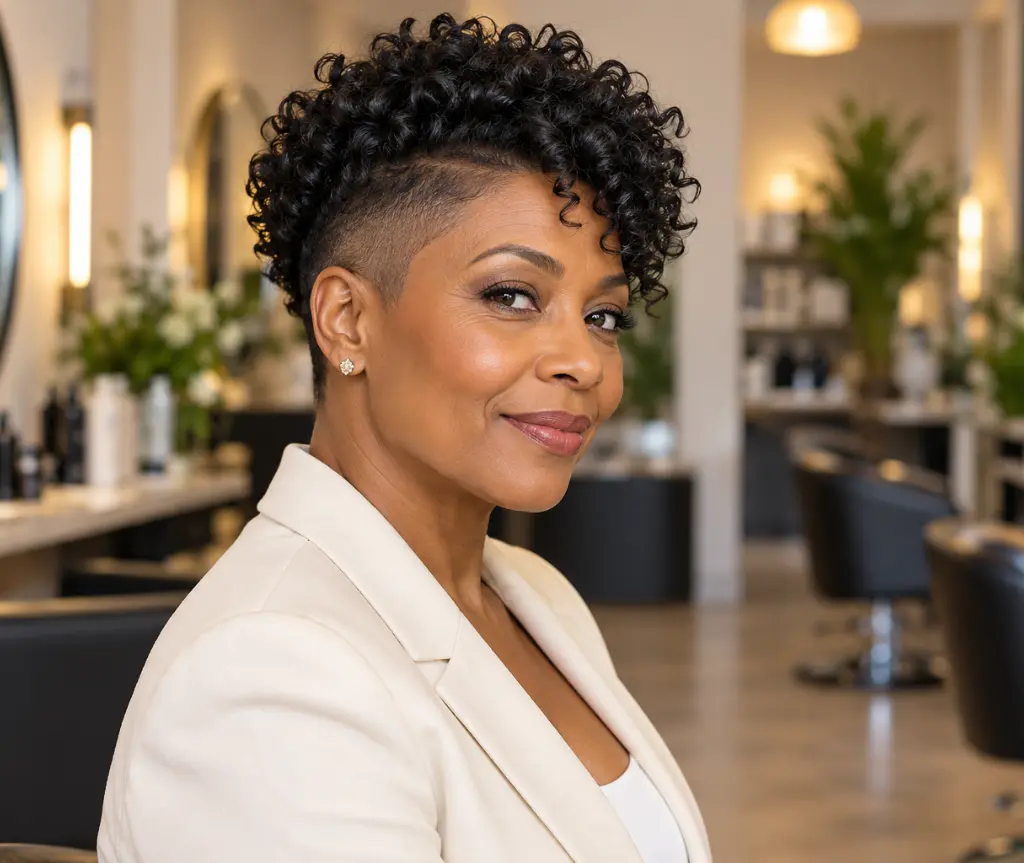
A short curly crop with an undercut pairs textured length on top with a closely clipped section at the sides or nape. The contrast makes the curls stand out and gives the haircut a deliberately bold outline. For women over 40 who like a distinctive short style, this can reduce the bulk in selected areas while keeping expressive movement above. An undercut can be visible around one temple or hidden beneath longer curls at the back. The placement changes the mood, so decide whether you want the detail to show every day.
Ask your stylist to explain the difference between a softly tapered side and a true undercut with disconnected lengths. Discuss clipper length, how much scalp you are comfortable showing, and the grow-out process. The shorter section may need attention more often than the curly top, so factor that into your routine. Style the top according to its natural direction rather than forcing it to cover or expose the clipped area. If you are unsure about a large undercut, a smaller nape section can let you explore the contrast with a more limited change.
12. Tapered Natural Curls
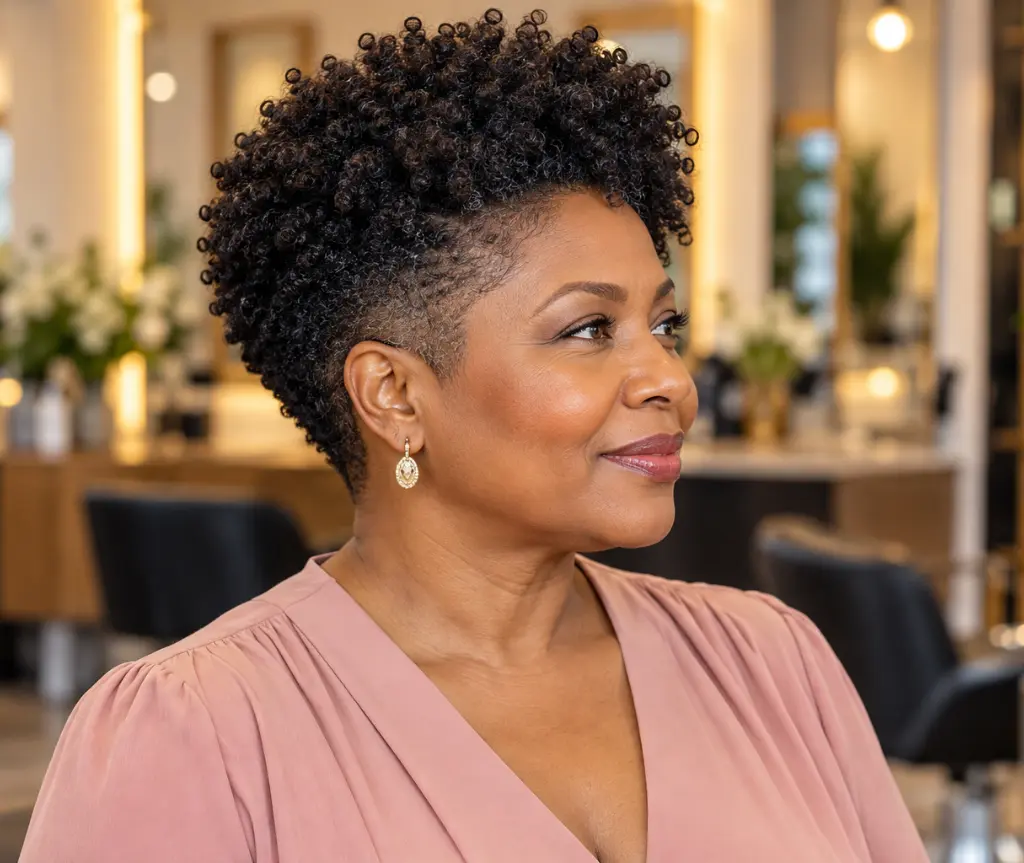
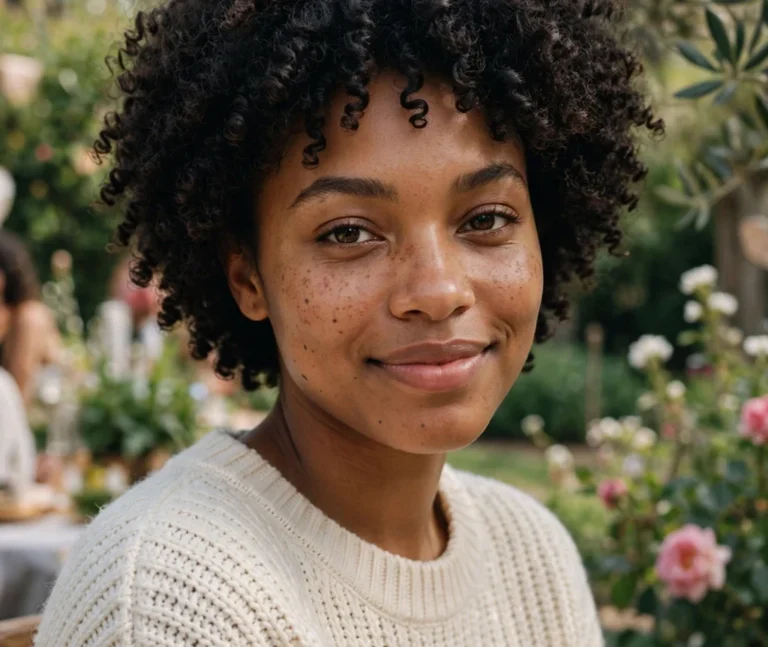
A tapered natural haircut keeps the sides and nape shorter while allowing more curl or coil length through the top. Unlike a uniform crop, the gradual change in length creates a sculpted outline with a clear focal point. For Black women over 40 and anyone with tightly curled natural texture, this can highlight the beauty of the curl pattern without requiring a large overall silhouette. The top can remain rounded, lean slightly forward, or form a subtle high shape. Your preferred profile determines how the taper connects with the upper section.
Ask for a taper that follows your natural hairline and leaves the amount of coverage you want around the temples. Bring a side-view reference so the stylist can see your preferred balance between crown height and back length. Discuss whether you want visibly defined coils or a softer textured finish because those styling choices affect the appearance of the cut. Work in manageable sections when defining the top, and let the shorter areas follow their growth direction. The goal is a comfortable, intentional shape that still looks appealing as the texture expands between styling sessions.
13. Shoulder-Length Curly Lob
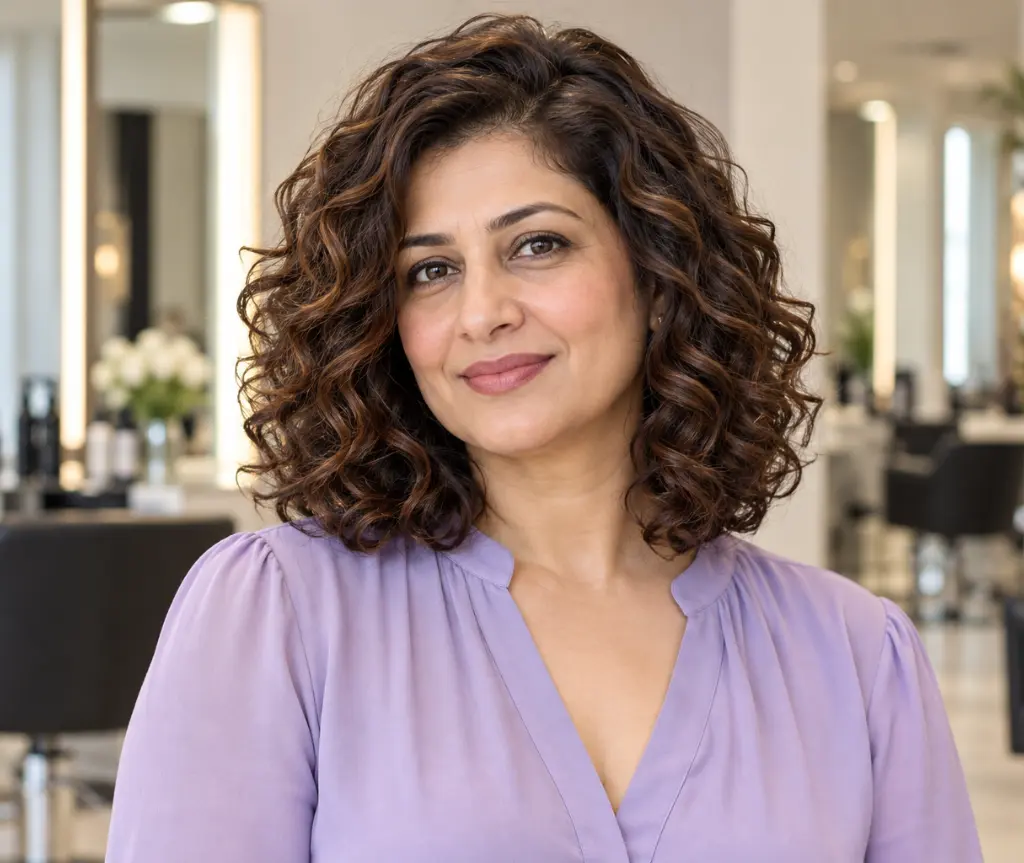
A shoulder-length curly lob offers a middle ground between a short bob and longer layered hair. The ends sit around the shoulders when dry, giving the curls enough length to move while keeping the overall style manageable. For women over 40 who want versatility, this length can work loose, partly clipped back, or gathered into a small updo. The shape may be softly rounded or slightly elongated through the front. A clearly considered perimeter helps the lob feel intentional even when the curl definition varies from one wash day to the next.
Discuss whether your ends should rest on the shoulders or sit just above them, since contact with clothing can change the way they turn. Ask the stylist to preserve enough fullness at the base while adjusting the interior according to your density. When styling, give the underneath sections attention so the top does not look defined while the lower hair tangles together. A simple off-center part can add root movement without a major change. If you often wear the hair up, confirm that the shortest front pieces can still reach your preferred clip or tie comfortably.
14. Collarbone Curls with Curtain Bangs
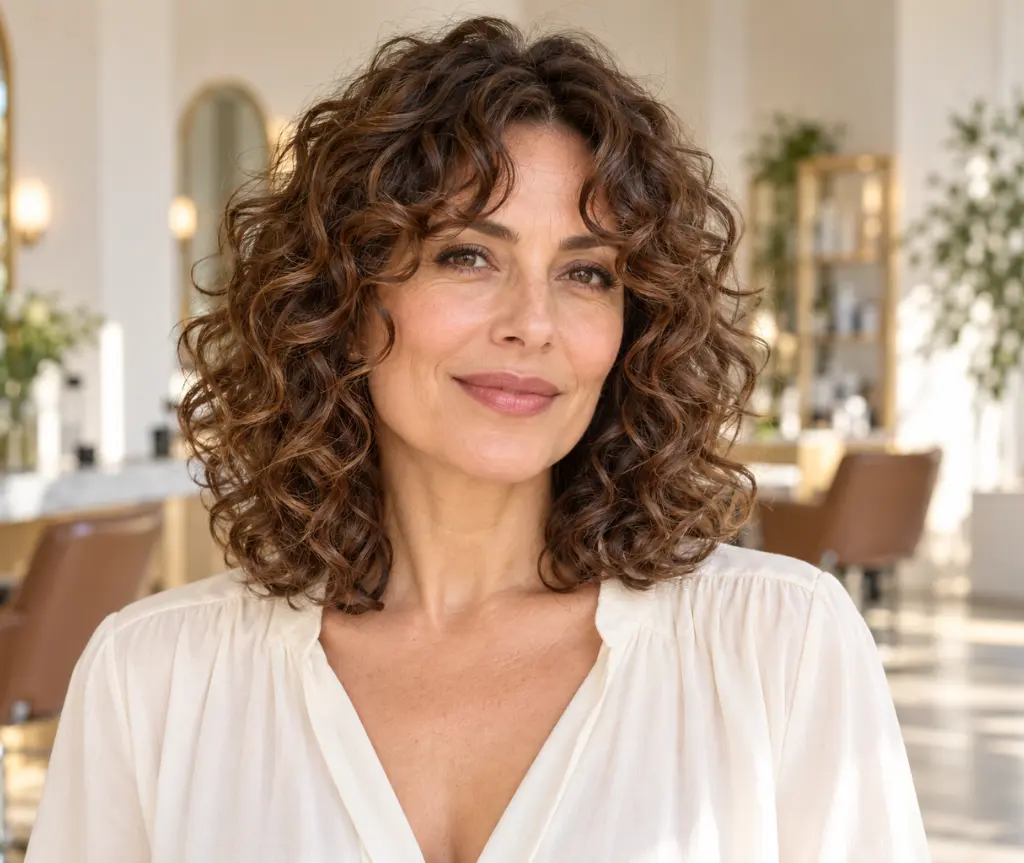
Collarbone curls with curtain bangs create a softly opened frame around the forehead and cheeks. The fringe separates near the center and blends into longer side pieces, while the main hair falls toward the collarbones. For women over 40 who enjoy a face-framing style, this offers movement without a dense line across the brow. Curly curtain bangs may look less symmetrical than straight ones, which is part of their appeal. The best version follows the way your front curls naturally fall and leaves enough length for them to curve outward comfortably.
Ask your stylist to check the fringe after shrinkage rather than deciding its length only while the hair is wet or stretched. Discuss where the longest bang pieces should meet the side layers and whether your usual part supports the curtain shape. When styling, separate the two front sections gently and guide each toward its own side. Avoid combing the fringe repeatedly once the curl groups begin to set. You can refresh those small front sections independently when needed, which may help the hairstyle look deliberate without restyling the entire collarbone-length cut every morning.
15. Medium Curls with Wispy Bangs
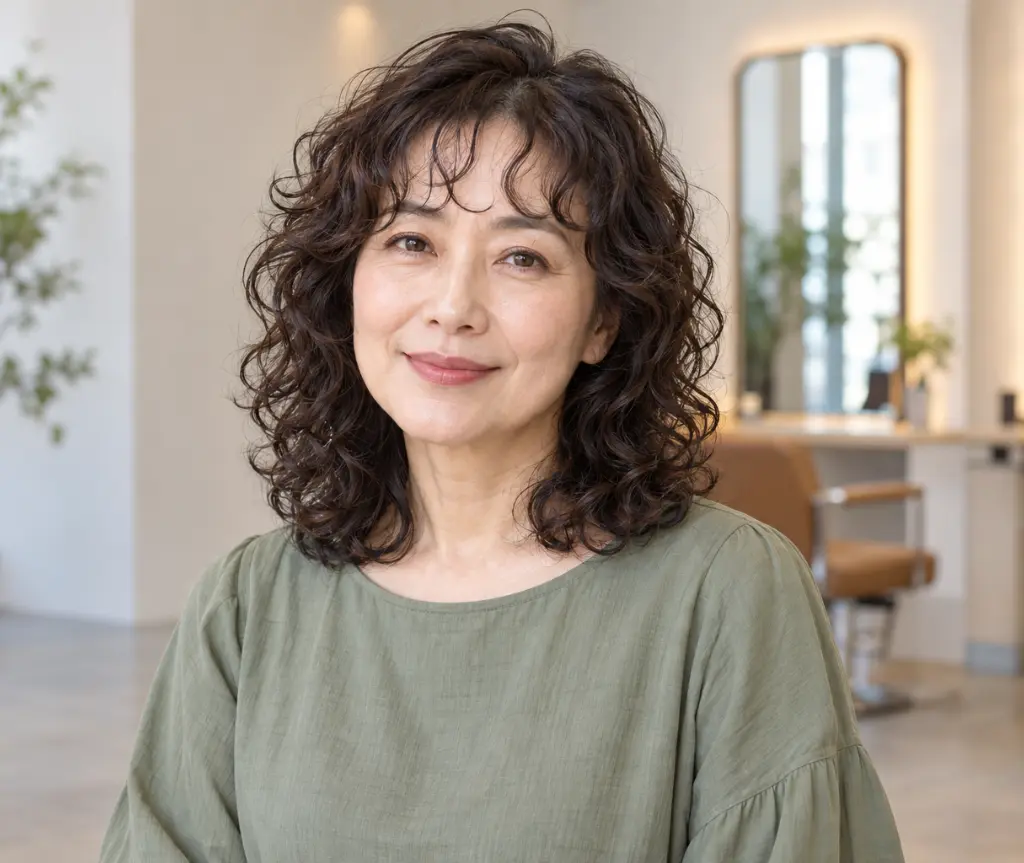
Medium curls with wispy bangs offer a lighter fringe that allows some forehead to remain visible between the curl groups. This creates a softer effect than a dense curly bang and can feel especially approachable if you have never worn a fringe. For women over 40, the style pairs well with shoulder-length layers because the front detail adds character without dominating the whole haircut. The fringe can contain a few loose spirals or smaller separated curls. Its appearance should reflect your natural texture rather than imitate a straight-haired, feathered bang exactly.
Discuss how much hair should be included in the fringe before cutting, particularly if your front density is limited. A narrow section may provide the look you want while preserving fullness through the sides. Ask your stylist to leave room for shrinkage and show you how the bangs fall without tension. During styling, define the front lightly and avoid loading it with heavy product. The fringe may need a small refresh after sleeping even when the longer curls still look good. Treat that as a separate step rather than assuming the whole style needs to be washed again.
16. Medium Curls with a Deep Side Part
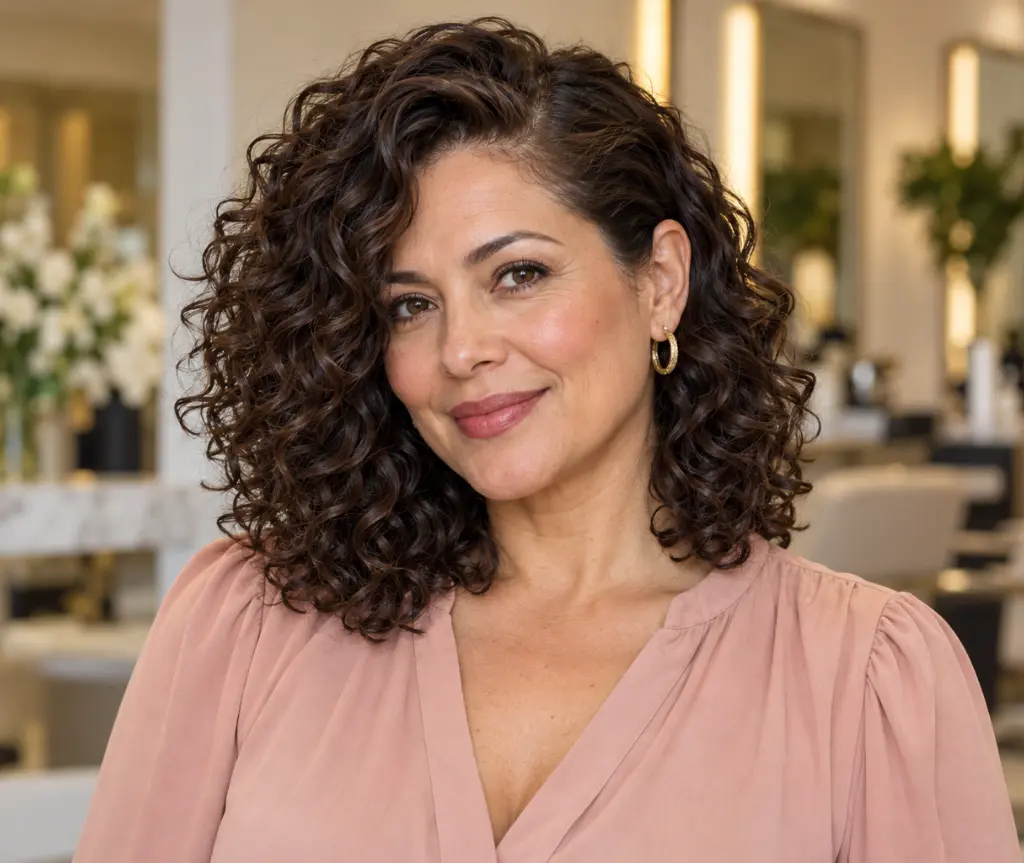
A deep side part can change the appearance of medium curls without requiring a completely different haircut. Moving the part farther to one side creates a fuller sweep across the top and a clearer contrast between the two sides. For women over 40 who want a simple styling change, this can make an existing shoulder-length cut feel more expressive. The look is particularly striking when the front curls remain defined and the smaller side is softly tucked back. You can keep the finish casual for daily wear or more polished for an evening event.
Choose the part based on how your roots naturally settle rather than forcing a precise line that feels uncomfortable. If you usually wear a center part, try moving it gradually to see how the crown responds. Set the direction while the hair is damp and let the curls form around it. A small clip on the lighter side can reveal an earring without flattening the entire hairstyle. If one side becomes too heavy, ask your stylist whether a little face-framing adjustment would help. The aim is balanced movement, with the fuller side remaining a deliberate feature.
17. Center-Parted Layered Curls
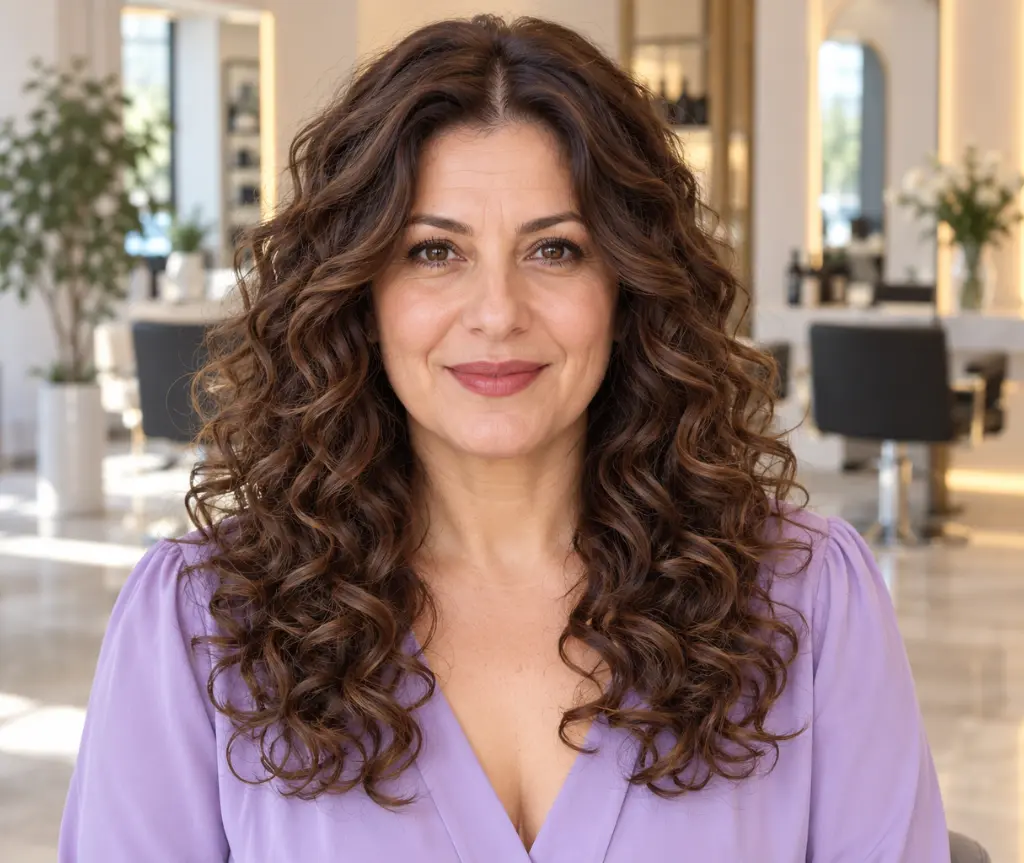
Center-parted layered curls create a balanced frame with movement on both sides of the face. The part gives the hairstyle a clear structure, while the layers prevent the lengths from sitting as one solid block. For women over 40 who prefer a straightforward silhouette, this can make medium or longer curly hair feel considered without looking heavily styled. The exact center line does not need to be perfect. A slightly irregular part often blends naturally with the texture, allowing the curls to remain the most noticeable feature rather than the line itself.
Ask for layers that connect through the sides and preserve the amount of fullness you want at the ends. The shortest pieces can begin near the cheekbones, jaw, or lower depending on your preferred coverage. When styling, give both sides similar attention but avoid trying to make every curl match its opposite partner. Natural differences are normal and can make the finish more relaxed. If the roots lie very flat, experiment with gently lifting them while drying. Check the back as well as the front so the center-parted frame connects with an equally balanced overall shape.
18. Curly Lob for Fine Hair
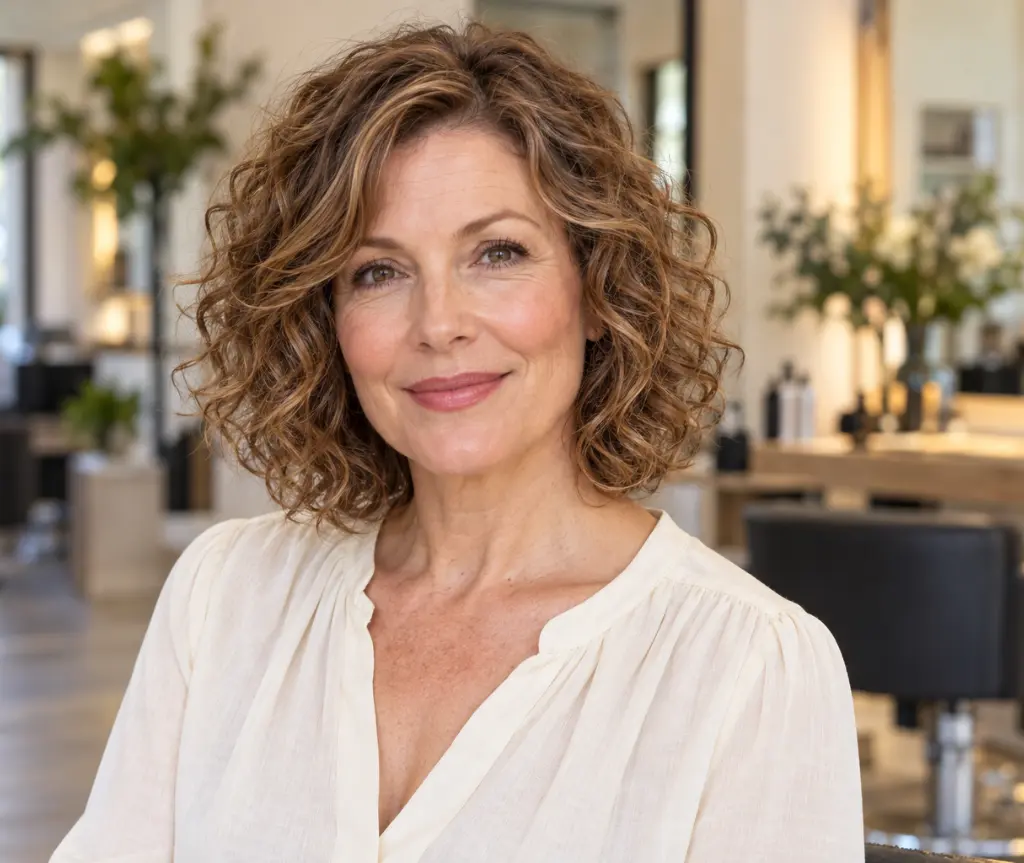
A curly lob for fine hair focuses on preserving a visible perimeter while using careful shaping to encourage movement. Fine hair refers to the width of individual strands, so it can still be dense or relatively sparse overall. For women over 40 with delicate curls, a shoulder-skimming length may offer enough body without making the ends look overly light. A modest amount of layering can support the shape, but the haircut should not depend on removing large sections of hair. Soft curl definition helps the lengths look cohesive and brings attention to the texture.
Tell your stylist whether your main concern is flat roots, thin-looking ends, or both, since each calls for a different approach. Ask to retain substantial lower lengths and discuss whether a few shorter pieces near the face would add enough movement. Start styling with a small amount of lightweight product, adding more only if needed. Rich creams may suit some fine curls but feel too heavy on others. Let the haircut guide the silhouette rather than trying to create maximum volume everywhere. A gentle root lift can be enough to make the lob feel fresher.
19. Layered Cut for Thick Curls
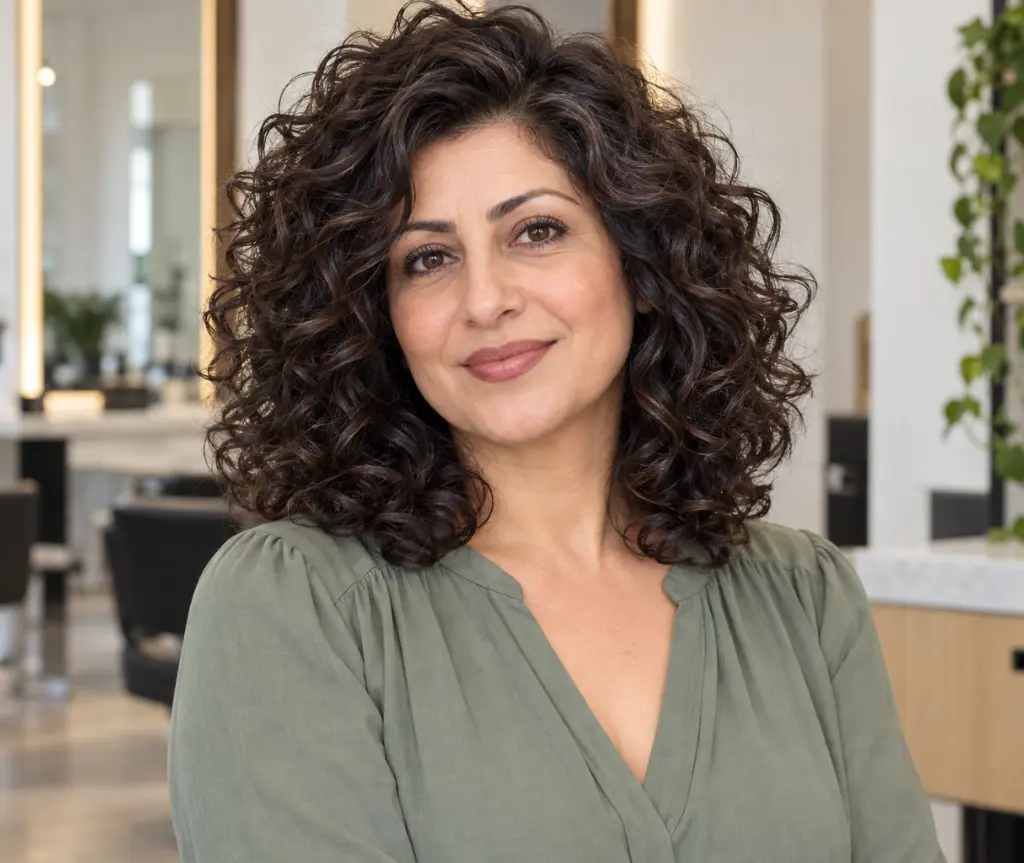
A layered cut for thick curls distributes fullness so the hairstyle has movement throughout rather than concentrating all its width near the bottom. The goal is a balanced silhouette that lets the curls remain substantial. For women over 40 with dense hair, this can make medium-length styles feel more shaped and easier to arrange. Thick hair may contain several curl patterns, so the shorter and longer sections need to work together. Thoughtful layers can reveal those differences attractively without making the surface look disconnected or leaving the lower lengths unexpectedly sparse.
Describe where your hair feels bulky and which areas you want to keep full. Ask your stylist how the proposed layers will change the dry outline, including the back and the sides. Removing weight is not the same as making every section shorter, and the right technique depends on your texture. At home, styling in sections can help products reach the interior instead of sitting mostly on the outer layer. Give the hair enough space to dry without compressing the roots. Evaluate the finished shape once it has settled, since dense curls may expand after the initial styling.
20. Loose Curly Lob
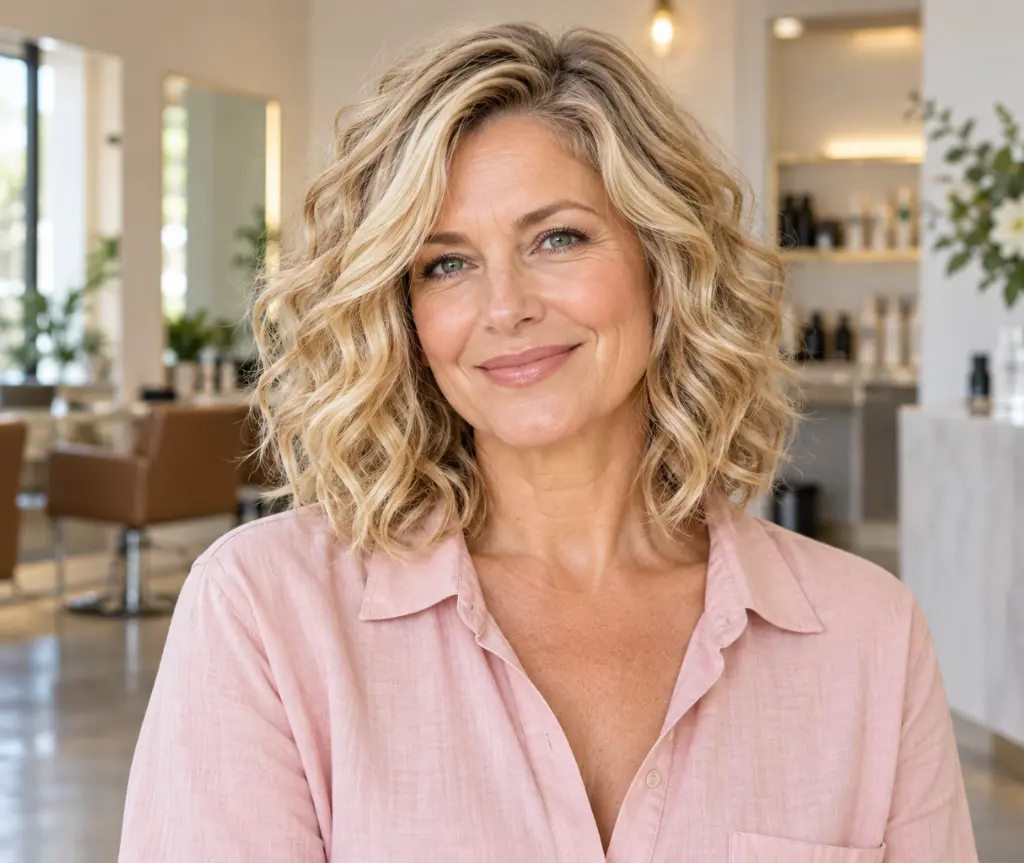
A loose curly lob has a softer, more elongated curl pattern than a bob filled with tight ringlets. The lengths move in broad curves and relaxed spirals, creating a casual silhouette around the shoulders. For women over 40 who want a gentle, easygoing look, this can feel polished without appearing overly arranged. It works best when the haircut supports the natural bend of the hair rather than relying on daily curling iron work. A subtle side part or a few longer face-framing pieces can give the style direction while keeping the overall finish light.
Ask for a length and layering pattern that allows your loose curls to remain visible when dry. Too much weight can stretch some curl patterns, while very short layers may interrupt the flowing outline you want. During styling, encourage larger curl groups with gentle scrunching rather than separating every section into small strands. If your texture sits between waves and curls, choose reference images with a similar pattern. This helps keep expectations realistic and lets your stylist design around your own movement. A little variation between the top and lower lengths can still look appealing and intentional.
21. Defined Shoulder-Length Ringlets
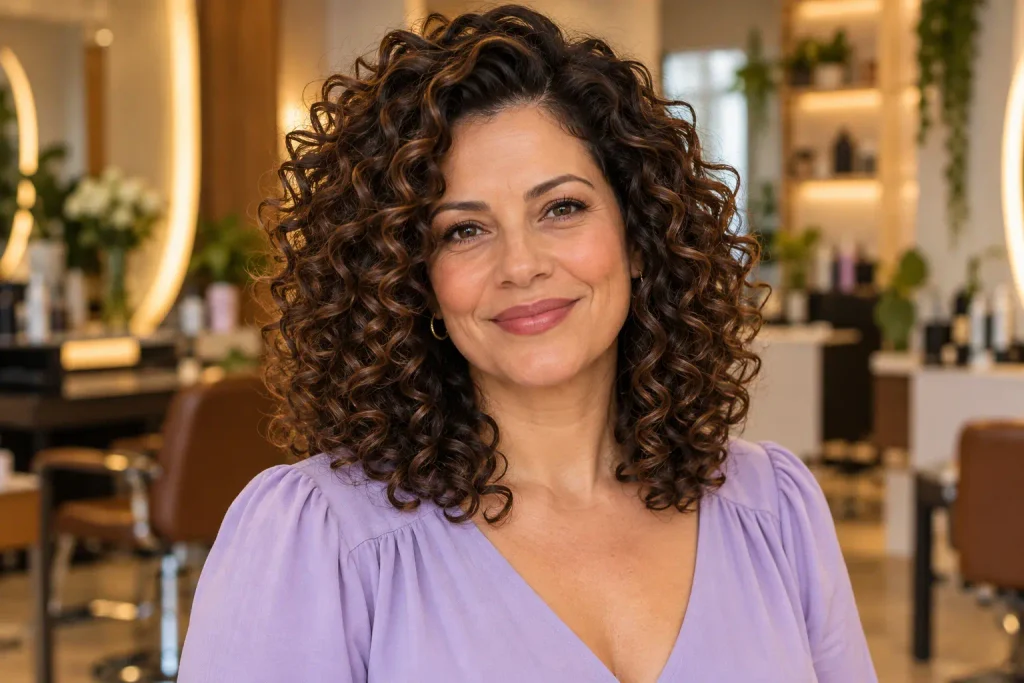
Defined shoulder-length ringlets celebrate a springy curl pattern with clear individual spirals from the middle lengths to the ends. The look feels modern when the shape remains soft and the curls have room to move. For women over 40 who enjoy definition, this offers a fuller alternative to a loose curly lob without needing very long hair. A few shorter face-framing ringlets can open the front, while the remaining curls form a balanced outline around the shoulders. Slight differences in ringlet size make the finished hairstyle more realistic and visually interesting.
Ask your stylist to work with the way the curls naturally group and to leave enough length for the spirals to form. Avoid judging the finished length only when the hair is stretched. When styling, you can define selected sections with your fingers if they need encouragement, but every ringlet does not have to be shaped individually. Allow the curls to set before separating them gently where you want more fullness. If your product leaves a firm cast, soften it only after the hair is dry. Keep some variation so the result retains movement instead of looking rigid.
22. Shoulder-Length Natural Coils
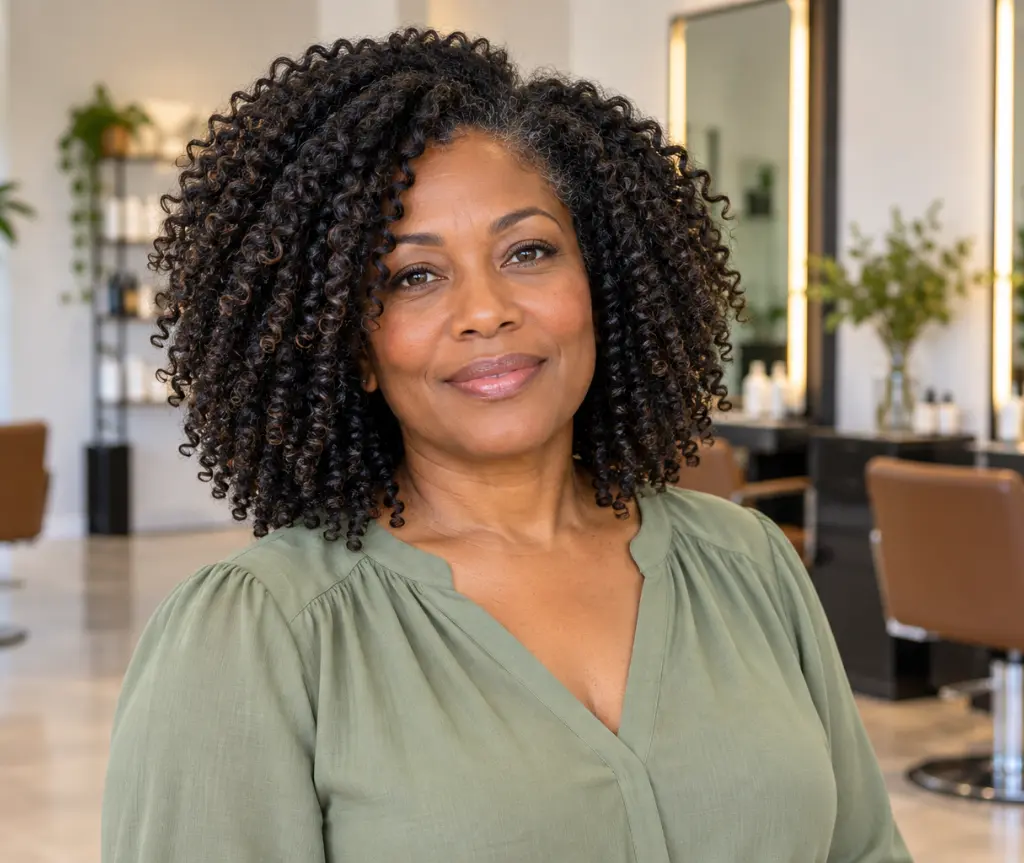
Shoulder-length natural coils create a rich silhouette with texture visible throughout the hair. Depending on shrinkage, the stretched length may be considerably longer than the finished shape, so the dry outline is the most useful reference. For Black women over 40 who want a medium-length natural hairstyle, this offers plenty of versatility while keeping the coils at the center of the look. The shape can be softly rounded, slightly elongated, or fuller near the crown. Small differences in definition across the head can add character without making the hairstyle appear unfinished.
Choose whether you prefer clearly separated coils or a softer, more expanded finish before discussing the cut. Both can be attractive, but they may need different shaping choices. Ask your stylist to consider shrinkage and density section by section, particularly if the front behaves differently from the back. Work through styling in manageable portions so the interior hair receives attention. Detangle gently with enough slip rather than forcing through knots. Once the coils have settled, adjust the overall silhouette lightly with your hands. A comfortable shape matters more than making every small coil look exactly the same.
23. Long Curly Layers
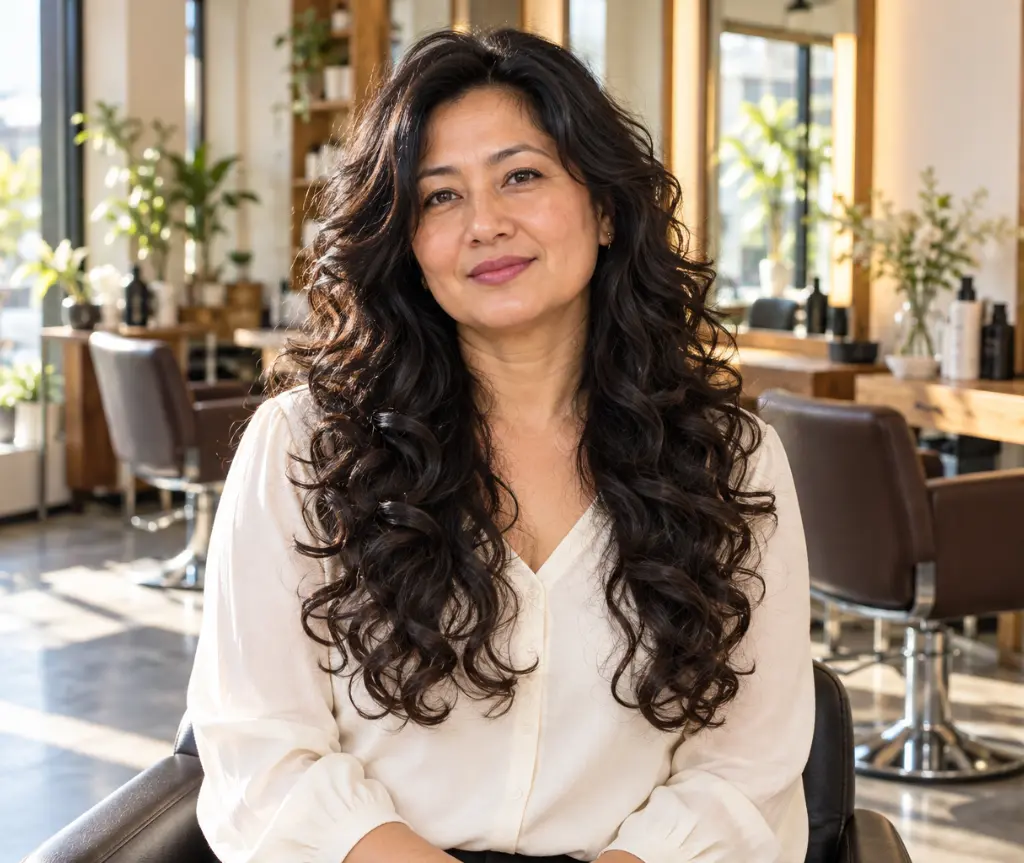
Long curly layers keep the beauty of extended lengths while introducing movement through the sides and crown. The haircut can feel lighter visually than one solid length, especially when the curls have enough space to separate into recognizable groups. For women over 40 who enjoy long hair, this is a flexible option that works loose or gathered back. The shortest layers do not need to be very short to make a difference. A gradual progression can create shape while preserving the substantial lower perimeter that makes the longer hairstyle feel complete and intentional.
Ask your stylist to show where each major layer will begin and how the ends will look after the curls spring back. If you value thick-looking lengths, make that preference clear before any internal shaping. Styling longer curls often benefits from sections, since the underside can otherwise receive less product and attention. Support the lengths while drying rather than pulling them downward repeatedly. If the top appears flatter than the ends, discuss the shape rather than assuming you need many more layers. Sometimes a small adjustment around the face or crown creates the balance you want.
24. Long Curls with Face-Framing Layers
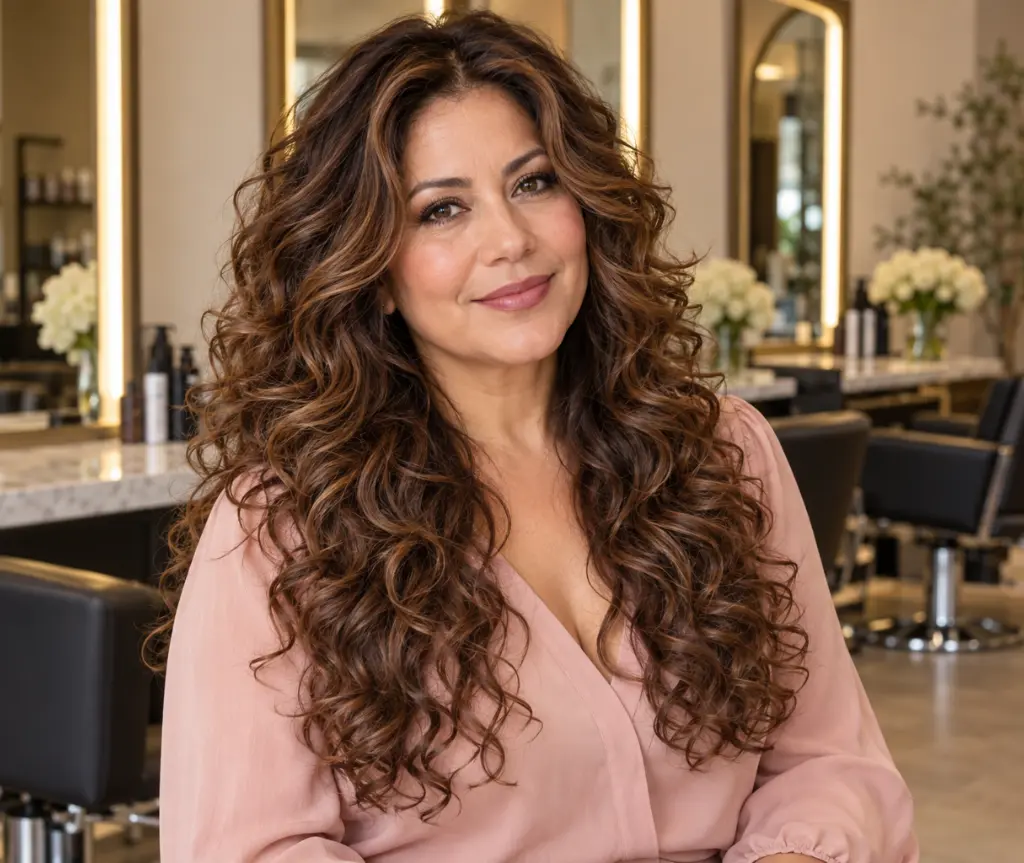
Long curls with face-framing layers bring movement toward the cheeks and jaw while leaving the main lengths relatively full. This can be a useful option when you like your long hair but want the front to feel less heavy. For women over 40, the effect is a more open frame that highlights the texture around the face. The shortest pieces can begin at the cheekbones, chin, or lower depending on your preference. Keeping them connected to the longer hair makes the change feel integrated rather than like a separate short section.
Tell your stylist how you usually wear your hair, especially if you often put it into a ponytail or clip. Very short front layers may fall out of those styles, which can be appealing or inconvenient depending on your routine. Ask for the finished dry lengths to be considered before the first cut. During styling, define the face-framing curls gently and let them fall where they naturally settle. Avoid pulling them straight to compare their length with the back. Their purpose is to create shape near the face while the longer curls provide the flowing outline below.
25. Long Curly Shag with Bangs
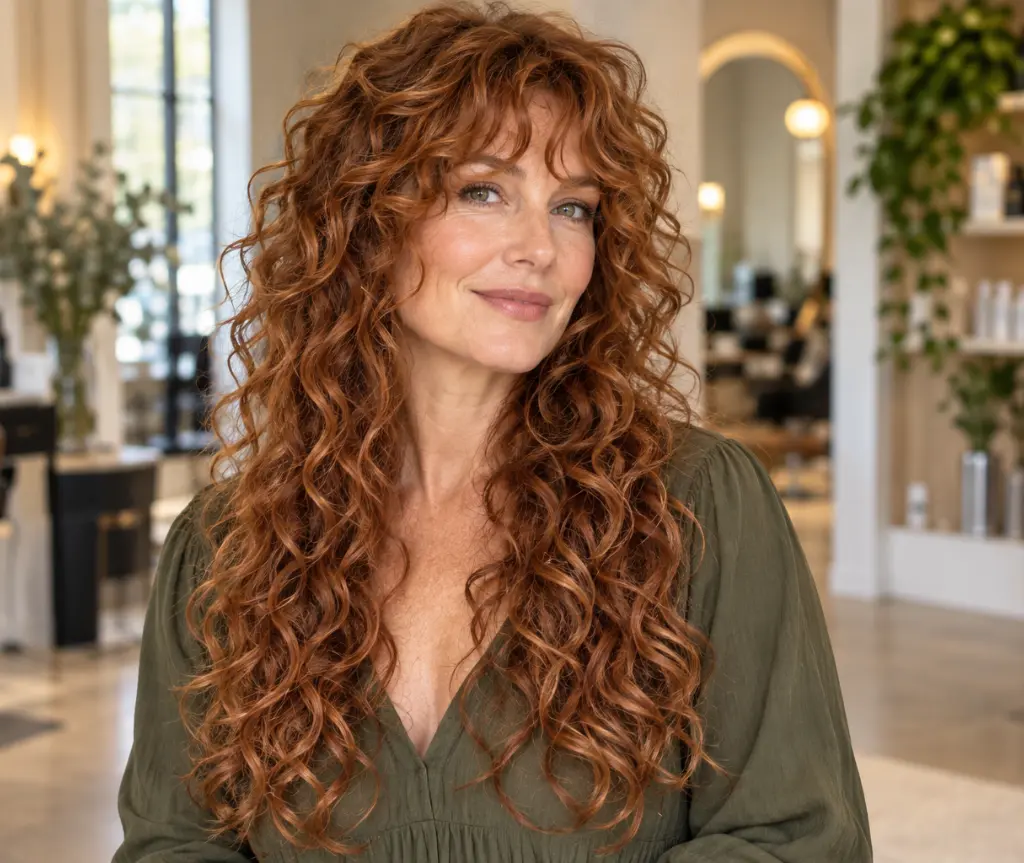
A long curly shag with bangs creates movement through the upper lengths while retaining the flowing outline of longer hair. The fringe connects with textured pieces around the cheeks, and the crown layers give the style a relaxed, expressive shape. For women over 40 who want a noticeable update without losing most of their length, this can feel especially appealing. The lower ends should still have enough substance to look intentional. A soft version emphasizes connected curls, while a more dramatic shag creates greater contrast between the short upper layers and longer perimeter.
Discuss how much daily attention you are willing to give the fringe, since bangs can behave differently from the longer curls after sleeping or in humid conditions. Ask your stylist to preserve the amount of density you want through the chest-length ends. Styling can begin at the front so the fringe settles in its intended shape, followed by the longer sections. Do not assume more layers automatically mean easier maintenance. The right balance depends on your curl pattern and preferred finish. Bring references showing both a freshly styled version and a relaxed everyday version if possible.
26. Long U-Shaped Curly Hair
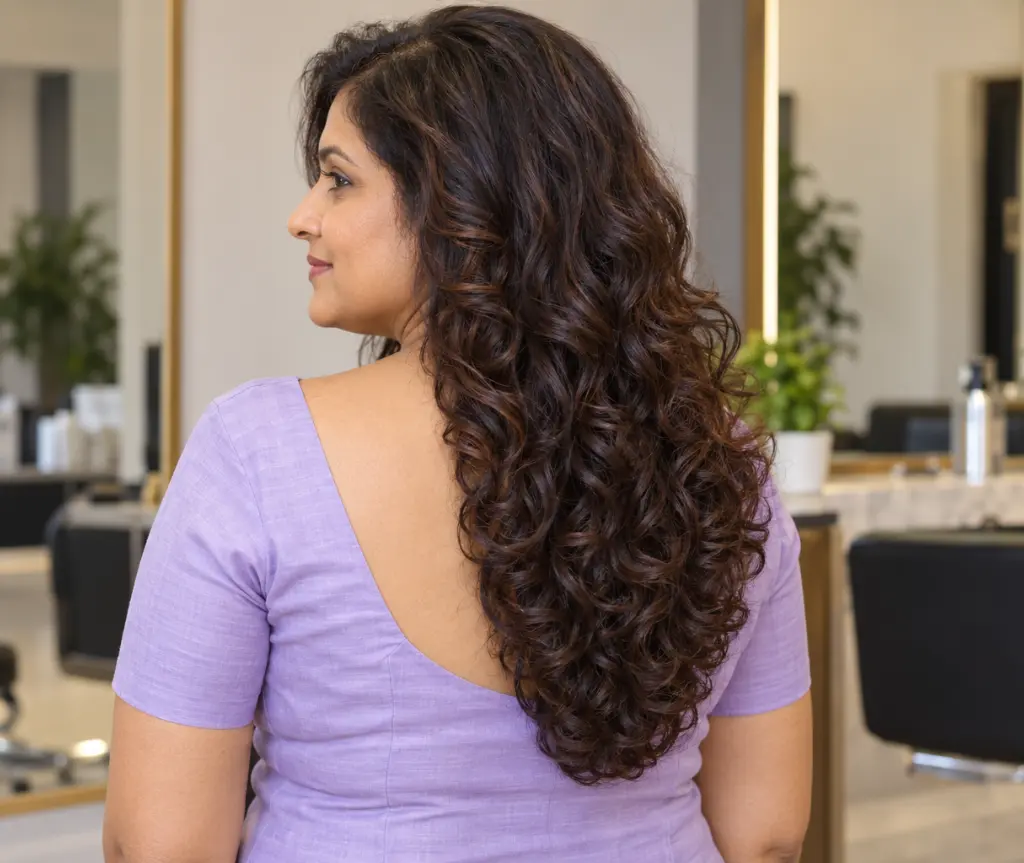
Long U-shaped curly hair keeps a rounded perimeter that is shorter toward the sides and longer through the center back. The outline provides a clear shape while retaining generous length. For women over 40 who prefer long curls with relatively restrained layering, this can create movement without a heavily textured upper section. The curved ends become most visible from the back, although the shorter sides also affect how the hair falls over the shoulders. This style works as a quiet structural update when you want your long hair to look more deliberately shaped.
Ask your stylist to explain how pronounced the U shape will be and how it will appear once your curls shrink. A very subtle curve may be enough if you want to keep the sides long for updos. Bring a rear-view image so the intended perimeter is clear, then discuss any face-framing changes separately. When styling, give the lower back sections attention so the curved outline remains defined rather than tangled together. Check the result with a second mirror or a photograph. The shape should look balanced from behind as well as when the curls fall forward.
27. Silver Curly Bob
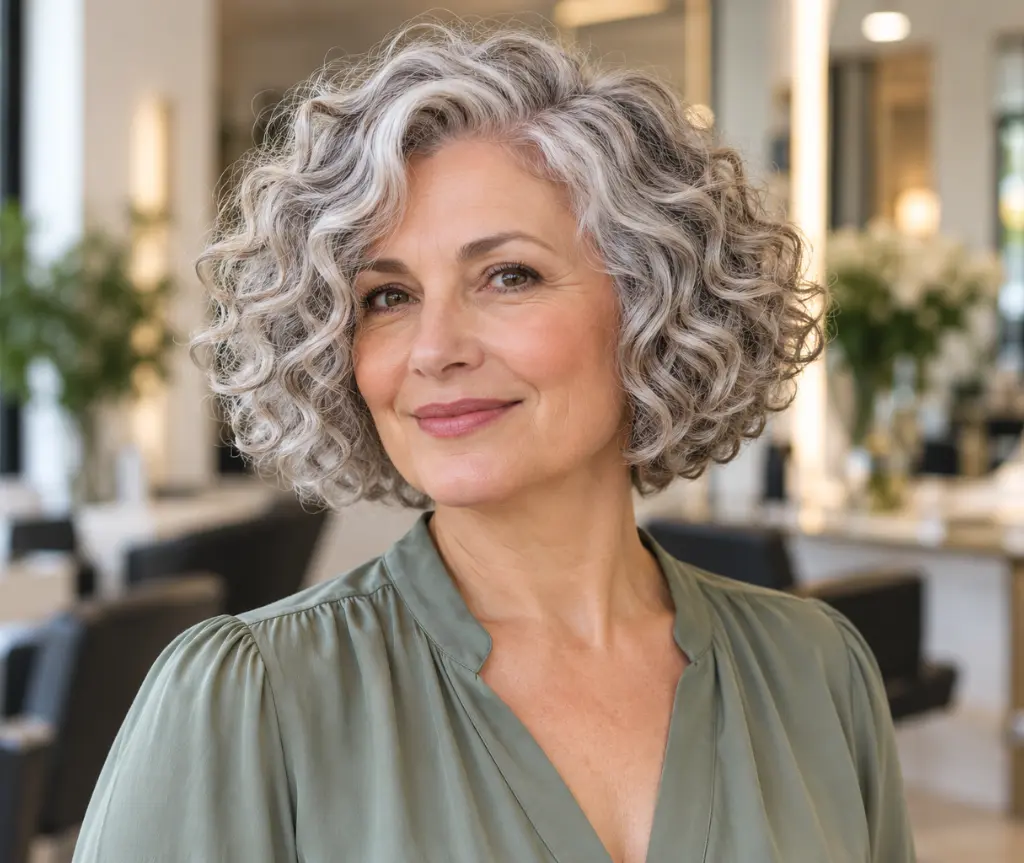
A silver curly bob combines a compact haircut with the visual depth of naturally gray or intentionally silver hair. The curls create texture that makes subtle differences in tone easy to appreciate, especially around the face. For women over 40 who want to embrace gray hair, a bob can offer a clearly shaped outline while their color becomes the main feature. The length can sit near the chin or a little lower, depending on the curl pattern. A soft side part and gently connected layers keep the style lively without making it overly elaborate.
Discuss whether your silver is natural, color-treated, or part of a transition, since those situations may call for different upkeep. Ask for a cut that suits the way your current texture behaves rather than assuming gray hair always needs the same haircut. If the ends are lighter or previously processed, preserve them according to their condition. Styling should reveal the curls without coating them so heavily that they lose movement. If you use a toning product, follow its instructions and seek advice about the result you want. Silver can look beautiful with natural tonal variation rather than a uniform finish.
28. Salt-and-Pepper Shoulder-Length Curls
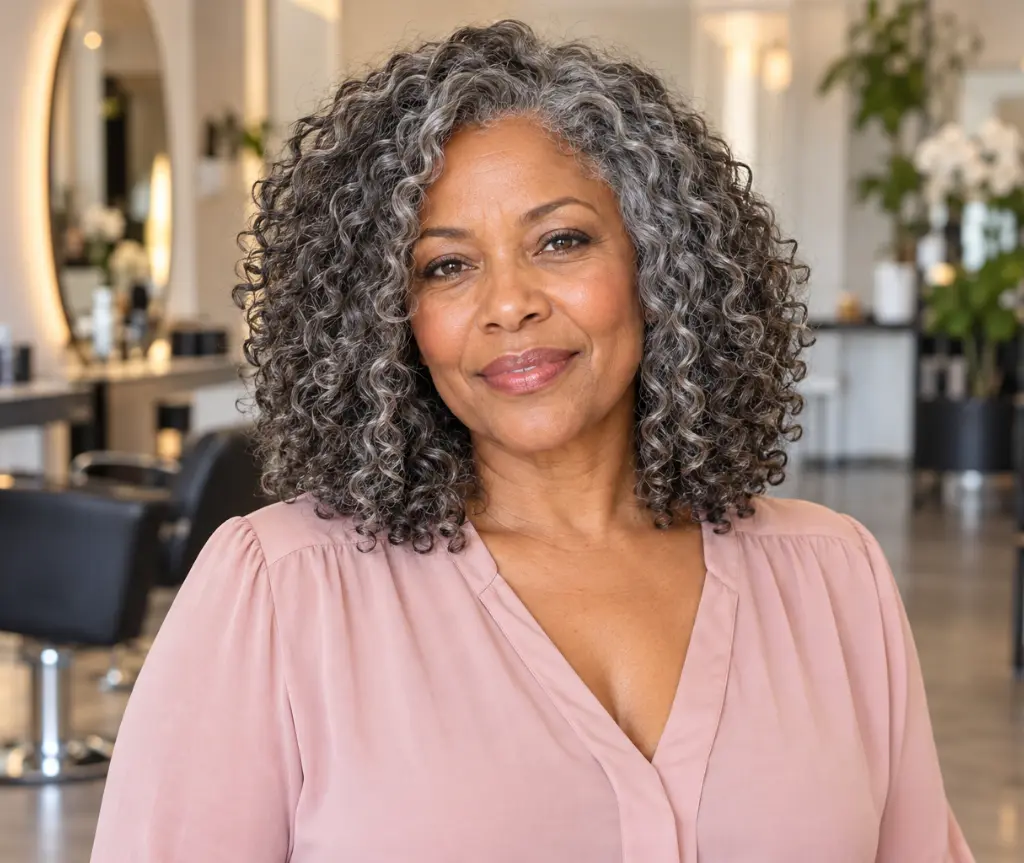
Salt-and-pepper shoulder-length curls highlight the natural mixture of dark and gray strands rather than aiming for one uniform color. The contrast can make curl definition more visible and give a familiar medium-length haircut extra depth. For women over 40 who are growing out gray or already enjoy their natural color, this offers a versatile look with plenty of texture. A softly layered shape keeps the sides balanced, while the shoulder-level ends provide enough length for loose styling or a small updo. The distribution of silver strands makes every version individual.
Ask your stylist to consider both the haircut and the color transition if older dyed lengths remain. You may prefer gradual trimming, a shorter reshape, or a conversation with a colorist about blending, depending on your goals. The curls should be shaped around their current behavior, with enough fullness retained where you want coverage. During styling, define the gray and dark sections together rather than treating them as separate visual areas. Avoid expecting perfect symmetry in the silver pattern. Its natural irregularity can be one of the most appealing features of this shoulder-length curly hairstyle.
29. Curly Lob with Caramel Highlights
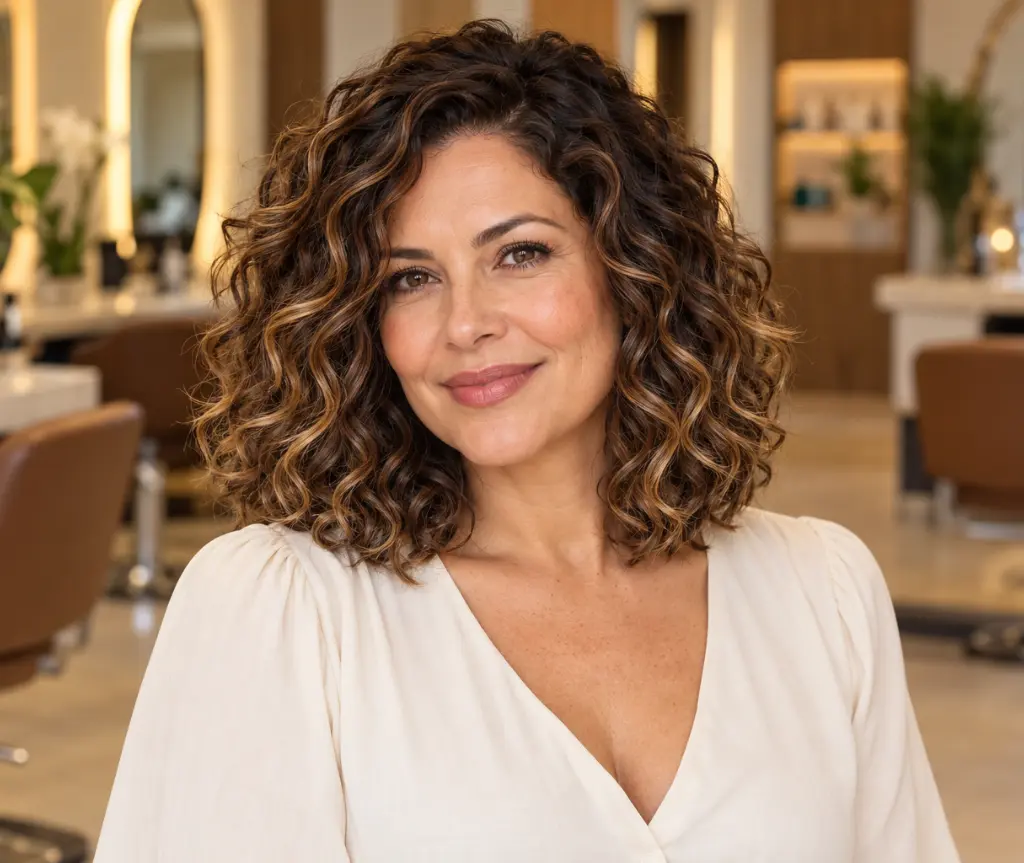
A curly lob with caramel highlights adds warm contrast to a brunette base while keeping the haircut at a versatile medium length. The lighter ribbons can draw attention to selected curls around the face and through the outer lengths. For women over 40 who want a color change without an all-over blonde result, this can make the texture feel more dimensional. The placement matters more than adding highlights everywhere. Well-chosen sections allow the natural base to remain visible and prevent the curl pattern from looking like a series of disconnected light stripes.
Discuss the amount of lightening, your existing color history, and how much maintenance you want before choosing the shade. A colorist can assess whether warm caramel is achievable in one appointment and how the process might affect your hair. Ask for placement that follows the way you usually part and wear the curls. Once colored, style with the condition of the hair in mind rather than chasing extra brightness at every visit. The lob should still have a coherent perimeter, so coordinate the haircut and color plan. The best result makes the curls, shape, and warm tones work together.
30. Copper Curly Shag
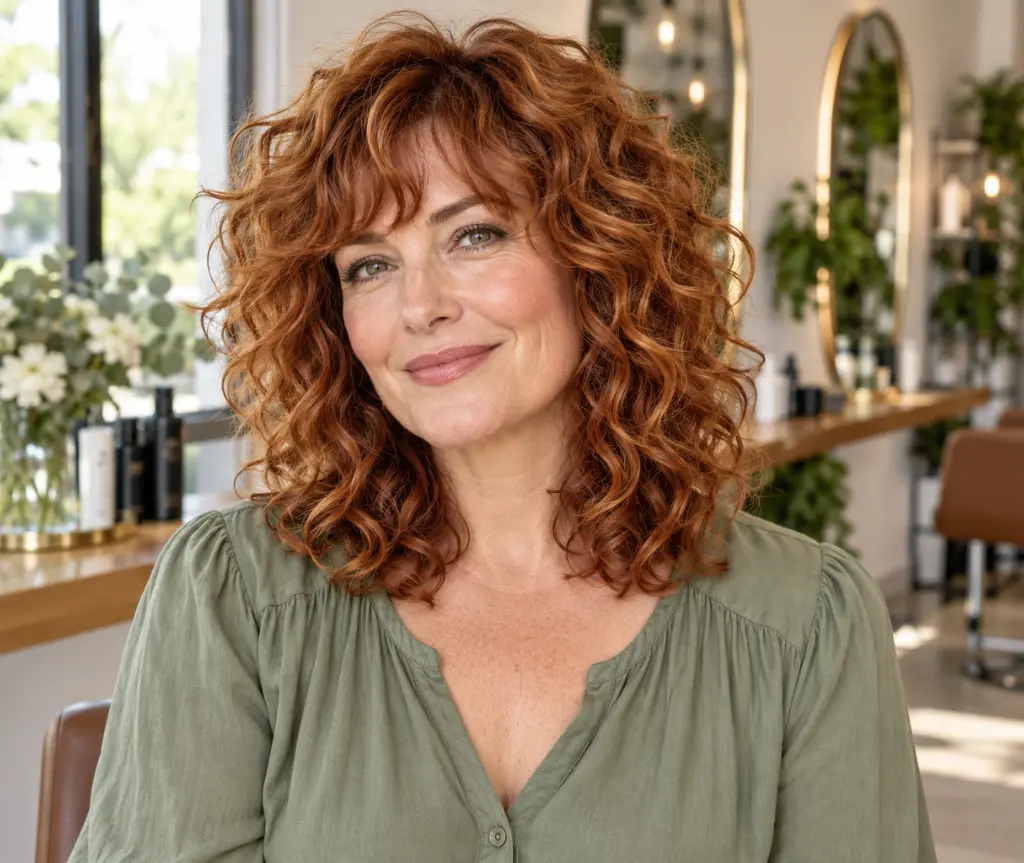
A copper curly shag brings together warm color and a layered silhouette with plenty of movement around the face. The shade can range from soft cinnamon to a more vivid copper, allowing you to choose the level of contrast you enjoy. For women over 40 who like expressive hair, the combination makes the curls a clear focal point. Connected crown layers and a softly textured fringe can strengthen the shag shape, while the longer ends preserve balance. The color is especially noticeable where the curls catch the light, revealing natural variation through the surface.
Talk with a colorist about your starting shade and any previous dye before selecting a copper reference. The image may show a result that requires more lighting or upkeep than you expect. Ask your stylist to adapt the shag to your density so the color change does not accompany an unwanted loss of fullness. During styling, emphasize a few curls around the fringe and cheeks rather than making the entire head uniformly sculpted. Keep the finish movable so the layers remain visible. A softer copper option can provide warmth while allowing the haircut itself to carry much of the visual impact.
31. Half-Up Curly Hairstyle
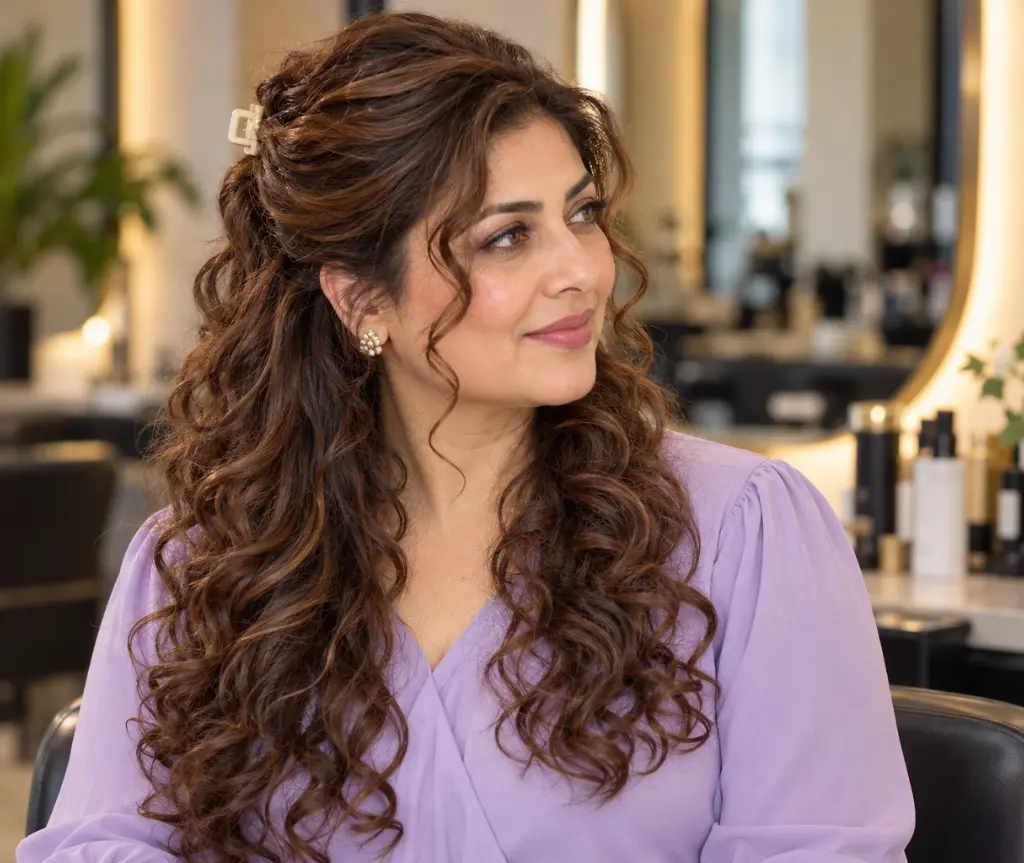
A half-up curly hairstyle gathers part of the upper hair while leaving the remaining curls loose around the shoulders or chest. This gives the face more openness without hiding the texture that makes the style appealing. For women over 40 who want a versatile option for work, dinners, or casual outings, it can feel put together with a small amount of effort. The gathered section can sit near the crown or a little lower at the back. A few loose curls near the temples help connect the secured portion with the flowing lengths.
Choose how much hair to gather according to your density and the amount of volume you want left loose. A small top section can preserve side fullness, while a larger section creates a cleaner frame around the face. Secure it comfortably with a suitable clip or tie and avoid pulling the hairline tight. Arrange the loose curls after fastening rather than repeatedly tightening the gathered section. If the crown looks flat, loosen it gently instead of adding tension elsewhere. This style can work with a bob that has enough length, a shoulder-length lob, or longer layered curls.
32. Low Curly Bun with Face-Framing Pieces
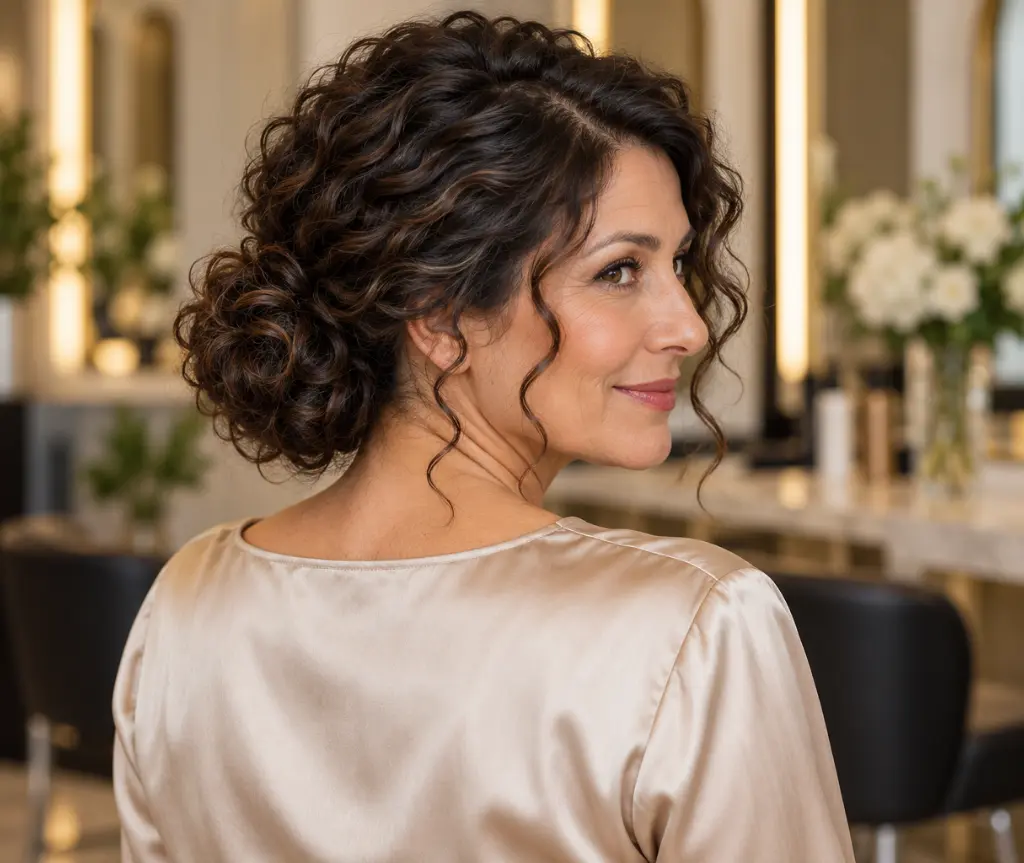
A low curly bun gathers the lengths near the nape while allowing the natural texture to remain visible across the surface. Soft face-framing pieces make the hairstyle feel relaxed rather than tightly formal. For women over 40, this can be an appealing option for occasions when you want the hair off your shoulders but still enjoy a textured finish. The bun may be small and compact or fuller with loose curls pinned around it. Its placement matters: keeping it low gives the style a calm outline and can work comfortably with different necklines.
Start with curls that are reasonably detangled, then gather them without aggressively brushing away all the texture. Secure the bun with pins or a tie that feels comfortable, and position loose sections so they look intentional rather than tangled. Leave front pieces only where you like them, since you do not need matching curls on both sides. Check the back to make sure the bun feels balanced and stays secure as you move. If your hair is shorter, a series of softly pinned curls at the nape can create a similar effect without forcing the lengths into one tight bundle.
33. High Curly Ponytail
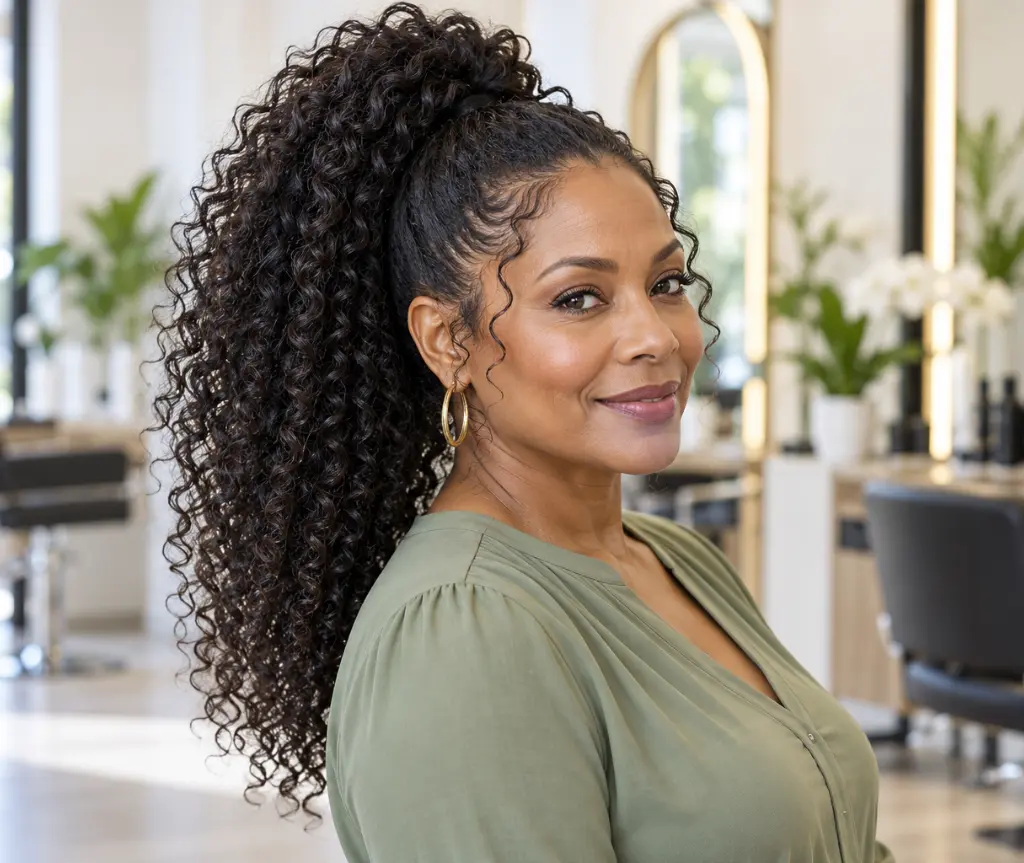
A high curly ponytail brings the lengths upward and lets the curls cascade from the crown or upper back of the head. The lifted position creates a different silhouette from wearing the hair loose, with texture concentrated in the ponytail itself. For women over 40 who enjoy a lively updo, this can work for casual days or a more dressed-up occasion. The front may be softly smooth or visibly textured depending on your preference. A few curls left near the hairline can make the transition between the gathered roots and loose lengths feel gentler.
Choose a height that feels comfortable instead of assuming the ponytail must sit at the very top of the head. Use a suitable tie and avoid pulling repeatedly to make the base tighter. If the ponytail feels heavy, a lower placement may be more practical. Define or arrange the hanging curls after fastening so you can see their actual fall. Keep the root area comfortable throughout the day, especially if you wear gathered styles often. This look depends on having enough length to reach the chosen position, so adapt the height to your haircut and natural shrinkage.
34. Curly Puff with Soft Edges
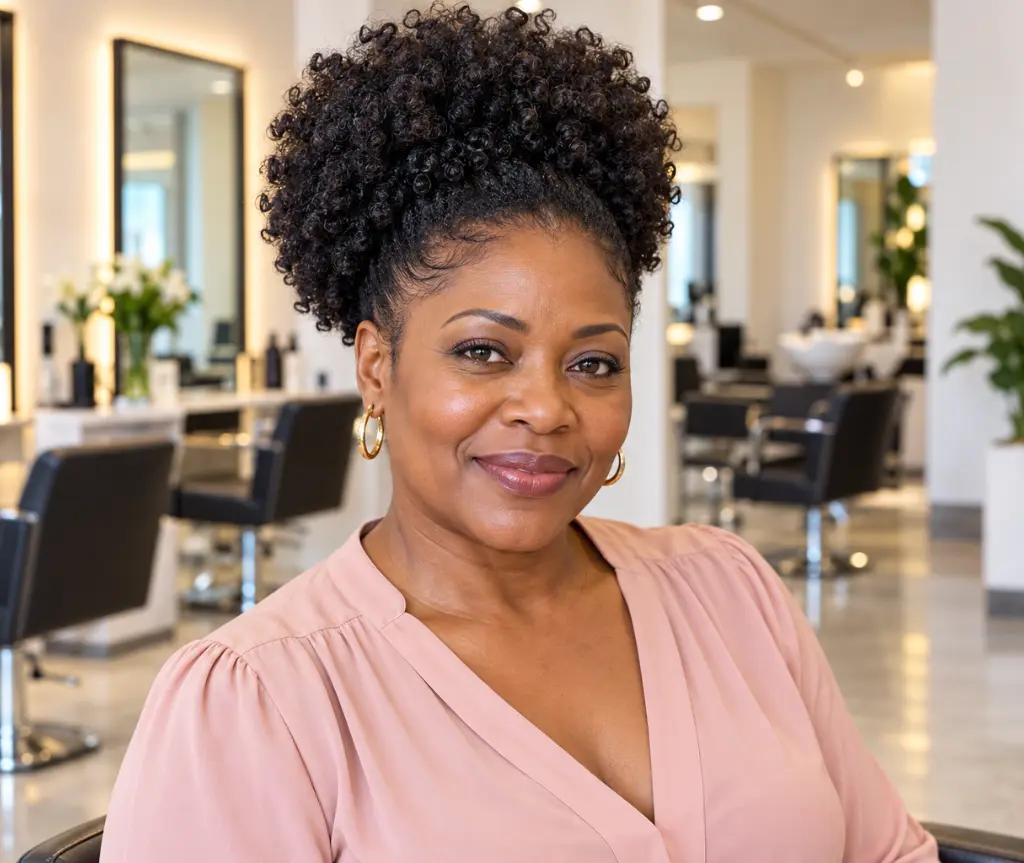
A curly puff gathers natural curls or coils into a rounded cloud of texture while leaving the hairline comfortably arranged. The puff can sit high, toward the back, or slightly lower depending on your length and preferred shape. For Black women over 40 who want an everyday updo that celebrates natural hair, this offers a clear silhouette with plenty of personality. The edges can remain softly textured rather than being styled into a precise pattern. A full, balanced puff makes the curl texture the main feature and works with understated or more expressive outfits.
Use a gathering method that holds the hair without feeling tight around the temples or nape. The puff should feel secure, but comfort matters more than making the base extremely smooth. Gently arrange the top to distribute volume and avoid tugging on individual curls just to create a perfect circle. If some sections are shorter, let them contribute to the textured outline or secure them lightly where needed. You can change the placement on different days to vary the look. Choose accessories that support the hair comfortably and leave the natural hairline looking credible rather than overly manipulated.
35. Twist-Out Curly Bob
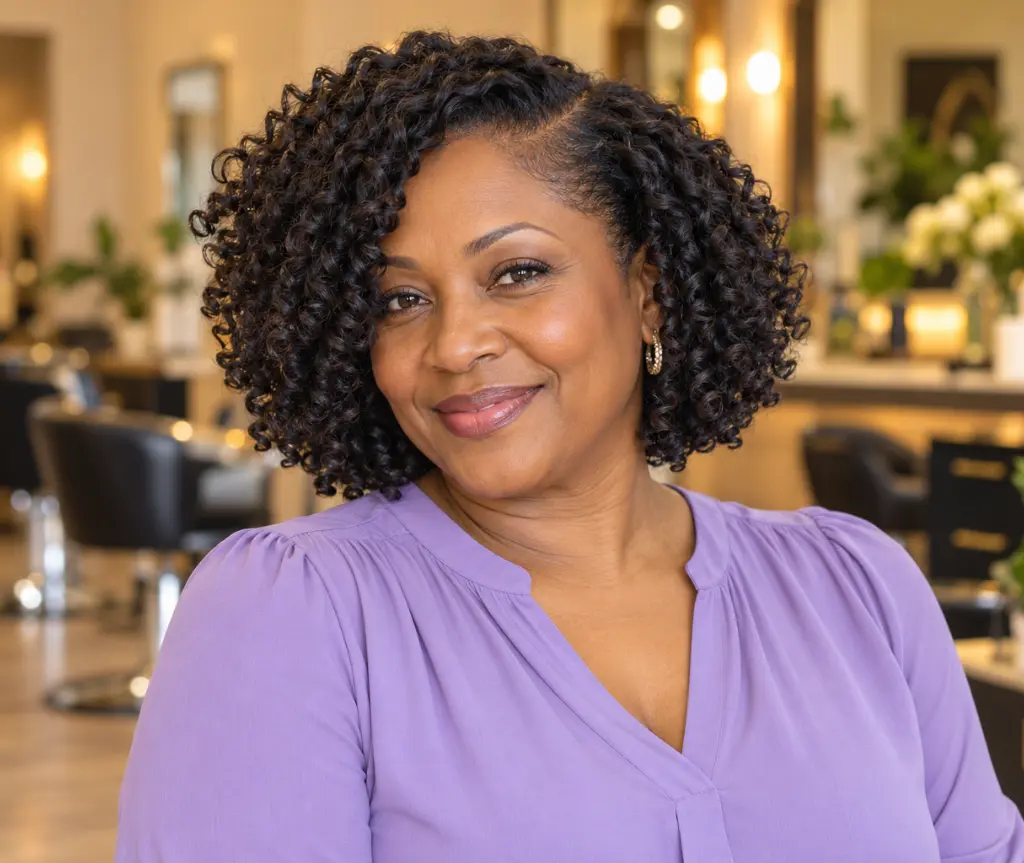
A twist-out curly bob creates a shaped short hairstyle with texture formed by setting the hair in twists and then separating them. The resulting pattern can include defined bends, curls, and softly expanded sections, depending on your natural texture and the size of the twists. For Black women over 40 who enjoy a set style, this offers a way to vary the appearance of a natural bob without changing the haircut. The dry perimeter remains important because it gives the expanded texture a recognizable shape. A side part can add direction while keeping the finish full.
Begin with comfortably detangled hair and choose twist sizes that suit the definition you want. Let the set dry fully before taking it down, since damp sections may lose their intended shape as you separate them. Open the twists gently and avoid repeatedly pulling apart every small piece if you prefer a defined finish. A little expansion at the roots can add fullness without disturbing all the ends. Ask your stylist to shape the bob with the way you usually wear it in mind. A cut designed only for stretched hair may fall differently in your finished twist-out.
36. Side-Pinned Curls for Special Occasions
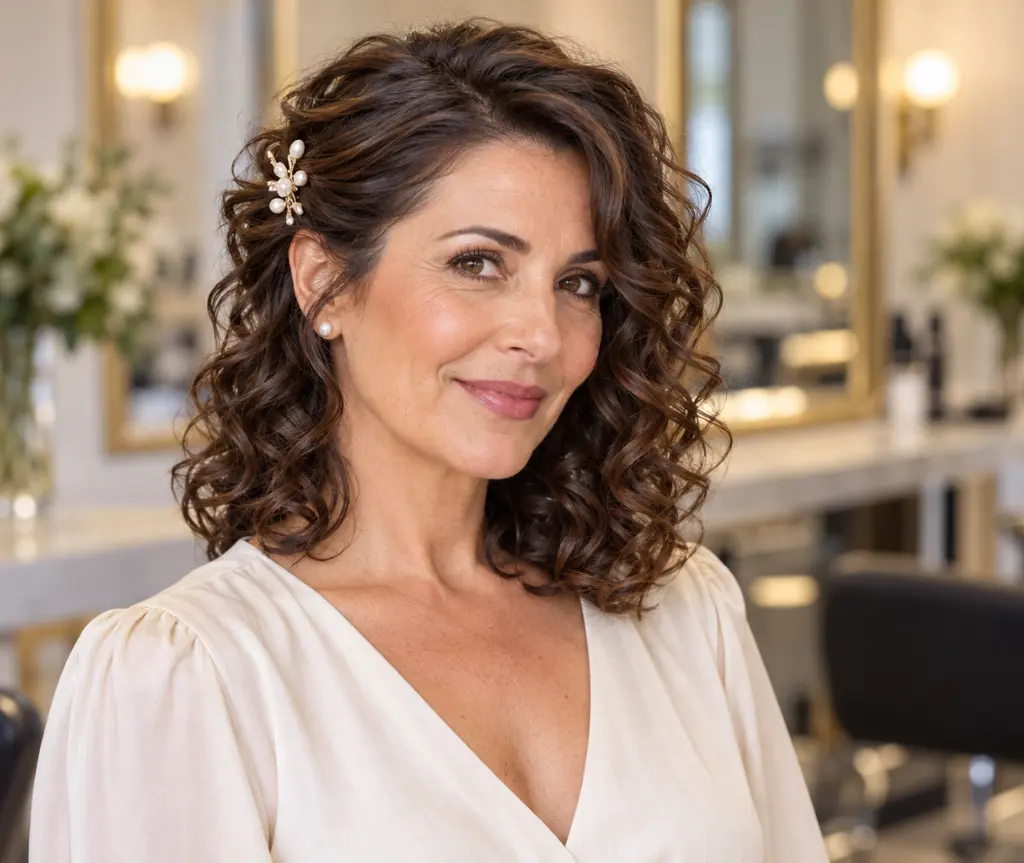
Side-pinned curls create an occasion hairstyle by securing one side while leaving the rest of the texture loose and visible. The contrast opens the face on one side and gives the other side a graceful sweep. For women over 40 attending a wedding, dinner, or celebration, this can feel dressed up without requiring a complicated updo. A simple decorative pin, small comb, or discreet set of grips can hold the section. The look works with a curly bob, a shoulder-length lob, or long layers as long as the secured side has enough length.
Decide whether you want the pinned side softly textured or more closely arranged before placing the accessory. Keep the section comfortable and position the pin where it can hold the hair without pulling at the temples. Arrange the loose curls afterward so their shape complements the exposed side. If you are using a decorative comb, test its grip before the event rather than assuming it will stay in place. A few hidden pins may provide extra support. Let the haircut guide the final silhouette, keeping the full curl pattern visible instead of covering it with oversized accessories or excessive ornament.
Choosing Your Curly Hairstyle
Start with the texture and density you have today. Fine strands, dense coils, loose spirals, and mixed curl patterns can all need different shaping, even when the reference haircut has the same name. Ask a stylist about the finished dry length, shrinkage, fringe maintenance, and how easily you can put the hair up. Choose a style that suits your routine as well as your preferred appearance.
For everyday care, the American Academy of Dermatology recommends conditioner after washing, gentle detangling, and limiting excessive heat. For thick curly hair, it advises combing in the shower before rinsing out the conditioner. These are care principles rather than promises that a particular haircut will change your texture.
Conclusion
The most satisfying curly hairstyle feels like a natural part of your personal style. You might prefer a compact pixie, a softly layered lob, long ringlets, or an updo that keeps your texture visible. Save the ideas that appeal to you, compare their maintenance needs, and use the descriptions to guide a clear conversation with your stylist. Explore more hairstyle inspiration at